Unlocking Curiosity: The Best Science Toys for 9-Year-Olds
Introduction: The Age of Wonder
At nine years old, children stand at a remarkable crossroads of cognitive and emotional development. Their brains are hungry for complex explanations, yet they still retain the unbridled joy of hands-on discovery. This is the golden age for science toys—not just as playthings, but as powerful tools that transform abstract concepts into tangible, memorable experiences. The right science toy for a 9-year-old does more than entertain; it plants seeds of inquiry, resilience, and critical thinking that can blossom into a lifelong passion for learning. But with an overwhelming market of options, how do parents and educators choose wisely? This article explores why science toys matter at this age, categorizes the most impactful types, and offers practical guidance for selecting and using them effectively.
Why Science Toys Matter for 9-Year-Olds
Cognitive and Developmental Milestones
By age nine, children typically have mastered basic reading and arithmetic, and they are beginning to think more abstractly. According to Piaget’s theory of cognitive development, most 9-year-olds are in the concrete operational stage, meaning they can reason logically about concrete events but still struggle with purely hypothetical concepts. Science toys bridge this gap perfectly. A chemistry set lets them *see* an acid-base reaction, a building kit allows them to *feel* mechanical advantage, and a microscope brings the invisible world into sharp focus. These experiences anchor scientific principles in memory far more effectively than any textbook diagram.
Fostering a Growth Mindset
Science is inherently experimental, which means failure is not a setback but a stepping stone. When a 9-year-old tries to build a bridge that collapses the first three times, they learn iteration and patience. Science toys naturally encourage a growth mindset—the belief that abilities can be developed through effort. This is especially crucial at an age when children become more aware of competition and may start avoiding challenges for fear of looking “dumb.” Toys that allow retries, like circuit kits or crystal-growing sets, teach that “wrong” results are just data points, not judgments.
Encouraging Independent Exploration
Nine-year-olds crave autonomy. They want to do things themselves, without constant adult supervision. The best science toys are designed for self-directed play: clear instructions, minimal adult intervention, and open-ended possibilities. This independence builds confidence and ownership over the learning process. A child who successfully grows a geode or launches a homemade rocket feels a sense of accomplishment that no passive screen time can replicate.
Categories of Science Toys for 9-Year-Olds
Physics and Mechanics: The Art of Cause and Effect
Physics toys are among the most accessible and visually rewarding. For 9-year-olds, concepts like force, motion, energy, and simple machines become exciting when they can build a marble run, experiment with pulleys, or construct a catapult. Look for kits that include multiple experiments, such as a “Physics Workshop” kit that lets a child build a working balance scale, a lever, or a pendulum. These toys teach core principles like Newton’s laws without using jargon. A great example is the *Snap Circuits Motion* kit, which combines electronics with mechanical movement, allowing kids to build a fan that spins faster or a car that moves forward when a switch is flipped. The hands-on manipulation of gears, springs, and magnets solidifies understanding far more than reading about them.
Chemistry and Reactions: Messy, Colorful, and Educational
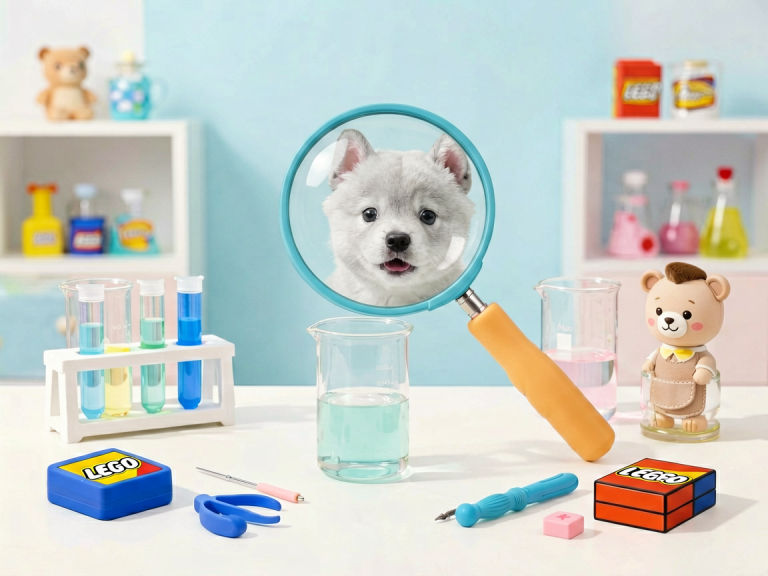
The dramatic fizz of baking soda and vinegar, the color change of a pH test, the sparkle of a homemade lava lamp—chemistry toys captivate because they are sensory and immediate. For 9-year-olds, safety is paramount, so look for non-toxic, age-appropriate kits. The *National Geographic Mega Chemistry Set* is a favorite, featuring 45 experiments with common household materials and clear instructions. Children can create a glowing chemical reaction, make a bouncing polymer ball, or grow a giant crystal. These experiences introduce concepts like chemical reactions, states of matter, and solutions in a way that feels like magic but is, in fact, reproducible science. Always check that the kit includes safety goggles and a detailed explanation of each reaction’s science.
Biology and Nature: Observing the Living World
Nine-year-olds have a natural fascination with living things. A good biology toy encourages observation, classification, and recording. An ant farm or a butterfly garden allows children to witness life cycles and social behaviors up close. A high-quality microscope (like the *AmScope Kids Microscope* with prepared slides and blank slides) turns a backyard leaf or a drop of pond water into a universe of microorganisms. Biology toys are particularly effective at nurturing patience and attention to detail. Children learn to sketch what they see, hypothesize about why a worm moves the way it does, or measure the growth of a bean sprout day by day. For 9-year-olds, the best biology toys include a field guide or project cards that guide exploration without being prescriptive.
Engineering and Building: From Blueprint to Structure
Engineering toys combine creativity with logic. At age nine, children can handle multi-step instructions and are ready for more complex builds. The *Lego Technic* series is a classic, offering gearboxes, pistons, and steering mechanisms that mimic real machines. More specialized kits like *Engino Discovering STEM* or *Thames & Kosmos Structural Engineering* let children build bridges, towers, and cranes while learning about tension, compression, and load distribution. The key is that these toys require not just following directions but also troubleshooting: “Why did my bridge collapse? How can I make it stronger?” This process mirrors real engineering design cycles. Additionally, open-ended building sets like magnetic tiles or wooden planks encourage free-form exploration, which sparks creativity and spatial reasoning.
Electronics and Coding: The Language of the 21st Century
Technology is inseparable from modern science, and teaching 9-year-olds basic electronics and coding builds digital literacy. The *littleBits* system (magnetic electronic modules) allows children to snap together circuits to create a light-sensitive alarm, a sound-activated fan, or a musical instrument—no soldering required. For coding, the *Sphero* robotic ball or the *Ozobot* can be programmed with color codes or drag-and-drop blocks, introducing logic sequences, loops, and conditionals. These toys demystify how smartphones, computers, and appliances work. They also emphasize cause and effect in a digital context: if the code says “turn left,” the robot better turn left. Debugging becomes a fun puzzle rather than a chore. Many kits now include companion apps that gamify learning, keeping children engaged for hours.
How to Choose the Right Science Toy
Match the Toy to the Child’s Interests
Not all 9-year-olds are alike. A child who loves building with Legos may prefer an engineering kit, while a nature enthusiast might thrive with a bird-watching telescope or a plant-growing experiment. Pay attention to what sparks your child’s curiosity. Do they ask “why” constantly about the world? An all-purpose science lab kit might be perfect. Do they enjoy taking things apart? A disassembly kit or a mechanical puzzle would be ideal. The goal is to match the toy to their natural inclinations, not to impose a “should” from the adult world.
Consider Open-Ended vs. Kit-Based Play
Some science toys are structured (e.g., a kit that provides all materials and instructions for 20 specific experiments), while others are open-ended (e.g., a set of magnets and metal parts that can be combined in infinite ways). Both have value. Structured kits are excellent for building foundational knowledge and giving a child a sense of accomplishment. Open-ended toys foster creativity and divergent thinking. The best approach is to offer a mix. A subscription box like *KiwiCo* or *Mel Science* delivers monthly kits with a balance of instruction and room for modification, which is ideal for this age group.
Safety First: Read Labels and Age Recommendations
Even though 9-year-olds are more responsible than younger children, safety should never be overlooked. Avoid chemistry sets that use flammable solvents or acids without proper training. Look for ASTM (American Society for Testing and Materials) safety certifications. Always read the age recommendations: a toy marked for ages 12+ may contain small parts that are still a choking hazard for a 9-year-old, or instructions that are too complex. If a toy involves electricity, ensure it uses low-voltage circuits. If it involves chemicals, confirm they are non-toxic and food-grade when possible.
Tips for Parents to Maximize Learning
Play Along Without Taking Over
The best role for a parent is that of a “guide on the side,” not a “sage on the stage.” Sit with your child during the first few experiments, but let them do the mixing, building, and hypothesizing. Ask open-ended questions: “What do you think will happen if we add more vinegar?” “Why do you think the marble stopped here?” Resist the urge to give the answer. If your child fails, encourage them to try a different approach. Celebrate the attempt, not just the success.
Connect the Toy to Real-World Science
After a child builds a working electrical circuit, point out similar circuits in the house—the lamp, the doorbell. After they grow a crystal, talk about how geodes form in caves. Watching a YouTube video about how roller coasters work after building a marble run can deepen understanding. These connections anchor the play in real-world relevance, making science feel less like a school subject and more like a superpower.
Allow Time for Free Exploration
While structured experiments are valuable, don’t force your child to follow the instructions every time. If they want to mix all the chemical powders together just to see what happens (with safety in mind, of course), let them. Undirected play often leads to the most profound insights. For example, a child who pours water into a bubble machine may discover surface tension in a way no kit could teach. Reserve judgment and encourage questioning: “That’s interesting! What do you think caused that effect?”
Conclusion: The Gift of Wonder
Science toys for 9-year-olds are far more than holiday gifts or birthday presents—they are portals to understanding the universe. At an age when children are forming their attitudes toward learning, the right toy can make science feel like a thrilling adventure rather than a tedious obligation. Whether it’s the satisfying click of gears, the vibrant swirl of a chemical reaction, or the triumphant launch of a homemade rocket, these experiences stay with a child forever. Parents who invest in thoughtful, age-appropriate science toys are not just buying a product; they are investing in their child’s curiosity, confidence, and capacity for wonder. In a world increasingly shaped by science and technology, there is no more valuable gift. So the next time you search for that perfect present, remember: a 9-year-old’s brain is a laboratory waiting to be sparked. Give them the tools, step back, and watch the magic happen.