The Power of Pretend: How Imaginative Play Shapes Learning in 6-Year-Old Boys
Introduction: More Than Just Child’s Play
At six years old, boys are bursting with energy, curiosity, and an insatiable desire to explore the world around them. They transform cardboard boxes into spaceships, sticks into lightsabers, and living rooms into medieval castles. To the casual observer, this may look like simple amusement—a welcome break from the structured demands of kindergarten or first grade. But beneath the surface of capes and plastic helmets lies one of the most powerful and sophisticated learning mechanisms available to the developing child. Pretend play for six-year-old boys is not merely a diversion; it is a dynamic, multi-faceted classroom where cognitive, social, emotional, and linguistic growth occur simultaneously. Understanding how this form of play functions as a vehicle for learning can help parents, educators, and caregivers appreciate its profound value and intentionally support it.
Cognitive Development: Building the Architect of Thought
Problem-Solving and Executive Function
When a six-year-old boy decides that the couch cushions are now lava rocks and he must cross the room without touching the floor, he is engaging in complex problem-solving. He assesses the terrain, plans a route, and adjusts his strategy when a cushion slips. This is not random activity—it is the practice of executive function. Pretend play requires children to hold multiple rules in mind, inhibit impulsive actions, and flexibly shift between roles and scenarios. For example, a boy playing “firefighter” must remember that he is the hero, that the “fire” (maybe a red blanket) is dangerous, that he must use a hose (a rolled-up towel), and that he needs to save the stuffed animal. He must inhibit the urge to run wildly and instead follow the script he has created. Neuroscientific research has shown that such play directly strengthens the prefrontal cortex, the brain region responsible for self-regulation, attention control, and working memory. In fact, studies indicate that children who engage in high-quality pretend play show better performance on tasks measuring cognitive flexibility and inhibitory control—skills that are strong predictors of academic success.
Abstract Thinking and Symbolic Representation
One of the most significant cognitive leaps in early childhood is the ability to use symbols. A six-year-old boy who holds a banana to his ear and pretends it is a telephone is demonstrating an understanding that one object can stand for another. This capacity for symbolic representation is the foundation of literacy and mathematics. Letters are symbols for sounds; numbers are symbols for quantities. By manipulating symbols in play, boys lay the neural groundwork for reading, writing, and arithmetic. When they assign a block to be a car, a stick to be a sword, or a pile of sand to be a mountain, they are practicing the same mental operation they will later use to understand that the word “dog” represents a furry four-legged creature. Moreover, pretend play often involves creating and following narrative sequences—a beginning, a middle, and an end. This narrative structure mirrors the structure of stories and reports, helping boys develop comprehension skills and the ability to organize ideas logically.
Scientific Thinking and Experimentation
Pretend play is also a laboratory for scientific inquiry. When a six-year-old boy pretends to be a doctor, he might try different tools or ask “what if” questions: “What if I use this spoon instead of the stethoscope? Will it still work?” He experiments with cause and effect, tests hypotheses, and observes outcomes. If he builds a fort and it collapses, he learns about structural stability and gravity—not through a textbook, but through direct, hands-on experience. This form of trial-and-error learning is deeply engaging and far more memorable than passive instruction. It also fosters a growth mindset, because in play, failure is safe and simply leads to a new attempt or a revised scenario.
Social and Emotional Learning: The Heart of Human Connection
Empathy and Perspective-Taking
One of the most profound lessons learned through pretend play is empathy. When a six-year-old boy takes on the role of a teacher, a parent, a superhero, or even a villain, he must temporarily step into another’s shoes. He considers how that character would feel, what they would say, and how they would react. This exercise in perspective-taking is the very essence of empathy. For instance, a boy pretending to be a baby who gets hurt in a game learns to comfort the “baby” (maybe a toy) by saying “I’m sorry you’re sad.” Over time, this practice translates into real-world social competence. Research in developmental psychology has consistently shown that children who engage frequently in sociodramatic play (pretend play with others) demonstrate higher levels of emotional understanding and are better at reading others’ facial expressions and body language. For six-year-old boys, who sometimes struggle with emotional vocabulary or expressing vulnerability, pretend play offers a safe, non-threatening context to explore feelings.
Negotiation, Cooperation, and Conflict Resolution
Pretend play almost always involves negotiation. Two boys building a rocket out of blocks must agree on who will be the pilot, who will be the engineer, and what the mission will be. This requires communication, compromise, and sometimes, friendly debate. When disagreements arise—for example, one boy wants to land on Mars while the other wants to rescue a stranded astronaut—they must resolve conflicts without adult intervention. They learn to articulate their ideas, listen to others, and find a solution that satisfies both parties. These social skills are among the most valuable outcomes of pretend play. They cannot be taught through worksheets; they must be lived. For six-year-old boys, who are often in the midst of refining their social identities and learning to navigate peer relationships, pretend play is a critical rehearsal space for real-life interactions.
Self-Regulation and Managing Emotions
Pretend play also helps boys manage their own emotions. In the safety of a make-believe world, they can explore fears, anger, excitement, and sadness in controlled ways. A boy who is afraid of the dark might pretend to be a brave knight who conquers the night. He transforms his anxiety into agency. Similarly, a boy who feels powerless in the classroom can become a superhero who saves the day. This role reversal gives him a sense of control and mastery over challenging emotions. Moreover, the structured nature of pretend play—following a script, staying in character—requires emotional regulation. If a boy becomes too excited or frustrated, the game may break down, teaching him the natural consequences of losing control. Over time, he internalizes the ability to modulate his emotional responses, a skill that directly benefits his behavior in school and at home.
Language and Literacy Development: Words Come Alive
Vocabulary Expansion and Narrative Skills
No worksheet can match the linguistic richness of a well-developed pretend play scenario. When six-year-old boys engage in pretend play, they naturally stretch their vocabulary to fit the context. A child playing “astronaut” will use words like “launch,” “orbit,” “gravity,” and “mission control.” A child playing “chef” will say “sauté,” “whisk,” “ingredients,” and “recipe.” These words are learned meaningfully because they are embedded in an engaging, purposeful activity. Additionally, pretend play requires children to produce extended narratives—not just single sentences, but entire stories with characters, settings, problems, and resolutions. This narrative practice directly supports reading comprehension and writing skills. When a boy tells his friend, “Pretend I’m the pirate captain and you’re my first mate, and we have to find the treasure before the storm comes,” he is constructing a complex story with a plot, conflict, and tension. This is the same skill he will use later to write a story or summarize a book.
Oral Language and Communication
Pretend play also hones conversational skills. Children must take turns speaking, clarify misunderstandings, and explain their ideas. For example, if one boy says, “No, the dragon lives over there,” and the other doesn’t understand, they must negotiate meaning. This back-and-forth builds pragmatic language skills—the social rules of communication, such as staying on topic, adjusting tone, and using appropriate volume. For six-year-old boys, who may sometimes be more action-oriented than verbally expressive, pretend play encourages them to put their thoughts into words. It also introduces them to different registers of language: they might speak formally as a king, gruffly as a monster, or sweetly as a parent. This awareness of language variation is a precursor to understanding tone, irony, and figurative language in later reading.
Creativity and Imagination: The Engine of Innovation
Divergent Thinking and Original Ideas
In our fast-paced, outcome-driven world, creativity is often undervalued. Yet it is a cornerstone of innovation, problem-solving, and adaptability. Pretend play is the purest form of divergent thinking—generating multiple, unique solutions to open-ended problems. A six-year-old boy with a set of building blocks can create a castle, a spaceship, a robot, or a farm. There is no single “correct” answer. This freedom to explore possibilities without fear of failure nurtures cognitive flexibility and originality. Schools increasingly recognize that the jobs of the future will require creative problem-solving rather than rote memorization. By encouraging pretend play, we are equipping boys with the ability to think outside the box and approach challenges with imagination.
Storytelling and World-Building
Boys who engage in elaborate pretend play are essentially world-builders. They create entire universes with their own rules, geographies, and histories. This is the same cognitive process that underlies the work of novelists, game designers, and filmmakers. When a six-year-old says, “In this land, everyone is invisible until they find a magic flower,” he is exercising his imagination and developing his ability to construct coherent, internally consistent systems. This skill translates into academic areas like creative writing, history (understanding cause and effect in narratives), and even science (modeling hypothetical scenarios). Moreover, the act of inventing scenarios and characters builds confidence in one’s own ideas—a quality that is essential for independent thinking throughout life.
Practical Strategies: How to Support Pretend Play at Home and School
Provide Open-Ended Materials
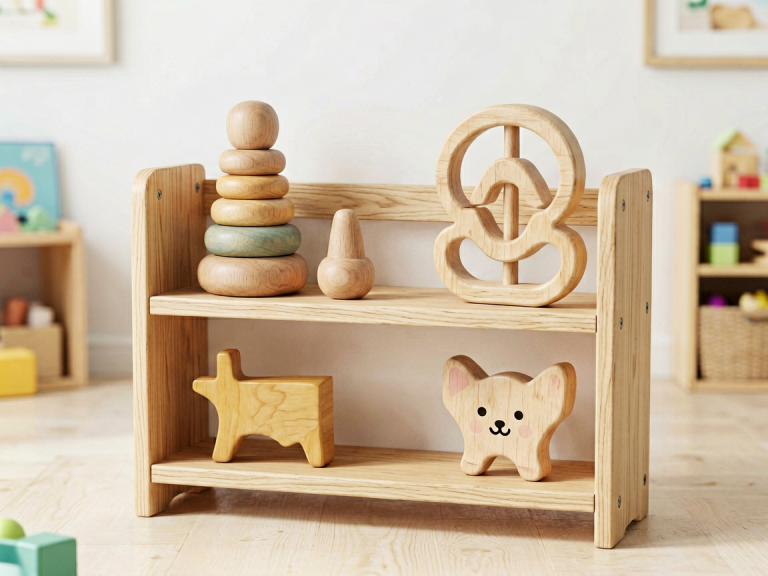
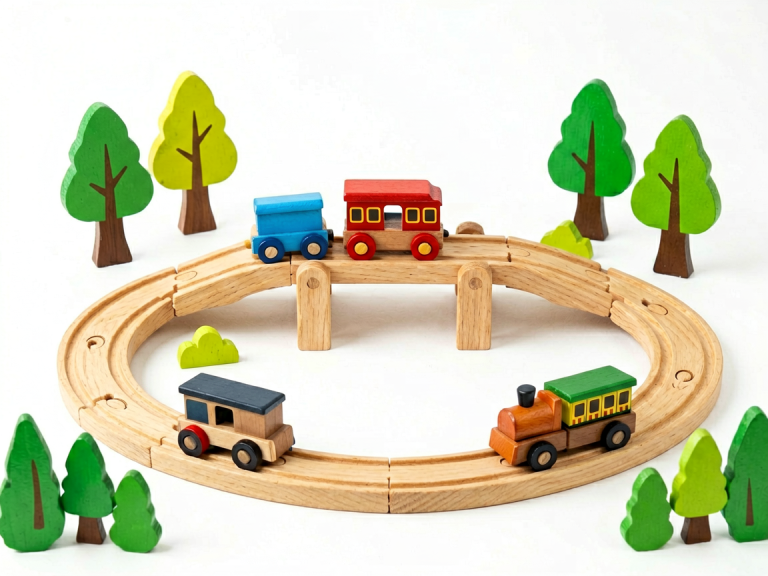
The best props for pretend play are not expensive toys but simple, open-ended materials. Cardboard boxes, fabric scraps, empty containers, sticks, stones, and old clothes can be transformed into anything. Avoid over-structured toys that dictate a single use; instead, offer items that invite creativity. A set of wooden blocks, a collection of scarves, and a few cooking utensils can fuel hours of imaginative play. For six-year-old boys, consider adding items that inspire specific themes they enjoy—pirates, dinosaurs, space exploration, construction, or superheroes—but let them define the narrative.
Create Unstructured Time
In our overscheduled culture, children often have little free time for unstructured play. Yet, as this article has argued, unstructured play is not idle time—it is active learning. Make sure your six-year-old boy has ample time each day to play without adult direction. Resist the urge to fill every moment with organized activities. Let him be bored; boredom is often the catalyst for the most creative play.
Join the Play Without Taking Over
Adults can enhance pretend play by participating, but with caution. When you join your child’s game, follow his lead. Ask open-ended questions: “What happens next?” “What is the monster doing?” “How do we defeat the dragon?” This validates his ideas and expands the narrative without controlling it. Avoid correcting or imposing “realistic” constraints. If he says the teddy bear can fly, let it fly. The goal is not accuracy but imaginative exploration.
Encourage Peer Interaction
While solo pretend play is valuable, playing with other children adds a social dimension that is irreplaceable. Arrange playdates or encourage group play in school settings. For six-year-old boys, pair play with children of similar or slightly different ages. Mixed-age groups can be especially beneficial, as younger children may stimulate nurturing behaviors and older children may introduce more complex scenarios.
Respect the Play as Serious Work
Finally, treat pretend play with respect. Avoid dismissing it as “just playing.” Instead, recognize it as a fundamental learning process. Share this understanding with grandparents, teachers, and other caregivers. When a boy comes home covered in mud after an epic space mission, celebrate the journey, not just the mess. The skills he gained—planning, cooperation, language, empathy, and creativity—are the very skills that will help him thrive in school, in relationships, and in life.
Conclusion: The Enduring Gift of Imagination
At first glance, the world of a six-year-old boy might seem chaotic and whimsical—a whirlwind of sound effects, costume changes, and imaginary creatures. But to those who look more closely, it becomes clear that this is a world of intense learning. Through pretend play, boys practice the cognitive, social, emotional, and linguistic skills that form the bedrock of human development. They become scientists, engineers, storytellers, and leaders—not by memorizing facts, but by living out their dreams. As parents and educators, our role is not to control or accelerate this process, but to create the conditions for it to flourish. Provide the time, the space, and the simple materials. Step back, watch, and marvel. For in the laughter and the battles and the whispered secrets of a six-year-old boy at play lies the blueprint for a capable, compassionate, and creative adult. Let us not underestimate the power of pretend.