The Magic of Make-Believe: How Pretend Play Shapes Learning in 6-Year-Old Girls
Introduction: More Than Just Fun and Games
At the age of six, the world of a little girl is a vibrant tapestry woven with curiosity, imagination, and an insatiable desire to understand the rules of the adult world. While formal schooling begins to introduce structured lessons in reading, math, and science, one of the most powerful and often underestimated engines of learning remains the unstructured, spontaneous, and joyful activity of pretend play. For six-year-old girls, slipping into the role of a doctor, a teacher, a princess, or a superhero is not merely a way to pass the time; it is a sophisticated form of cognitive, social, and emotional experimentation. This article explores the multifaceted ways in which pretend play—often dismissed as simple dressing-up—actually serves as a vital platform for deep, lasting learning. Through the lens of developmental psychology and practical observation, we will see that when a six-year-old girl announces, “Let’s pretend I’m the mommy and you’re the baby,” she is not just playing; she is building the architecture of her future self. The following sections break down the key learning domains that are actively nourished during these imaginative episodes.
1. Cognitive Growth: Building Executive Function and Problem-Solving Skills
One of the most significant benefits of pretend play for a six-year-old girl lies in its capacity to strengthen executive functions—the set of mental skills that include working memory, flexible thinking, and self-control. When a child engages in complex pretend scenarios, she must hold multiple rules in her mind simultaneously. For instance, if she is pretending to run a restaurant, she must remember that she is the chef, that the customer has ordered a specific dish, that certain ingredients are available, and that she must follow a sequence (take order, cook, serve, clean up). This mental juggling act directly exercises her working memory.
Moreover, pretend play requires flexible thinking. A six-year-old girl who decides that a wooden block is a cell phone, a blanket is a magic cape, and a stuffed bear is a patient in need of surgery must constantly shift between the real and the imagined. She learns to inhibit the real-world identity of objects and instead assign new, symbolic meanings. This ability to think flexibly is a cornerstone of creative problem-solving and is highly correlated with academic success in subjects like mathematics and reading, where abstract symbols (numbers and letters) must be manipulated mentally.
Additionally, pretend play often presents spontaneous problems that demand solutions. “Oh no, the baby is crying and I have to make dinner at the same time!” Such a scenario forces the child to plan, prioritize, and adapt. She might decide to put the “baby” in a high chair (a toy or a pillow) near the “kitchen” (a play stove) so she can stir the soup with one hand and rock the cradle with the other. This is real-time executive function training—far more engaging than any worksheet. For a six-year-old girl, who is at a crucial stage of developing self-regulation, these playful challenges are perfect practice for managing real-life frustrations and demands.
2. Social and Emotional Intelligence: Navigating Relationships and Empathy
The world of pretend play is, above all, a social universe. Even when a six-year-old girl plays alone, she often populates her imaginary world with characters she controls; but the richest learning occurs when she plays with peers. Through collaborative pretend play, she learns to negotiate, compromise, and articulate her ideas. For example, two six-year-old girls wanting to play house must agree on roles: Who will be the mother? Who will be the pet? What happens if one wants to be a veterinarian instead? These negotiations involve taking another’s perspective, asserting one’s own desires, and finding a middle ground—skills that are essential for healthy relationships throughout life.
Perhaps most importantly, pretend play is a powerful vehicle for developing empathy. When a six-year-old girl pretends to be a frightened child lost in a store, she must access the emotional state of that character. She may adopt a trembling voice, a worried expression, and behaviors that reflect vulnerability. Stepping into someone else’s shoes—even a fictional character—allows her to practice recognizing and responding to emotions. Research in developmental psychology shows that children who engage in frequent, high-quality pretend play tend to have higher levels of social competence and emotional understanding. For girls, who are often socialized to be emotionally attuned, this form of play reinforces and expands their natural inclination toward caregiving and cooperation, but it also allows them to explore power dynamics—boss, teacher, queen—in a safe environment. They learn that influence can be wielded kindly or cruelly, and they experience the consequences of their actions within the pretend frame.
3. Language and Literacy Development: From Dialogue to Narrative
Pretend play is fundamentally a verbal activity. At age six, a girl’s language skills are blossoming rapidly, and pretend scenarios provide a rich context for using more complex vocabulary and sentence structures. She might say, “I’m going to the market to purchase organic vegetables for our royal banquet,” using words she heard from an adult or a storybook. She must explain her actions to playmates, describe objects, and narrate events. This constant demand for oral language is a natural, low-pressure form of practice that boosts vocabulary, syntax, and narrative skills.
Moreover, pretend play directly supports reading and writing readiness. Many six-year-old girls will incorporate literacy into their play: they pretend to write a shopping list, read a story to a stuffed animal, or write a prescription as a doctor. These acts are not just imitation; they are early literacy rehearsals. When a child scribbles a note and “reads” it aloud, she is practicing the concept that print carries meaning. When she creates a menu for her pretend restaurant, she is exploring the relationship between spoken words and written symbols. Teachers and parents who recognize this can gently scaffold the learning by providing paper, markers, and simple books within reach of the play area, transforming make-believe into a literacy-rich environment.
Narrative thinking is also honed. A pretend play episode usually has a beginning, a middle, and an end—a story arc. The six-year-old girl must decide what happens first, what problem arises, and how it resolves. This narrative construction is directly linked to reading comprehension. Children who can create and recount detailed pretend stories are better able to understand the story structures in books they read. For girls, who often gravitate toward dramatic and character-driven play, this is a natural pathway to a love of literature and storytelling.
4. Creativity and Problem-Solving: The Laboratory of Innovation
Pretend play is the original sandbox for creativity. With no script and no predetermined outcome, a six-year-old girl must invent her world from scratch. A cardboard box becomes a spaceship; a scarf becomes a river; a tuft of grass becomes a forest full of fairies. This process of symbolic transformation—seeing what something *could be* rather than what it *is*—is the essence of creative thinking. It teaches the child that reality is malleable, that ideas have power, and that she is the author of her own experience.
In addition to imagination, pretend play hones practical problem-solving. Consider a group of six-year-old girls playing “school” who need to decide how to take attendance. They may invent a system—maybe using a list of names, or a stack of toy blocks representing each student. When a disagreement arises about who is the teacher, they must brainstorm solutions: take turns, have two teachers, or create a new role like “principal.” These are real-world problem-solving skills disguised as fun. The freedom of pretend play allows for trial and error without fear of failure. A plan that doesn’t work can be abandoned with a simple, “Let’s pretend we did it a different way.” This resilience, the willingness to try new approaches, is invaluable for future academic and life challenges.
5. Practical Guidance for Parents and Educators: Cultivating Rich Pretend Play
Given the profound learning benefits, adults can play a supportive role in nurturing pretend play for six-year-old girls without taking over. The key is to provide an enabling environment, not a scripted one. Here are several actionable strategies:
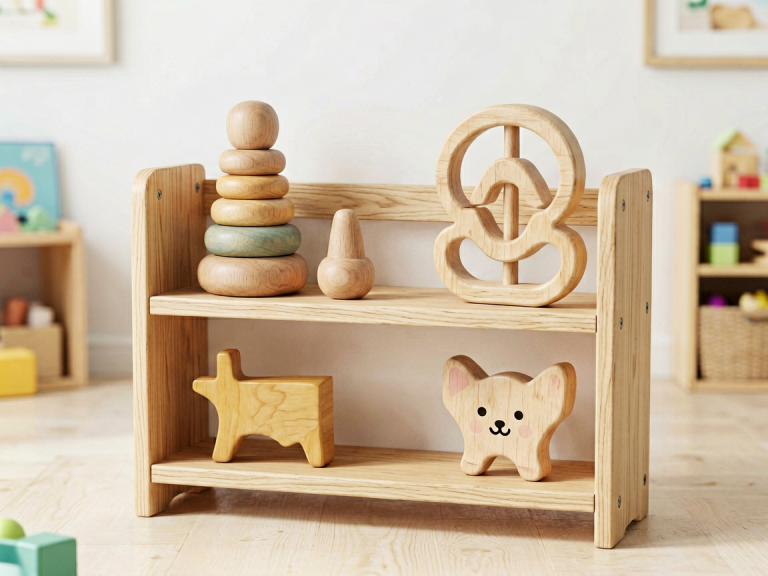
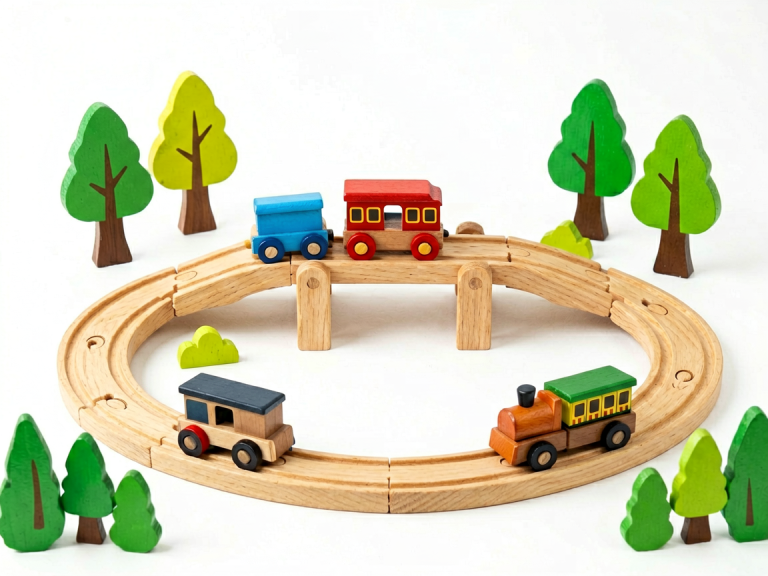
- Offer open-ended materials. Simple toys like blocks, dolls, dress-up clothes, kitchen sets, and art supplies spark more creativity than battery-operated, single-purpose toys. A costume bin with scarves, hats, and old adult clothes allows endless role variations.
- Provide unstructured time. In a world of scheduled activities, six-year-old girls need generous blocks of unscheduled time to immerse themselves in their imaginary worlds. Rushing from lesson to lesson can stifle the deep engagement that makes pretend play so valuable.
- Observe and listen without interrupting. Adults often want to “teach” during play, but the learning happens best when the child leads. A parent can sit nearby and occasionally offer a prop or a simple question (“What does the dragon need to be happy?”) but should resist correcting or directing.
- Introduce real-world contexts. A trip to the grocery store, a visit to the doctor, or watching a construction site can fuel new pretend scenarios. After such outings, encourage the child to act out what she saw. This connects her play to actual knowledge about the world.
- Read stories together and then play them out. Books are fantastic springboards for pretend play. After reading a fairy tale, a six-year-old girl might want to reenact it or create a sequel. This blends literacy and imagination seamlessly.
- Embrace mess and noise. Pretend play is often chaotic. Pillows become mountains, blankets become tents, and the living room becomes a castle. Allowing controlled mess communicates to the child that her imagination is valued.
Conclusion: The Serious Work of Play
It is a mistake to view pretend play as a trivial pastime that must be replaced by “real learning” as a child grows. For a six-year-old girl, the boundary between play and learning is not a line but a permeable membrane. Every time she puts on a costume, invents a dialogue, or resolves a pretend conflict, she is rehearsing the complex skills she will need as a student, a friend, a daughter, and eventually an adult. The cognitive, social, emotional, and creative benefits are not just nice extras—they are foundational. As parents, educators, and caregivers, our role is not to interrupt this magic but to protect it. By providing time, space, and a few simple props, we give six-year-old girls the greatest gift: the freedom to build their own worlds, and in doing so, to build themselves. So next time you hear the words, “Let’s pretend…,” listen closely. That is the sound of a mind at work, a heart growing, and a future unfolding.