A Parent’s Playbook: Nurturing Learning at Home for Your 5-Year-Old
Introduction
The age of five is a magical window in a child’s development. It is a time when curiosity bursts forth like dandelions in spring, when questions tumble out faster than answers can keep up, and when the foundations of lifelong learning are laid. As a parent, you are your child’s first and most important teacher. But the idea of “teaching” a five-year-old at home can feel daunting—especially if you worry about structure, curriculum, or keeping up with school standards. The truth is, you do not need a classroom, a whiteboard, or a teaching degree. What you need is intention, patience, and a willingness to follow your child’s lead. This guide will walk you through practical, research-backed strategies to support your five-year-old’s learning at home—turning everyday moments into rich educational opportunities while preserving the joy and wonder of early childhood.
—
Creating a Learning-Friendly Home Environment
Before diving into specific activities, it is essential to set the stage. A five-year-old learns best when the environment feels safe, organized, and full of invitations to explore. You don’t need a dedicated homeschool room; a corner of the living room or a small table in the kitchen works beautifully.
Designate a “Yes” Space
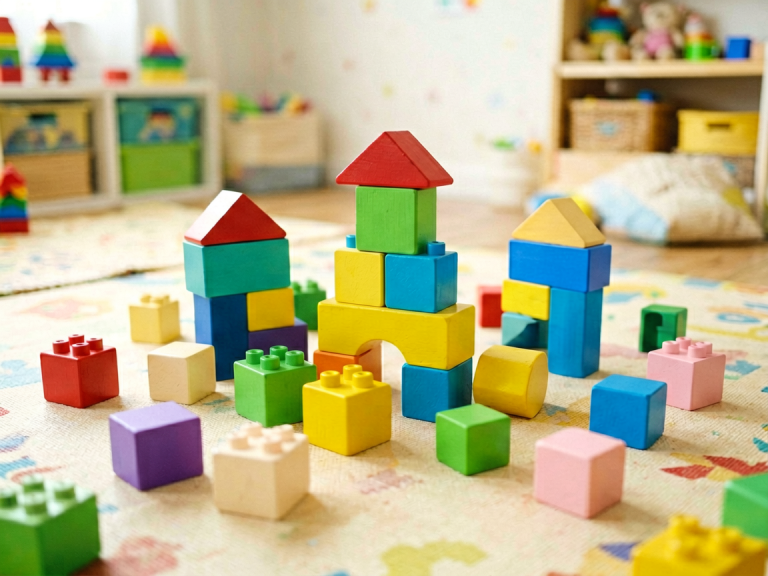
Choose a low-traffic area where your child can access materials independently. Place a low shelf or basket with age-appropriate books, puzzles, crayons, paper, scissors (blunt-tipped), and a few open-ended toys like blocks or play dough. Rotate items weekly to keep interest fresh. The key is to make learning materials visible and attainable—when a child can reach for a book or a counting game without asking, they develop autonomy and intrinsic motivation.
Establish Predictable Routines
Five-year-olds thrive on rhythm. A simple daily structure—not a rigid schedule—gives them a sense of security. For example: breakfast, followed by 20 minutes of free play, then a “learning time” (15–20 minutes of a guided activity), outdoor time, lunch, quiet time, and another short learning window in the afternoon. Keep sessions short; a five-year-old’s attention span is typically about 10 to 15 minutes for focused tasks. Follow their cues—if they are engaged, stretch it; if they are fidgeting, stop. Learning at home should never feel like a chore.
Minimize Distractions
Turn off the television and put away phones during learning times. Background noise can overload a young child’s developing executive function. Instead, play soft instrumental music or enjoy silence—silence itself is a learning tool that fosters concentration and creative thinking.
—
Building Literacy Skills Through Everyday Moments
Literacy for a five-year-old is not about drilling sight words or completing worksheets. It is about connecting sounds, symbols, and stories to real life. The goal is to build a love for language, not to create a fluent reader overnight.
Read Aloud—Every Day, Everywhere
Make read-aloud time non-negotiable. Choose a mix of picture books, rhyming stories, nonfiction, and classic tales. While reading, pause to ask open-ended questions: “What do you think will happen next?” or “Why do you think the bear is sad?” Point to words occasionally so your child begins to understand that text carries meaning. Let your child “read” the pictures, retell the story from memory, or finish a familiar sentence. Children who are read to daily develop larger vocabularies and stronger comprehension skills.
Play with Sounds and Letters
Phonological awareness—the ability to hear and manipulate sounds—is a stronger predictor of reading success than knowing the alphabet at age five. Play rhyming games (“Can you think of a word that rhymes with ‘cat’?”), segment words into sounds (“What’s the first sound in ‘dog’?” – /d/), and clap out syllables in names or objects. Use magnetic letters on the fridge to spell simple, meaningful words like “MOM,” “DAD,” or “LOVE.” Do not force letter writing; instead, offer chalk on the driveway, finger paints, or a salt tray for tracing shapes and letters. Fine motor strength develops through play dough, cutting, and climbing, not through handwriting drills.
Label the World
Write simple labels for objects around the house: “door,” “window,” “couch,” “sink.” Your child will absorb these words naturally through repeated exposure. Encourage “environmental print” reading—stop at stop signs, read cereal boxes at breakfast, and notice logos on trucks. This shows that reading is not a school subject but a part of life.
—
Making Math Meaningful and Fun
Mathematics for a five-year-old is about patterns, quantity, spatial relationships, and problem-solving—not memorizing facts. The best math lessons happen in the kitchen, on a walk, or during play.
Count Everything
Count steps as you go up the stairs, count blueberries into a bowl, count how many claps you can do in 10 seconds. Use one-to-one correspondence: touch each object as you count. Gradually introduce “how many?” questions and compare quantities (“Do we have more spoons or forks?”). Board games like Chutes and Ladders or simple card games (Go Fish) naturally teach counting, subitizing (recognizing small quantities at a glance), and turn-taking.
Explore Shapes and Patterns
Point out circles, squares, triangles, and rectangles in the environment—the clock is round, the window is a rectangle. Use colored blocks to create patterns (red, blue, red, blue) and ask your child to extend the pattern. Cooking together offers rich math: measuring cups teach fractions intuitively, and setting the timer builds awareness of time.
Incorporate Hands-On Manipulatives
Avoid worksheets for math at this age. Instead, use beans, buttons, small toys, or LEGO bricks for counting and grouping. Play “store” with pretend money. Sorting laundry by color or size is math. Building with blocks develops spatial reasoning and early geometry. The more concrete the experience, the deeper the understanding.
—
Encouraging Scientific Thinking and Nature Connection
Five-year-olds are natural scientists—they observe, question, and experiment constantly. Your job is to nurture that instinct without overwhelming them with facts.
Ask “I Wonder” Questions
Instead of giving answers, model curiosity. “I wonder why the leaves change color?” “I wonder where this ant is going?” Then, explore together: look up a simple book from the library, watch a short video, or go outside to observe. Simple experiments—sink or float in the bathtub, mixing water colors, planting a bean in a cup—are powerful. Let your child make predictions, test them, and talk about what happened. Failure is part of the process; if the bean doesn’t sprout, ask, “What could we try differently?”
Spend Time Outdoors Daily
Nature is the richest classroom. Collect rocks, leaves, and sticks; sort them by size, color, or texture. Lie on the grass and watch clouds. Dig in the dirt. A five-year-old’s brain develops best through sensory-rich, unstructured outdoor play. While outside, you can sneak in early biology: “That’s a robin—see her red breast? She’s looking for worms.” No need for formal lessons; simply name what you see and let your child lead the investigation.
—
Fostering Creativity and Self-Expression
Art, music, and imaginative play are not extras—they are core to cognitive and emotional development. A five-year-old who builds a spaceship out of cardboard boxes is practicing engineering, storytelling, and perseverance.
Provide Open-Ended Art Materials
Stock up on crayons, markers, watercolors, play dough, glue sticks, old magazines, and recyclables. Avoid coloring books—they limit creativity. Instead, give a blank sheet of paper and say, “Tell me a story with your picture.” Display their artwork on the wall; this communicates that their ideas matter. Process, not product, is the goal. If the picture is a mess of scribbles, ask, “Can you tell me about your drawing?” and listen with genuine interest.
Encourage Dramatic Play
Dress-up clothes, a play kitchen, puppets, or a simple fort made of blankets—these are the tools of social learning. Through pretend play, children practice negotiation, empathy, and problem-solving. Join in occasionally but let them direct the play. You might be surprised how many mathematical and literacy concepts emerge naturally from a “restaurant” or “vet clinic” game.
—
Supporting Social-Emotional Growth
Learning at home is not just about academics; it is about helping your child manage feelings, build relationships, and develop resilience. A five-year-old may still struggle with impulse control, sharing, or handling disappointment—and that is perfectly normal.
Name Emotions and Practice Calm-Down Strategies
Read books about feelings (e.g., “The Color Monster” by Anna Llenas) and use feeling charts. When your child is frustrated, help them label the emotion: “I see you are angry because the tower fell down. That is frustrating.” Then teach a simple calm-down strategy: take three deep breaths, hug a stuffed animal, or squeeze a stress ball. Model your own calm-down techniques (“I am feeling impatient, so I will take a deep breath”). Emotional regulation is a skill that develops over years.
Prioritize Unstructured Play with Peers
If possible, arrange playdates or outdoor meetups. Social learning at home can be supplemented with sibling interaction, but peer play teaches negotiation, sharing, and conflict resolution in ways that adult-child interactions cannot. Let children work out minor disagreements without stepping in immediately; they learn resilience and compromise through trial and error.
—
The Role of Screen Time and Technology
Screens are a reality of modern life, but for a five-year-old, less is more. The American Academy of Pediatrics recommends no more than one hour per day of high-quality programming for children this age, with co-viewing by a parent.
Choose Interactive, Slow-Paced Content
Avoid fast-paced cartoons or apps that overstimulate the brain. Instead, opt for show like “Daniel Tiger’s Neighborhood” or “Sesame Street,” which model social skills and academic concepts. Engage with your child during screen time: pause, ask questions, and connect the show to real life. Better yet, prioritize audio stories (podcasts or audiobooks) that build listening comprehension without visual overstimulation.
Replace Screens with Hands-On Alternatives
When your child asks for a tablet, have a basket of engaging alternatives ready: puzzles, magnetic tiles, a simple board game, or a set of watercolors. Often, the request for a screen is really a request for attention. Offer connection first—a snuggle, a walk, or a joint activity—and screens become less appealing.
—
Partnering with Your Child’s School or Preschool
If your child attends a formal program, stay in communication with teachers. Ask about the themes they are exploring in class and reinforce them at home. For example, if they are learning about fall, go on a leaf hunt and talk about seasonal changes. If they are working on letter sounds, play matching games at home. Consistency between home and school settings helps children feel secure and reinforces learning.
Do not feel pressured to replicate the classroom at home. Your role is complementary: you provide the warm, individualized environment where your child can practice skills in low-stakes, loving ways. Trust your instincts. You know your child best.
—
Conclusion: Embrace the Journey
Supporting learning at home for a five-year-old is not about checking boxes or accelerating milestones. It is about being present—putting down your phone, getting on the floor, and seeing the world through their eyes. Some days you will feel like a superhero parent; other days you will feed them cereal for dinner and call it a win. Both are fine. Children learn more from your genuine interest and enthusiasm than from any perfect lesson plan. Read one extra story. Build a fort. Count the stars. Let them be five. In doing so, you are giving them the greatest educational gift of all: the knowledge that learning is joyful, that mistakes are okay, and that they are loved unconditionally. And that, far more than any skill, will carry them through a lifetime of discovery.