A Parent’s Guide to Supporting Learning at Home for 6‑Year‑Olds: Nurturing Curiosity, Building Foundations, and Making Joyful Moments Count
Title: A Parent’s Guide to Supporting Learning at Home for 6‑Year‑Olds: Nurturing Curiosity, Building Foundations, and Making Joyful Moments Count
—
Your six-year-old is a whirlwind of questions, energy, and emerging independence. At this age, children are transitioning from the playful world of preschool into the more structured environment of formal schooling. They are learning to read, write, and count, but they still learn best through hands‑on experiences, imagination, and connection with the people they trust most — you. As a parent, you might wonder how to support your child’s learning without turning your home into a classroom or adding stress to your daily routine. The good news is that effective home learning for a six‑year‑old looks less like drill sheets and more like baking cookies, building with blocks, reading bedtime stories, and asking “what if” questions. This guide will walk you through practical, research‑based strategies to create a rich learning environment at home, strengthen foundational <a href="https://www.playlearningguide.com/category/skills/”>skills, and nurture a lifelong love of discovery — all while preserving the precious bond between you and your child.
—
Understanding the 6‑Year‑Old Learner
Before diving into activities, it helps to know what is happening inside your child’s mind and body. Six‑year‑olds are typically in what developmental psychologist Jean Piaget called the “preoperational” stage, moving toward “concrete operational” thinking. They still think very concretely — they understand things they can see, touch, and experience directly. Abstract ideas like “tomorrow” or “sharing” can be tricky. Their attention span is short, often around 10 to 15 minutes for a seated task, but they can concentrate much longer when they are genuinely interested or engaged in play. Emotionally, they are learning to manage big feelings, but meltdowns over a broken crayon are normal. They crave routine and predictability, yet they also need choices to feel a sense of control.
Recognizing these traits helps you set realistic expectations. Instead of expecting your child to sit still for a 30‑minute worksheet, you can design short, interactive learning bursts that match their natural rhythm. Remember: learning happens everywhere — in the kitchen, on a walk, during bath time, and in the five minutes before dinner. Your role is not to “teach” in the formal sense but to facilitate discovery by being present, asking open‑ended questions, and celebrating effort over perfection.
—
Creating a Conducive Home Learning Environment
A supportive learning space does not need to be elaborate. What matters most is consistency, accessibility, and minimal distraction. Designate a small area — a corner of the living room, a child‑sized table, or even a lap desk on the couch — that your child associates with calm, focused activity. Keep a basket of basic supplies nearby: crayons, child‑safe scissors, glue, paper, a few books, and simple puzzles. Rotate materials weekly to keep curiosity alive.
Equally important is emotional safety. A child who is afraid of making mistakes will not take learning risks. When your child writes a word backwards or counts “1, 2, 3, 5,” instead of correcting sharply, say something like: “I love how you tried that! Let’s count together and see what happens.” This builds resilience. Also, establish a simple daily rhythm — for example, after school snack, then 15 minutes of free reading or a math game, then outdoor play. Predictability reduces resistance and helps children feel secure enough to explore.
—
Integrating Learning into Daily Routines
You do not need extra time in your day; you only need to see the learning opportunities that already exist. Here are three easy ways to embed academics into everyday life:
1. In the kitchen. Cooking is a powerhouse of learning. Measuring flour teaches fractions and volume. Counting eggs reinforces one‑to‑one correspondence. Reading a recipe builds pre‑reading skills (print awareness) and sequencing. Ask your child: “If we need two cups of flour, and we already put in one, how many more do we need?” That is early addition.
2. On a walk. Nature is the best classroom. Spot letters on street signs, count the number of red cars, compare the sizes of leaves, or discuss why the squirrel is hiding nuts. These mini‑lessons are effortless and memorable.
3. During chores. Sorting laundry by color or size is a classification exercise. Setting the table practices one‑to‑one correspondence (one plate, one fork, one napkin). Even dusting can involve “top” and “bottom,” “left” and “right” — spatial vocabulary central to geometry.
By weaving learning into routines, you show your child that knowledge is not confined to school hours — it is part of life.
—
Building Foundational Literacy Skills
Reading is the cornerstone of all future learning. At age six, most children are decoding simple words, but they still need plenty of practice to build fluency and comprehension. Your home literacy program does not need a curriculum; it needs three pillars: read aloud, talk about stories, and playful writing.
Read aloud every day — even if your child can already read a little. Choose books with rich vocabulary, rhyme, and repetition. While reading, pause to ask questions: “What do you think will happen next?” “Why did the character feel sad?” This builds inference and prediction skills. Let your child hold the book, turn pages, and “read” the pictures.
Phonics and word play can be fun. Practice letter sounds with games like “I Spy” (“I spy something that starts with /b/…”). Make letter magnets on the fridge and form simple words. Use sidewalk chalk to write words and then hop from one to another. The key is to keep it playful — avoid drilling flashcards for more than a few minutes.
Writing should feel like a natural extension of play. Provide a “writing basket” with blank cards, envelopes, sticky notes, and old magazines. Encourage your child to write a grocery list, a thank‑you note, or a short story about their stuffed animal. Do not worry about spelling errors; invented spelling is a healthy step toward conventional writing. Praise the message, not the mechanics.
—
Developing Early Numeracy Through Play
Math anxiety often starts early, but you can prevent it by making numbers a source of joy. Six‑year‑olds need to understand numbers as quantities, not just symbols. Here are three playful approaches:
1. Board games and card games. Games like Snakes and Ladders teach number sequencing and counting. “Go Fish” builds number recognition and matching. Simple dice games involve adding small numbers. The social nature of games also teaches turn‑taking and good sportsmanship.
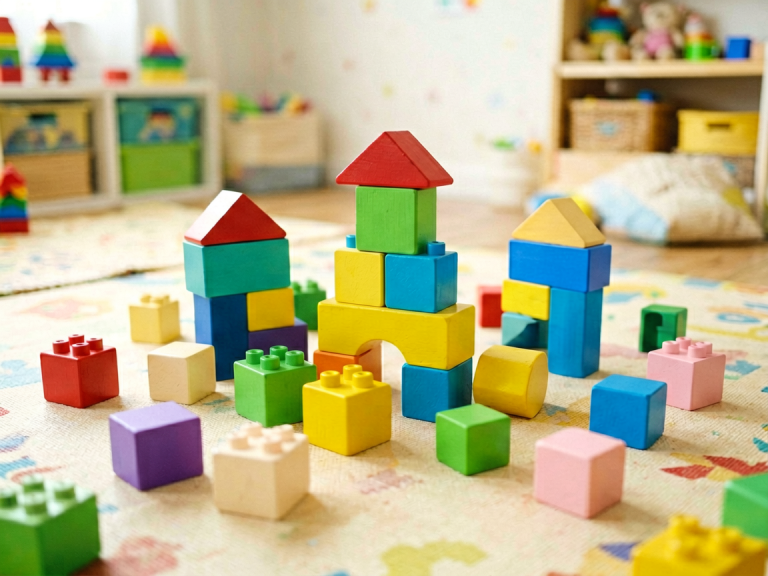
2. Building and construction. Blocks, LEGO, and magnetic tiles are perfect for spatial reasoning, pattern recognition, and early geometry. Ask your child: “How many blocks did you use to build that tower?” “Can you make a pattern: red, blue, red, blue?” “What shape is the roof?”
3. Real‑world math. Use a ruler to measure toys. Sort coins by value (even if the numbers are not fully understood). Compare heights: “Who is taller, you or your teddy bear?” Let your child help count money in your wallet (and maybe earn a small allowance for small purchases). These experiences give math a tangible context.
—
Encouraging Curiosity, Creativity, and Problem‑Solving
Beyond literacy and numeracy, six‑year‑olds need to develop what educators call “executive function” skills: the ability to plan, focus attention, remember instructions, and juggle multiple tasks. You can nurture these through open‑ended activities.
Provide materials that invite creation. A cardboard box can become a castle, a car, or a time machine. Offer play dough, clay, watercolors, and recycled materials. When your child builds something, ask: “Tell me about your creation.” Avoid giving too many instructions; let them lead.
Ask “why” and “how” questions instead of “what.” For example, after a science experiment like mixing baking soda and vinegar, ask: “Why do you think it bubbled?” “What would happen if we used lemon juice instead?” This teaches the scientific method in its simplest form.
Puzzles and brain teasers — jigsaw puzzles, tangrams, simple mazes, and memory games — all strengthen focus and logical thinking. Even a 10‑minute puzzle before bed can make a difference.
—
Social‑Emotional Learning at Home
Learning is not just cognitive; it is deeply emotional. A child who feels secure, valued, and understood will have the confidence to tackle academic challenges. Here is how you can support social‑emotional growth at home:
Validate feelings. When your child is frustrated with a tricky math problem, say: “I see you are feeling frustrated. That is okay. Let’s take a deep breath and try a different approach.” This teaches self‑regulation.
Practice empathy through stories. After reading a book, discuss how the characters felt. “How do you think the little rabbit felt when he lost his toy?” This builds theory of mind — the ability to understand others’ perspectives.
Teach problem‑solving scripts. When siblings argue, use a simple framework: “What is the problem? What are some solutions? Which one works best for both of you?” Role‑playing common social scenarios (sharing, taking turns, apologizing) helps children practice before real situations occur.
Celebrate effort, not outcome. Instead of “You are so smart!” say “I noticed how hard you worked on that puzzle. You kept trying even when it was hard.” This fosters a growth mindset — the belief that abilities can improve with practice.
—
Balancing Screen Time and Active Learning
Screens are part of modern home learning, but they must be used intentionally. The American Academy of Pediatrics recommends that children aged 2 to 5 have no more than one hour of high‑quality programming per day, and for older children, parents should set consistent limits. For a six‑year‑old, aim for no more than one hour of educational screen time per day, and co‑view whenever possible.
Choose apps and shows that are interactive, slow‑paced, and designed for learning (e.g., PBS Kids, Khan Academy Kids, or reading apps like Epic). Avoid passive consumption or games with flashy rewards that overstimulate. After screen time, always have a “decompression” activity — talking about what they learned, drawing a picture related to the content, or playing offline.
Remember that the best learning for a six‑year‑old is active, sensory, and relational. No app can replace building a fort, planting a seed, or having a conversation with you. Use screens as a supplement, not a substitute.
—
Staying Connected with School and Teachers
Home learning is most effective when it complements what happens in the classroom. Communicate regularly with your child’s teacher — even a quick email every two weeks can help you align your home activities with school goals. Ask: “What topics are you covering next? Are there specific sight words or number concepts we can practice at home?” Many teachers provide weekly newsletters or learning calendars.
Also, share your observations with the teacher. If you notice your child struggling with phonics but loving puzzles, the teacher might suggest targeted support. Collaboration between home and school creates a consistent, supportive ecosystem for your child.
—
Conclusion
Supporting a six‑year‑old’s learning at home does not require a degree in education or a dedicated classroom. It requires your presence, your patience, and a willingness to see the world through your child’s curious eyes. Every shared story, every game of dominoes, every conversation about why the sky is blue is planting a seed. Some seeds will sprout immediately; others will grow slowly. That is not only okay — it is natural.
Your most powerful tool is your relationship. When your child feels that learning is a safe, joyful, and shared adventure, they will carry that attitude into the classroom and into life. So take a deep breath, trust your instincts, and remember: you are already exactly the guide your child needs.