Play Activities for 6-Month-Olds in Daycare: A Comprehensive Guide for Caregivers
Introduction: Why Play Matters at Six Months
The sixth month of life marks a remarkable developmental milestone. At this age, infants transform from passive observers into active explorers of their world. They begin to sit with support, reach deliberately for objects, transfer items from one hand to another, and respond to familiar faces with babbling and smiles. For daycare providers, understanding the power of play at this stage is not merely a matter of keeping babies entertained—it is an essential component of their cognitive, physical, social, and emotional growth.
In a daycare setting, where multiple infants require simultaneous attention, designing play activities that are both developmentally appropriate and logistically feasible can be challenging. However, with thoughtful planning, even the busiest childcare environment can become a rich landscape for discovery. This article provides a detailed, research-backed guide to play activities specifically tailored for six-month-olds in daycare, organized by developmental domains. Each activity includes clear objectives, materials, step-by-step instructions, and safety considerations to ensure that every moment of play supports the infant’s journey while respecting the realities of group care.
—
Sensory Play: Awakening the Senses
At six months, babies are sensory scientists. They learn through touching, tasting, hearing, seeing, and smelling. Sensory play not only stimulates neural connections but also helps infants regulate their own arousal levels. In a daycare, sensory activities should be easy to set up, clean, and supervise.
Tummy Time with Textured Mats
Tummy time remains crucial at six months, as it strengthens neck, shoulder, and back muscles needed for crawling. To make it engaging, place a variety of textured mats on the floor—one with soft fleece, another with crinkly fabric, a third with smooth satin. Lay the baby on these surfaces so that they feel different textures against their skin. Add a low-hanging mirror or a colorful toy just out of reach to encourage lifting the head and reaching.
*Materials:* Textured play mats, a non-breakable mirror, soft toys.
*Safety:* Always supervise tummy time. Ensure mats are clean and free of loose threads. Limit each session to 3–5 minutes, multiple times a day.
*Developmental benefits:* Strengthens core muscles; tactile discrimination; visual tracking.
Water Play in a Shallow Tray
Water fascinates six-month-olds. Fill a shallow, plastic tray (like a baking pan) with about one centimeter of lukewarm water. Add a few floating toys—rubber ducks, plastic cups, or sponges. Place the tray on a towel on the floor. Let the baby sit with support (or lie on their tummy) and splash, pat, and grab. The caregiver can demonstrate pouring water from one cup to another, but the baby’s own experimentation is the goal.
*Materials:* Shallow tray, water, floating toys, towel, waterproof bib (optional).
*Safety:* Never leave a baby unattended near water. Use only a tiny amount of water. Check water temperature with your wrist.
*Developmental benefits:* Cause-and-effect learning; hand-eye coordination; sensory integration.
Edible Sensory Bins
For six-month-olds who are starting solids, edible sensory bins are a safe and delightful option. Use a large, shallow container and fill it with cooked, cooled oatmeal or plain yogurt dyed with natural food coloring (e.g., beet juice for pink). Add a few safe utensils—a silicone spoon, a small cup. The baby can squish, smear, and taste (since all materials are edible). Ensure that the baby is in a high chair or seated with support, and cover the floor with a drop cloth.
*Materials:* Cooked oatmeal or yogurt, natural food coloring, silicone utensils, drop cloth.
*Safety:* Ensure no choking hazards. Remove any jewelry from caregiver’s hands. Clean up promptly to avoid slipping.
*Developmental benefits:* Oral motor exploration; fine motor skills; early self-feeding practice.
—
Gross Motor Play: Building Strength and Coordination
Gross motor development at six months includes rolling, sitting, and beginning to pivot on the belly. Daycare providers can facilitate these milestones through structured and unstructured movement activities.
Assisted Sitting with Interesting Objects
To help babies develop independent sitting, position them in a “tripod sit” (leaning forward on their hands) or provide a supportive Boppy pillow. Place a basket of engaging objects just beyond their reach—wooden rings, soft blocks, rattles. Encourage the baby to lean, twist, and reach for the objects. The caregiver can sit behind or beside the baby to provide spotting and encouragement.
*Materials:* Supportive cushion, low basket of safe toys.
*Safety:* Ensure the baby’s head is not at risk of falling backward. Do not use pillows that could suffocate. Stay within arm’s reach.
*Developmental benefits:* Core strength; balance; trunk rotation.
Rolling Games with Music
Rolling is a major achievement at six months. Place two mats side by side: one soft, one slightly harder (like a yoga mat). Lay the baby on their back on the soft mat. Place a musical toy or a caregiver’s face on one side and call the baby’s name. Gently help the baby roll to their side, then to their tummy. Sing a song—“Roll, roll, roll your baby, gently down the mat”—and repeat on the other side. Over time, the baby will initiate the roll themselves.
*Materials:* Two contrasting mats, a musical toy (e.g., a wind-up music box).
*Safety:* Always support the baby’s head during rolling. Do not force the movement. Stop if the baby shows distress.
*Developmental benefits:* Coordination; spatial awareness; auditory localization.
Obstacle Course for Pre-Crawlers
Create a simple, safe obstacle course using soft play cushions, foam wedges, and a tunnel made from a large cardboard box (cut open at both ends, edges taped). Place the baby on their tummy at one end. Encourage them to reach, scoot, or roll to the other end where a caregiver waits with a favorite toy. This activity can be done with one baby at a time or in small groups with multiple caregivers.
*Materials:* Soft cushions, foam wedges, cardboard tunnel, toys.
*Safety:* Ensure all edges of the box are smooth and taped. Keep the course short (2–3 feet). Never leave a baby unsupervised inside a tunnel.
*Developmental benefits:* Motivation to move; problem-solving; spatial navigation.
—
Social and Emotional Play: Building Bonds and Communication
Six-month-olds are social beings. They smile at familiar faces, imitate sounds, and show preferences for certain caregivers. Social play in daycare helps infants form secure attachments and develop early communication skills.
Peek-a-Boo with Variations
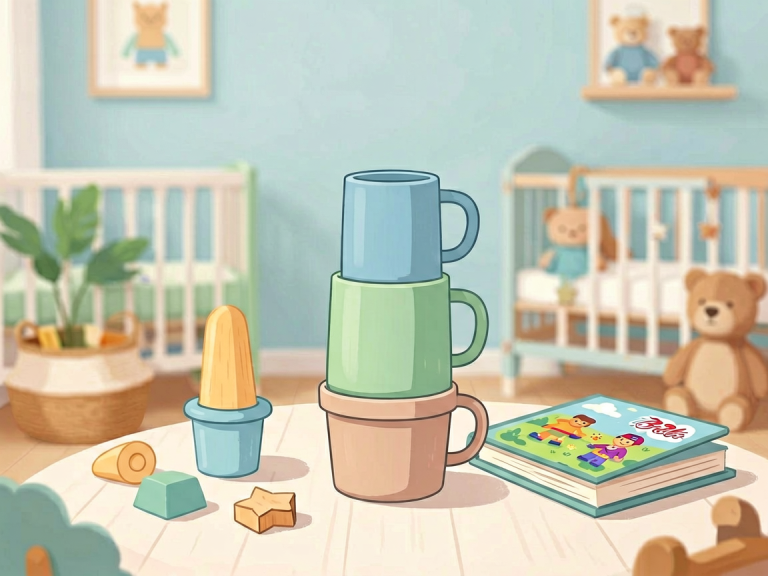
Peek-a-boo is a classic for a reason. At six months, babies begin to understand object permanence—the idea that something exists even when hidden. Play peek-a-boo with your own hands, a cloth, or a soft toy. For variety, hide a toy under a cup and lift it with a dramatic “peek-a-boo!” Encourage the baby to reach for the cup or push it away. Repeat multiple times, allowing the baby to anticipate the reveal.
*Materials:* A lightweight cloth, plastic cup, or a small blanket.
*Safety:* Ensure the cloth is lightweight and breathable. Never cover the baby’s face.
*Developmental benefits:* Object permanence; social anticipation; turn-taking.
Mirror Play with Expressive Faces
Place an unbreakable mirror on the floor at an angle (leaning against a wall). Lay the baby in front of it or seat them with support. Sit behind the baby and make exaggerated facial expressions—happy, surprised, sad, silly. Point to the baby’s reflection and say their name. Encourage them to pat the mirror. Over time, the baby will start to imitate facial expressions.
*Materials:* Unbreakable acrylic mirror (sold for infants).
*Safety:* Ensure the mirror is stable and cannot tip over. Clean it regularly.
*Developmental benefits:* Self-awareness; emotional recognition; social imitation.
Group Singalong with Actions
Gather two or three babies in a circle (each seated with support or lying on their backs). Sing simple songs with actions, such as “Itsy Bitsy Spider” or “Wheels on the Bus.” Use gentle hand-over-hand movements to help the babies clap or do the motions. Even if they cannot participate fully, they benefit from watching the caregiver’s mouth, hearing the rhythm, and feeling the vibration of the group.
*Materials:* None required.
*Safety:* Keep volume moderate; avoid loud noises that could startle infants.
*Developmental benefits:* Auditory processing; rhythm; group bonding.
—
Cognitive and Language Play: Sparking Curiosity
Cognitive development at six months involves cause and effect, object permanence, and early problem-solving. Language development includes babbling, recognizing names, and responding to tone.
Cause-and-Effect Toys (DIY and Store-Bought)
Provide toys that respond to the baby’s actions: a rattle that makes noise when shaken, a ball that lights up when tapped, a pop-up toy that springs up when a button is pressed. For a DIY version, fill a sealed plastic bottle with rice or beads (lid super-glued) to create a shaker. Demonstrate how to shake it, then let the baby try. Another idea: attach a silicone teether to a string and tie it to a high chair tray; the baby pulls and the teether dangles.
*Materials:* Rattles, light-up toys, sealed sensory bottles, silicone teethers with strings.
*Safety:* Ensure all parts are securely attached and cannot be swallowed. No strings longer than 12 inches (strangulation risk).
*Developmental benefits:* Understanding cause and effect; fine motor control; sustained attention.
Treasure Basket Exploration
A treasure basket is a low-sided basket filled with natural, safe, and varied objects: a wooden spoon, a metal whisk, a soft brush, a fabric ball, a clean pine cone, a silicone cup. Place the baby in a seated position of support and allow them to explore the basket freely. The caregiver sits nearby, narrating without interfering: “You picked up the wooden spoon. It feels smooth. You are tapping it on the floor.”
*Materials:* Low basket of safe household objects (no small parts, no sharp edges).
*Safety:* Inspect each object for splinters, loose parts, or choking hazards. Supervise closely.
*Developmental benefits:* Sensory discrimination; curiosity; independent play.
Name Recognition Game
At six months, babies begin to recognize their own name. During play, frequently say each baby’s name in a warm, excited tone. Combine it with a gentle touch: “Emma! Look, Emma, here comes the red ball!” Use a mirror game: “Who is that? That is Liam!” Also, use name cards with photos of each baby and point to them during circle time.
*Materials:* Photo cards, mirror.
*Safety:* None specific.
*Developmental benefits:* Identity formation; auditory discrimination; social connection.
—
Safety Considerations for Daycare Play
When implementing play activities for six-month-olds in a group setting, safety must be paramount. Here are key guidelines:
- Supervision: Never leave a baby unattended, especially during tummy time, water play, or when using any prop. Maintain a ratio of at least one caregiver per three infants.
- Choking hazards: Avoid toys smaller than a toilet paper roll inner diameter. Regularly inspect toys for loose parts. Remove any broken items immediately.
- Surface safety: Use soft mats or carpeted areas for all floor play. Ensure no hard or sharp edges are nearby. Keep pathways clear.
- Cleanliness: Babies explore with their mouths. All toys and surfaces should be sanitized daily. Wash hands before and after each activity.
- Allergies: For edible sensory play, confirm with parents any food allergies. Use only common allergens like oatmeal or yogurt only after parental approval.
- Temperature: Keep the room at a comfortable 68–72°F (20–22°C). Avoid drafts. Water for sensory play should be lukewarm, not hot.
- Individual differences: Some babies may be delayed or have medical conditions (e.g., torticollis, reflux). Adapt activities accordingly, and consult with parents or a pediatric therapist if needed.
—
Conclusion: Play as the Foundation of Learning
For six-month-olds in daycare, play is not a luxury—it is the primary vehicle through which they make sense of their world. Each sensory exploration, each roll, each peek-a-boo game strengthens neural pathways that will support future learning in language, math, and social relationships. By providing a variety of safe, developmentally appropriate activities, daycare providers become partners in the baby’s most critical period of growth.
The activities outlined above are designed to be flexible, requiring minimal materials and preparation. They can be rotated throughout the week to maintain novelty, and many can be done simultaneously with small groups when multiple caregivers are present. Remember that the most important element is the caregiver’s warm, responsive interaction—your voice, your smile, your gentle guidance are the most powerful toys in the room.
As you implement these play activities, observe each baby’s cues. Some will love the water tray; others may prefer the quiet treasure basket. Follow their lead, celebrate their small victories, and trust that every moment of purposeful play is building a stronger, smarter, and happier child. In the busy daycare environment, these simple, intentional activities transform routine care into a rich foundation for lifelong learning.