The Power of Open-Ended Play: Activities That Inspire 7-Year-Olds to Learn, Create, and Grow
Introduction: Why Open-Ended Play Matters for Seven-Year-Olds
At the age of seven, children stand at a fascinating crossroads of development. They have left behind the purely sensory-driven explorations of toddlerhood and are now entering a phase of greater cognitive sophistication, social awareness, and physical coordination. Yet they are not quite ready for the rigid structures of formal learning that dominate later childhood. This is precisely why open-ended play activities—those with no predetermined outcome, no fixed set of rules, and no single “correct” way to engage—are so crucial for this age group.
Open-ended play allows seven-year-olds to harness their growing abilities while preserving the joy of discovery. Unlike closed-ended activities such as puzzles with a specific solution or board games with strict rules, open-ended play invites children to take the lead, make decisions, solve problems creatively, and collaborate with peers. It builds resilience, fosters imagination, and nurtures a sense of agency that will serve them well in school and beyond. In a world increasingly dominated by screens and structured extracurriculars, rediscovering the value of open-ended play is not just a nostalgic indulgence—it is a developmental necessity.
In this article, we will explore a variety of open-ended play activities specifically designed for seven-year-olds. Each activity can be adapted to different settings—at home, in a classroom, or outdoors—and requires minimal adult intervention. The key is to provide the materials, the space, and the freedom, and then step back and watch the magic unfold.
The Building Blocks of Creativity: Construction and Engineering Play
Blocks, Bricks, and Beyond
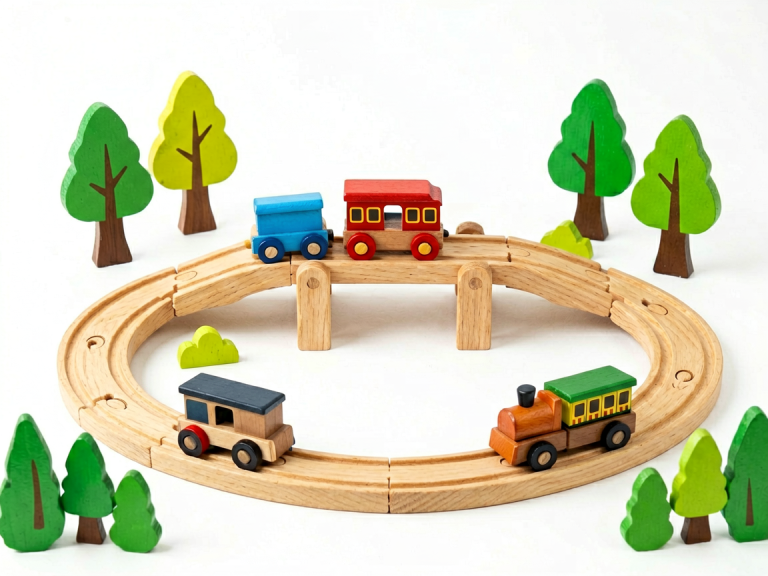
Seven-year-olds have the fine motor skills and spatial reasoning to engage deeply with construction play. While classic wooden blocks remain a staple, consider expanding the repertoire to include a wider variety of materials: magnetic tiles, interlocking plastic bricks (like LEGO or Mega Bloks), cardboard tubes, empty containers, and even natural materials like sticks and stones. The goal is not to build a specific model from instructions but to create whatever the child imagines.
For instance, you might scatter a large collection of recycled materials—egg cartons, toilet paper rolls, bottle caps, and fabric scraps—on a table and challenge the child to build a “machine that solves a problem.” There is no right or wrong answer. One child might create a contraption that “collects happiness,” while another builds a device for transporting marbles across the room. The open-ended nature of the task encourages trial and error, planning, and revision. As the child works, they develop critical thinking skills, learn about balance and stability, and gain confidence in their own ideas.
Loose Parts Play
The concept of “loose parts” originated in early childhood education, but it remains powerfully engaging for seven-year-olds. Loose parts are any materials that can be moved, combined, redesigned, and used in multiple ways. Think buttons, pebbles, pine cones, bottle corks, string, washers, wooden beads, and scraps of felt. Spread them out on a tray or a large mat and simply observe. Children might sort them by color or size, create patterns, build small sculptures, or use them as props for storytelling.
One particularly rich loose-parts activity is to create a “story bag.” Fill a cloth bag with a variety of unrelated items—a small shell, a key, a feather, a miniature car, a piece of shiny fabric. Ask the child to pull out three or four items and invent a story that connects them. The story can be told aloud, written down, or acted out. This activity not only sparks imagination but also develops language skills, narrative sequencing, and emotional expression. Because there are no rules about what the story must be, each retelling can be completely different.
Imaginative Worlds: Role-Play and Dramatic Play
The Blank Canvas of Dress-Up
Seven-year-olds are masters of pretend play, but their scenarios have become more complex than they were at age four or five. They can hold long-running narratives, assign multiple roles to themselves and their friends, and negotiate plot twists. Open-ended dress-up does not require elaborate costumes. A collection of scarves, hats, old shirts, and fabric remnants can transform an ordinary living room into a medieval castle, a spaceship, or an underwater kingdom.
To encourage deeper play, avoid suggesting specific scenarios. Instead, simply place the dress-up items within reach and let the child decide what world to inhabit. You might notice that a scarf becomes a cape, then a blanket, then a river in a make-believe landscape. The child is not just playing—they are rehearsing social roles, experimenting with language, and practicing empathy as they pretend to be a worried mother, a brave knight, or a curious scientist. For seven-year-olds, this kind of play also helps them process real-world experiences, such as a recent doctor’s visit or a new sibling.
Puppet Theater Without a Script
Puppets offer another powerful avenue for open-ended play. You do not need a professional puppet stage; a cardboard box with a cut-out window works perfectly. Provide a selection of hand puppets, finger puppets, or even simple sock puppets that the child can decorate themselves. Then, invite the child to put on a show. The key is that there is no assigned script, no audience expectation, and no critique of the performance.
The child might start with a familiar story and then veer off into wild improvisation. Or they might create an entirely original character and act out a problem they are grappling with, such as a conflict with a friend or a fear of the dark. In this safe, unstructured space, the child gains mastery over their emotions and experiences. They learn that their voice matters, and that they can shape a narrative from beginning to end. If a friend or sibling joins in, the play becomes a collaborative exercise in negotiation, compromise, and shared creativity.
Outdoor Adventures: Nature as an Open-Ended Playground
The Forest or Backyard as a Laboratory
Nature is the ultimate open-ended play environment. For a seven-year-old, a simple walk in the woods or time in the backyard can become a rich, self-directed learning experience. The adult’s role is to provide time, safety, and minimal guidance. A basket or bag for collecting treasures—acorns, interesting leaves, smooth stones, fallen feathers—can spark hours of investigation.
One structured but still open-ended outdoor activity is “nature mapping.” Give the child a piece of paper and a pencil, and ask them to draw a map of a small area, such as a ten-by-ten-foot patch of grass or a corner of the garden. They can mark where they find ant colonies, dandelions, spider webs, or interesting textures. The map does not need to be accurate or linear; it is a personal representation of what the child notices. Later, they can add to the map on a different day, creating a record of seasonal changes. This activity sharpens observation skills, encourages scientific thinking, and connects the child to the natural world in a deeply personal way.
Water and Sand: Timeless Open-Ended Materials
If you have access to a sandbox, a water table, or even a large plastic bin, you have an instant open-ended play station for a seven-year-old. Add scoops, cups, funnels, small vehicles, and natural objects like sticks and leaves. There is no goal other than exploration. The child might dig channels, build mountains, create dams, or mix sand with water to make “magic potions.”
For older seven-year-olds, extend the activity by introducing simple physics challenges: “Can you build a bridge that holds a toy car?” or “How can you make the water flow from one container to another without spilling?” Notice that even these prompts remain open-ended—there are many possible solutions, and failure is simply part of the learning process. When a dam breaks or a bridge collapses, the child learns about cause and effect, persistence, and creative problem-solving. These are lessons no worksheet can teach.
Artistic Exploration: Process Over Product
Painting Without a Picture
Art is a natural fit for open-ended play, yet many children’s art activities are product-driven: “Paint a flower,” “Draw your family,” “Make a card for Grandma.” While these have their place, true open-ended art gives the child complete control over materials and outcome. Set up a painting station with a variety of brushes, sponges, textured rollers, and colors. Then invite the child to simply explore what happens when colors mix, when paint is applied thickly or thinly, or when different tools create different marks.
Resist the urge to ask “What is it?” Instead, ask “What did you discover?” or “How did you make that interesting pattern?” This shift in language tells the child that the process matters more than the product. They become free to experiment boldly—mixing mud into the paint, layering colors, or even painting with their fingers. Over time, this builds a healthy relationship with creativity, reducing the fear of “making mistakes” that stifles so many older children and adults.
Clay and Playdough: Sculpting Possibilities
Modeling materials like air-dry clay, playdough, or even homemade salt dough are endlessly open-ended. For a seven-year-old, they offer a tactile, three-dimensional medium for expression. Provide a lump of clay and a few simple tools—a plastic knife, a toothpick, a small rolling pin—and step back. The child may roll snakes, pinch bowls, make imprints with leaves, or build a fantastical creature with multiple heads and tails.
If the child seems stuck, you can spark ideas without directing the outcome: “I wonder what would happen if you added a bit of water to the clay,” or “What kind of texture can you make with this fork?” The key is that the adult is a facilitator, not a director. As the child works, they develop fine motor strength, spatial reasoning, and the ability to visualize and execute a plan. When the sculpture inevitably collapses or changes shape, they learn to adapt—a skill that transfers directly to academic problem-solving and social flexibility.
The Social Dimension: Collaborative Open-Ended Play
Building a Fort Together
Few activities embody open-ended play as perfectly as fort-building. All it requires is a collection of blankets, pillows, chairs, clothespins, and perhaps a few string lights if you want to get fancy. Invite two or three seven-year-olds to build a fort together, but give them no instructions about its shape, size, or purpose. The process will involve negotiation: “Where should the entrance be?” “How do we keep the blankets from falling?” “Is this a secret base, a castle, or a spaceship?”
Through this collaborative effort, children practice communication, compromise, and leadership. They learn that good ideas can come from anyone, and that a plan may need to be revised when reality intervenes (for example, when a blanket keeps slipping). The fort they end up with might be lopsided and imperfect, but the pride of co-creation is immense. This activity also offers a rich setting for subsequent pretend play—the fort becomes a stage for further open-ended adventures.
Cooperative Storytelling Games
Another powerful social open-ended activity is collaborative storytelling. Gather a small group of children and begin a story with a single sentence: “Once upon a time, a giant purple turtle woke up in the middle of a library.” Then go around the circle, with each child adding one sentence. There is no predetermined plot, no wrong turn. The story might become silly, dark, or confusing—but it is always the children’s creation.
For seven-year-olds, this game develops listening skills, creativity, and narrative coherence. They must pay attention to what came before and figure out how to add something that makes sense (or deliberately break the logic for humor). It also teaches turn-taking and the joy of shared invention. You can extend the activity by asking children to draw a scene from the story or act it out. The possibilities are as endless as their imaginations.
Conclusion: Trusting the Power of Play
Open-ended play is not a luxury or a "nice-to-have" for seven-year-olds—it is a fundamental pillar of healthy development. In a culture that often pushes children toward measurable outcomes, structured lessons, and digital entertainment, open-ended play reclaims the child’s right to wonder, explore, and create on their own terms. The simple act of providing a box of loose parts, a corner of the yard, or a pile of blankets can unleash a world of learning that no worksheet or app can replicate.
As parents, educators, and caregivers, our most important role is to resist the urge to direct, correct, or evaluate. Instead, we can offer the time, the space, and the materials—and then trust the child’s innate drive to play. The seven-year-old who builds a wobbly tower, invents a nonsense language for their puppet character, or maps the path of an ant across the sidewalk is not just "playing around." They are building the cognitive, emotional, and social foundations for a lifetime of learning. And that is the most powerful outcome of all.