Unlocking Imagination: The Power of Open-Ended Play Activities for 8-Year-Olds
Introduction
At eight years old, children stand at a fascinating crossroads of development. They have outgrown the simple sensory explorations of toddlerhood, yet they haven’t fully entered the structured, rule-bound world of older childhood. Their cognitive abilities are blossoming—they can reason, plan, and solve problems—but their creativity is still boundless, untainted by the self-consciousness that often emerges later. This is precisely why open-ended play activities are not just beneficial but essential for 8-year-olds. Unlike closed-ended toys or games that have a single correct outcome, open-ended play offers no predetermined endpoint. It invites children to invent, experiment, fail, and try again. In this article, we will explore what open-ended play really means, why it matters so much for this age group, and provide a rich collection of activity ideas that parents, educators, and caregivers can implement today.
—
What Is Open-Ended Play?
Open-ended play is any activity that has no fixed goal, no right or wrong way to engage, and no single solution. The materials and environment are simply tools for the child’s imagination. For an 8-year-old, this might mean a pile of wooden blocks becomes a medieval castle one day, a space station the next, and a complex marble run the day after. The child is the architect, the storyteller, and the rule-maker. Unlike a jigsaw puzzle—which has one correct final picture—open-ended play thrives on ambiguity. It encourages divergent thinking, where many answers are possible, rather than convergent thinking, which narrows down to one correct answer.
This type of play is deeply aligned with how children naturally learn. Psychologist Jean Piaget called this “constructive play,” where children actively build their understanding of the world. Lev Vygotsky emphasized the role of imagination and social interaction in such play. For an 8-year-old, who is increasingly capable of abstract thought and complex language, open-ended play becomes a laboratory for planning, negotiation, and self-expression. It respects the child’s autonomy and honours their unique perspective.
—
Why Open-Ended Play Matters for 8-Year-Olds
At age eight, children face growing academic and social pressures. They are often introduced to standardised tests, organised sports, and rigid classroom routines. Open-ended play provides a crucial counterbalance—a space where there are no wrong answers, no grades, and no competition. Here are four key reasons why this type of play is especially vital for this age group:
1. Fostering Creativity and Innovation
In a world that increasingly values innovation, creativity is a skill that can be nurtured. Open-ended play forces children to ask “what if” and “how might I.” When an 8-year-old builds a fort out of blankets and chairs, they are solving spatial and structural problems, adapting their design when the blanket falls, and inventing a narrative to go with the structure. These are the same mental muscles used by engineers, artists, and entrepreneurs.
2. Building Executive Function Skills
Executive functions—working memory, cognitive flexibility, and self-control—are developed through unstructured, self-directed play. An 8-year-old engaged in a loose-parts play session must hold a plan in mind, adjust it when obstacles arise, and regulate impulses to stay focused on their own vision. Research from the American Academy of Pediatrics has shown that play is crucial for these higher-order thinking skills.
3. Strengthening Social and Emotional Growth
When children engage in open-ended play together, they must negotiate, share leadership, resolve conflicts, and empathise with others’ ideas. For example, two 8-year-olds creating a pretend restaurant must decide who cooks, who serves, and what the menu includes. They learn to compromise and express feelings in a safe context. This builds emotional intelligence in a way that direct instruction cannot.
4. Reducing Anxiety and Encouraging Flow
Open-ended play has no time limit and no external judgement. Children can enter a state of “flow”—a deep, joyful immersion in an activity. This is especially important for 8-year-olds who may already feel anxiety about school performance or peer acceptance. Play provides a mental reset, allowing them to process emotions and regain a sense of control.
—
Top Open-Ended Play Activities for 8-Year-Olds
Now that we understand the “why,” let’s dive into the “how.” The following activities are designed to maximise creativity, critical thinking, and fun. They require minimal adult direction and can be adapted to indoor or outdoor settings.
1. Loose Parts Construction
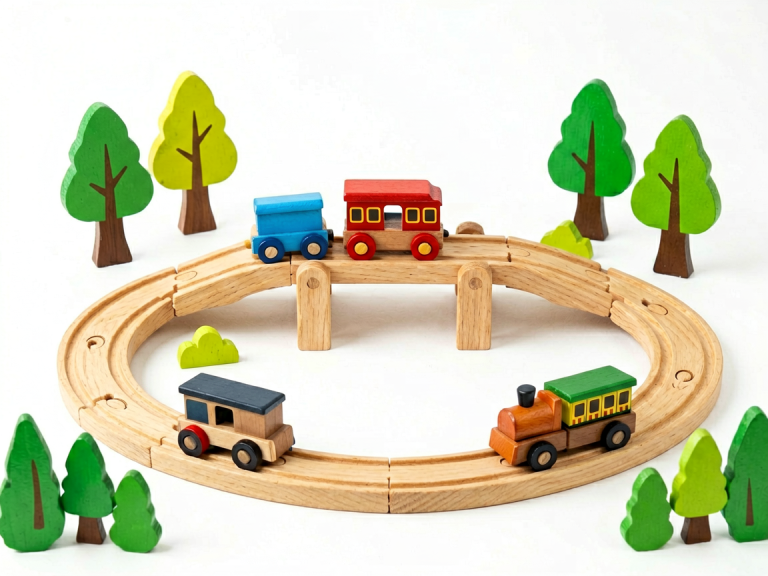
Loose parts are any open-ended materials that can be moved, combined, redesigned, and taken apart. Think wooden blocks, cardboard tubes, bottle caps, fabric scraps, pebbles, and pinecones. For an 8-year-old, the possibilities are endless.
- Set-up: Gather a bin of assorted loose parts. Add scissors, tape, string, and glue as optional tools.
- Play possibilities: Children can build a bridge, create a sculpture, design a marble run, or construct a tiny village. They might choose to work alone or collaboratively. The key is that there is no instruction booklet. One child might spend an hour stacking blocks to see how high they can go before toppling, learning physics through trial and error. Another might create a “robot” using a cardboard box, bottle caps for eyes, and a fabric cape.
- Why it works: Loose parts engage multiple senses and support complex problem-solving. They also allow for open-ended narrative: a pile of sticks can become a forest, a fence, or a magic wand.
2. Imaginative Role-Play with Minimal Props
Eight-year-olds still adore imaginative play, but they may need less “realistic” props than younger children. A stick can be a sword, a microphone, or a magic staff. A cardboard box can be a spaceship, a time machine, or a castle.
- Set-up: Provide a collection of neutral items: scarves, hats, empty containers, cardboard boxes, blankets, and natural objects like leaves or stones. Avoid overly themed toys (e.g., a licensed superhero costume) because they can limit creativity.
- Play possibilities: Children can invent a whole world. They might pretend to be explorers on a remote island (the backyard), scientists in a lab (the kitchen table), or characters from a book they love—reinterpreting the story in their own way. They can create “rules” for their world, such as “all animals can talk in this forest.” This type of play often involves complex planning, dialogue, and problem-solving.
- Why it works: Role-play strengthens language development, empathy (by adopting different perspectives), and narrative skills. It also allows children to safely explore adult roles and emotions.
3. Process-Oriented Art
Art is naturally open-ended, but many kits and colouring books impose limits. Process-oriented art focuses on the experience of creating rather than the final product.
- Set-up: Provide high-quality art supplies: watercolours, clay, pastels, collage materials, found objects (e.g., leaves, feathers, fabric), and various types of paper. No pre-printed templates. Allow children to choose their medium and subject.
- Play possibilities: A child might mix colours on a palette for 20 minutes, fascinated by how blue and yellow become green. Another might sculpt a fantastical creature out of clay, then decide to add wings and a third eye. They could create a “texture collage” using sand, cotton balls, and twigs. The only rule is that there is no “bad” art.
- Why it works: Process art reduces the fear of failure. It encourages experimentation with materials and techniques. For an 8-year-old, this can also be a calming, meditative activity that builds fine motor skills and visual thinking.
4. Outdoor Exploration and Nature Play
Nature is the ultimate open-ended play environment. Trees, rocks, water, mud, and insects offer endless possibilities for discovery and invention.
- Set-up: Provide basic tools: magnifying glasses, small shovels, buckets, string, and a nature journal. No specific instructions—just let the child loose in a safe outdoor space.
- Play possibilities: An 8-year-old might build a dam in a stream, dig for worms, create a fairy house from bark and moss, or track animal footprints. They could design an obstacle course using logs and rocks, or simply lie on the grass and find shapes in clouds. Seasonal variations add richness: collecting autumn leaves for a colour hunt, building a snow fort in winter, or planting seeds in spring.
- Why it works: Nature play connects children to the real world, reduces stress, and improves physical health. It also teaches patience, observation, and respect for living things. The unpredictability of nature—a sudden breeze, a hidden bug—constantly challenges the child to adapt.
5. Storytelling and World-Building
For 8-year-olds who love words and narratives, open-ended storytelling is a powerful activity. This can be done individually or in a group.
- Set-up: Provide blank books, markers, a simple notebook, or even a voice recorder. You can also use prompts like a “story dice” with random pictures, but the child decides how to connect them.
- Play possibilities: A child can invent a character, draw a map of a fantasy land, and write a series of adventures. They might create a “choose your own adventure” style story where the reader makes decisions. Alternatively, children can take turns adding one sentence to a collaborative story, letting it twist in unexpected directions. They could also act out their stories with homemade puppets or shadow theatre.
- Why it works: Storytelling develops literacy, sequencing, and creativity. It allows children to organise their thoughts and express complex emotions indirectly. For example, a child who feels anxious about school might create a story about a shy dragon who learns to make friends.
6. Construction with Recycled Materials
Similar to loose parts, but with a focus on upcycling. Gather egg cartons, milk cartons, plastic bottles, paper towel rolls, yogurt cups, and bottle caps.
- Set-up: Add tape, glue, scissors, and markers. Challenge the child to “build something that moves” or “create an invention that solves a problem,” but keep it optional.
- Play possibilities: An 8-year-old might build a marble run using taped cardboard tubes and a shoe box. They could create a “garbage monster” sculpture, a working catapult from a plastic spoon and bottle cap, or a dollhouse from a shoebox. The process of figuring out how to attach materials and make them stable is rich with learning.
- Why it works: This activity teaches engineering principles, resourcefulness, and environmental awareness. It also gives children a sense of pride in transforming trash into treasure.
7. Music and Sound Exploration
Open-ended music play is not about learning an instrument correctly; it’s about experimenting with sound.
- Set-up: Offer simple instruments like drums, shakers, xylophones, or even homemade ones (e.g., a rice-filled jar, rubber bands around a box). Also provide access to recordings of different musical styles, or let the child record their own sounds using a device.
- Play possibilities: A child might create a “rainstorm” by shaking a shaker softly, then loudly, then adding a drum for thunder. They can compose a song about their day, with lyrics that rhyme or don’t. They might experiment with echo effects in a large room or try to mimic animal sounds with their voice.
- Why it works: Music play enhances auditory discrimination, rhythm, and emotional expression. For an 8-year-old, it can also be a non-verbal way to release energy or calm down.
—
How to Encourage Open-Ended Play (Without Taking Over)
Adults often struggle with open-ended play because it feels messy, unstructured, or “unproductive.” But our role is to be a facilitator, not a director. Here are practical tips:
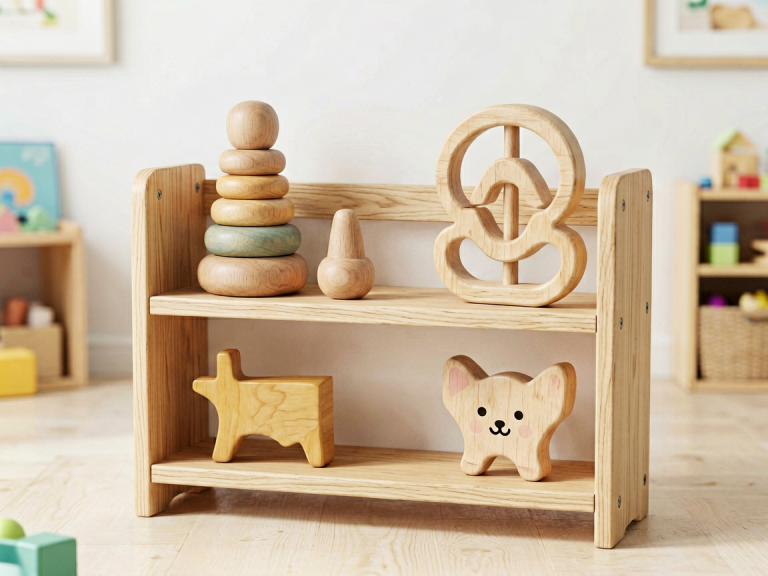
- Provide the “third teacher” environment: Arrange materials in low, accessible shelves. Rotate items to keep interest. Avoid overcrowding; too many options can overwhelm.
- Ask open-ended questions: Instead of “What are you building?” try “Tell me about your creation!” or “What happens next in your story?”
- Embrace mess and noise: Set clear boundaries (e.g., “Play dough stays on the table”), but allow experimentation. A little chaos is part of the process.
- Resist the urge to correct: If a child builds a tower that looks unstable, let it fall. The lesson is more powerful than any warning.
- Model playfulness: Join in when invited, but follow the child’s lead. Lie on the floor and let them “operate” on you with toy medical tools. Be a willing passenger on their imaginary spaceship.
—
Conclusion
Open-ended play is not a luxury; it is a fundamental pillar of healthy development for 8-year-olds. In a world that often prioritises measurable outcomes and structured activities, we must deliberately carve out time for unstructured, imaginative exploration. The activities outlined above—loose parts construction, role-play, process art, nature exploration, storytelling, recycled materials, and music—each offer unique opportunities for growth. They help children develop creativity, problem-solving skills, emotional resilience, and social competence. Perhaps most importantly, they allow 8-year-olds to simply *be* children: curious, playful, and full of wonder. So put away the worksheets, step back, and watch as your child transforms a cardboard box into a universe. That is the magic of open-ended play—and it is available to every child, every day.