Unleashing Imagination: Open-Ended Play Activities for 11-Year-Olds
In today’s hyper-structured world, where children’s schedules are often packed with schoolwork, extracurricular classes, and screen time, the concept of open-ended play can feel almost revolutionary. For 11-year-olds, who stand at a fascinating crossroads between childhood and adolescence, open-ended play is not merely a pleasant diversion—it is a vital tool for cognitive growth, emotional resilience, and social connection. Unlike closed games with predetermined outcomes, open-ended activities have no fixed rules, no single “right answer,” and no finish line. They invite children to explore, experiment, fail, try again, and create their own meaning. This article delves into a rich variety of open-ended play activities designed specifically for 11-year-olds, offering parents, educators, and caregivers practical ideas to nurture curiosity, problem-solving skills, and creative self-expression.
—
The Philosophy Behind Open-Ended Play
Before diving into specific activities, it is crucial to understand why open-ended play matters at this particular age. Eleven-year-olds are developing more abstract thinking abilities, longer attention spans, and a stronger sense of identity. They crave autonomy and challenge, yet they still benefit from unstructured exploration that allows their imagination to run free. Open-ended play meets these developmental needs by offering a canvas, not a coloring book. It encourages children to ask “What if?” rather than “What’s the answer?” It builds persistence because there is no immediate failure—only iteration. It also fosters collaboration when children engage together, as they must negotiate roles, share ideas, and resolve conflicts without a referee. The activities that follow are grouped by style and environment, but they all share the core principle: the child is the designer of their own experience.
—
Outdoor Adventures: Nature as a Limitless Playground
1. Fort Building with Found Materials
There is something almost primal about the urge to construct a shelter. Set an 11-year-old loose in a backyard, a park, or a wooded area with nothing but a pile of fallen branches, old blankets, rope (or even natural vines), and you have given them a world of possibilities. Fort building is a classic open-ended activity that combines engineering, spatial reasoning, and storytelling. One child might create a low, hidden den for reading; another might build a multi-level “castle” with secret compartments. The lack of instructions means they must problem-solve in real time: Will this branch support the weight of the blanket? How do I tie a knot that stays? The process also teaches patience and resourcefulness. Encourage them to document their creations with photos or drawings, and let the fort evolve over several days as they add “furniture” made from leaves or stones.
2. Water Flow and Dam Engineering
A stream, a puddle, or even a garden hose can become the basis for an afternoon of hydrological exploration. Provide simple tools: plastic cups, small shovels, sticks, and pebbles. Then challenge children to redirect water, build a dam, or create a series of cascading pools. There is no blueprint; they must observe cause and effect, test hypotheses (e.g., “If I pack mud around these stones, will the water stop leaking?”), and adapt to changing conditions. This activity is deeply satisfying for 11-year-olds because it yields immediate, visible results. Moreover, it can spark an interest in physics, ecology, and even teamwork when multiple children cooperate to dig a channel or build a bridge. Safety tip: supervise near any natural body of water and ensure children wash hands afterward.
3. Nature Art and Land Art
Take the idea of “crafting” outside by using leaves, flowers, pinecones, sand, and stones as your palette. 11-year-olds can create mandalas on the ground, weave grass into simple baskets, or arrange patterns that will later be scattered by wind or rain—and that impermanence is part of the magic. Land art encourages observation: noticing the subtle colors of different mosses, the texture of bark, the symmetry of a fern. There are no rules about what constitutes a “finished” piece. One child might spend 20 minutes arranging a rainbow of petals; another might build a three-dimensional sculpture from driftwood. The activity enhances fine motor skills, aesthetic judgment, and a deeper connection with the natural world. For an extra layer, ask them to photograph their art and create a nature journal documenting their process.
—
The Art of Tinkering: STEM and Building Activities
4. Open-Ended Robotics with Modular Kits
While many robotics kits come with step-by-step instructions, true open-ended play happens when you hand a child a set of sensors, motors, wheels, and connectors and simply say, “Make something that moves or reacts.” Kits like LEGO Spike Prime, micro:bit, or even simple Arduino starter sets allow 11-year-olds to experiment without a fixed goal. They might build a device that blinks in response to sound, a small vehicle that changes direction when it hits a wall, or a whimsical creature that waves its arms. The process is iterative: code fails, gears slip, batteries die. But each failure teaches debugging and resilience. More importantly, the child owns the design—there is no manual to consult. This type of play builds computational thinking, creativity, and confidence in handling technology as a tool, not a toy.
5. Cardboard Construction and Prototyping
Never underestimate the power of a cardboard box. Add tape (duct tape, masking tape, or even glue), scissors, string, and markers, and an 11-year-old can build anything from a wearable robot armor to a working marble run to a miniature city. Cardboard is forgiving; mistakes can be cut away or covered, and the low cost encourages bold experimentation. Challenge them to build a contraption that can launch a marshmallow across the room (a simple catapult) or a structure that can hold a book without collapsing. The open-ended nature means they will constantly revise their design. This activity seamlessly blends geometry, physics, and art, and it can be done alone or with friends who trade ideas. For added depth, ask them to write a short “user manual” for their creation.
6. Loose Parts Play with Downtime Materials
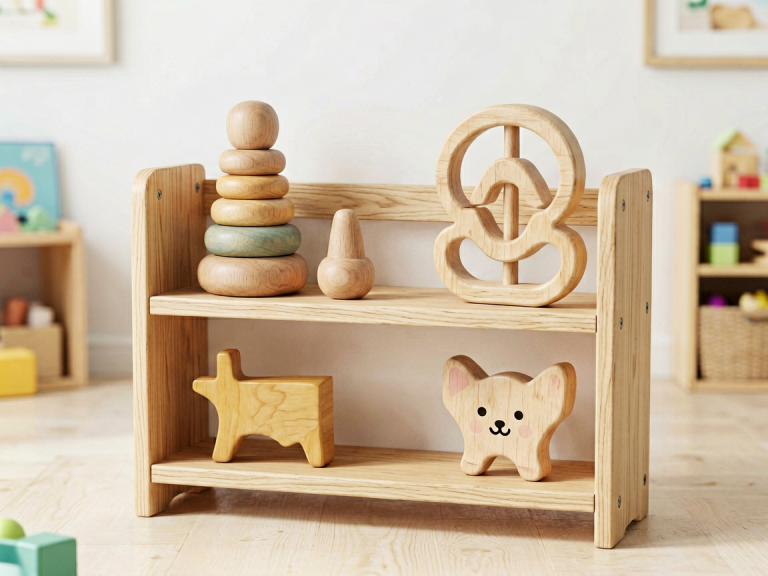
Loose parts are collections of random, open-ended objects that can be combined, stacked, arranged, and transformed. Think buttons, shells, wooden blocks, bottle caps, fabric scraps, pebbles, spools, and small PVC pipe sections. For an 11-year-old, these materials are not just craft supplies—they are the building blocks of imaginary worlds. One child might sort them by color and size to create a pattern; another might build a balance scale; a third might arrange them to tell a story (e.g., a “treasure map” with buttons as islands). The key is that there is no predetermined outcome. Loose parts play supports spatial reasoning, classification, and symbolic thinking. It also encourages social negotiation when children share resources and decide together on a group creation. Set up a weekly “loose parts station” with a new theme (e.g., “underwater,” “space,” “city”) to keep the challenge fresh.
—
Imaginative Worlds: Storytelling and Role-Play
7. Collaborative Story Construction (Round-Robin)
Gather a small group of children and invite them to build a story together—but with a twist. Each child contributes one sentence, then passes the story to the next person. The narrative can spiral in unexpected directions: a hero turns into a villain, a setting shifts from a dragon’s cave to a spaceship. There are no wrong moves; the only rule is that each addition must respect what came before (no ignoring the previous plot point). This activity practices listening, creativity, and narrative structure. For a more tactile version, provide a pile of index cards and ask them to draw or write key story elements (characters, settings, objects) and then shuffle the deck and draw cards to inspire the next scene. 11-year-olds love the surprise element, and it often leads to hilarious, memorable outcomes.
8. Improv Theater: Yes, And…
Formal scripts are the opposite of open-ended play. Instead, introduce the improv principle of “Yes, and…”—where players accept whatever their partner offers and build on it. Simple games like “Expert Interview” (one child is a wildly unqualified expert on a made-up topic, the other is a curious interviewer) or “Freeze Tag” (two actors start a scene, a third yells “Freeze!” and replaces one actor, starting a completely new scene) are gold mines for 11-year-olds. These activities require quick thinking, empathy, and the willingness to take risks in front of peers. No props are needed, but a few hats or scarves can spark ideas. The beauty of improv is that failure is celebrated as a “gift”—if a scene goes nowhere, the group adapts. It builds confidence, reduces performance anxiety, and strengthens verbal and non-verbal communication.
9. Fantasy Mapmaking and Worldbuilding
Give an 11-year-old a large sheet of paper, markers, and a simple prompt: “Draw a map of a world that exists only in your imagination.” The activity is deeply open-ended. They must decide on geography (mountains, rivers, forests), place names, climate, and perhaps even hidden treasures or dangers. The map becomes a launchpad for stories: Who lives in the haunted swamp? What lies beyond the jagged peaks? This exercise encourages systems thinking (how does a river affect trade? why are villages near a coast?) and creative writing. They might also create a “legend” with symbols for different features. For a social twist, have two children create maps and then “discover” each other’s continents, writing letters between the inhabitants. Mapmaking fosters patience, attention to detail, and a sense of ownership over a imaginary realm.
—
Creative Expression: Art, Music, and Writing
10. Soundscapes and Homemade Instruments
Music doesn’t have to come from a store-bought keyboard. Challenge an 11-year-old to construct a soundscape using only everyday objects: rubber bands stretched over a shoebox (guitar), a glass bottle filled with different water levels (xylophone), empty cans and wooden spoons (drums), and crumpled paper (percussion). Then ask them to “compose” a piece that represents a specific mood or scene—for instance, a rainy afternoon, a frantic chase, or a calm ocean. There is no notation required; they can record their performance on a phone or simply perform for an audience. This activity fosters auditory discrimination, rhythm, and creative problem-solving (how do I make a sound that mimics thunder?). It also empowers children to see that they can create music, not just consume it.
11. Scribble Art and Abstract Expression
Art supplies like charcoal, pastels, watercolors, or even ink can be intimidating if the goal is realism. Open-ended art removes that pressure. Try the “scribble game”: have each child draw a random, energetic scribble on a page, then trade pages and transform the scribble into a recognizable image (e.g., a scribble becomes a bird’s nest or a swirling galaxy). Alternatively, give them a limited palette of three colors and ask them to paint an emotion—anger, joy, curiosity—without using any representational shapes. Abstract expression is a powerful outlet for feelings that can be hard to verbalize at age 11. It also teaches composition, color theory, and the value of process over product. Display their works without judging; simply ask, “Tell me about what you made.”
12. Found Poetry and Blackout Poetry
To combine language arts with visual creativity, provide old books, magazines, or newspapers, along with markers or black paint. In blackout poetry, children scan a page and select certain words to form a poem, then “black out” the rest, leaving only their chosen words visible. The result is a striking visual-text hybrid. Found poetry works similarly but involves rearranging cut-out words from various sources to create new meaning. Both activities encourage close reading, vocabulary exploration, and the discovery of hidden narratives. An 11-year-old might create a poignant poem about friendship from a science textbook, or a playful haiku from a cereal box. This is a low-stakes way to experiment with language and personal expression.
—
Strategic Thinking: Board Games and Puzzles Without Fixed Rules
13. Design Your Own Board Game
Instead of playing a store-bought game, challenge children to create one from scratch. Provide a blank board (or a large sheet of paper), index cards, dice, and small tokens. The only rule is that the game must be playable and have clear rules—but the theme, mechanics, win conditions, and penalties are entirely up to them. One group might design a space exploration game where players collect stardust; another might create a cooperative game where players work together to escape a monster’s cave. The design process involves iterative testing: first playthrough reveals that a rule is unfair, so they adjust. This activity integrates math (probability in dice rolls), logic (balancing the game), and creativity. It also teaches empathy, as designers must consider the player experience.
14. Open-Ended Puzzle Challenges
Traditional puzzles have a single solution. Open-ended puzzles, by contrast, have many. For example, give each child a bag of 20 identical wooden blocks and ask them to build the tallest possible tower that can withstand a “wind” (a fan on low setting). Or present them with a set of gears and a motor and ask them to create a machine that moves a marble from one end of the table to the other in at least two seconds—but no more than ten. These challenges encourage divergent thinking: there is no “right” way to succeed. They also build patience and teamwork when children must collaborate to adjust their designs. The key is that the constraints are minimal, and the evaluation criteria are flexible (e.g., “most creative,” “most stable,” “most surprising”).
—
Digital Open-Ended Play: Coding and Design
15. Creative Coding with Scratch or Python
Screen time doesn’t have to be passive. Platforms like Scratch (MIT) allow 11-year-olds to create their own interactive stories, animations, and games without writing complex syntax. The open-ended nature is built in: start with a blank canvas, choose a sprite, and then snap together blocks to control movement, sound, and variables. A child might make a virtual pet that reacts when you click on it, or a simple platformer where they control the physics. Python, with libraries like Turtle, can be introduced as a text-based alternative for those ready for more challenge. The goal is not to complete a specific tutorial but to follow one’s curiosity. This digital tinkering nurtures logical reasoning, debugging, and project management. Share their creations with family or in online communities (with supervision) to celebrate their work.
16. Virtual Architecture with Minecraft in Creative Mode
Minecraft is often criticized for being addictive, but in Creative Mode, it is a pure open-ended sandbox. Players have unlimited resources and no threats; they can build anything from a replica of the Taj Mahal to a floating city with redstone-powered elevators. The game encourages spatial planning, scale, and aesthetics. 11-year-olds can work collaboratively on a shared world, discussing design principles and redistributing tasks. To give it structure, you can set a gentle constraint: “Build a house that conserves energy” or “Create a secret underground base that is invisible from above.” But the real power is that the child decides the project scope. The experience translates into real-world skills: geometry, resource management, and digital citizenship (how to work with others respectfully in a shared virtual space).
—
Conclusion: Trusting the Process
Open-ended play is not a luxury; it is a developmental necessity for 11-year-olds navigating the transition to adolescence. It provides a low-stakes laboratory for hypothesis testing, a safe space for emotional expression, and a platform for boundless creativity. The activities outlined here—from fort-building to blackout poetry, from improv to Minecraft—are merely starting points. The most important ingredient is an adult who trusts the child’s innate drive to explore, who resists the urge to direct, and who celebrates every messy, unfinished, brilliant attempt. By offering time, space, and a few loose materials, we give 11-year-olds the greatest gift: permission to be the authors of their own play. And in that authorship, they discover not only new worlds but also deeper parts of themselves.