The Power of Open-Ended Play: Unlocking Creativity and Learning in Kindergarteners
Open-ended play activities are the heartbeat of a developmentally appropriate kindergarten classroom. Unlike structured games with fixed rules or predetermined outcomes, open-ended play gives children the freedom to explore, imagine, and create without a single “right” answer. For five- and six-year-olds, this type of play is not merely entertainment—it is the foundation for cognitive flexibility, social negotiation, emotional regulation, and problem-solving. In this article, we will delve into why open-ended play matters, explore a variety of engaging activities, and discuss how teachers and parents can create environments that nurture deep, meaningful learning through play.
Why Open-Ended Play Matters for Kindergarteners
The kindergarten years are a critical window for brain development. During this stage, children are naturally curious and eager to make sense of the world. Open-ended play respects this innate drive by offering materials and situations that invite exploration rather than direct instruction. When a child builds a tower with wooden blocks, they are simultaneously practicing spatial reasoning, cause and effect, fine motor control, and perseverance. When they decide that a cardboard box is a spaceship, they are exercising symbolic thinking, narrative skills, and collaboration if they invite a friend aboard.
Research in early childhood education consistently shows that open-ended play fosters what psychologists call “executive function”—the set of mental skills that include working memory, flexible thinking, and self-control. For example, when two kindergarteners argue over who gets to be the “captain” of their imaginary boat, they must negotiate, take turns, and regulate their emotions. These are precisely the skills that predict later academic success and social competence. Moreover, open-ended play allows children to work at their own developmental level. A child who is just beginning to understand numbers might count the blocks they stack, while another child might create complex symmetrical patterns. No child is left behind because there is no finish line.
Finally, open-ended play is intrinsically motivating. Children engage deeply because they are in charge. This sense of agency builds confidence and a positive attitude toward learning—a gift that lasts far beyond kindergarten.
Essential Open-Ended Play Activities for Kindergarteners
The beauty of open-ended play lies in its simplicity. Some of the most powerful activities require little more than basic materials and a supportive adult who knows when to step back. Below are several categories of open-ended play that are particularly enriching for kindergarteners.
1. Loose Parts Play: The Ultimate Creative Tool
Loose parts are any materials that can be moved, combined, redesigned, and transformed. Think of wooden blocks, pinecones, bottle caps, fabric scraps, pebbles, shells, buttons, ribbons, and corks. Unlike plastic toys with a single function, loose parts invite endless possibilities. In a kindergarten classroom, a basket of colorful yarn and some clothespins might become a spider web, a necklace, or a way to tie two sticks together to make a flag.
To facilitate loose parts play, set out a tray or a large table with a mix of natural and manufactured items. Provide no instructions—just let children explore. You might observe a child sorting the items by size, another building a miniature village, and a third creating a pattern. The teacher’s role is to observe, ask open-ended questions (“I wonder what would happen if you put the big shell on top?”), and occasionally introduce new materials to reignite interest. Loose parts play supports math concepts (classification, seriation, pattern-making), science inquiry (balance, weight, texture), and artistic expression.
2. Sensory Bins and Sand/Water Play
A sensory bin filled with rice, sand, water, or kinetic sand is a classic open-ended activity. Add scoops, funnels, small containers, toy animals, or plastic letters, and you have a rich environment for exploration. Kindergarteners can spend an hour pouring, measuring, burying, and digging. They learn about volume and capacity as they fill a cup and dump it out. They develop fine motor strength as they pinch grains of sand or squeeze a dropper. Socially, two children might cooperate to build a sandcastle or negotiate whose turn it is to use the funnel.
Water play deserves special mention. Whether at a water table or a simple tub, adding items like waterproof dolls, boats, sponges, and tubing turns water into a laboratory. Children experiment with sinking and floating, with water flow and displacement. Teachers can extend the learning by introducing soap for bubble play or by adding food coloring to create a “potions” station. The key is to resist the urge to direct the play; instead, let children discover that a heavy rock sinks while a light cork floats.
3. Dramatic Play with Minimal Scaffolding
Dramatic play is often the richest form of open-ended play for kindergarteners because it involves story creation, role-taking, and language development. While a structured “pretend kitchen” with plastic food can be fun, it tends to limit imagination. Instead, provide open-ended props: a few lengths of fabric (scarves, curtains, old sheets), empty cardboard boxes, paper bags, a collection of hats, and some wooden spoons. These items become everything from a doctor’s coat to a magic cape to a tent for a camping adventure.
Encourage children to invent their own scenarios. A cardboard box might be a rocket ship, a store counter, or a cave. When children dress up and assign roles, they practice perspective-taking (“I’m the mommy and you’re the baby, so you have to eat your vegetables”). They also learn to negotiate plot twists: “Wait, a dragon is coming! We need to hide!” This type of play builds oral language, story sequencing, and empathy. Teachers can enrich the experience by occasionally joining the play as a character who asks questions or introduces a gentle problem (“Oh no, the rocket ship has run out of fuel—what should we do?”). But avoid taking over the narrative.
4. Art Exploration: Process Over Product
Open-ended art activities remove the pressure of creating a recognizable product. Instead of a directed craft where every child makes the same paper plate turkey, offer a canvas of possibilities. Set out tempera paints in primary colors, brushes of different sizes, sponges, forks for texture, and large sheets of paper on an easel or on the floor. Alternatively, provide play dough with sticks, googly eyes, and cookie cutters—but no model to copy.
When children engage in process art, they experiment with color mixing, brush strokes, and texture. They might paint one section solid red, then decide to smear blue on top to see what happens. They might roll play dough into a snake, then flatten it, then wrap it around a stick. The learning is in the doing, not in the outcome. Teachers should praise effort and creativity rather than realism: “I love how you used so many different strokes!” Avoid asking “What is it?” because the child might not have a label for their creation. Instead, say, “Tell me about your painting.”
5. Construction and Block Play
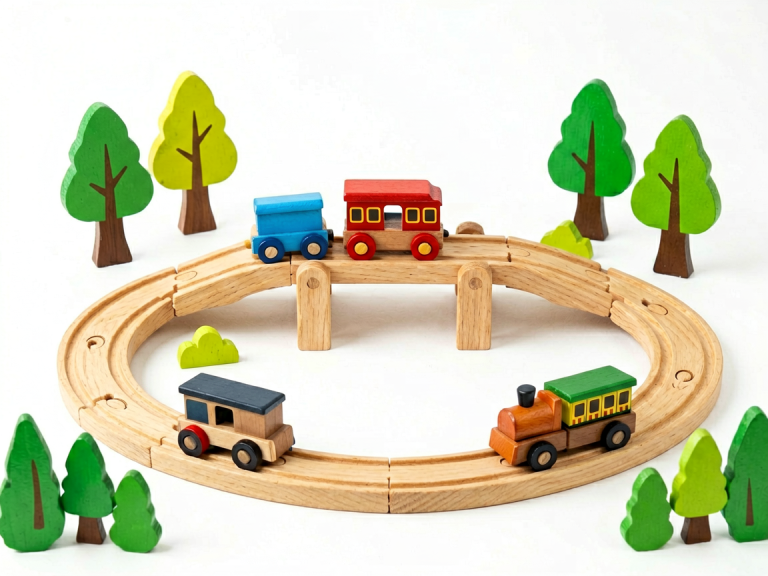
Blocks are perhaps the quintessential open-ended toy. A set of unit blocks—simple wooden rectangles, squares, cylinders, and triangles—can be used alone or combined with other loose parts. Kindergarteners might build a tower, a bridge, a zoo enclosure for toy animals, or a race track for small cars. Block play directly supports early math and engineering concepts: balance, symmetry, weight distribution, and spatial relationships.
To keep block play fresh, occasionally add new elements: a cardboard tube becomes a tunnel, a piece of blue fabric becomes a river, a set of small plastic animals or people introduces storytelling. Teachers can prompt deeper thinking by asking, “Your bridge looks like it could hold a heavy car—how could we test it?” or “What could we add to make the tower taller without it falling?” Block play also encourages perseverance; when a tower collapses, a child learns to rebuild stronger.
How to Create an Environment That Supports Open-Ended Play
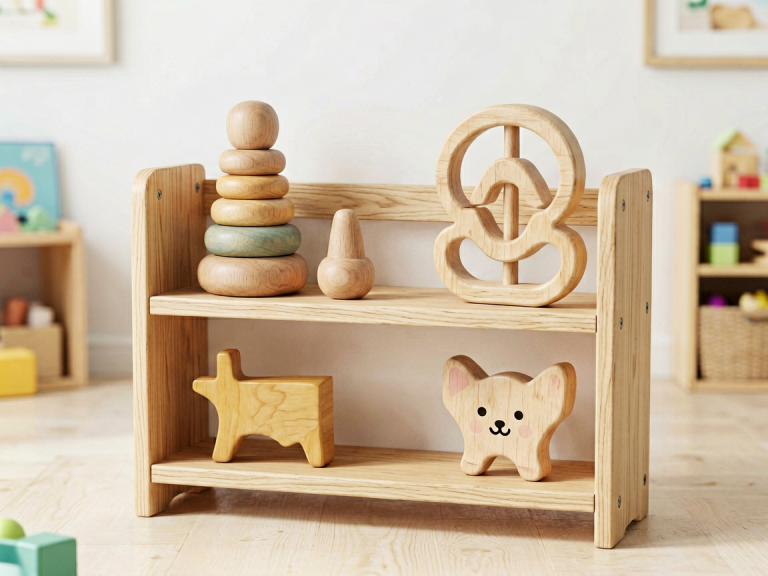
Open-ended play flourishes in an environment that is intentionally designed to invite exploration. First, prioritize open storage. Instead of toy bins with lids that dump everything together, use low shelves with trays or baskets that display materials invitingly. When children can see the blocks, the loose parts, and the fabrics, they are more likely to choose and combine them. Labeling shelves with pictures helps children independently return materials.
Second, limit the number of choices at any given time. Too many options can overwhelm kindergarteners. A good rule of thumb is to offer three to five activity zones (e.g., block area, art table, sensory bin, dramatic play corner) and rotate materials every few weeks. This keeps the environment fresh without overstimulation.
Third, allow ample uninterrupted time. Deep play does not happen in ten-minute snippets. Kindergarteners need at least 45 minutes to an hour of free-play time to enter a flow state where they can fully invest in their ideas. Rushing children to clean up just as they are building a complex world undermines the cognitive benefits of open-ended play.
Finally, the adult’s role is crucial but subtle. Teachers and parents should observe, document learning, and scaffold without directing. Use “I notice” statements (“I notice you put the biggest block at the bottom—that was smart planning”). Ask open-ended questions that encourage problem-solving (“What do you think will happen if you add one more block on that side?”). Resist the temptation to correct or intervene unless a child is unsafe. When children resolve their own conflicts—such as who gets the red scarf—they build social competence that no worksheet can teach.
Addressing Common Concerns About Open-Ended Play
Some adults worry that open-ended play lacks educational rigor. They ask: “But are they learning letters? Are they practicing writing?” The answer is yes—indirectly. A child who scribbles a “menu” for their pretend restaurant is engaging in emergent writing. A child who counts how many friends can fit in the cardboard “bus” is practicing one-to-one correspondence. A child who builds a ramp and tests which car rolls fastest is experimenting with physics. The key is that learning happens organically, driven by the child’s own curiosity. Teachers can capture these moments by taking photos, writing down children’s words, and displaying their creations. This documentation makes learning visible to both children and families.
Another concern is that open-ended play can be messy. It often is. Sand spills, paint splatters, and blocks end up in unexpected places. However, with clear routines for cleanup (song, timer, or buddy system), children learn responsibility. The mess is a small price to pay for deep engagement. Embrace the chaos as evidence of active learning.
Conclusion
Open-ended play activities are not a luxury or a break from “real learning”—they are the most authentic, developmentally powerful way for kindergarteners to build the skills they need for a lifetime. Through loose parts, sensory bins, dramatic play, art exploration, and block building, children become architects of their own learning. They practice persistence when a block tower falls, creativity when a scarf becomes a superhero cape, and collaboration when they design a story together. As educators and parents, our role is not to fill children with facts but to provide the conditions for them to discover, experiment, and grow. The next time you see a child deeply absorbed in an open-ended activity, resist the urge to direct or interrupt. Instead, smile and know that you are witnessing the most profound kind of education—one that respects the child’s innate drive to make sense of the world on their own terms.