The Power of Possibility: Embracing Open-Ended Play Activities for Elementary School Kids
Introduction: Why Open-Ended Play Matters
In an age of structured schedules, screen-based entertainment, and outcome-driven education, the simple joy of open-ended play is often overlooked. Yet for elementary school children—typically ages 6 to 12—this type of play is not merely a break from learning; it is a fundamental pillar of healthy development. Open-ended play activities are those that have no predetermined goal, no single correct outcome, and no adult-imposed rules. Instead, they invite children to explore, imagine, create, and experiment using materials and ideas in ways that are limited only by their own curiosity. A cardboard box can become a spaceship, a castle, a time machine, or a pet’s house. A pile of leaves can be a treasure map, a science lab, or an art supply. This flexibility is what makes open-ended play so powerful: it places the child firmly in the driver’s seat of their own learning.
For elementary school kids, who are at a critical stage of cognitive, social, and emotional growth, open-ended play offers unique benefits. It fosters creativity by encouraging divergent thinking—the ability to generate multiple solutions to a problem. It builds resilience, as children learn to adapt when their original plans don’t work out. It strengthens executive function skills such as planning, impulse control, and working memory. And perhaps most importantly, it nurtures a genuine love for learning that no worksheet or app can replicate. In the following sections, we will explore why these activities are so effective and provide a rich collection of practical examples that parents, teachers, and caregivers can easily implement.
The Developmental Benefits of Open-Ended Play
Cognitive Growth Through Unstructured Exploration
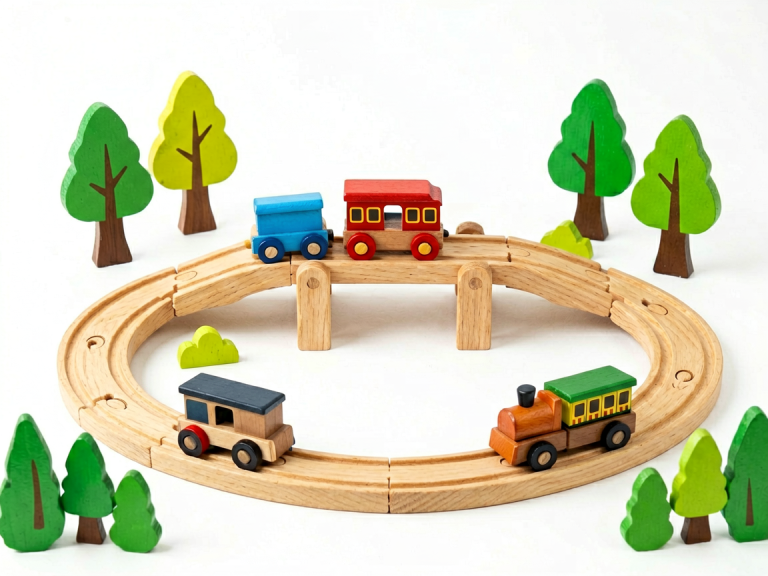
When children engage in open-ended play, their brains are working overtime. Unlike structured games that have clear winners or specific steps, open-ended activities require children to make decisions, test hypotheses, and revise their thinking in real time. For example, building a structure out of wooden blocks is not just about stacking; it involves understanding balance, weight distribution, and spatial relationships. If the tower falls, the child must analyze why—was the base too narrow? Did they place a heavy block on a weak spot? This iterative process is a natural form of scientific reasoning. Research in developmental psychology consistently shows that children who engage in frequent open-ended play demonstrate stronger problem-solving skills and greater cognitive flexibility than those whose play is more prescriptive.
Social and Emotional Skill Building
Open-ended play also provides a rich social laboratory. When children play together without a fixed script—for instance, when they decide to create a “restaurant” using play dough, paper menus, and stuffed animals as customers—they must negotiate roles, share resources, resolve conflicts, and communicate ideas. These interactions teach empathy, turn-taking, and compromise. Moreover, because the activity is directed by the children themselves, they experience a sense of ownership and control, which boosts self-esteem. A child who successfully builds a fort with friends learns not only engineering concepts but also the pride of collaboration and the satisfaction of a shared accomplishment. For elementary school kids who are increasingly aware of social dynamics, open-ended play offers a safe and low-stakes environment to practice interpersonal skills.
Fostering Creativity and Divergent Thinking
One of the most celebrated benefits of open-ended play is its role in nurturing creativity. Unlike convergent thinking, which focuses on finding a single correct answer, divergent thinking involves generating many possible ideas. A classic example: give a child a collection of loose parts—buttons, string, fabric scraps, bottle caps—and ask them to “make something.” One child might create a robot, another a necklace, another a tiny village. There are no wrong answers. This freedom to explore multiple possibilities is exactly what schools and workplaces increasingly value. In a world that demands innovation, children who have grown up with open-ended play are better equipped to think outside the box, take creative risks, and embrace ambiguity.
Practical Open-Ended Play Activities for Elementary School Kids
Outdoor Exploration and Nature Play
Nature is the ultimate open-ended play resource, offering an ever-changing landscape of materials and challenges. Here are a few activities that require minimal adult intervention:
- Natural Sculpture Building: Send children into a backyard, park, or forest with the simple challenge: “Create a sculpture using only things you find on the ground.” Sticks, leaves, pinecones, stones, and acorns become building blocks. Children can make patterns, balance objects, or build miniature shelters. There is no right or wrong—only their imagination and the laws of physics.
- Obstacle Course Design: Instead of a pre-built playground, let children design their own obstacle course using logs, blankets, chairs, and ropes. They must decide the sequence of tasks, test if it’s challenging enough, and modify as needed. This activity combines gross motor skills with planning and teamwork.
- Mud Kitchen: A classic that never goes out of style. Provide old pots, spoons, water, and a patch of dirt. Children mix, stir, and “cook” concoctions. They can pretend to bake mud pies, brew magical potions, or serve a feast for invisible guests. The sensory experience is rich, and the social play that emerges is often elaborate and hilarious.
Indoor Construction and Loose Parts Play
Open-ended play doesn’t require expensive toys. In fact, the best materials are often found around the house:
- Cardboard Box Engineering: Collect boxes of various sizes. Provide tape, scissors (with supervision), markers, and perhaps some string. Children can build anything: a rocket ship, a puppet theater, a car, a cave. The process of cutting, folding, and joining encourages fine motor skills and spatial reasoning. As the project evolves, children often change their plans—a castle might become a spaceship half-way through—which is perfectly fine.
- Loose Parts Play with Everyday Objects: Gather a “treasure basket” filled with safe household items: fabric scraps, plastic lids, corks, wooden spools, empty spools of thread, and small containers. Allow children to sort, stack, arrange, and combine them however they wish. This type of play is especially beneficial for developing focus and concentration. Some children may create patterns, others might build towers, and still others may invent a game with its own rules.
- Paper and Scissors Challenge: Give children a stack of paper, child-safe scissors, glue sticks, and nothing else. Challenge them to create “something that can move” or “something that tells a story.” Paper can be folded, cut, torn, and layered. This activity pushes children to think three-dimensionally and to problem-solve when their initial design doesn’t work.
Imaginative and Dramatic Play
Pretend play is the quintessential open-ended activity, and elementary school kids can sustain complex narratives for hours:
- The Blanket Fort: Provide blankets, pillows, chairs, and clothespins. Let children construct a fort—it might become a secret headquarters, a castle, a spaceship, or a bookstore. Once built, the play begins. Adults should resist the urge to direct; instead, they can eavesdrop on the stories unfolding inside. Fort building teaches physics (how to keep the blanket from collapsing), negotiation (who gets which corner), and storytelling.
- Costume Box Theater: Fill a box with old hats, scarves, masks, and fabrics. No full costumes needed—just accessories that spark transformation. Children can invent characters and scenarios entirely on their own. They might put on a “show” for an audience of stuffed animals, or they might explore a make-believe world. The key is that there are no scripts or required lines.
- Shop or Restaurant Setup: With simple props—a cash register (real or toy), play money, empty food containers, a pad of paper for “orders”—children can run a pretend store or restaurant. They decide the menu, the prices, and the roles (cashier, chef, customer). This activity naturally incorporates math (counting money, making change), literacy (writing menus), and social skills.
Artistic Endeavors Without a Template
Art is most valuable when it is process-oriented rather than product-oriented. Instead of coloring sheets or step-by-step crafts, try:
- Open-Ended Painting: Provide paper, tempera paints, brushes, and perhaps unusual tools like sponges, leaves, or string. Ask no specific instruction. Children can mix colors, make patterns, or simply enjoy the sensory feel of paint. The result might be abstract, but the process builds creativity and fine motor control.
- Recycled Material Sculptures: Gather clean recyclables—plastic bottles, egg cartons, toilet paper rolls, yogurt cups. Provide glue, tape, and paint. Challenge children to “build something new out of these old things.” This activity teaches environmental awareness alongside creative thinking. A toilet paper roll can become a telescope, a car axle, or the trunk of an elephant.
- Story Stones: On smooth stones (or pieces of cardboard), children draw simple images—animals, faces, objects. Then they use the stones as prompts for storytelling. They might lay out the stones in a sequence and narrate a tale, or they might trade stones with a friend and combine them into a collaborative story. This activity strengthens narrative skills and vocabulary.
How Parents and Teachers Can Support Open-Ended Play
Create an Inviting Environment
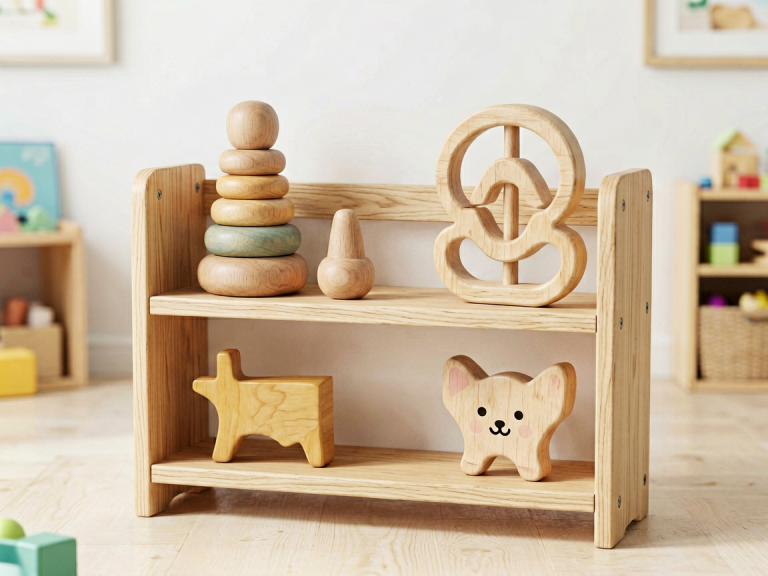
The physical space matters. Dedicate an area—even a corner of a room—where open-ended materials are easily accessible. Low shelves with clear bins labeled with pictures (for non-readers) help children choose their own materials. Rotate items periodically to keep curiosity alive. Avoid over-organizing; a bit of mess is the sign of active play.
Adopt a Facilitator, Not a Director, Role
The adult’s job is to provide resources and then step back. Resist the urge to say “That’s not how you build a bridge” or “Why don’t you paint the sky blue?” Instead, ask open-ended questions: “Tell me about your creation,” “What will happen next?” or “I wonder what would happen if you tried this?” Such language encourages children to reflect on their own process.
Allow for Boredom
Paradoxically, boredom can be a catalyst for open-ended play. When children have no screens or structured activities, they are forced to invent their own entertainment. That initial discomfort often leads to the most creative play. Educators call this the “gift of boredom.” So resist the urge to fill every minute with planned activities. Leave empty time for children to figure out what to do.
Model Playfulness
Children learn by watching. If you occasionally join their play—without taking over—you model that imagination is valuable. Sit inside the blanket fort and ask for a tour. Accept an imaginary cup of tea. Let them “serve” you a mud pie. Your engagement validates their world and deepens the play experience.
Conclusion: The Lasting Gifts of Open-Ended Play
Open-ended play is not a luxury; it is a necessity for healthy child development. It cultivates the very skills that will serve children throughout their lives: creativity, critical thinking, collaboration, and self-regulation. In a world that often rushes children toward measurable outcomes, open-ended play offers a precious counterbalance—a space where curiosity is the only curriculum and joy is the only reward. By embracing these activities, we give elementary school kids more than just fun; we give them the tools to become confident, empathetic, and innovative thinkers. So put away the worksheets for a while. Hand your child a cardboard box, a pile of leaves, or a set of wooden blocks. Then watch as their imagination unfolds, one open-ended moment at a time.