Playing with Words: Vocabulary-Building Play Activities for 6-Month-Olds
The journey of language acquisition begins long before a baby speaks their first word. At six months old, infants are already absorbing the sounds, rhythms, and patterns of their native language. While they may not yet produce understandable words, their brains are rapidly forming neural connections that will later support vocabulary development. The most effective way to nurture this process is through purposeful, joyful play. For parents and caregivers, understanding that every moment of interaction can be a vocabulary-building opportunity transforms routine care into rich linguistic experiences. This article explores specific play activities designed for six-month-olds, each grounded in developmental science, that naturally expand a baby’s receptive vocabulary—the words they understand before they can say them.
The Foundation: How Six-Month-Olds Learn Words
At six months, babies are in a critical period of auditory and visual development. They can distinguish nearly all speech sounds of any language, though this ability begins to narrow around eight to ten months as they specialize in the sounds of their home language. Their memory for words is primarily associative: they link sounds to objects, actions, and emotions through repeated, meaningful exposure. Vocabulary building at this age is not about drilling flashcards but about embedding words in context-rich, multisensory experiences. Babies learn best when they are calm, alert, and engaged—often during moments of face-to-face interaction, physical touch, and gentle movement. Play activities that involve naming objects, describing actions, and using exaggerated intonation (often called “parentese”) capture attention and enhance word retention. Moreover, the emotional bond between caregiver and baby acts as a catalyst: words spoken with love and warmth are far more likely to be remembered than those delivered in a flat, detached tone. Understanding this foundation helps caregivers design play that is both developmentally appropriate and linguistically fruitful.
Activity 1: Narrated Object Exploration – The Power of “This Is a…”
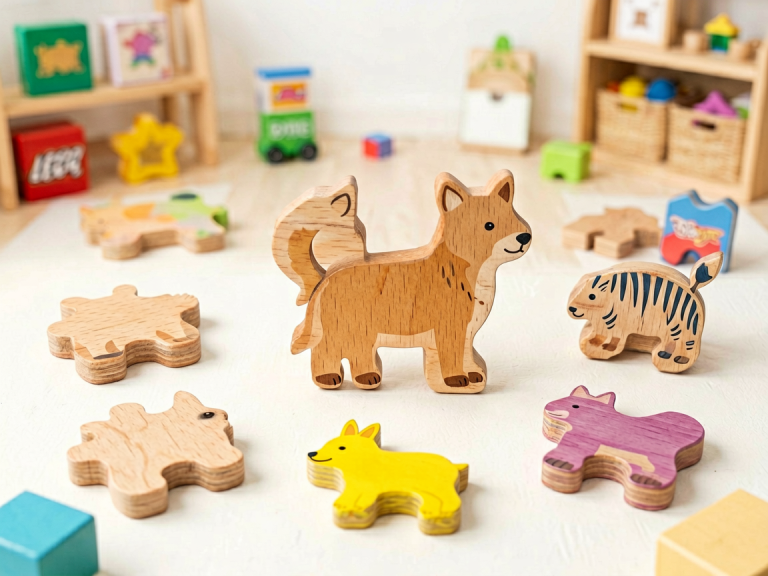
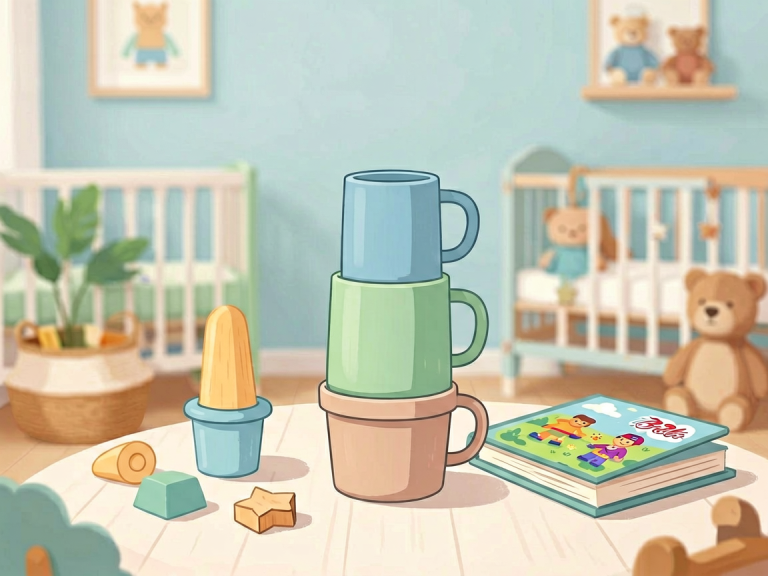
One of the simplest yet most profound vocabulary-building activities is narrated object exploration. Place your six-month-old in a safe, comfortable position—on their back on a play mat, in a high chair, or propped with pillows. Offer them a single object at a time, such as a soft rattle, a wooden ring, a textured ball, or a crinkly fabric square. As the baby reaches for, grasps, and mouths the object (a primary way of exploring at this age), narrate every action in simple, repetitive language. For example, hold the rattle close to your face and say, “Rattle. This is a rattle. Listen! Shake, shake, shake! The rattle makes a sound.” Then guide the baby’s hand to shake it. Repeat the word “rattle” several times during the interaction. The key is to pair the spoken word with the physical sensation and visual focus. Why does this work? At six months, babies are developing object permanence and cause-and-effect understanding. By consistently naming the object while it is in their hands, you create a strong auditory-tactile-visual link. Over days and weeks, the baby will begin to recognize the word “rattle” even when the object is not present—a foundational step in receptive vocabulary. Vary the objects daily: a spoon, a soft block, a silicone teether, a piece of crinkled paper. Each new item introduces a new word, and the repetition across different contexts solidifies understanding. Caregivers should also use descriptive words: “The ball is round. The fabric is soft.” This expands vocabulary beyond nouns to adjectives. The activity requires no special materials—only a curious baby and an attentive adult willing to talk through the exploration.
Activity 2: Mirror Play and Self-Awareness Words
Babies are naturally fascinated by faces, especially their own. Around six months, many infants begin to show interest in mirrors, though full self-recognition typically comes later. Mirror play offers a unique opportunity to build vocabulary related to body parts, emotions, and actions. Lay the baby on their stomach in front of a baby-safe, unbreakable mirror, or hold a small mirror in front of them during tummy time. Point to the reflection and say, “Look! Baby! That’s you! Hello, baby!” Then touch the baby’s nose and your own nose while saying, “Nose. Mommy’s nose. Baby’s nose.” Repeat with other body parts: eyes, mouth, ears, toes. Make silly faces—a big smile, a frown, a surprise expression—and label the emotion: “Happy! Mommy is happy! Baby is happy too!” You can also introduce verbs by moving the baby’s arms or legs while naming the action: “Wave! Baby waves! Kick! Baby kicks!” This activity reinforces vocabulary in a highly personal context. Babies are more likely to remember words that are associated with their own bodies and movements because the input is self-referential, which activates deeper neural processing. Additionally, mirror play encourages social engagement: the baby sees both your face and theirs, strengthening the connection between spoken language and facial expressions. To make it a routine, incorporate mirror play into daily care routines, such as after a diaper change or before a bath. Keep sessions short—two to three minutes—to match the baby’s attention span. Over time, you will notice the baby responding to phrases like “Where is your nose?” by looking at their reflection, a clear sign of receptive vocabulary growth.
Activity 3: Singing, Rhymes, and Gesture Games
Music and rhythm are powerful vehicles for early language development. At six months, babies respond to the melodic contour of speech, and singing exaggerates these contours, making words more salient. Song-based play activities build vocabulary by embedding words in predictable, repeating patterns that are easy for the brain to encode. Popular choices include “Itsy Bitsy Spider,” “Wheels on the Bus,” “Pat-a-Cake,” and “Twinkle, Twinkle, Little Star.” When singing these songs with a six-month-old, focus on three elements: clear articulation of key words, simple hand gestures or movements, and eye contact. For example, while singing “Pat-a-Cake, Pat-a-Cake, Baker’s Man,” gently take the baby’s hands and clap them together on the word “pat.” Pause after the word “baker” and emphasize “man” with a smile. The repetition of the same words in the same rhythmic context helps the baby segment speech into units. Additionally, gesture games like “Peek-a-Boo” and “So Big” introduce vocabulary related to location (“Where is baby? There!”) and size (“So big! You are so big!”). These games also involve anticipation and surprise, which heighten attention and memory. For a six-month-old, the goal is not to have them perform the gestures independently but to observe and begin associating the words with the actions. Sing the same songs daily for at least a week before introducing new ones. Consistency allows the baby to form strong auditory templates. You can also create simple personalized songs using the baby’s name: “Where is Sophia? Where is Sophia? Here she is! Here she is! Hello, Sophia! Hello, Sophia! Smile and kiss!” This not only teaches vocabulary but also reinforces the social bond. Studies show that infants exposed to regular music and rhyme activities in the first year demonstrate larger vocabularies by age two. The key is to sing with enthusiasm, not perfection; the emotional tone matters more than the tune.
Activity 4: Tactile and Sensory Play with Labeled Textures
Six-month-olds are tactile learners—they explore the world primarily through touch and mouth. Sensory play activities that introduce varied textures provide a natural context for descriptive vocabulary. Create a simple sensory basket with items of different textures: a smooth wooden block, a bumpy silicone teether, a piece of fleece fabric, a cold metal spoon, a crinkly cellophane bag (supervised closely to prevent choking). Let the baby handle each item while you narrate the sensations in rich, emotive language: “Oh, this is soft. The blanket is so soft. Feel the soft blanket on your cheek.” Then offer a contrasting item: “Now this is rough. This scrubby sponge is rough. Rough, rough.” By using the same descriptive words repeatedly in conjunction with the sensory input, you help the baby build abstract categories like “soft” and “rough.” You can also incorporate temperature by briefly holding a cooled (not cold) teething ring and a room-temperature one, saying “cold” and “warm.” Water play is another excellent sensory activity: fill a shallow basin with warm water and a few floating toys, naming each as the baby splashes. “Splash! The duck is yellow. Splash! The boat is blue.” All interactions must be carefully supervised, but the payoff is immense. Sensory play activates multiple brain regions simultaneously—touch, vision, hearing, and motor areas—creating richer, more interconnected memory traces for the words. This multisensory approach is especially beneficial for six-month-olds because their primary learning mode is physical. To maximize vocabulary building, limit the number of items to two or three per session, and repeat the same items for several days before introducing new ones. This repetition allows the baby to form stable associations. The goal is not to overwhelm but to deepen understanding through consistent, loving interaction.
Activity 5: Daily Routine Narration – Turning Everyday Moments into Vocabulary Lessons
Perhaps the most powerful vocabulary-building “play activity” is simply narrating your daily routines with your baby. Six-month-olds spend much of their day being carried, fed, changed, bathed, and put to sleep. Each of these moments is an opportunity to introduce dozens of words in a highly context-rich, emotionally secure environment. While you are changing a diaper, describe each step: “First, we take off the diaper. Cold wipes! Wipe, wipe, wipe. Now a fresh diaper. This diaper is so soft. Let’s fasten the tabs. There! All clean!” During feeding, describe the food: “Here comes the spoon. Open wide. You are eating yummy banana. Banana is sweet and smooth.” During a bath, label body parts and actions: “Let’s wash your tummy. Splash! The water is warm. Now rinse your hair. Shh, gentle water.” The key is to use short, repetitive phrases and to pause frequently so the baby can process your words. Don’t worry if they don’t seem to understand—they are absorbing the rhythm and emotional tone. Over time, you will notice them turning their head when you say “bath” or reaching for their bottle when you say “milk.” This is receptive vocabulary in action. To make routine narration more playful, add exaggerated facial expressions, change your voice for different items, or incorporate gentle tickles and kisses. The more joyful the interaction, the more dopamine is released in the baby’s brain, facilitating learning. Remember, you are not lecturing—you are conversing with your baby, even if they only respond with coos and gurgles. This back-and-forth, called “serve and return,” is the foundation of all language development. By narrating routines, you provide hundreds of meaningful word exposures each day, far more than any structured lesson could offer.
Activity 6: Baby Sign Language – Bridging Gesture and Word
While not a play activity in the traditional sense, introducing a few simple baby signs alongside spoken words can significantly boost vocabulary development for six-month-olds. Baby sign language uses gestures—such as waving for “bye-bye,” pointing for “that,” touching the lips for “eat,” or tapping the chest for “more”—that are easy for babies to imitate. At six months, babies are developing fine motor control and may not be able to produce signs themselves, but they can begin to recognize them. Use signs consistently during play and routines. For example, when offering a toy, say “More? Do you want more?” while making the sign for “more.” When it is time to say goodbye to a visitor, wave and say “Bye-bye, Grandma! Bye-bye!” while making the waving gesture. The visual cue of the sign adds a second channel of input, reinforcing the spoken word. Research indicates that babies exposed to sign language often understand more spoken words earlier and may have larger vocabularies by age two, largely because the signs help them break the code of symbolic communication. The key is to use no more than five to eight signs at first, always paired with the spoken word, and to use them with enthusiasm and consistency. You can turn sign usage into a playful game: for instance, during peek-a-boo, sign “where” before saying “Where is baby?” and then sign “there” as you reveal yourself. The playful element keeps the baby engaged. Even if your baby never produces the sign, the exposure alone enhances their word comprehension. This activity is especially valuable because it empowers babies to communicate their needs earlier, reducing frustration and creating positive associations with language.
Conclusion: Consistency, Connection, and Celebration
Building vocabulary in a six-month-old is not about pushing early milestones but about creating a rich, responsive language environment through play. The activities described—narrated object exploration, mirror play, singing and gestures, sensory labeling, routine narration, and baby signs—are not isolated lessons but threads woven into the fabric of daily life. Each interaction, whether during a diaper change or a tummy time session, is a chance to plant a word seed that will bloom later. The most important ingredient is the caregiver’s presence: your smiling face, your warm voice, your gentle touch. Babies learn words best when they feel safe and loved. So talk to your baby about everything you see, touch, and do. Repeat, repeat, and repeat again. Celebrate their babbling, their glances, their smiles. Language is not a race; it is a dance, and every playful step you take together adds a new word to their world. By embracing these play activities, you are not simply teaching vocabulary—you are building a lifelong foundation for communication, connection, and joy. And that is the most profound gift you can give your six-month-old.