From Play to Pages: The Role of Toys in Fostering Early Reading Skills
Introduction
The journey into literacy begins long before a child sounds out their first word. Long before they recognize the letter "A" or hold a book the right way up, they are absorbing the foundational skills of reading through play. Toys are not merely distractions; they are the silent teachers that shape neural pathways, build vocabulary, and cultivate a love for stories. In a world increasingly dominated by screens, the thoughtful selection of toys for early reading becomes a powerful act of intentional parenting and education. This article explores how specific types of toys can transform playful moments into stepping stones for literacy, and how caregivers can harness this potential to nurture confident, enthusiastic readers.
The Building Blocks of Literacy: Alphabet and Phonics Toys
Alphabet toys are the most intuitive tools for early reading. From wooden letter blocks to magnetic alphabets, these toys introduce children to the shapes and names of letters in a tactile, kinesthetic way. Unlike a flashcard, a block can be held, stacked, and arranged, allowing a child to engage multiple senses simultaneously. Research in developmental psychology suggests that multisensory learning strengthens memory retention, especially for abstract symbols like letters. For instance, a child who traces a sandpaper letter with their finger while saying its sound is creating a neural link between the visual, tactile, and auditory experiences—a process known as "embodied cognition."
Phonics toys take this a step further by linking letters to sounds. Toys like talking alphabet posters, letter-sound puzzle cards, or electronic letter wands that produce phonetic sounds when pointed at a letter help children decode the relationship between written symbols and spoken language. One classic example is the LeapFrog Letter Factory, which uses a sing-along method to teach letter sounds in a memorable, engaging format. However, it is important to choose phonics toys that emphasize accuracy over entertainment—gimmicky sounds or overly fast-paced games can confuse rather than clarify. A simple set of alphabet stones with embossed letters, paired with a matching picture card (e.g., "A" for apple), allows a child to practice association at their own pace. These toys build the phonological awareness that is a proven predictor of later reading success.
Storytelling Through Play: Narrative and Role-Playing Toys
Beyond isolated letters and sounds, reading comprehension requires understanding narrative structure—beginning, middle, end, cause and effect, character motivation. Storytelling toys nurture exactly these cognitive skills. Puppets, felt storyboards, and sequencing cards invite children to create and retell stories. When a child manipulates a puppet to act out a story, they are not just playing; they are practicing narrative sequencing, inferring dialogue, and predicting outcomes. For example, a set of farm animal puppets can be used to recreate "The Three Little Pigs," with the child deciding what each pig says and does. This oral storytelling lays the groundwork for understanding written narratives later.
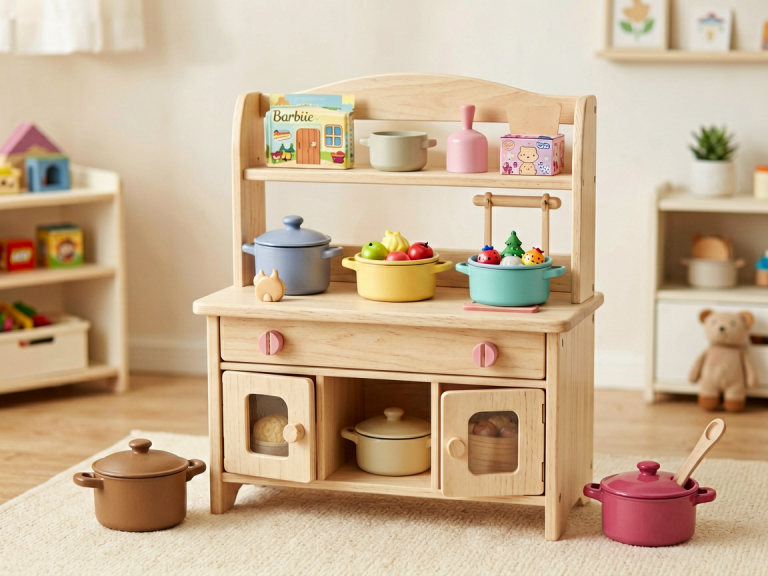
Role-playing toys—such as a pretend grocery store, doctor's kit, or kitchen set—also contribute to early reading by expanding vocabulary and contextual understanding. When a child plays "shopping," they naturally learn words like "list," "price," "checkout," and "bag." Parents can enhance this by adding simple labels to objects (e.g., a sign that says "Milk" on a toy carton). This bridges the gap between spoken language and print. Similarly, story-based board games like "Hoot Owl Hoot!" (which requires following picture-based sequences) or cooperative games like "The Sneaky, Snacky Squirrel" (which involves color and word matching) introduce turn-taking, following instructions, and context clue usage—all essential for reading comprehension. The key is to view every play scenario as a mini-story, with the child as both author and actor.
Interactive Digital Toys: Balancing Screen Time and Reading
The digital age offers a host of interactive toys designed specifically for early literacy, from tablet apps like "Endless Reader" to smart speakers that read stories aloud and ask comprehension questions. These tools can be highly effective when used thoughtfully. For instance, an interactive story app that highlights each word as it is spoken (a feature called "read-along highlighting") helps children map spoken words to written text, a skill known as "tracking." Some digital toys, like the Osmo Little Genius Starter Kit, combine physical pieces with tablet feedback, requiring children to arrange letter tiles or complete picture puzzles while the screen responds. This hybrid approach capitalizes on children's natural attraction to screens while preserving tactile engagement.
However, balance is crucial. The American Academy of Pediatrics recommends no more than one hour of high-quality screen time per day for children aged 2 to 5, and that co-viewing with a caregiver is essential. A digital toy should never replace human interaction. When a child uses a story-reading robot like "Luka," which scans physical books and reads them aloud, the parent can pause to ask questions: "What do you think will happen next?" or "Why did the bear say that?" This transforms passive listening into active comprehension. Choose digital toys that are ad-free, emphasize narrative over arcade-style games, and allow for customization (such as recording the parent's voice). Used sparingly and interactively, digital tools can be a valuable supplement to a rich diet of physical books and analog toys.
Choosing the Right Toys for Your Child’s Developmental Stage
Not all early reading toys are suitable for every age. A toy that excites a four-year-old may frustrate a two-year-old, while a simple alphabet puzzle might bore a kindergartner. Understanding developmental milestones helps caregivers make informed choices.
For toddlers (ages 1–2), the focus should be on sensory exploration and vocabulary building. Soft cloth books, chunky puzzle letters, and sound-making toys that label objects (e.g., a toy that says "ball" when squeezed) are ideal. These toys should be durable, washable, and safe—no small parts. At this stage, the goal is exposure, not mastery.
Preschoolers (ages 3–4) benefit from toys that introduce letter-sound correspondence and simple story sequences. Foam letter bath toys, magnetic storyboards with character magnets, and simple matching games like "Alphabet Bingo" are effective. They can also handle more complex role-playing sets with printed signs and menus. Look for toys that encourage dialogue: "What does the sign say? It says 'Open.' Now the store is open!"
Kindergartners (ages 5–6) are ready for more sophisticated tools like word-building tiles, simple board games that require reading short sentences (e.g., "Zingo!" with sight words), and story cubes that prompt them to create tales based on pictures. At this stage, fluency and confidence are key. Toys that allow for self-correction, such as a self-checking puzzle where only the correct letter fits, build independence. Avoid toys that pressure or test; learning to read should feel like discovery, not assessment.
The Parent’s Role: Guiding Play into Reading Readiness
No toy, no matter how cleverly designed, can replace the active involvement of a caring adult. The most powerful early reading tool is a parent who sits on the floor, points to letters, asks open-ended questions, and laughs at a puppet's silly voice. To maximize the benefit of early reading toys, parents should practice "scaffolding"—a technique where the adult adjusts their support level based on the child's needs. For example, when a child is stuck on a letter puzzle, the parent might first ask, "What letter looks like a circle?" then, if needed, point to the letter "O" and say, "This one! It makes the sound 'aww.'" Gradually, the child takes over.
Another crucial practice is to integrate toys with real books. After playing with a farm animal puppet set, read a book like "Click, Clack, Moo: Cows That Type." The child will recognize the characters and feel ownership over the story. Similarly, after building words with magnetic letters, read a simple decodable book that uses those same words. This bridges the gap between isolated skill practice and meaningful reading. Parents should also model a love for reading themselves—children who see adults reading are far more likely to view literacy as a joyful activity rather than a chore.
Conclusion
Toys for early reading are not a shortcut to literacy, nor are they a replacement for direct instruction or quality picture books. Rather, they are powerful catalysts that make the journey toward reading playful, multisensory, and deeply personal. From the humble alphabet block to the high-tech interactive storybot, each toy offers a unique doorway into language. The essence lies not in the toy itself, but in how it is used—with curiosity, patience, and the guiding hand of a loving adult. When we choose toys thoughtfully and engage with children during play, we are doing far more than teaching letters; we are building a lifelong relationship with the written word. In a world of fleeting digital distractions, that relationship is the true gift we give to the next generation of readers. Let every playroom become a library in waiting, and every toy a key that unlocks the pages of imagination.