Unlocking Imagination: The Power of Open-Ended Play Activities for Tweens
Unlocking Imagination: The Power of Open-Ended Play Activities for Tweens
—
Introduction
The tween years—roughly ages eight to twelve—are a remarkable developmental bridge. Children in this stage are no longer little kids who depend on structured games with clear rules, yet they are not yet teenagers absorbed in social media and homework. Their brains are hungry for challenge, creativity, and autonomy. This is precisely where open-ended play activities shine. Unlike closed-ended toys or digital games that dictate a single correct outcome, open-ended play offers no fixed endpoint. It invites tweens to experiment, fail, try again, and invent their own rules. In an age of scheduled activities and screen time, rediscovering the value of unstructured, imaginative play is not just enjoyable—it is essential for cognitive flexibility, emotional resilience, and social problem-solving. This article explores several categories of open-ended play that can captivate tweens and support their growth.
—
Why Open-Ended Play Matters for Tweens
Open-ended play is more than a “break” from learning; it is a form of deep learning. For tweens, whose brains are undergoing significant rewiring—especially in the prefrontal cortex responsible for planning and self-control—such play builds executive function <a href="https://www.playlearningguide.com/category/skills/”>skills. When a tween decides how to build a fort with only blankets and chairs, they are practicing goal-setting, spatial reasoning, and adaptation. When they negotiate roles in an improvised game of “space explorers,” they are honing social skills like compromise and perspective-taking. Moreover, open-ended play reduces anxiety. The absence of “right” answers removes the fear of failure, allowing tweens to explore their own interests without judgment. In a world that often pressures them to excel, this freedom is precious. It also nurtures intrinsic motivation—the joy of doing something for its own sake—which predicts long-term academic and personal success.
—
Creative Construction: Building Without Blueprints
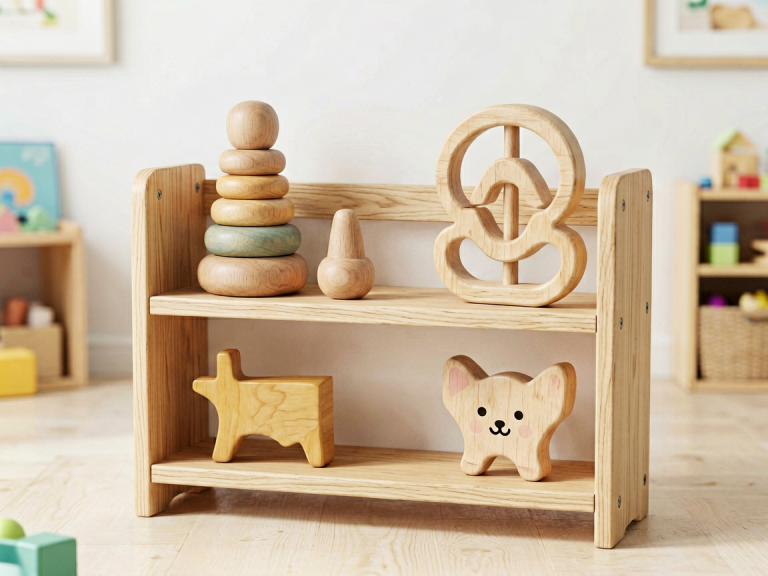
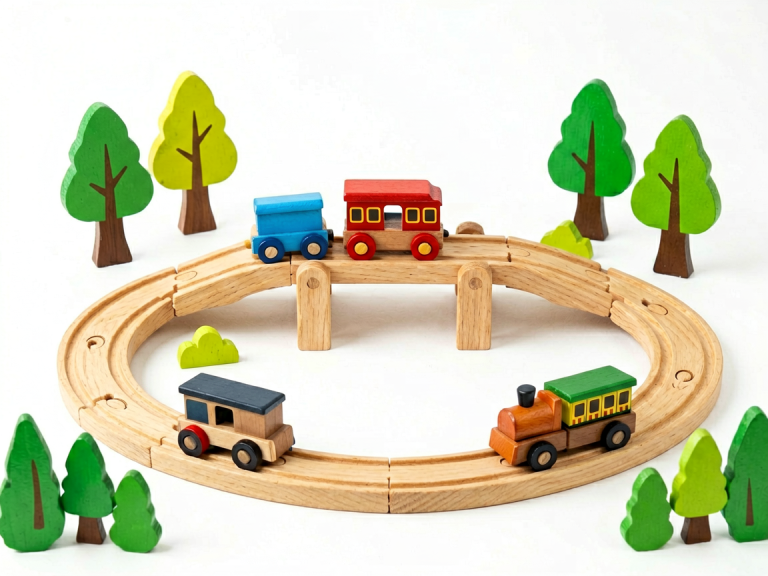
One of the most intuitive forms of open-ended play for tweens is construction—but not with a kit that shows step-by-step instructions. Instead, provide materials that invite invention: wooden blocks, LEGO bricks without a theme set, cardboard boxes of all sizes, tape, string, and recyclable containers. A tween might spend an hour constructing a marble run that fails the first five times, then redesign it with a new slope angle. Or they might build a “city” out of shoeboxes and paper towel rolls, complete with tunnels and bridges. The process itself is the reward. Unlike a video game where progress is coded, physical construction gives immediate tactile feedback: the tower that wobbles, the bridge that holds weight. This type of play also encourages perseverance. When a structure collapses, tweens learn to diagnose the problem—a skill directly transferable to science and math. To deepen the experience, add unexpected materials like fabric scraps, popsicle sticks, or battery-operated LED lights. The only rule is that there are no rules.
—
Nature-Based Exploration: The Ultimate Open-Ended Playground
Nature is the richest open-ended play environment. A forest, a beach, or even a backyard can become a world of endless possibilities. For tweens, who are often glued to screens, outdoor play offers a sensory reset. Suggest activities like building a den from fallen branches, creating a “fairy house” with moss and pebbles, or constructing a dam in a small stream. Each of these tasks requires observation, planning, and adaptation—if the stream washes away the dam, they must rethink their design. Another powerful activity is nature art: collecting leaves, stones, and flowers to create temporary mandalas or sculptures on the ground. Because the art is impermanent, it teaches non-attachment and the joy of creation for its own sake. For tweens who love a challenge, introduce a “survival scenario”: can they build a shelter that keeps out wind? Can they navigate using only the sun and a map they drew? These experiences build confidence and a sense of competence that no app can provide. Moreover, time in nature reduces stress and improves attention, making it a perfect counterbalance to academic pressures.
—
Artistic Expression: From Blank Canvas to Masterpiece
Art is inherently open-ended, but tweens often become self-conscious about their drawing skills. The key is to offer materials and prompts that remove the pressure of “good” art. Provide a large roll of paper, acrylic paints, old magazines for collage, clay, wire, and fabric scraps. Then let them explore. One engaging entry point is “process art,” where the focus is on the act of making rather than the final product. For instance, give a tween a handful of string dipped in paint and let them drag it across paper to see the patterns. Or offer black paper and chalk pastels to create a “reverse” drawing. For tweens who like storytelling, suggest they create a comic strip with no storyline—just let the drawings emerge. Another powerful activity is collaborative art: a group of friends working on one giant mural, each adding their own element. This teaches negotiation, turn-taking, and appreciation of different styles. Because there is no “correct” outcome, tweens feel free to experiment with color, texture, and form. Over time, they develop a personal artistic voice that boosts their self-identity.
—
Imaginative Role-Play and Storytelling
Some may think pretend play is only for preschoolers, but tweens can engage in sophisticated forms of imaginative role-play that challenge their creativity and empathy. Instead of traditional “playing house,” invite them to invent a fictional world: a colony on Mars, a medieval kingdom, or a post-apocalyptic community. Provide simple props—old clothes for costumes, a cardboard “control panel,” notebooks for “logs.” The narrative is entirely theirs. They might spend days developing the history of their world, writing laws, and solving disputes among characters. This type of play naturally incorporates writing, history, and social studies, but without a curriculum. For tweens who enjoy words, encourage improvisational storytelling games. One simple game: “Fortunately, Unfortunately,” where one person starts a story with a positive event, the next adds a negative twist, and they alternate building a chaotic tale. Another is “Story Cubes,” where dice with pictures are rolled and woven into a story. These activities strengthen verbal fluency, sequencing, and flexibility of thought. They also create deep bonds among friends, as shared imaginary worlds become a private universe of memories.
—
Digital Open-Ended Play: Coding and Game Design
Not all open-ended play needs to be screen-free. In fact, certain digital tools offer powerful open-ended experiences for tweens. Minecraft’s Creative Mode is a classic example: there is no goal, no enemies, and unlimited blocks. Tweens can build anything from a castle to a working calculator using redstone circuits. This combines creativity with logic and basic engineering. Similarly, coding platforms like Scratch allow tweens to create their own animations, games, and interactive stories using drag-and-drop code. They start with a blank screen and end with a project that reflects their unique ideas—whether it’s a game about a penguin collecting fish or a digital birthday card for a friend. The iterative nature of coding (test, debug, improve) mirrors the trial-and-error of physical construction. Other apps like “Bloxels” let tweens design their own video game characters and levels. The key is that these tools do not prescribe what to create. They are sandboxes, not scripts. Parents can encourage this by setting time limits on consumption (watching videos) while allowing unlimited access to creative digital tools. The distinction matters: passive screen time vs. active, imaginative digital play.
—
Conclusion
Open-ended play activities for tweens are not a luxury; they are a necessity. They provide a safe space for experimentation, social negotiation, and emotional expression at a pivotal age when children are forming their identities and coping with increased expectations. Whether through building with cardboard, exploring a forest, painting without a plan, inventing a new world, or coding a quirky game, tweens benefit from the freedom to direct their own play. As parents, educators, and caregivers, our role is not to orchestrate every moment but to provide the materials, time, and trust. Let them get bored. Let them fail. Let them create. In that open-ended space, they will discover not only new skills but also the joy of their own imagination—a gift that lasts a lifetime.