Building the Foundation: How Early Learning Toys for 6-Month-Olds Foster Early Reading Skills
Introduction
The journey of literacy begins long before a child utters their first word or deciphers their first letter. For a six-month-old, every rattle shaken, every soft book gummed, and every black-and-white card gazed upon is a stepping stone toward the complex world of reading. At this tender age, the brain is a sponge, absorbing patterns, sounds, and textures at an astonishing rate. Early learning toys designed specifically for six-month-olds are not merely diversions; they are the architects of neural pathways that will later support language comprehension, vocabulary acquisition, and a love for stories. This article explores the critical connection between appropriate infant toys and early reading readiness, offering parents a practical guide to choosing playthings that nourish the budding reader within their baby.
Why Six Months? The Cognitive and Sensory Milestones
At six months, most babies have achieved remarkable developmental leaps. They can typically sit with support, reach for objects with intention, and transfer items from one hand to another. Their vision has matured to distinguish finer details, though high-contrast patterns remain especially captivating. Hearing is fully developed, and they begin to recognize the rhythm and intonation of their native language. Most importantly, they enter a phase of intense curiosity: everything goes into the mouth, every surface is touched, and every sound is investigated. This sensory exploration is the very foundation of early learning. Toys that engage these emerging skills—grasping, mouthing, looking, listening—directly stimulate areas of the brain that will later process print, phonemes, and story structure. A baby who learns that a textured fabric book feels different from a plastic ring is simultaneously learning that objects have distinct properties, a precursor to understanding that symbols (letters) carry distinct meanings.
The Role of Sensory Play in Pre-Literacy Development
Before a child can read, they must understand that language is a system of sounds and symbols. Sensory play—activities that engage touch, sight, hearing, and even taste—builds the neural architecture for this understanding. For a six-month-old, an early learning toy that offers contrasting colors, varied textures, or gentle sounds is not just entertaining; it is teaching pattern recognition, cause and effect, and auditory discrimination. For instance, a rattle that produces a different pitch when shaken fast versus slow helps the baby differentiate sound qualities, a skill directly applicable to distinguishing letter sounds later on. Similarly, a soft crinkle book with bright images of animals trains the eye to track visual elements, a prerequisite for following lines of text. By providing a rich sensory environment, these toys prime the infant’s brain to attend to, categorize, and remember stimuli—exactly what reading requires.
Top Early Learning Toys for Six-Month-Olds That Support Early Reading
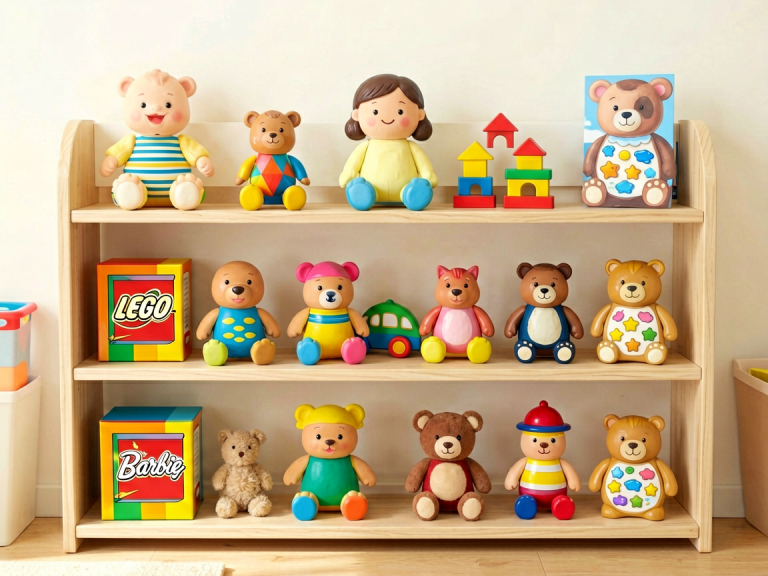
Choosing the right toys can feel overwhelming given the market’s abundance. However, the most effective options share common traits: they are safe, multi-sensory, and interactive. Below are categories of toys that specifically nurture early reading skills.
1. High-Contrast Visual Cards and Black-and-White Books
At six months, babies’ vision is still developing, and they are naturally drawn to high-contrast patterns—black, white, red, and bold geometric shapes. High-contrast visual cards, often sold in sets with simple images like faces, animals, or checkerboards, encourage visual tracking and focus. When an adult holds a card six to eight inches from the baby’s face and slowly moves it left to right, the baby learns to follow an object with their eyes. This skill is identical to scanning a line of text. Moreover, describing the card (“Look, a big black circle! It’s round like a ball!”) introduces vocabulary in a context the baby can see. Soft black-and-white cloth books with crinkle pages add texture and sound, further engaging multiple senses.
2. Soft Fabric Books with Tactile Elements
Fabric books designed for infants are perhaps the most direct bridge to reading. They are chewable, washable, and often include flaps, mirrors, tags, and crinkle paper. A typical soft book might depict a simple story: “Baby’s Day” with pages showing a sun, a bottle, and a teddy bear. As the baby mouths the book, they become familiar with the object—a book—as a source of pleasure and interaction. When a parent turns the pages and narrates the simple images (“Here is the sun! It’s warm and yellow.”), the baby absorbs the concept that flat, two-dimensional pictures represent real-world things. This is the seed of symbolic thinking, which reading later demands. Books with mirrors also help babies recognize themselves, fostering self-awareness and social-emotional development, both linked to language comprehension.
3. Activity Gyms and Play Mats with Hanging Toys
Activity gyms provide a overhead landscape of dangling toys, often featuring different shapes, textures, sounds, and colors. As the baby lies on their back and bats at a hanging rattle or a soft star, they practice hand-eye coordination and spatial awareness. More importantly, these gyms encourage cause-and-effect learning: “When I hit this, it jingles.” This understanding that actions produce predictable outcomes is the same logic that later helps a child grasp that letters form words that convey meaning. Some activity gyms include detachable soft books or cards that can be repositioned, offering variety. Parents can enhance literacy by labeling the toys (“You touched the blue star!”) and singing songs that correspond to the objects.
4. Rattles, Teethers, and Sensory Balls
While they may seem unrelated to reading, simple grasping toys like textured teethers or wooden rattles build fine motor strength and coordination. Holding a rattle and shaking it requires the same hand muscles that will later hold a crayon or turn a page. More directly, many rattles include high-contrast patterns or animal faces that can be discussed. A teether shaped like a ring with raised bumps offers different tactile sensations, and when a parent describes those sensations (“That’s bumpy! This part is smooth.”), they are enriching the baby’s descriptive vocabulary. Sensory balls with varied nubs and colors also encourage rolling and reaching, teaching spatial relationships—another pre-reading skill.
5. Musical Toys and Sound Makers
Auditory development is crucial for phonemic awareness—the ability to hear and manipulate individual sounds in words. Musical toys, such as a simple xylophone or a shaker egg, help babies distinguish between loud and soft, fast and slow, high and low pitches. These distinctions directly map onto the rhythms of speech and the subtle differences between similar letter sounds (e.g., /b/ vs. /p/). When a parent shakes a maraca and says “Shake, shake, shake!” in a rhythmic way, the baby begins to associate sound with movement and language. Interactive toys that play nursery rhymes or simple melodies when pressed also reinforce listening skills and repetition, both core to early literacy.
Linking Play to Early Reading: Practical Strategies for Parents
Having the right toys is only half the equation; how parents use them matters immensely. For a six-month-old, reading is not about decoding words but about building positive associations with books and language. Here are actionable ways to transform play into pre-reading practice:
1. Narrate Everything
When your baby plays with any toy, describe what is happening. “You’re holding the soft bunny! Its ears are floppy.” This constant stream of language exposes the baby to sentence structure, vocabulary, and intonation. Studies show that the number of words a child hears in infancy directly predicts later language and reading ability. Use a sing-song voice (parentese) to capture attention.
2. Follow Their Lead
Observe what captures your baby’s gaze. If they stare at a red ring on the activity gym, talk about that ring. If they mouth the corner of a fabric book, gently turn the page and point to the picture. Following the child’s focus validates their curiosity and makes learning organic. Forced attention is less effective than shared attention.
3. Create Rituals
Set aside a few minutes each day for “book time,” even if it’s just holding a soft book and turning pages while the baby sits in your lap. Consistency builds comfort. At six months, the goal is simply to expose the baby to the physical book and the sound of your voice. Eventually, they will associate the book with warmth and closeness.
4. Use Toys to Introduce Print Awareness
While a six-month-old cannot understand that letters represent sounds, you can still gently expose them to print. Some soft books have large, bold letters or simple words. Point to them and say the letter name or sound casually. “Look—that’s a big ‘S’! It looks like a snake.” This early exposure plants a seed without pressure.
5. Rotate Toys to Maintain Novelty
Babies thrive on novelty because it stimulates the brain’s reward centers. Rotating toys weekly—bringing out a few and putting others away—keeps play fresh and encourages deeper exploration. A toy that seems ignored may become fascinating again after a break. This sustained engagement allows for repeated learning opportunities.
Conclusion
Early learning toys for six-month-olds are far more than colorful distractions. They are the first tools in a lifelong journey of literacy. By selecting toys that engage the senses, encourage cause and effect, and invite language-rich interaction, parents can lay a robust foundation for early reading. The high-contrast card, the crinkly book, the musical rattle—each holds the potential to spark curiosity about patterns, sounds, and symbols. Yet the true magic lies not in the toy itself but in the loving adult who uses it to connect, narrate, and share the joy of discovery. A six-month-old may not turn pages or point to words, but in their eager gaze and grasping hands, the seeds of a reader are already growing. Nurture those seeds with intention, and watch as they blossom into a lifelong love of stories.
(Word count: approximately 1,280 words)