Toy Taming: A Parent’s Comprehensive Guide to Avoiding Toy Clutter
—
Introduction: The Silent Invasion of Plastic
Every parent knows the scene: you step on a rogue Lego brick at 2 a.m., your living room floor has turned into a multicolored obstacle course, and the once-pristine playroom now resembles a disaster zone. Toy clutter is not just an eyesore—it’s a source of stress for parents, a distraction for children, and a financial drain. Yet our instinct is to buy more toys, believing they fuel creativity. The truth is that too many toys overwhelm a child’s brain, leading to shorter attention spans, less imaginative play, and more mess.
This guide offers a systematic, research-backed roadmap to reclaim your home from the toy invasion. By changing how you acquire, store, and rotate toys, you can foster deeper play, teach lifelong organization skills, and finally breathe in a clutter-free space.
—
Why Toy Clutter Happens (And Why It’s Harmful)
The Psychology of Overabundance
Children’s brains are wired to explore, but when surrounded by dozens of options, they enter “choice overload.” A classic study by researchers Sheena Iyengar and Mark Lepper showed that shoppers were more likely to buy jam when presented with 6 varieties than with 24—but those with fewer choices were happier with their purchase. The same applies to toys. A child faced with a mountain of plastic is less likely to engage deeply with any single item. Instead, they flit from toy to toy, leaving a trail of chaos.
The Emotional Trap for Parents
We buy toys to express love, to compensate for guilt, or to appease a tantrum in the checkout aisle. We hold onto “sentimental” toys (the torn teddy bear from Grandma) long after they serve any purpose. This emotional attachment turns our homes into museums of childhood moments, not functional living spaces. Recognizing these drivers is the first step toward change.
—
Principle #1: Curb the Inflow Before You Manage the Outflow
Adopt the “One In, One Out” Rule
The simplest rule to prevent accumulation: for every new toy that enters the house, an old one must leave. This forces you and your child to think critically about what stays. When a birthday gift arrives, immediately decide which existing toy will be donated or recycled. This isn’t punishment—it’s a lesson in conscious consumption.
Rethink Gift-Giving
Relatives and friends are often the biggest contributors to toy clutter. Politely set boundaries: suggest experience gifts (zoo memberships, craft kits that get consumed), consumables (art supplies, play-doh), or contributions to a savings account for a future big purchase. Create an Amazon wishlist of *few* high-quality items that align with your child’s current interests.
Avoid Impulse Purchases
When your child begs for the latest cartoon-themed toy, pause. Implement a “24-hour rule”: if they still want it the next day, consider it. More often, the desire evaporates. Ask yourself: Where will this toy live? Will it be played with for more than two weeks? Does it require 47 tiny pieces?
—
Principle #2: Curate, Don’t Accumulate
The 80/20 Rule of Toys
You’ve likely observed that your child plays with 20% of their toys 80% of the time. The rest—half-broken, forgotten, or too advanced—just takes up space. Conduct a ruthless audit. Pull *everything* out of bins and closets. Sort into three piles: Keep (loved and used regularly), Store (seasonal or currently too advanced), and Go (broken, outgrown, or ignored for 6+ months). Be honest. A toy that “someday” your toddler will love is just taking up space now.
Quality Over Quantity
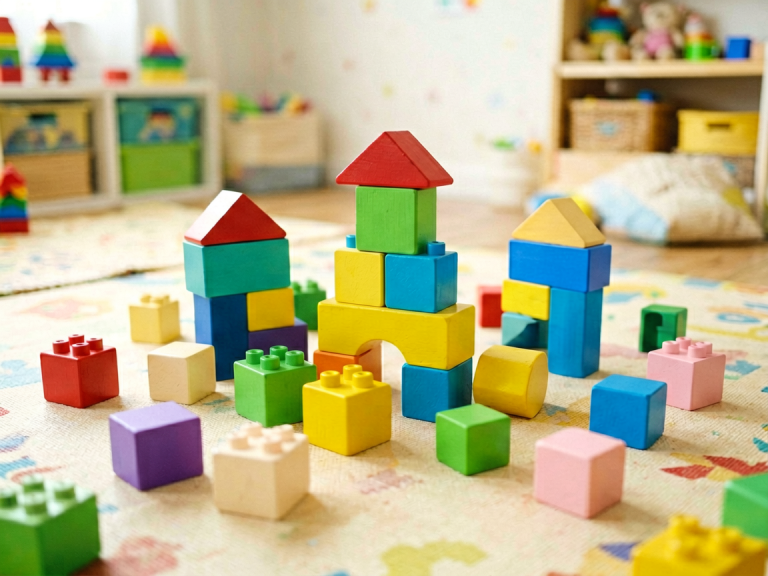
Invest in open-ended toys that spark creativity: wooden blocks, magnetic tiles, art supplies, dress-up clothes, and simple dolls. These toys have no single “right” way to play, so they grow with your child. A set of 30 magnetic tiles yields more possibilities than 100 battery-operated plastic gadgets that each do one thing.
The “One Category” Strategy
Segment toys by category (building, art, pretend play, puzzles, vehicles) and limit each category to one or two types. For example, instead of owning four different sets of plastic dinosaurs, keep just one. This prevents the “all dinosaurs, all the time” mess while still allowing rich imaginative play.
—
Principle #3: Implement a Rotation System
Why Rotation Works
Children’s attention spans thrive on novelty, but novelty doesn’t require new purchases. By rotating a subset of toys every two to four weeks, you reintroduce “forgotten” favorites with fresh excitement. Rotation also reduces clutter instantly: only a small fraction of toys are accessible at any time.
How to Rotate
Divide your curated toy collection into three to four “baskets” or bins. Label them by theme or level (e.g., “Fine Motor,” “Pretend Play,” “Building Sets”). Store the rotation bins in a closet, garage, or under a bed. Every few weeks, swap the active bin with a new one. Observe which types of play your child gravitates toward and adjust future rotations accordingly.
The “Toy Library” Mindset
Treat your home like a toy library. Your child can “check out” a bin for a set period, but they must return it before getting the next one. This builds anticipation and responsibility. It also teaches that toys are not permanent possessions but tools for temporary exploration.
—
Principle #4: Design Smart Storage Systems
Low, Visible, and Accessible
Children will only put away toys if they can physically reach the storage. Use open bins, low shelves, and shallow drawers. Label containers with pictures (for pre-readers) or words. Avoid large, deep toy boxes where items disappear into a black hole—those encourage dumping rather than organized storage.
Create Zones
Designate specific zones for different types of play: a quiet corner for reading, a floor mat for building, a table for art. Each zone has a designated storage container. When clean-up time comes, the rule is simple: “Blocks go back to the blue bin in the building zone.” This spatial organization reduces the mental load for both parent and child.
Use Vertical Space
Wall-mounted shelves, pegboards, and hanging organizers utilize vertical space. They keep frequently used toys visible but off the floor. Magnetic strips can hold metal toy cars or trains. A simple IKEA Trofast system or cube shelves with fabric bins can transform a chaotic playroom into an orderly space.
—
Principle #5: Teach Clean-Up as a Life Skill
The “Clean-Up Song” Method
Make tidying a ritual, not a chore. Play a consistent song (e.g., “Clean Up” by The Wiggles) and set a timer for 5–10 minutes. Race against the clock. For younger children, break the task into micro-steps: “First, put all the red blocks in the bin. Now the blue ones.”
Involve Children in Decluttering Decisions
When it’s time to rotate or donate toys, have your child participate. Ask guiding questions: “Which toy have you not played with in a long time? Maybe another child would love it now.” This gives them ownership and reduces resistance. Even a three-year-old can place a toy in a “donate” bag.
Model the Behavior
Children imitate what they see. If you pile mail on the counter or leave shoes in the hallway, your child will mirror that chaos. Make tidy habits visible: put away your own items immediately, and narrate your actions: “I’m putting my book back on the shelf so we can find it later.”
—
Principle #6: Manage Sentimental and Heirloom Toys
The Memory Box Solution
Some toys carry deep emotional value—the first stuffed animal, a hand-knit blanket. Designate a small, clearly labeled “Memory Box” for each child. Only items that truly spark joy or hold irreplaceable memories go inside. The rest? Take a photo and let the physical object go. The memory lives in the photo, not the dust-gathering plastic.
Pass-It-On Rituals
For toys that are outgrown but still in good condition, create a family tradition: “This puzzle helped you learn numbers—now it’s going to your cousin’s house to help her.” Or donate to a local daycare, shelter, or preschool. Frame it as a generous act, not a loss.
—
Advanced Tips for Long-Term Success
Seasonal “Toy Fasts”
Twice a year (e.g., before birthdays and holidays), do a full inventory. Remove every toy from the house for 48 hours, then bring back only what your child actually asks for. You’ll be shocked at how little they miss. This reset prevents the slow creep of accumulation.
The One-Week Test
When your child receives a new toy, keep it in the packaging for one week. If they haven’t begged to open it by day seven, return it or regift it. This curbs the immediate-gratification cycle and teaches delayed gratification.
Use Technology Mindfully
Avoid digital toys that beep, flash, and talk—they often break quickly and have limited play value. Stick to analog, imagination-driven toys. If you must use electronic devices, treat them like any other toy: limit to one or two and rotate them out.
—
Conclusion: Less Toys, More Play
A clutter-free home is not about deprivation; it’s about intention. When children have fewer toys, they play deeper. They invent games, build narratives, and learn to focus. Parents spend less time cleaning and more time connecting. The toy clutter battle isn’t won through better storage bins alone—it’s won through a mindset shift that prioritizes quality, boundaries, and respect for space.
Start small. Audit one drawer or one shelf this weekend. Implement the “one in, one out” rule. Watch your child’s play transform. And as you step on your last Lego brick, take a deep breath: you are not just decluttering your home; you are giving your child the gift of a calmer mind and a richer imagination.
The toy tsunami can be tamed. You just need the right map.