Unlocking Imagination: A Comprehensive Guide to Using Toys for Pretend Play
Introduction
Pretend play, also known as imaginative play, is one of the most powerful tools for child development. When a child picks up a wooden block and declares it a magic phone, or drapes a blanket over a chair to create a castle, they are not just “playing pretend”—they are building cognitive flexibility, emotional intelligence, language skills, and social competence. Toys serve as the props, the catalysts, and the canvases for these miniature worlds. But simply owning a box of action figures or a play kitchen does not guarantee rich pretend play. Parents, caregivers, and educators often wonder: *How can I use toys effectively to inspire and deepen this kind of play?*
This article explores the art and science of using toys for pretend play, offering practical strategies, age-appropriate guidance, and insights into why this matters. Whether you are a new parent, a teacher, or someone who simply wants to nurture creativity in a child’s life, you will find actionable advice that transforms ordinary toys into gateways to extraordinary adventures.
—
The Power of Pretend Play: Why It Matters
Before diving into the *how*, it is essential to understand the *why*. Pretend play is not just fun—it is a developmental necessity. Research in early childhood education shows that children who engage in frequent, high-quality pretend play demonstrate stronger executive function skills, including impulse control, working memory, and mental flexibility. They also develop better narrative abilities, empathy, and problem-solving strategies.
Toys are the physical anchors of this play. A toy stethoscope allows a child to step into the role of a doctor, practicing care and empathy. A simple set of plastic teacups becomes the setting for social negotiations (“You be the host, and I’ll be the guest!”). Without toys, pretend play relies solely on abstract imagination; with toys, children have tangible objects that scaffold their ideas. The key is not the toy itself, but how it is presented and used. An expensive, battery-operated gadget that dictates the play—such as a talking robot that only repeats scripted lines—can actually limit imagination. Conversely, a cardboard box, a set of blocks, or a handful of dress-up clothes can spark limitless possibilities.
The guiding principle: The best toy for pretend play is one that is “open-ended”—it can be transformed into anything the child imagines. This is the foundation of all the strategies that follow.
—
Choosing the Right Toys for Pretend Play
Not all toys are created equal when it comes to fostering imagination. When selecting toys for pretend play, consider these categories and criteria:
1. Open-Ended Building Toys
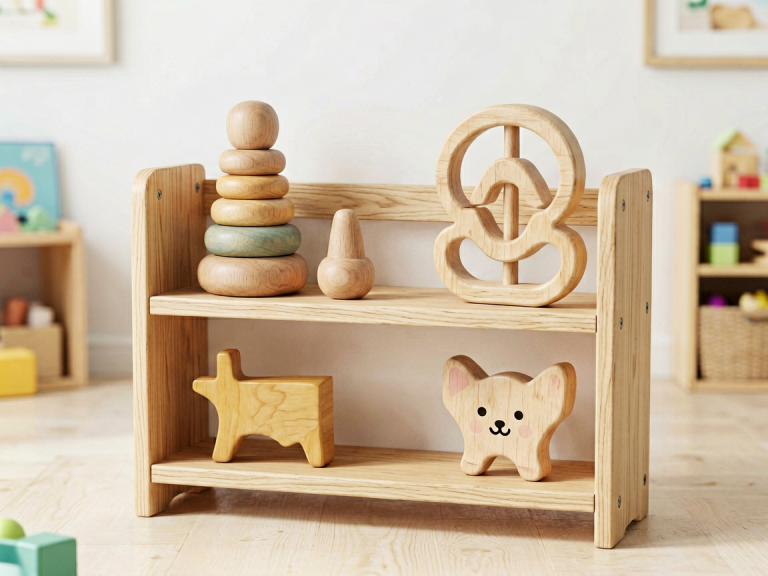
Blocks, LEGO bricks, magnetic tiles, and wooden planks are the bedrock of pretend play. They allow children to construct their own environments—a fort, a spaceship, a castle, a farm. The child decides the function, the scale, and the story. For example, a set of simple wooden blocks can become a bakery counter one day and a row of dinosaur cages the next. The absence of a fixed purpose invites creativity.
2. Realistic Props with a Twist
Realistic toys—such as play kitchens, tool benches, dollhouses, and doctor kits—provide a familiar context. However, the best ones are those with minimal fixed details. A play kitchen with a stove that lights up and makes sounds is less versatile than one with simple knobs and open shelves. The child can pretend the sound of sizzling without hearing it. Similarly, a dollhouse with empty rooms (rather than pre-decorated furniture) encourages the child to imagine the layout, the family, and the daily events.
3. Dress-Up and Costume Elements
Clothing, hats, scarves, old uniforms, and accessories are powerful tools for pretend play because they allow children to physically transform into a character. A firefighter helmet, a princess cape, or a simple apron can instantly change the child’s role. Even better: mix and match. A pirate hat with a lab coat? That might lead to a story about a scientist pirate who discovers a treasure on a distant moon!
4. Neutral Objects
The most creative toys are often not toys at all. Cardboard boxes, fabric scraps, clothespins, paper tubes, and natural materials like sticks and stones become anything the child needs. These objects have no predefined use, so they demand imagination. A cardboard box can be a car, a time machine, a cave, or a stage.
5. Avoid Over-Stimulation
Toys that flash, talk, or move on their own can be entertaining, but they often hijack the play. If a toy fire truck makes loud siren noises and drives itself, the child’s role becomes passive: watching the truck rather than directing its story. Choose quiet, manual toys that put the child in the driver’s seat—literally and figuratively.
—
Setting the Stage: Creating Inviting Play Spaces
The environment in which pretend play occurs significantly influences its depth and duration. A carefully arranged play space sends a message: “This is a place where stories happen.” Here are strategies to set the stage:
1. Define Zones Without Over-Structuring
Instead of a chaotic pile of toys, create loose zones. A corner with a small rug and a basket of dress-up clothes can be the “costume studio.” A low shelf with a play kitchen and empty containers can be the “restaurant.” A bin of blocks near a flat surface invites construction. The key is that zones are flexible. A child who wants to turn the costume zone into a spaceship should feel free to move the clothes aside and build with blocks there.
2. Rotate Toys to Keep Inspiration Fresh
Children often become overwhelmed by too many choices. A classic Montessori approach is to rotate toys regularly. Keep only a few open-ended toys and props accessible at a time. Every few weeks, swap them with others from storage. This re-ignites curiosity: the old toy feels new again, and the child rediscovers its possibilities.
3. Provide “Invitations to Play”
An invitation to play is a carefully arranged setup that suggests a scenario without dictating it. For example, place a play tent, a flashlight, a small stuffed bear, and a “campfire” made from orange tissue paper on the floor. The child sees these items and is naturally drawn to create a camping story. The adult does not say, “Now pretend you are camping.” The objects themselves whisper that possibility. This technique works wonderfully for children ages 2 to 7.
4. Allow Mess and Clutter (Within Reason)
Pretend play often involves moving items around, creating “messes,” and reorganizing. A child building a zoo with blocks might scatter them across the floor. A chef in a play kitchen might dump all the plastic vegetables into a bowl. This is not disorganization; it is the physical manifestation of a narrative. Allow this spontaneous chaos, but later involve the child in tidying up as part of the play (“All the zoo animals need to go to sleep in their basket at night!”).
—
Techniques to Encourage Pretend Play with Toys
Beyond the space and the toys themselves, the way adults interact with children during play can either expand or shrink the imaginative universe. Here are specific techniques to use toys as springboards for rich pretend play:
1. Role-Play as a Co-Player
Join the child’s play as a fellow character, not a director. If the child is using a toy cash register, ask, “Excuse me, how much is this apple? Do you accept magic coins?” Your tone and actions show that you respect the child’s rules. Follow the child’s lead—if the child decides the apple is actually a dragon egg, go with it. The toy has been redefined, and your acceptance validates the child’s creativity.
2. Use “What If” Questions
Questions that begin with “What if” open endless possibilities. While a child plays with a toy car, ask: “What if this car could fly? Where would it go?” Or with a doll: “What if this doll was a superhero? What would her power be?” These questions turn a static object into a launchpad for narrative.
3. Provide Minimalist Props for Maximum Flexibility
When you introduce a new toy, resist the urge to demonstrate its intended function. Instead, let the child discover it. For example, hand a child a set of wooden rings and simply say, “I wonder what you can do with these.” The child might stack them, pretend they are bracelets, or roll them like wheels for a toy car. The fewer instructions, the more invention.
4. Connect Toys to Real-Life Experiences
Pretend play often mirrors real life. If the child has recently visited a grocery store, bring out a toy shopping cart, empty food boxes, and a pretend wallet. The child will reenact the experience, processing and making sense of it. Similarly, after a visit to the doctor, a medical kit becomes a way to reduce anxiety about future checkups.
5. Encourage Storytelling Through Toy Sequences
Help the child weave a story that connects multiple toys. For instance, “Let’s say the bear went to the library (a dollhouse room), and then the rabbit found a treasure map (a piece of paper) under the table.” As the child adds details, the play becomes more complex. Simple toys—a few figures, a piece of fabric, a block—can generate a saga.
6. Embrace Repetition
Children often replay the same scenario with the same toys many times. This is not boring; it is mastery. A child who builds the same tower of blocks every day is refining balance, understanding cause and effect, and deepening the story they associate with that tower. Do not interrupt or suggest variations unless the child seems stuck. Let the repetition be the foundation for later, more elaborate play.
—
Age-Specific Strategies: From Toddlers to School-Age Children
The way toys are used for pretend play shifts as a child grows. Here is a breakdown by developmental stage:
Toddlers (12–36 months):
Toddlers are just beginning to understand symbolic thinking. A toy phone might be held to the ear, but the conversation is babbling. Use toys that mirror their daily routines: a doll, a bottle, a small blanket. Play alongside them, modeling simple actions: “Let’s give the doll a bath in this bowl.” Avoid complex narratives. Keep it concrete and short. Toddlers also love containers and stacking toys—these are the first “props” for simple stories like “put the blocks to sleep in the box.”
Preschoolers (3–5 years):
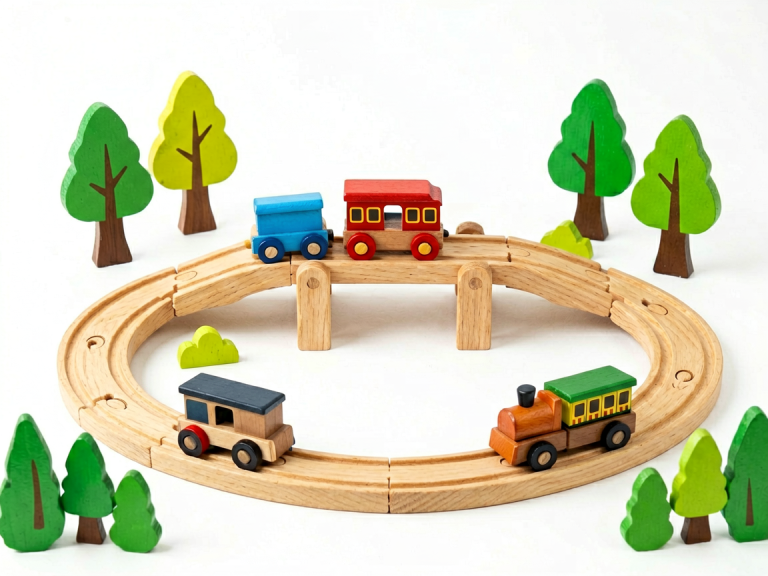
This is the golden age of pretend play. Children now create elaborate scenarios with multiple characters and plots. Provide a rich variety of open-ended toys: costumes, animal figurines, building sets, vehicles, and pretend food. Encourage group play with other children to develop social negotiation. You might set up a “shop” with a toy cash register and empty boxes, then let children take turns as shopkeeper and customer. At this stage, adults can introduce “problem” elements: “Oh no, the toy car broke down! What can we do?” This stimulates creative solutions.
School-Age Children (6–8 years):
Pretend play becomes more sophisticated and rule-based. Children might create elaborate worlds with assigned roles, scripts, and even props they make themselves. Encourage them to build their own toys: a cardboard robot costume, a paper map for a treasure hunt, or a sign for their “restaurant.” This blends pretend play with craft and planning. Video games or board games can also inspire pretend play if used as starting points—for example, after playing a game about knights, children might reenact a tournament with blocks. At this age, adults shift to a quieter role, offering materials and occasional suggestions but letting the child direct.
—
The Role of Adults: Facilitating Without Taking Over
The most common mistake adults make during pretend play is taking control. We want to “teach” or “demonstrate,” but this often squashes the child’s autonomy. The art of facilitation is subtle:
- Observe before intervening. Watch what the child is doing. Is the play flowing? If the child seems stuck, a gentle question can help: “What happens next?” If the child is happily engaged, stay silent.
- Resist the urge to correct reality. If a child uses a blue block to represent an apple, that is fine. Do not say, “But apples are red.” Pretend play operates on imagination, not logic.
- Supply resources, not recipes. If the child needs a boat, hand them a piece of aluminum foil and some tape. Let them build and fail and rebuild. The process matters more than the product.
- Join the play as an apprentice, not a master. Let the child teach you the rules of their world. Say, “What should I do now?” This empowers the child and deepens their engagement.
—
Conclusion
Using toys for pretend play is not about having the most expensive or most realistic collection. It is about understanding the child’s mind and creating conditions for imagination to flourish. Open-ended toys, thoughtfully arranged spaces, respectful adult involvement, and age-appropriate strategies all work together to turn a simple toy into a portal to infinite worlds.
When you hand a child a toy, you are handing them a tool for thinking, for feeling, and for understanding the world. The next time you see a child transforming a cardboard box into a spaceship, pause and marvel. You are witnessing the architecture of creativity itself—and now you know exactly how to support and celebrate it.
*(Word count: approximately 1,340 words)*