The Power of Touch: Best Hands-On Early Learning Approaches for Lifelong Success
Introduction: Why Hands-On Learning Matters More Than Ever
In an age dominated by screens, digital tablets, and passive entertainment, the concept of hands-on early learning has never been more critical—or more misunderstood. Parents and educators alike are flooded with promises of “educational apps” and “smart toys” that claim to accelerate cognitive development. Yet, mounting evidence from developmental psychology, neuroscience, and educational research consistently points to a simpler, more profound truth: the best early learning happens when children use their hands, their bodies, and their senses to actively explore the world around them. Hands-on early learning is not a trendy pedagogical fad; it is the foundational method through which human beings have always learned—by doing, touching, building, and experimenting. This article explores why hands-on approaches are the gold standard for early childhood education, what constitutes the “best” practices in this domain, and how parents and teachers can implement them effectively. From sensory bins that ignite neural connections to block towers that teach physics before a child can speak, the power of tangible experience shapes not only academic readiness but also emotional resilience, creativity, and a lifelong love of learning.
The Neuroscience of Active Exploration: Why Hands-On Beats Passive Instruction
Understanding why hands-on early learning works so well requires a glimpse into the developing brain. During the first six years of life, a child’s brain forms more than one million new neural connections every second. These connections are strengthened through repeated, multi-sensory experiences—what neuroscientists call “embodied cognition.” When a child squeezes a sponge, pours water from one cup to another, or stacks wooden blocks, multiple brain regions fire simultaneously: the motor cortex, the sensory cortex, the prefrontal cortex (for planning), and the cerebellum (for coordination). This simultaneous activation creates dense neural networks that are far more robust than those formed by watching a video or listening to a lecture. In contrast, passive screen-based learning often engages only limited visual and auditory pathways, leading to what researchers term “shallow encoding.” The best hands-on early learning activities actively recruit the somatosensory system—the sense of touch—which is the first sensory system to develop in utero and remains one of the most powerful conduits for memory and understanding. Moreover, hands-on experiences are inherently self-paced. A child can repeat an action ten times, modify it, test a hypothesis, and experience immediate feedback. This cycle of action, observation, and adjustment mirrors the scientific method and builds executive function skills such as focus, impulse control, and problem-solving. In short, the brain is not a passive recorder; it is an active constructor of knowledge, and hands-on learning provides the raw materials for that construction.
Key Characteristics of the Best Hands-On Early Learning Activities
Not all hands-on activities are created equal. The best ones share several defining characteristics that maximize developmental benefits. First, they are open-ended rather than prescriptive. A set of wooden blocks, a bucket of sand, or a tray of playdough offers infinite possibilities; there is no single “correct” outcome. This encourages creativity, divergent thinking, and perseverance because the child is the author of the experience. Second, the best activities are multi-sensory, engaging not just touch but also sight, sound, smell, and even taste (safely). For example, a sensory bin filled with rice, scoops, and small toys engages tactile, visual, and auditory senses, while adding a few drops of lavender oil introduces smell. Multi-sensory stimulation strengthens cross-modal connections in the brain, which is linked to later reading and math skills. Third, effective hands-on learning allows for failure in a low-stakes environment. A tower that topples, a collage that tears, a clay pot that collapses—these are not setbacks but opportunities for learning cause and effect, perseverance, and emotional regulation. Fourth, the best activities are developmentally appropriate—challenging enough to stretch abilities but not so difficult that they cause frustration. Finally, they require active adult facilitation without domination. An adult who asks open-ended questions (“What do you think will happen if you add more water?”) rather than giving instructions (“Do it this way”) scaffolds learning without stifling agency. These characteristics transform a simple activity from mere play into a powerful learning tool.
Practical Examples: The Best Hands-On Early Learning Across Developmental Domains
To illustrate how these principles translate into practice, consider three core developmental domains: cognitive, motor, and social-emotional. In the cognitive domain, one of the best hands-on early learning activities is puzzle play with variable difficulty. A child who manipulates puzzle pieces not only develops spatial reasoning and pattern recognition but also practices executive function—holding the goal image in mind while testing which piece fits. Research from the University of Chicago found that children who engaged in spatial puzzle play before age three demonstrated stronger math skills at age five. Another standout activity is simple cooking and baking. Measuring flour, mixing ingredients, and rolling dough involve math (counting, fractions, volume), science (chemical reactions, heat transfer), and literacy (reading a recipe with pictures). Even a two-year-old can tear lettuce or stir batter, gaining fine motor control and a sense of accomplishment. In the motor domain, fingertip painting and clay sculpting are unmatched for developing hand strength and dexterity—precursors to handwriting. The resistance of clay against small fingers builds the intrinsic muscles of the hand, while the open-ended nature of painting with fingers avoids the constraint of a brush and allows full-body expression. For social-emotional learning, cooperative block building or group dramatic play (e.g., a pretend grocery store) teaches turn-taking, negotiation, empathy, and conflict resolution. A child who must decide where to place a block so that a tower does not fall is also practicing theory of mind—understanding that another child has a different perspective. These examples demonstrate that the best hands-on early learning is not a separate “subject” but an integrated experience that simultaneously builds multiple skills.
Implementing the Best Hands-On Approach at Home: A Practical Guide
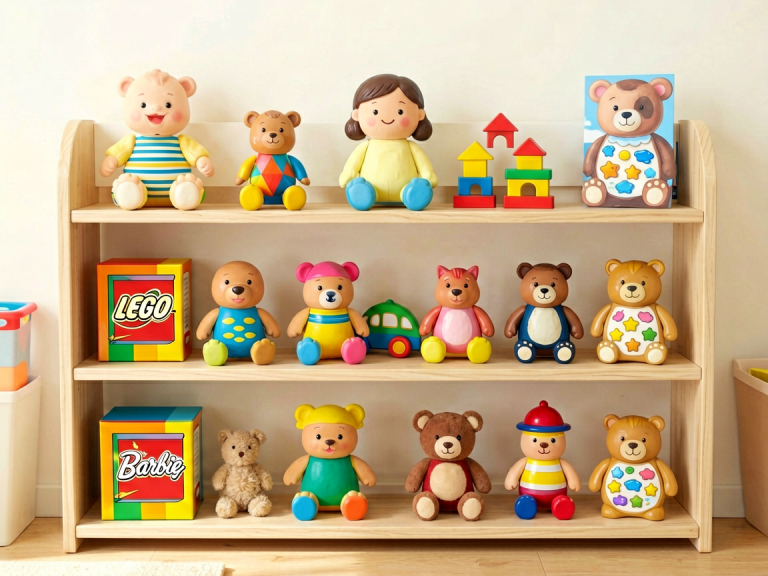
Parents often ask: “How can I ensure my child gets the best hands-on early learning without turning my house into a chaotic mess?” The answer lies in intentional space design and a mindset shift from entertainment to engagement. First, create a “yes” environment —a low shelf with open bins containing simple, high-quality materials: wooden blocks, animal figurines, scarves for draping, crayons, and paper. Rotate materials every few weeks to maintain novelty. Avoid toys that do everything themselves (battery-operated, lights, sounds) because they reduce the child’s role to a passive observer. Second, embrace messy play as a non-negotiable part of development. Spread a plastic tablecloth on the floor, dress the child in old clothes, and provide a tub of water with measuring cups, funnels, and waterproof toys. Water play teaches volume, displacement, and physics while calming the nervous system. Third, integrate hands-on learning into daily routines. Let a toddler help sort socks (classification), pour their own milk from a small pitcher (motor control, estimation), or scrub a potato with a brush (sensory input, responsibility). These mundane tasks are, in fact, the best hands-on early learning because they occur in a meaningful context. Fourth, limit screen time to no more than one hour per day for children aged two to five, as recommended by the World Health Organization, and replace that time with outdoor exploration. Digging in dirt, collecting leaves, and climbing on playground equipment provide rich sensory and vestibular input that no app can replicate. Finally, trust the process. A child who spends 30 minutes “wasting” water by pouring it back and forth is not wasting time; they are constructing foundational concepts of capacity, gravity, and control. The parent’s role is to observe, narrate, and protect this sacred time for discovery.
Adapting Hands-On Learning for Diverse Learning Styles and Special Needs
One of the greatest strengths of the best hands-on early learning is its inclusiveness. Children who struggle with traditional instruction—whether due to language delays, attention difficulties, sensory processing disorders, or cognitive differences—often thrive when learning becomes tangible. For a child with autism, a sensory bin with carefully selected textures (dry beans, kinetic sand, water beads) can provide calming, predictable input that reduces anxiety and opens the door to communication. For a child with dyslexia, forming letters with clay or tracing them in sand engages muscle memory and bypasses the visual confusion that phonics alone can cause. For a child who is kinesthetic—someone who “thinks with their body”—the best hands-on early learning is not a supplement but the primary mode of instruction. Teachers and parents can adapt activities by offering alternative materials: for a child with fine motor delays, use larger objects (e.g., big Lego Duplo rather than tiny beads); for a child with auditory processing issues, pair instructions with visual demonstrations. The key principle remains the same: provide concrete, manipulable experiences that allow the child to learn through doing. When we honor each child’s unique neurological wiring, hands-on learning becomes not just effective but transformative.
The Role of the Educator: How to Facilitate Without Interfering
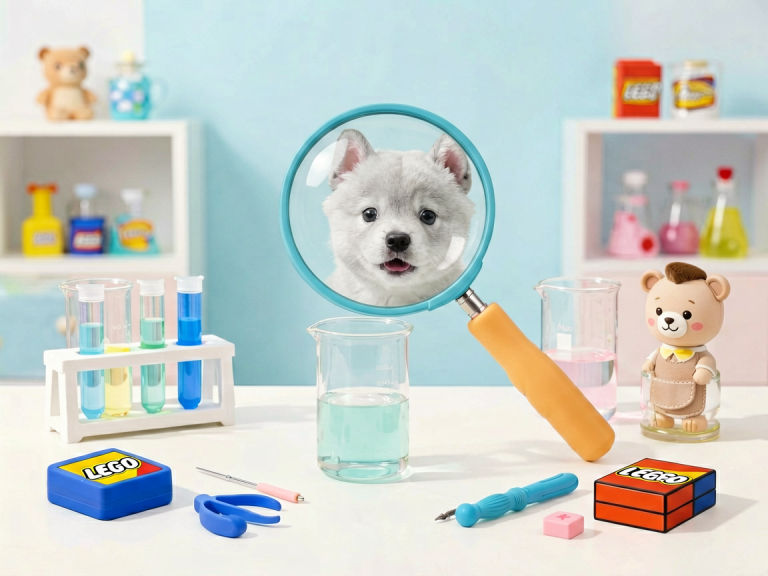
Even the best hands-on early learning materials are only as good as the adult who sets the stage. A skilled educator or parent operates as a “scaffolder”—providing just enough support to keep the child in their zone of proximal development. This means asking open-ended questions (“How can you make that bridge stronger?”) rather than giving commands (“Put the block here”). It means resisting the urge to “correct” a child’s creative interpretation—if a child says the blue crayon makes a “sun” but it is green, allow the cognitive dissonance; it indicates imaginative thinking. It means preparing the environment in advance so that the child can work independently, and then stepping back to observe and document. Educators can incorporate hands-on early learning by setting up provocations—inviting arrangements of materials that spark curiosity. For example, a tray with a magnifying glass, a pinecone, a feather, and a ruler invites classification and measurement. A basket with fabric scraps, yarn, and cardboard tubes invites engineering and design. The best facilitators also introduce vocabulary in context: saying “You are using force to push that ball” while the child rolls a ball down a ramp teaches physics language organically. Finally, they model a growth mindset by embracing their own mistakes—“Oops, I spilled the water. Let’s get a towel and figure out how to clean it up.” This teaches resilience and problem-solving far more effectively than any lecture.
Conclusion: The Enduring Value of Tangible Experience in a Digital Age
As we navigate an increasingly virtual world, the importance of the best hands-on early learning cannot be overstated. Screens offer efficiency and information delivery, but they cannot replace the messy, joyful, physical process of learning through touch. The child who builds a fort of pillows learns about balance and geometry. The child who smushes a banana into a bowl learns cause and effect and texture. The child who digs for worms learns biology and reverence for life. These experiences form the bedrock of curiosity, creativity, and critical thinking—qualities that will serve children long after they have forgotten how to swipe a screen. The best hands-on early learning is not a method reserved for Montessori classrooms or Pinterest-perfect playrooms; it is a philosophy that recognizes every moment as an opportunity for discovery. Whether you are a parent, a teacher, or a caregiver, you have the privilege and responsibility to provide these experiences. Put down the tablet. Pick up the block. Pour the water. Dig in the dirt. In doing so, you are not just teaching a child—you are honoring their deepest, most natural way of learning. And that is the best investment we can ever make in the future.