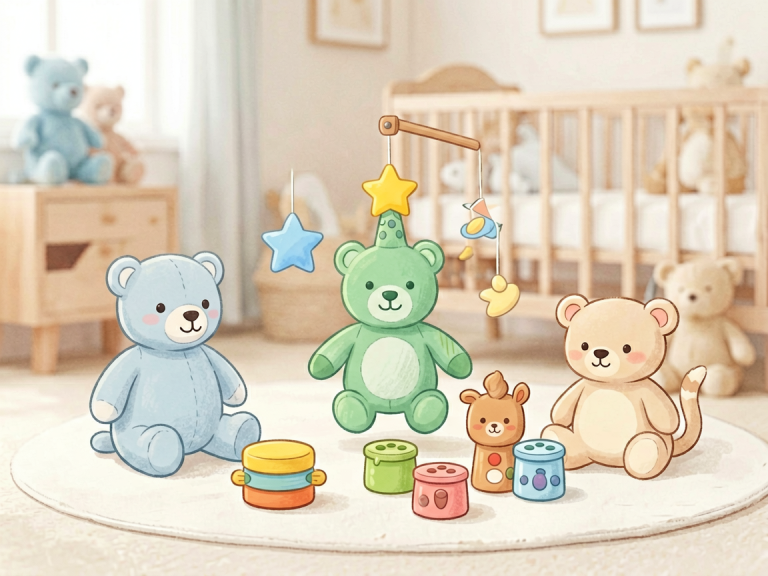
Top Screen-Free Toys for 2-Year-Olds: Nurturing Development through Hands-On Play
Introduction
In an age where digital screens dominate every corner of daily life, many parents are actively seeking alternatives that encourage real-world interaction, sensory exploration, and cognitive growth. For two-year-olds, who are at a critical stage of rapid brain development, the right toys can shape motor skills, language acquisition, problem-solving abilities, and social-emotional understanding. Screen-free toys not only reduce passive consumption but also invite active, imaginative engagement. This article explores the best screen-free toys for 2-year-olds, categorized by developmental benefits, to help caregivers make informed choices that foster healthy growth without a single pixel in sight.
Why Screen-Free Matters at Age Two
Before diving into specific recommendations, it is worth understanding why screen-free play is particularly vital for toddlers. At age two, children’s brains are forming up to one million neural connections per second. These connections are strengthened through multisensory experiences—touch, sound, movement, and social interaction. Screens, by contrast, deliver passive, two-dimensional stimuli that often inhibit the kind of open-ended exploration a toddler needs. The American Academy of Pediatrics recommends avoiding all screen media for children under 18 months and limiting it to one hour of high-quality programming for children aged 2 to 5. By choosing screen-free toys, parents encourage hands-on learning, improve attention spans, and support the development of fine and gross motor skills necessary for later tasks like writing and self-care.
Building Fine Motor Skills: Stacking, Sorting, and Threading Toys
Fine motor development—the coordination of small muscles in the hands and fingers—is a cornerstone of toddler growth. Toys that require precise manipulation help children gain control and dexterity, which later translates into using utensils, drawing, and buttoning clothes.
*Interlocking Building Blocks*
Classic wooden blocks remain unmatched for fine motor practice. Unlike plastic bricks that snap together easily, wooden blocks require careful balancing and spatial awareness. A set with various shapes—cubes, cylinders, arches—allows a two-year-old to practice stacking without frustration. Many brands now offer blocks with textured surfaces or painted patterns that also stimulate tactile and visual senses. As children experiment with equilibrium, they learn cause and effect: “If I put this block here, the tower falls.” This simple trial-and-error process is a foundation for scientific thinking.
*Large Bead Mazes and Threading Kits*
Bead mazes, often mounted on a wooden base with curved wires, encourage toddlers to slide beads along paths. This motion strengthens the pincer grip (thumb and forefinger) and hand-eye coordination. For threading, choose chunky wooden or plastic beads with large holes and a stiff lace or rod. At two, children may initially struggle to thread beads, but the repeated attempt builds patience and finger strength. Look for sets with beads of different colors and shapes to add a layer of sorting and naming opportunities.
*Peg Puzzles*
Puzzles with large, easy-to-grasp pegs are ideal for this age. Unlike traditional jigsaw puzzles, peg puzzles require the child to lift and replace pieces into cut-out spaces. This action exercises the wrist and finger muscles while teaching shape recognition and spatial relationships. Choose puzzles that depict familiar objects—animals, vehicles, or fruits—so that language development naturally accompanies play. For example, as a child places the cow puzzle piece, an adult can say, “The cow says ‘moo’.” This links motor action with vocabulary, creating a richer learning experience.
Sensory and Tactile Exploration: Materials That Engage Multiple Senses
Two-year-olds are sensory explorers. They learn by touching, tasting (though we hope not too much), smelling, and listening. Screen-free toys that offer varied textures, weights, and sounds captivate their curiosity and support sensory integration.
*Kinetic Sand or Play Dough Sets*
Kinetic sand is a marvel of engineering: it sticks to itself but not to hands, allowing toddlers to mold, scoop, and squeeze without messy residue. Squeezing sand strengthens hand muscles, while shaping it into “castles” or “cookies” encourages imaginative play. Pair it with silicone molds or small plastic tools (cups, shovels, rolling pins) to extend the activity. Play dough, similarly, offers infinite possibilities—rolling, pinching, stamping. Many commercial doughs now come in natural, non-toxic formulas. For added sensory variety, parents can create homemade dough with different scents (cinnamon, lavender) or textures (adding rice or sand).
*Sensory Bins*
A sensory bin is a container filled with a base material—dried beans, rice, pasta, or water beads—and supplemented with scoops, funnels, and small toys. Two-year-olds love to pour, sift, and bury objects. This open-ended play promotes concentration and fine motor control. Important safety note: always supervise water beads or small items to prevent choking. Choose larger objects like plastic animals, silk leaves, or jumbo pom-poms. Sensory bins can be themed around seasons (autumn leaves and acorns) or animals (river rocks and plastic frogs), turning play into a discovery lesson.
*Musical Instruments*
Simple, child-safe instruments like maracas, xylophones, drums, and jingle bells provide rich auditory feedback. Shaking a maraca teaches rhythm and cause-effect (“I shake hard, it makes loud noise”), while tapping a xylophone hones hand-eye coordination. Many wooden instrument sets are designed for small hands and produce pleasant, not jarring, sounds. Music-making also supports language rhythm and emotional expression—a toddler banging on a drum may be expressing joy or frustration, and that outlet is healthy.
Pretend Play and Social-Emotional Growth: Dolls, Kitchen Sets, and Tool Benches
At age two, children begin to imitate the world around them. Pretend play is not just fun; it is how they understand social roles, practice empathy, and develop language. Screen-free toys that invite role-play are invaluable.
*Dollhouses with Simple Furniture*
A sturdy wooden dollhouse with a few rooms and movable furniture pieces allows a toddler to create narratives. While a two-year-old may not construct complex stories, they will enjoy placing the “mommy” doll in the bed or putting the “baby” in the high chair. This action helps them process daily routines—bedtime, mealtime, bathing—and reduces anxiety by making these events familiar. Choose a dollhouse with chunky, non-detachable pieces to avoid frustration. Larger dolls (around 6 to 8 inches) are easier for small hands to hold and dress.
*Play Kitchens and Pretend Food*
A child-sized wooden kitchen with a stove, sink, and pots is a classic for good reason. Toddlers love to “cook” and serve their stuffed animals or caregivers. This type of play builds sequencing skills (first cut, then stir, then serve) and social interaction (offering a “snack” to Dad). Look for sets that include pretend fruits and vegetables that can be “cut” apart with a wooden knife—these often stick together with Velcro, providing satisfying separation. Such toys also introduce vocabulary: apple, banana, chop, boil. For added realism, include empty food boxes or plastic plates.
*Tool Benches*
For children who show interest in fixing things, a toddler-sized workbench with a hammer, wrench, and screws offers a fantastic screen-free outlet. They can practice hammering pegs into holes or twisting bolts into place. This develops bilateral coordination (using both hands together) and problem-solving (figuring out which hole the bolt fits). Again, pretend play merges with fine motor work. A tool bench also allows parents to model safety and concentration, turning play into a bonding moment.
Gross Motor Activities: Push Toys, Ride-Ons, and Balance Aids
While many gross motor toys involve movement, they are still screen-free and essential for physical development. Two-year-olds are learning to run, jump, balance, and climb. The right toys encourage these skills safely.
*Push and Pull Toys*
A classic pull-along toy, such as a wooden dog on wheels or a train with cars, helps toddlers practice walking backward while controlling a string. This seemingly simple activity improves balance and spatial awareness. Push toys, like a wooden lawn mower or a grocery cart, encourage forward motion and strengthen leg muscles. When the cart makes clicking noises or the lawn mower spins a wheel, the child learns cause and effect—their movement produces a result.
*Balance Bikes*
Balance bikes (pedal-less bikes) are arguably the best investment for a two-year-old who is ready for locomotion. Unlike tricycles, which often frustrate because pedaling requires coordination few two-year-olds have, balance bikes let children focus on balancing and steering using only their feet to push off the ground. This builds core strength and confidence. Most children transition to a pedal bike much faster after balance bike practice. Choose one with an adjustable seat and pneumatic tires for a smooth ride.
*Soft Climbing Blocks or Foam Obstacles*
Foam climbing blocks made of non-toxic, dense foam allow toddlers to crawl, climb, and jump without injury. A set that includes ramps, steps, and a small tunnel creates an indoor playground. These toys support vestibular development (balance and spatial orientation) and give high-energy children an outlet for their natural urge to move. Supervised climbing also teaches risk assessment—a child learns how high they can go before falling.
Language and Cognitive Development: Board Books, Memory Games, and Simple Puzzles
Even without screens, two-year-olds can develop pre-literacy skills through hands-on materials.
*Touch-and-Feel Books*
Board books with textured pages (furry bunny, rough sandpaper, shiny foil) combine sensory input with storytelling. Reading together creates a screen-free ritual that builds vocabulary and listening comprehension. Choose books with simple, repetitive text and bright illustrations. At two, children often want to turn pages themselves, which refines fine motor control. Pop-up books add an element of surprise that delights toddlers and reinforces object permanence.
*Simple Matching and Memory Games*
Wooden memory games with large, thick cards featuring animals or common objects are great for this age. Initially, toddlers may just flip cards to see the pictures. Over time, they learn to match pairs. This process sharpens visual discrimination and short-term memory. Some games come with an accompanying plastic tray where children place matching items, which adds a tactile element. Play these games with a caregiver, taking turns to model patience and turn-taking.
*Color and Shape Sorters*
A classic shape sorter—a cube with holes in different shapes and corresponding blocks—never loses its value. It teaches categorizing, problem-solving (which block fits where), and perseverance. Some modern versions have transparent sides so children can see the blocks drop, adding visual feedback. For variety, try a color-sorting game where toddlers place colored wooden discs into matching painted cups. This activity can be extended into counting: “One red disc, two red discs.”
Conclusion: Choosing Quality over Quantity
The best screen-free toys for two-year-olds are not necessarily the most expensive or the ones with the most features. They are toys that invite exploration, require active participation, and spark imagination. When selecting toys, prioritize natural materials (wood, fabric, silicone) over plastic, avoid batteries (which limit the child’s role), and choose open-ended items that can be used in many ways. Remember that the most valuable element in any play experience is the presence of an engaged adult who talks, listens, and plays alongside the child. Screen-free toys are powerful tools, but they reach their full potential in the context of loving human interaction. By curating a collection of these developmentally appropriate items, you can create a childhood rich in hands-on learning, creativity, and joy—all without a single screen in sight.