The Ultimate Age-Appropriate Play Checklist: A Developmental Roadmap for Parents and Caregivers
Introduction
Play is the language of childhood. It is not merely a pastime but a fundamental pillar of cognitive, physical, social, and emotional development. From the first cooing gaze of a newborn to the elaborate board-game strategies of a ten-year-old, play evolves in complexity, mirroring the child’s growing capacities. Yet, one of the most common challenges parents face is knowing which types of play, toys, and activities are appropriate for their child’s age. Offering a toy that is too advanced can cause frustration; offering one that is too simple can lead to boredom—and both can dampen the joy of discovery.
An age-appropriate play checklist serves as a practical compass. It helps caregivers match play experiences to a child’s current developmental stage, ensuring that each activity is both safe and stimulating. This guide synthesizes developmental research and expert recommendations into a clear, stage-by-stage checklist. Whether you are a new parent looking for sensory ideas for your infant or the guardian of a school-age child seeking to balance screen time with active play, this article will provide you with actionable milestones and concrete suggestions. By understanding what children need at each age, we can turn everyday moments into powerful opportunities for growth.
—
Infants (0–12 Months): Sensory Exploration and Bonding
*The Foundation of Trust and Sensory Awareness*
During the first year, play is overwhelmingly sensory and relational. Infants learn about the world through their mouths, hands, eyes, and ears. They also form their first attachments through responsive, face-to-face interactions. An age-appropriate play checklist for this period must prioritize safety (no small parts, no strings longer than 12 inches) and simplicity.
- Visual Tracking and Contrast: Newborns see most clearly at a distance of 8–12 inches. High-contrast black-and-white cards or soft books with bold patterns capture their attention. At around 3–4 months, they begin to reach for hanging toys. A play gym with dangling, rattling objects encourages batting and grasping.
- Tactile and Oral Exploration: Once infants can sit with support (around 4–6 months), provide textured teething toys, soft fabric blocks, and unbreakable mirrors. These items offer varied surfaces and safe mouthing experiences, which are crucial for oral-motor development.
- Cause and Effect: By 6–9 months, babies love shaking rattles, pressing buttons on electronic toys that produce sounds, or dropping objects from their highchair. Simple stacking cups or nesting bowls teach early spatial concepts. Always supervise, as mouthing continues.
- Social Games: Peek-a-boo, pat-a-cake, and gentle tickling are powerful forms of play that build social reciprocity. Singing nursery rhymes with exaggerated facial expressions helps infants tune into rhythm and emotion.
Checklist Summary for Infants
□ High-contrast cards or toys (0–3 months)
□ Soft rattles and grasping toys (3–6 months)
□ Teething rings and textured balls (6–9 months)
□ Stacking cups or nesting dolls (9–12 months)
□ Mirror (unbreakable) for self-recognition
□ Daily caregiver interaction: talking, singing, and peek-a-boo
—
Toddlers (1–3 Years): Motor Skills and Imaginative Emergence
*From Wobbly Steps to Pretend Play*
Toddlers are bundles of energy and curiosity. Their rapid acquisition of walking, running, and climbing is matched by a blossoming imagination. The checklist for this age emphasizes large-motor challenges, fine-motor manipulation, and early symbolic thinking. Safety concerns shift: toddlers can now pull items off shelves, put small objects in their mouths, and climb onto unstable furniture.
- Gross Motor Play: Push-and-pull toys (e.g., a wagon or a wooden lawn mower) encourage walking and balance. Low, soft climbing structures, balls of various sizes for rolling and chasing, and ride-on toys (without pedals) build core strength. An important addition is the “bumpy path” made from pillows or foam mats for crawling and tumbling.
- Fine Motor Manipulation: Large pegboards, simple jigsaw puzzles with two to four pieces, and chunky crayons for scribbling help refine hand-eye coordination. Playdough (homemade, non-toxic) strengthens small hand muscles. Lacing cards with thick strings are excellent for older toddlers.
- Pretend Play: A play kitchen, toy phone, doll with a blanket, or simple costume items (hats, scarves) invite toddlers to imitate adult actions. This type of play is critical for language development and social understanding. At this stage, children often engage in “parallel play”—playing alongside peers rather than with them—which is perfectly normal.
- Sensory Bins: Fill a shallow container with dry rice, beans, or sand. Add scoops, small cups, and plastic animals. Supervise closely to prevent ingestion. These bins provide open-ended, calming sensory exploration.
Checklist Summary for Toddlers
□ Push/pull toys and ride-on vehicles (1–2 years)
□ Large balls and soft climbing blocks (1–2 years)
□ Chunky crayons, finger paints, and playdough (2+ years)
□ Simple puzzles (2–5 pieces) and shape sorters (2+ years)
□ Pretend play props: kitchen sets, dolls, dress-up clothes
□ Sensory bins (supervised)
—
Preschoolers (3–5 Years): Social Interaction and Creative Complexity
*Cooperation, Storytelling, and Early Rule-Understanding*
Preschoolers are ready for more structured play, though flexibility remains key. Their language explodes, and they begin to negotiate roles with friends. They can follow simple rules, share (with reminders), and persist at tasks for longer periods. The checklist for this stage should encourage cooperative play, fine-motor refinement, and increasingly complex narratives.
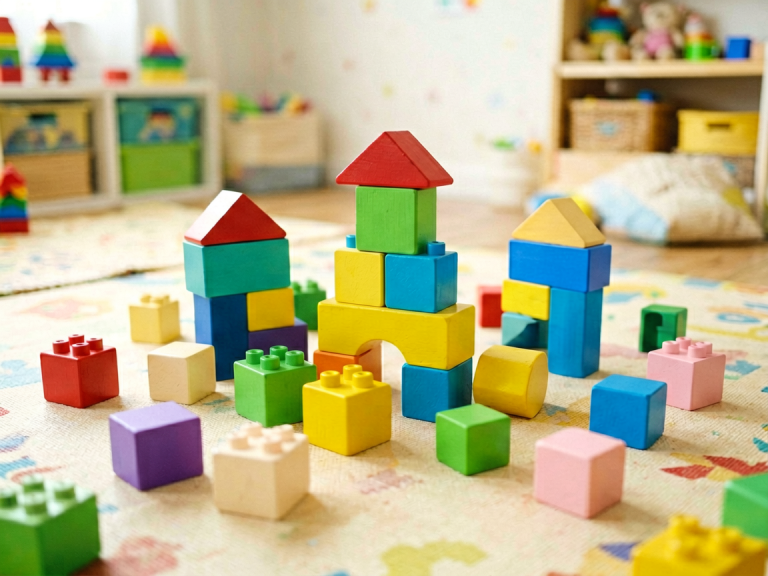
- Constructive Play: Building sets like large plastic bricks (Duplo/Lego Jr.), magnetic tiles, and wooden blocks allow children to design houses, towers, and bridges. This fosters spatial reasoning and problem-solving. Encourage them to draw plans before building.
- Art and Creativity: Washable markers, safety scissors (blunt tip), glue sticks, recycled materials (boxes, paper tubes), and watercolor paints offer endless possibilities. Process-oriented art (where the experience matters more than the final product) supports creativity and reduces frustration.
- Imaginary Worlds: Dollhouses, train sets, farm animal sets, and puppet theaters become stages for elaborate pretend episodes. Children create scripts, assign characters, and act out emotions. This play is crucial for empathy and emotional regulation.
- Board Games and Memory Games: Simple games like Candy Land (color recognition), Memory (matching cards), and “Simon Says” teach turn-taking, patience, and working memory. Keep sessions short (10–15 minutes) to match attention spans.
- Outdoor Exploration: Tricycles or balance bikes, sandboxes, water tables, and simple gardening tools (small trowels, watering cans) blend physical activity with scientific inquiry. Nature scavenger hunts encourage observation.
Checklist Summary for Preschoolers
□ Construction blocks (Duplo, magnetic tiles)
□ Art supplies: safety scissors, glue, markers, paper
□ Dress-up costumes and puppet theater
□ Simple board games (Candy Land, Memory)
□ Outdoor equipment: tricycle, sandbox, water table
□ Puzzles (12–24 pieces) and matching games
—
School-Age Children (6–12 Years): Complex Games, Strategy, and Peer Collaboration
*Mastery, Competition, and Deep Engagement*
School-age play shifts toward games with formal rules, team sports, and hobbies that require sustained attention and skill-building. Children at this stage can understand complex cause-and-effect, plan ahead, and engage in logical reasoning. They also crave autonomy and peer acceptance. The checklist should reflect a balance between structured activities and free, child-led exploration.
- Strategy and Logic Games: Chess, checkers, Scrabble Junior, or cooperative board games (e.g., Forbidden Island) challenge critical thinking. Card games like Uno or Go Fish also teach strategy and social etiquette. Puzzle books with crosswords, mazes, and sudoku are excellent for solo play.
- Physical Play and Organized Sports: Team sports (soccer, basketball, softball) teach cooperation and discipline. Individual activities such as swimming, martial arts, or gymnastics build self-confidence. Free outdoor play—tag, capture the flag, or building forts—should not be replaced by structured leagues entirely; unstructured time is vital for creativity.
- Construction and Engineering: Advanced building sets (Lego Technic, K’NEX), model kits (cars, airplanes), and simple robotics kits (like Lego Mindstorms or Snap Circuits) introduce principles of physics and design. Children can follow instructions or invent their own creations.
- Creative and Expressive Arts: Musical instruments (keyboard, recorder, ukulele), theater clubs, drawing and painting, or writing short stories allow children to express their identity. Digital creation tools (e.g., coding apps like Scratch) blend technology with creativity.
- Role-Playing and Simulation: Fantasy role-playing games (e.g., simplified Dungeons & Dragons), historical reenactments, and complex pretend scenarios (running a pretend store or restaurant) help children understand systems, negotiate roles, and practice perspective-taking.
Checklist Summary for School-Age Children
□ Strategy board games (chess, checkers, cooperative games)
□ Sports equipment (ball, glove, bicycle, jump rope)
□ Advanced construction kits (Lego Technic, Snap Circuits)
□ Musical instrument or art supplies (sketchbook, pastels)
□ Logic puzzles, brainteasers, and coding apps
□ Outdoor unstructured play time (minimum 1 hour daily)
—
Special Considerations: Screen-Based Play, Sensory Needs, and Inclusivity
While this checklist focuses on physical and social play, modern childhood inevitably involves screens. An age-appropriate approach means setting clear limits. For infants and toddlers, screens (except live video calls) should be avoided entirely. Preschoolers can enjoy 30 minutes daily of high-quality, interactive content (e.g., Daniel Tiger, Sesame Street) with an adult watching alongside. School-age children can use educational apps, coding platforms, and creative software up to one hour per day, provided it does not replace active play or sleep.
Every child develops at their own pace, and some have sensory processing differences or physical disabilities. Adapt the checklist accordingly: a child with autism may prefer solitary, repetitive play (like lining up cars), which can be gently expanded upon; a child with motor delays may benefit from adaptive toys (e.g., larger grips, switch-operated electronic toys). The principle of “just-right challenge” remains—a task should be achievable with effort but not cause chronic frustration.
Conclusion
An age-appropriate play checklist is not a rigid prescription but a dynamic guide. It reminds us that play has a trajectory: from the simple joy of a rattle to the complex strategies of a board game, each stage builds on the last. By offering children the right tools, time, and environment, we honor their developmental needs and fuel their innate curiosity. The checklist also empowers caregivers to say “no” to toys that are developmentally mismatched, even if they are marketed as popular, and to say “yes” to the simple, open-ended materials that spark creativity.
Ultimately, the most important item on any checklist is the presence of a caring, responsive adult. Whether you are rolling a ball to an infant, building a fort with a toddler, or losing a round of chess to a ten-year-old, your engagement is the irreplaceable ingredient. Play is not just preparation for life—it is life itself, in its most vivid and joyful form. So keep this checklist handy, but also keep your eyes on your child. Watch their delight, follow their lead, and trust that the play you offer today is building the foundation for a lifetime of learning.