The Power of Play: Cultivating Problem-Solving Skills in Children Through Engaging Activities
Introduction
In the bustling landscape of modern childhood, where structured academics and screen time often dominate, the simple act of play is sometimes undervalued. Yet, for decades, developmental psychologists and educators have underscored that play is not merely a pastime but a fundamental engine for cognitive growth. Among the most critical skills nurtured through play is problem-solving—the ability to analyze a situation, identify obstacles, and devise effective solutions. From building a tower that won’t topple to negotiating the rules of an imaginary game, children engage in spontaneous problem-solving that shapes their executive functions, creativity, and resilience. This article explores how problem-solving play works, why it matters, and how parents and educators can intentionally foster it. By understanding the principles behind this type of play, we can help children develop the mindset and tools they need to tackle real-world challenges with confidence.
The Science Behind Play and Problem Solving
Play is the natural language of childhood, and problem-solving lies at its core. When children play, they enter a state of low-stakes experimentation. Unlike formal learning environments where failure may be penalized, play allows trial and error without fear. Neuroscientific research reveals that during unstructured play, the prefrontal cortex—the brain region responsible for planning, decision-making, and impulse control—is highly active. This neural activation strengthens neural pathways that support flexible thinking. For example, when a child tries to fit a square block into a round hole, they are not just playing; they are hypothesis testing. They observe, adjust, and try again. This process mirrors the scientific method: observation, hypothesis, experiment, and conclusion. Moreover, play often involves social negotiation, which requires children to consider multiple perspectives, anticipate outcomes, and compromise—all advanced problem-solving skills. The American Academy of Pediatrics has even stated that play is essential for healthy brain development, highlighting its role in building the foundation for lifelong learning and adaptation.
Types of Problem-Solving Play: A Spectrum of Opportunities
Not all play is equal when it comes to fostering problem-solving, but a wide range of activities can be leveraged. Understanding these types helps caregivers choose appropriate experiences.
1. Constructive Play: Building and Creating
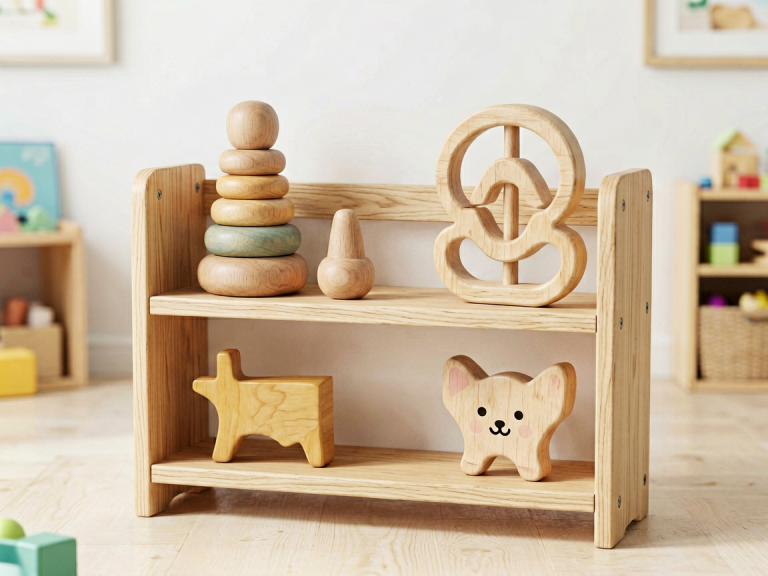
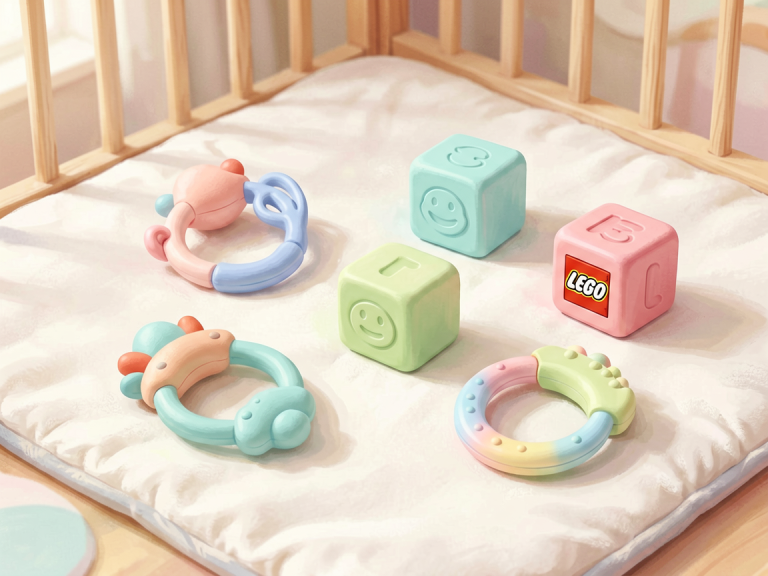
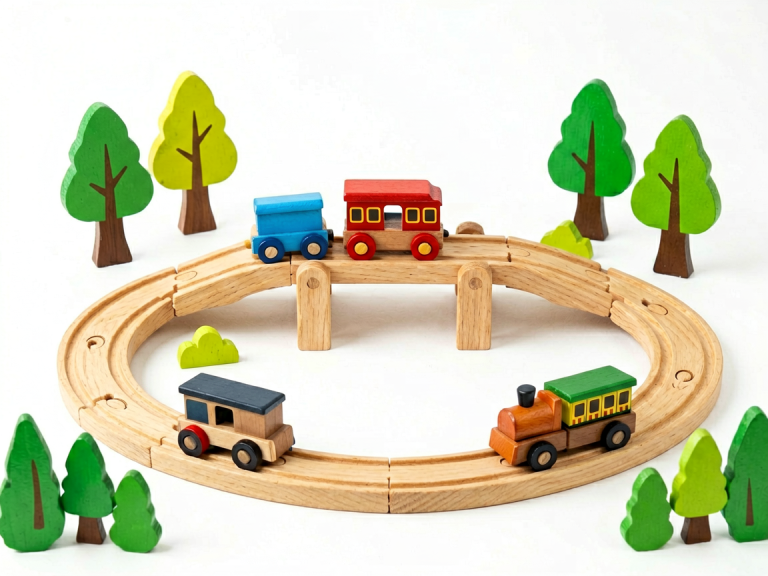
Constructive play involves manipulating materials to create something new. Classic examples include building with LEGO bricks, assembling puzzles, or designing a fort from blankets and furniture. This type of play directly engages children in spatial reasoning, planning, and iterative problem-solving. When a tower falls, a child must diagnose the cause—was the base too narrow? Were the blocks aligned unevenly?—and then modify their approach. Open-ended materials like wooden blocks or magnetic tiles offer infinite possibilities, encouraging children to set their own goals and overcome obstacles. Even simple activities like threading beads onto a string require fine motor coordination and sequential thinking. The key is that the child controls the outcome; there is no single "right answer," which fosters a growth mindset.
2. Pretend Play: Navigating Social and Narrative Challenges
Pretend play, also known as imaginative or dramatic play, is a rich arena for problem-solving. When children pretend to be doctors, astronauts, or shopkeepers, they create scenarios that demand negotiation, role adaptation, and conflict resolution. For instance, two children may disagree on who gets to be the captain of the spaceship. To continue the game, they must collaboratively find a solution—perhaps taking turns or inventing a new role. These interactions teach children to articulate their needs, listen to others, and generate compromises. Furthermore, pretend play often involves "if-then" reasoning: "If we have a storm, then the ship must land." This narrative thinking strengthens logical connections and the ability to foresee consequences. Research shows that children who engage in frequent, complex pretend play score higher on measures of task persistence and flexible thinking.
3. Games with Rules: Strategic and Analytical Thinking
Board games, card games, and organized sports introduce a different layer of problem-solving: adherence to rules combined with strategy. Games like chess, checkers, or even "Guess Who?" require players to think ahead, anticipate an opponent’s moves, and adapt their strategy based on new information. Cooperative games, where players work together against the game itself, are especially valuable for teaching teamwork and shared problem-solving. For example, in the game "Forbidden Island," players must collaborate to collect treasures while the island sinks—a scenario that necessitates communication, resource allocation, and prioritization. Even simple games like "Simon Says" train impulse control and attention, which are foundational for higher-order problem-solving. The structure of rules provides a safe framework within which children can experiment with cause and effect.
4. Outdoor and Physical Play: Real-World Problem Solving
Nature and physical environments offer unpredictable challenges that sharpen problem-solving skills. Climbing a tree requires assessing branch strength, planning a route, and managing risk. Building a dam in a stream forces children to understand water flow, gravity, and material properties. Navigating a playground with peers involves spatial awareness and social dynamics. Outdoor play often presents open-ended problems that cannot be solved through a predetermined method—a child must invent a solution on the spot. For instance, retrieving a ball stuck in a bush might require using a stick, asking for help, or creating a new game to retrieve it. These experiences build resilience and resourcefulness because the consequences are immediate and tangible.
The Role of Adults: Guiding Without Overriding
While children naturally engage in problem-solving play, adults can enhance this process through thoughtful facilitation. The goal is not to solve problems for children but to create conditions that encourage independent thinking. Here are some strategies:
- Ask open-ended questions: Instead of saying, "That won't work," ask, "What else could you try?" or "How did you decide to do it that way?" This prompts reflection without imposing a solution.
- Provide diverse materials: A simple collection of recycled items, art supplies, blocks, and natural objects can spark countless problem-solving scenarios. Avoid toys that dictate a single use.
- Embrace failure: When a child’s structure collapses or their plan fails, resist the urge to fix it immediately. Instead, validate their effort: "I see you're frustrated. What do you think caused the problem?" This teaches that setbacks are learning opportunities.
- Model problem-solving: Narrate your own thought processes while cooking, repairing something, or planning a trip. Let children see that adults also encounter problems and work through them step by step.
- Allow unstructured time: Over-scheduled lives leave little room for deep, uninterrupted play. Ensure children have at least 45–60 minutes of free play daily, preferably outdoors or with open-ended materials.
It is equally important to recognize the difference between supervised play and over-directed play. When adults dictate every step of a game, they rob children of the opportunity to own the problem. The magic happens when the adult steps back and lets the child struggle, think, and ultimately succeed—or fail—on their own terms.
Real-World Benefits: Beyond the Sandbox
The skills cultivated through problem-solving play extend far beyond childhood. Children who regularly engage in such play develop better executive functions—working memory, cognitive flexibility, and inhibitory control. These are the same skills that predict academic success, career readiness, and even emotional well-being. For example, a child who has learned to negotiate roles in pretend play is better equipped to collaborate on group projects in school. A child who has experimented with block structures understands basic engineering principles intuitively. Moreover, problem-solving play fosters a growth mindset—the belief that abilities can be developed through effort. This mindset is linked to higher motivation, lower anxiety, and greater willingness to take on challenges.
In an era of rapidly changing technology and complex global issues, the ability to think creatively and solve novel problems is more valuable than ever. While parents may worry that children spend too much time on screens, the solution is not necessarily to eliminate technology but to ensure that play remains hands-on, social, and exploratory. Even digital games can be chosen wisely—those that encourage strategy, puzzle-solving, and creativity, rather than passive consumption.
Conclusion
Problem-solving play is not a luxury; it is a necessity for healthy development. Through constructive building, imaginative storytelling, rule-based games, and outdoor adventures, children learn to navigate uncertainty, experiment with possibilities, and persist through difficulty. These experiences lay the neural groundwork for a lifetime of adaptive thinking. As adults, our role is to trust the process—to provide the space, materials, and gentle guidance that allow children to become confident problem-solvers. In doing so, we gift them not just the ability to answer questions, but the courage to ask new ones and the creativity to invent solutions that have never been tried before. The next time you see a child deeply absorbed in play, remember: they are not just playing—they are building the architecture of their own minds.