The Power of Play: A Comprehensive Guide to Fine Motor Toys for Toddlers
Introduction: Why Fine Motor Skills Matter
In the whirlwind of toddlerhood, every moment is an opportunity for growth. From the first wobbly steps to the joyous scribbles on a piece of paper, children are constantly building the foundational skills they will carry into school and adulthood. Among these essential abilities, fine motor skills—the coordinated movements of small muscles in the hands, fingers, and wrists—play a surprisingly pivotal role. They are the silent architects behind tasks as varied as holding a spoon, buttoning a shirt, writing a name, or even using a smartphone. For toddlers, the development of these skills is not merely a milestone to check off; it is a gateway to independence, confidence, and cognitive development.
Enter fine motor toys. These purposefully designed playthings transform abstract concepts like grip strength, hand-eye coordination, and dexterity into tangible, joyful experiences. But not all toys are created equal. In a market flooded with bright colors and flashing lights, discerning parents and educators need a clear roadmap to choose toys that truly nurture a toddler’s growing abilities. This article delves deep into the world of fine motor toys for toddlers—explaining why they matter, what to look for, and which types offer the richest developmental returns.
Understanding Fine Motor Development in Toddlers
Before diving into toy recommendations, it is crucial to grasp the typical trajectory of fine motor growth in toddlers. Between the ages of one and three, children’s hands undergo a remarkable transformation.
At 12–18 months, a toddler’s grasp is still relatively primitive. They may use a whole-hand (palmar) grasp to pick up objects, and their pincer grasp—the ability to pick up small items between thumb and index finger—is just beginning to emerge. By 18–24 months, children often refine their pincer grip and start to show interest in stacking blocks, turning pages one at a time, and scribbling with crayons. Between 24–36 months, their movements become more intentional and controlled: they can string large beads, use scissors with assistance, twist lids, and draw circles and lines.
Fine motor toys accelerate this natural progression by providing repeated, engaging practice in a low-pressure environment. When a toddler repeatedly tries to fit a peg into a hole or snap two toy pieces together, they are not just playing—they are strengthening neural pathways, improving bilateral coordination (using both hands together), and building hand muscles that will later support academic tasks like writing and typing.
Key Features of Effective Fine Motor Toys
Not every toy labeled “educational” actually challenges a toddler’s dexterity. An effective fine motor toy should possess several key characteristics:
- Open-Ended Play Potential – The best toys allow multiple ways to play. For example, a set of wooden rings can be stacked, nested, sorted by color, or even used as pretend “donuts.” This versatility keeps children engaged and encourages problem-solving.
- Just-Right Challenge – The toy should be difficult enough to require effort but not so hard that it frustrates. A pegboard with large pegs is perfect for a 15-month-old, while a toddler of 30 months might thrive with smaller pegs or threading activities.
- Sensory Appeal – Toddlers learn through their senses. Toys with varied textures (smooth wood, bumpy silicone, soft fabric) and gentle sounds (a click, a rattle) provide richer feedback and maintain interest.
- Safety and Durability – Toddlers explore with their mouths as much as their hands. Non-toxic finishes, rounded edges, and large enough pieces to prevent choking are non-negotiable.
- Encouragement of Precision – The activity should demand intentional finger movements—like twisting, pressing, pulling, or pinching—rather than gross arm movements.
Top Fine Motor Toys for Toddlers (By Category)
Pincer Grasp Toys
The pincer grasp is the holy grail of fine motor development. Toys that require a child to pick up small objects between thumb and forefinger are especially valuable. Classic examples include:
- *Wooden Peg Puzzles*: These puzzles feature chunky pegs that toddlers can grasp and place into corresponding holes. As they progress, puzzles with smaller pegs challenge their precision.
- *Toy Tweezers and Pom-Pom Sets*: Using child-safe tweezers to transfer fuzzy pom-poms from one bowl to another is an excellent strength-building game. Some sets include sorting trays by color to add a cognitive layer.
- *Coin Banks*: A simple plastic or wooden bank with a slot for coins (or large buttons) encourages repeated grasping and releasing. The satisfying “clink” of a coin dropping motivates continued practice.
Threading and Lacing Toys
Threading requires a child to coordinate both hands: one holds the string or lace steady while the other guides beads or shapes onto it. This bilateral coordination is a precursor to tying shoelaces, sewing, and many other life skills.
- *Large Wooden Beads*: For young toddlers (18 months+), beads should be at least 1.5 inches in diameter with smooth holes. Stringing them onto a stiff lace with a wooden tip at the end builds focus and patience.
- *Lacing Cards*: These sturdy cardboard shapes (animals, vehicles, letters) have punched holes around the edges. Children lace a shoelace through the holes, often learning a simple stitch.
- *Giant Snap Beads*: These interlocking plastic beads “snap” together with a satisfying click. They require hand strength and alignment skills, and they can be used to create necklaces, bracelets, or simple sculptures.
Sorting and Stacking Toys
Sorting introduces the concept of categorization while fine-tuning finger movements. Stacking, meanwhile, develops visual-spatial awareness and controlled release.
- *Stacking Rings*: A classic stacking toy with a central post and graduated rings. Toddlers must align the ring’s hole with the post and release it at the right angle—harder than it looks!
- *Shape Sorters*: Traditional shape sorters with a cube and blocks of different shapes require children to rotate and maneuver each piece into the correct slot. Look for ones with a variety of shapes (star, hexagon, heart) beyond the basic circle and square.
- *Nesting Bowls or Cups*: These simple sets can be stacked into a tower or nested inside each other. They teach size relationships and require careful hand movements to balance.
Art and Craft Supplies
Art isn’t just for expression; it’s a dexterity workout. The tools toddlers use to create are themselves fine motor toys.
- *Egg-Shaped Crayons and Triangular Crayons*: These ergonomic shapes force a tripod grip (thumb and first two fingers), preparing the hand for proper pencil hold later.
- *Play-Doh and Modeling Clay*: Rolling, pinching, flattening, and cutting Play-Doh with plastic scissors strengthens hand muscles. Add tools like rolling pins, cookie cutters, and a simple “press” toy to create shapes.
- *Sticker Books*: Peeling small stickers off a sheet and placing them onto a designated spot requires precise pincer movements. Reusable sticker sets offer endless practice.
Practical Life Activities
Sometimes the best fine motor toys are everyday objects repurposed for play. Montessori-inspired activities fall into this category.
- *Child-Safe Tweezers and Scoops*: Use them to transfer dry beans, pasta, or cotton balls between containers. Set up a “sensory bin” with rice or sand and hiding small toys inside for extra motivation.
- *Button and Zipper Boards*: A small wooden board with attached buttons, snaps, a zipper, and a buckle. Toddlers love the challenge of manipulating these fasteners, which directly supports dressing independence.
- *Water Dropper Play*: Give your toddler a small pipette or dropper and two shallow bowls of water (one with food coloring). They squeeze and release the dropper to transfer colored water—science meets fine motor fun.
How to Choose the Right Toys for Your Child’s Age
Age recommendations on toy packaging can be helpful, but always consider your individual child’s readiness. A 16-month-old who still mouth’s everything should not have small parts, even if the box says “18 months.” Conversely, a particularly coordinated 22-month-old may be ready for simple threading beads.
For 12–18 months: Focus on toys that encourage whole-hand grasping and cause-and-effect. Fat stacking rings, large pop-up toys (where pushing a button makes a character appear), and simple puzzles with pegs work well. Avoid anything with tiny parts that could be a choking hazard.
For 18–24 months: Introduce pincer grasp challenges like chunky peg puzzles, shape sorters, and crayons. Toys that require twisting (like large plastic nuts and bolts) or pressing (like a toddler-sized play hammer and peg bench) are also excellent.
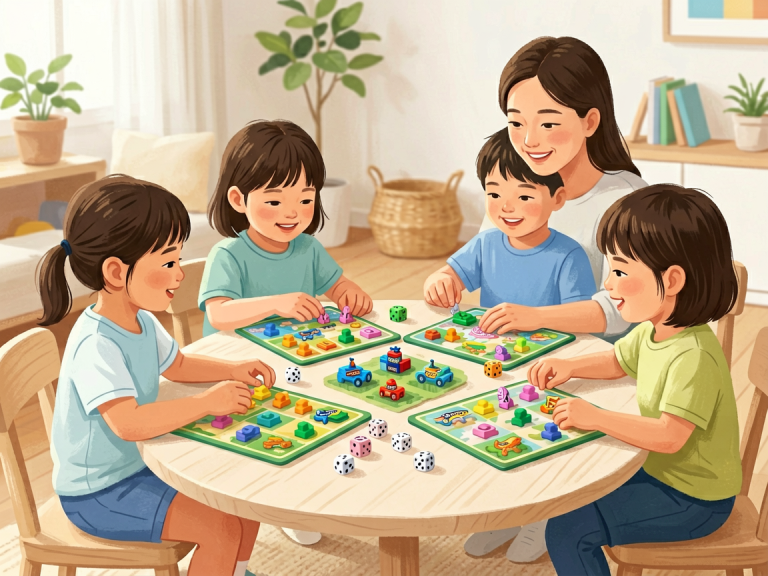
For 24–36 months: This is the golden age for more complex fine motor play. Threading beads (with supervision), lacing cards, scissors with blunt tips (for cutting play dough or soft paper), and simple board games with small pieces (like a matching game with tokens) all provide rich stimulation.
Safety Considerations
Safety must always come first. Check for:
- Non-toxic materials – Look for certifications like ASTM (American Society for Testing and Materials) or EN71 (European safety standard).
- Choking hazards – Any toy part that can fit inside a toilet paper roll (about 1.25 inches in diameter) is too small for children under three.
- Sharp edges or splinters – Wooden toys should be sanded smooth and finished with non-toxic sealant.
- Durability – Avoid toys that break easily, creating sharp shards or small magnets that could be swallowed.
- Supervision – Even the safest toys become dangerous if a toddler decides to try biting them. Always supervise fine motor play, especially with small parts or water activities.
Incorporating Fine Motor Play into Daily Routines
Fine motor development doesn’t need to be confined to designated playtime. Everyday moments are brimming with opportunities. Let your toddler help with simple tasks:
- Mealtime – Hand them a child-safe butter knife to spread soft cheese on a cracker. Let them scoop yogurt or pour water from a small pitcher.
- Getting Dressed – Encourage them to pull up their own pants (with elastic waistbands), unzip a jacket, or snap a large snap.
- Chores – Give them a small spray bottle (filled with water) and a cloth to “wipe” tables. Let them sort socks by color or place napkins on the table.
- Nature Walks – Collect leaves, acorns, or pebbles and later sort them by size or texture. Picking up small treasures is a natural fine motor exercise.
The key is to offer patience and allow extra time. These activities may end messily or slowly, but the developmental payoff is immense.
Conclusion
Fine motor toys for toddlers are far more than simple amusements; they are instruments of growth. In an age when screens and passive entertainment dominate, intentionally selecting toys that challenge little fingers can set the stage for academic success, independence, and creative expression. From the humble stacking ring to the intricate lacing card, each toy offers a unique puzzle that a toddler’s brain and body are eager to solve.
As parents, caregivers, and educators, our role is not to push but to provide—to offer a carefully curated environment where a child can explore, fail, try again, and finally succeed with a triumphant squeal. That moment when a toddler finally threads a bead, or fits a shape into its slot, or cuts a snip of play dough with scissors is a tiny miracle of perseverance. By investing in high-quality fine motor toys and weaving fine motor practice into daily life, we gift our toddlers the skills they need to navigate the world with capable hands and a confident spirit. So step away from the flashing plastic and embrace the simplicity of a wooden peg, a soft lace, and a child’s earnest determination. The power of play is in your hands—and theirs.