The Power of Play: How Language Toys Shape Preschoolers Communication Skills
Introduction: The Critical Window of Early Language Development
In the bustling world of a preschooler, every rattle, every rhyme, and every colorful picture holds the potential to unlock a universe of words. Between the ages of two and five, children experience what linguists call a "language explosion"—a period when their vocabulary grows from roughly 50 words to over 2,000, and their ability to form complex sentences emerges almost overnight. During this sensitive phase, the environment plays a decisive role, and among the most influential environmental factors is the choice of toys. Language toys for preschoolers are not mere entertainment; they are carefully designed tools that scaffold phonological awareness, vocabulary acquisition, narrative skills, and social communication. This article explores the multifaceted benefits of language-focused toys, categorizes the most effective types, offers criteria for selecting developmentally appropriate options, and provides practical strategies for parents and educators to maximize learning through play.
The Neuroscience Behind Language Play
How Play Rewires the Developing Brain
To understand why language toys matter, one must first appreciate what happens inside a preschooler's brain during play. Neuroimaging studies show that when children engage in interactive, language-rich play, multiple regions of the brain activate simultaneously: the Broca's area (responsible for speech production), the Wernicke's area (language comprehension), and the prefrontal cortex (executive function and attention). Toys that require naming, describing, or sequencing—such as picture cards, story cubes, or talking plush animals—strengthen neural pathways through repetition and positive reinforcement. Unlike passive screen time, which often yields shallow learning, hands-on language toys encourage active manipulation and multi-sensory integration, leading to deeper encoding of vocabulary and grammatical structures.
The Role of Adult-Child Interaction
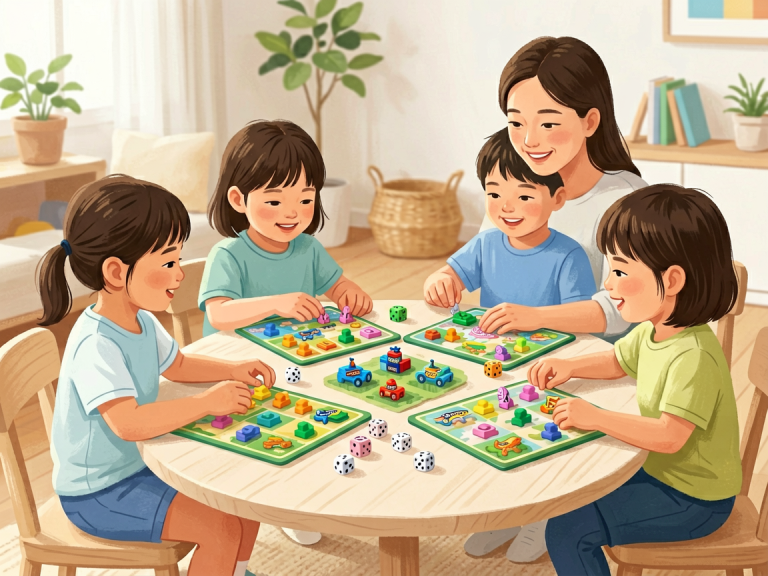
It is crucial to note that a toy itself is not magical. Research consistently demonstrates that the greatest benefit arises when an adult or an older peer mediates the toy experience. For example, a set of alphabet blocks becomes a powerful language-learning tool when a caregiver points to the letter "B," says its sound, and helps the child find the block with a picture of a butterfly. This "serve and return" interaction—where the child's action (picking a block) prompts a verbal response from the adult—is the bedrock of language development. Therefore, when we discuss language toys, we are really discussing a system of play that includes the child, the toy, and a responsive communication partner.
Categories of Effective Language Toys
1. Phonological Awareness Toys: Building Blocks of Sound
Phonological awareness—the ability to recognize and manipulate sounds in spoken language—is a strong predictor of later reading success. Toys that focus on sounds include:
- Rhyming games and puzzles: Sets that pair "cat" with "hat" or "dog" with "log" help preschoolers detect sound patterns. Many come with large, tactile pieces that children can physically match.
- Sound bingo or lotto boards: Instead of numbers, these games use initial sounds or syllables. For instance, a child hears "mmm" and covers the picture of a moon. This sharpens auditory discrimination.
- Sing-along microphones or musical instruments: While not explicitly labeled as language toys, simple percussion instruments like tambourines or shakers used in call-and-response songs reinforce beat, rhythm, and syllable segmentation. Clapping out the syllables of "el-e-phant" while shaking a maraca turns abstract phonology into a concrete, kinesthetic experience.
2. Vocabulary-Building Toys: Expanding the Lexicon
Preschoolers learn new words most effectively when they encounter them in meaningful, contextualized activities. The following toys excel in vocabulary expansion:
- Themed playsets: A farm set with plastic animals, a barn, and a tractor naturally introduces words like "stable," "pasture," "veterinarian," and "milking." Children learn not just single nouns but also verbs ("feeding," "herding") and prepositions ("inside the barn," "behind the fence").
- Picture dictionaries and interactive books: Modern language toys include touch-and-talk books where a child presses a button to hear the word spoken. The best ones offer multiple languages or provide a definition in simple terms. For example, pressing on a picture of a "caterpillar" might elicit "A caterpillar is a small creature that eats leaves and later becomes a butterfly."
- Object classification sets: These consist of small figurines grouped by category—vehicles, foods, animals, clothing. Children sort them and name each item, building both vocabulary and categorization skills. A child who can correctly place a "tricycle" with vehicles and an "apron" with kitchen items demonstrates semantic organization.
3. Narrative and Storytelling Toys: Crafting Coherent Discourse
Narrative ability—telling a story with a clear beginning, middle, and end—is a sophisticated language skill that emerges around age three to four. Toys that foster storytelling include:
- Story cubes or picture sequence cards: A set of six dice with images (a castle, a key, a dragon, a princess, a map, a moon) encourages children to roll and then create a tale connecting the pictures. This sequential thinking builds both vocabulary and syntactic complexity.
- Puppets and felt boards: A simple hand puppet of a bear allows a child to practice dialogue and perspective-taking. "The bear said, 'I am hungry. Can I have some honey?'" Felt boards with movable characters and backgrounds let children physically arrange scenes and narrate what happens.
- Magnetic storyboards: These contain magnetized characters and settings that stick to a metal tray. Children move the pieces while verbalizing the action, which trains temporal sequencing ("First the boy went to the park, then he saw a dog, and then…"). Such toys also support joint attention when used in a group setting.
4. Social and Pragmatic Language Toys: Navigating Real-World Conversations
Language is not just words and grammar; it is about using those words appropriately in social contexts. Toys that target pragmatic skills include:
- Role-playing kits: A cash register with play money, a doctor's kit, or a tea set encourages preschoolers to adopt roles and use situationally appropriate language. The child playing "cashier" must say "How can I help you?" and the "customer" must request items. These interactions teach turn-taking, question formation, and polite forms.
- Conversation starter cards: Simple cards with prompts like "What makes you happy?" or "Tell me about your favorite animal" are excellent for group settings. When paired with a spinner or a dice, they add a game-like element that reduces performance anxiety.
- Emotion puzzles and feeling charts: While primarily social-emotional tools, they directly support language by providing vocabulary for internal states. A child who learns the word "frustrated" can use it to describe her feelings, reducing tantrums and promoting self-regulation through verbal expression.
How to Choose the Right Language Toy for Your Preschooler
Developmental Appropriateness Is Non-Negotiable
A common mistake is buying toys that are too advanced or too simplistic. For a two-year-old, toys should focus on basic nouns and simple two-word phrases. A set of animal figures with matching sounds is ideal. For a four-year-old who can produce sentences of five to six words, a story-building game that requires sequencing four to five pictures is more appropriate. Always check the age recommendation on the packaging, but also observe your child's actual linguistic level. If a toy causes frustration because the child cannot manipulate the pieces or understand the instructions, it will not foster language—it will stifle it.
Prioritize Open-Ended Over Rigid Toys
Language flourishes in environments where multiple responses are possible. A toy that only allows one correct answer (e.g., a puzzle where each piece fits only one spot) teaches matching but not generative language. In contrast, a set of plain wooden blocks can become a house, a spaceship, or a castle depending on the child's narrative. Similarly, a simple dollhouse with miniature furniture invites endless stories: "The mommy is cooking dinner in the kitchen. The baby is sleeping in the bedroom." Open-ended toys encourage divergent thinking and richer verbal output.
Check for Safety and Durability
Preschoolers explore with their mouths and hands. All toys should be made of non-toxic materials, have no small parts that could be choking hazards for children under three, and be sturdy enough to withstand enthusiastic play. Avoid toys with sharp edges or easily detachable batteries. For language toys that include electronic components, ensure the volume is adjustable and not too loud, and that the speech recordings are clear and grammatically correct. Poor-quality audio can actually confuse a child's phonological development.
Seek Toys That Invite Interaction, Not Isolation
A language toy should be a catalyst for conversation, not a replacement for it. Watch for toys that "talk" to the child without expecting a response—these can be passive and even detrimental if they replace human interaction. The best language toys either require the child to respond (e.g., "Press the button when you hear the word 'butterfly'") or provide a platform for the child to speak. For example, a toy telephone that records and plays back the child's voice is excellent because it motivates the child to produce language and then hear her own speech, which aids self-monitoring.
Practical Strategies for Maximizing Language Learning Through Toys
The Three-Second Rule: Wait for the Child to Speak
When a child is playing with a language toy, parents often rush to prompt or correct. Instead, use the "three-second rule": after asking a question or presenting a toy, wait at least three seconds before speaking again. This pause gives the child time to process and formulate a response. For instance, if your child is looking at a picture of a giraffe in a vocabulary book, resist the urge to immediately say, "That's a giraffe." Wait. The child might point and say "gi-affe" or ask "What's that?" The self-initiated speech is far more valuable for neural wiring than passive hearing.
Model Expanded Language Without Overwhelming
If a child says "car go," you can model a more sophisticated sentence: "Yes, the red car is going fast down the road." This is called "expansive modeling." Do not correct the child directly ("No, say 'The red car is going fast'"). Instead, just offer the enriched version in a natural, conversational tone. Over time, the child's neural representation of the sentence structure will upgrade. Language toys provide ample opportunities for this because they contain reusable vocabulary sets.
Create Themed Play Sessions
Instead of scattering all toys at once, set up a weekly or daily theme. Monday could be "Farm Animal Day" where only farm-related toys are available. Sing "Old MacDonald," read a farm book, and let the child play with the plastic animals. All the language during that session reinforces the same semantic field, which helps with word consolidation. After several sessions, the child will spontaneously produce sentences like "The pig is in the mud."
Encourage Peer Play with Language Toys
While adult-child interaction is paramount, peer play also boosts language—especially pragmatic skills. Arrange playdates where children use a shared language toy, such as a large floor puzzle of a city. As they negotiate who places which piece, they use language to coordinate, argue, and compromise. The toy serves as a neutral third party that focuses their joint attention. Observing peer interactions also provides valuable assessment data for parents: Does my child initiate conversation? Does she respond to others' questions? Does she use the new vocabulary she learned? Adjust your toy selection and scaffolding accordingly.
The Long-Term Impact of Language-Rich Play
Bridging the "Word Gap"
Decades of research, most famously the Hart and Risley study (1995), revealed that children from different socioeconomic backgrounds hear vastly different numbers of words in early childhood—a phenomenon known as the "word gap." Language toys alone cannot close this gap, but they can be a powerful equalizer when combined with caregiver training. Public libraries and early intervention programs that loan out high-quality language toys to families have shown promising results: children who receive such toys, along with brief coaching for parents, demonstrate faster vocabulary growth and better school readiness than control groups. The tactile, engaging nature of physical toys makes them more accessible than digital apps for families with limited technology.
Fostering a Love of Language That Lasts
Finally, the most profound impact of language toys is attitudinal. A child who associates words with the joy of discovering a hidden picture, the laughter of a puppet show, or the pride of independently telling a story to a grandparent develops a positive emotional connection to language. This intrinsic motivation becomes the engine for lifelong reading, writing, and communication. In an era when screens often replace human interaction, language toys remind us that the richest language learning happens through hands, heart, and mouth intertwined. Choosing the right toy is not just an act of consumerism—it is an investment in a child's voice.
Conclusion: Play, Talk, Grow
Language toys for preschoolers are far more than amusing trinkets. They are carefully engineered instruments of cognitive and social development, each with a role to play in the grand symphony of early communication. From the simple rhyming puzzle that awakens phonological awareness to the elaborate puppet theater that nurtures storytelling, these tools work best when embedded in warm, responsive relationships. As parents and educators, our task is to select toys that meet the child where she is linguistically, to use them in ways that invite rather than demand speech, and to remember that the most important feature of any language toy is the conversation it sparks between the child and the world. So the next time your preschooler reaches for a talking book or a set of animal cards, sit down beside her. Press the button together. Laugh at the silly sound. Ask a question. And watch as a single word grows into a story, and a story grows into a lifelong fluency.