Unlocking Words: The Power of Language Toys for Elementary Kids
Introduction
Language is the cornerstone of human connection, and for elementary school children, mastering it is both a monumental challenge and an exhilarating adventure. Between the ages of six and twelve, children move from basic vocabulary and simple sentences to more complex grammar, narrative skills, and abstract reasoning. This transition is critical, yet it often feels like a chore to young learners who would rather play than practice verb tenses. Enter language toys—specially designed playthings that blend entertainment with educational value. These toys are not mere distractions; they are powerful tools that can ignite a child’s curiosity about words, storytelling, and communication. In this article, we will explore what language toys are, why they matter for elementary kids, the different types available, and how parents and educators can choose the best ones to support language development without sacrificing fun.
The Role of Language Toys in Early Education
Language development in elementary years is not just about learning to read and write; it is about building the cognitive infrastructure for thinking, reasoning, and expressing oneself. Traditional methods like worksheets and drills can become monotonous, leading to disengagement. Language toys, however, tap into the natural drive for play. Psychologists and educators have long known that play-based learning enhances retention, motivation, and social interaction. When a child uses a toy that requires them to form letters, create rhymes, or tell a story, they are actively practicing language skills in a low-stakes environment. Mistakes become part of the game, not failures. Moreover, language toys often encourage collaboration—children play together, negotiate meanings, and learn to articulate their thoughts aloud. This social dimension is especially important for elementary kids, who are developing the ability to take perspectives and engage in extended conversations. By integrating language practice into play, these toys help children see communication as something enjoyable rather than a test.
Categories of Language Toys
Not all language toys are created equal. They can be grouped into several categories, each targeting different aspects of language acquisition. Understanding these categories helps parents select toys that match their child’s current needs and interests.
Phonics and Alphabet Toys
For younger elementary kids (ages 5–7), mastering the relationship between letters and sounds is foundational. Phonics toys include magnetic letter sets, alphabet puzzle boards, and electronic devices that pronounce letters and simple words. A classic example is the wooden alphabet block set, where children can arrange letters to spell their names or short words. More advanced options include talking pens or tablets that read aloud when a child touches a word. These toys reinforce letter recognition, phonemic awareness, and early spelling in a tactile, engaging way.
Vocabulary and Word-Building Games
As children progress, expanding their vocabulary becomes key. Word-building games like Scrabble Junior, Boggle, or Bananagrams encourage players to create words from random letters. These games introduce new vocabulary, teach spelling patterns, and foster strategic thinking. For example, a child might discover that adding an “s” changes a word from singular to plural, or that suffixes like “-ing” can transform verbs. Similarly, flashcard sets with pictures and words—such as those for animals, food, or emotions—help children associate visual cues with lexical items. Some digital apps, like interactive storybooks where children tap on words to see definitions, also fall into this category, blending screen time with active learning.
Storytelling and Narrative Toys
Language is not just about words in isolation; it is about weaving them into coherent narratives. Storytelling toys include sets of illustrated cards (like Story Cubes) that children roll and then use to create a story based on the images shown. There are also felt boards with characters and scenery, allowing kids to act out tales. More sophisticated options include blank books or story-writing kits with prompts and stickers. These toys develop sequencing, cause-and-effect reasoning, and creativity. They also help children understand story structure—beginning, middle, and end—which is a critical element in both reading comprehension and written expression.
Bilingual and Multilingual Toys
In an increasingly global world, many families are introducing a second language early. Bilingual toys, such as electronic dictionaries, puzzles with words in two languages, or toys that sing songs in English and Spanish, expose children to multiple linguistic systems. Even if the goal is not fluency, such toys promote metalinguistic awareness—the ability to think about language as a system. This can actually boost a child’s understanding of their first language by highlighting contrasts and similarities.
Cognitive and Social Benefits Beyond Vocabulary
While the obvious benefit of language toys is vocabulary expansion, their impact reaches far deeper. First, they enhance executive function. Games that require following rules, taking turns, and planning moves—like a word-building race—train working memory and self-regulation. Second, they improve listening skills. Many language toys involve audio components or require children to listen to instructions from peers, sharpening auditory discrimination. Third, they foster empathy and perspective-taking. When a child acts out a story character or explains a game rule to another child, they practice putting themselves in someone else’s shoes. This social-linguistic integration is crucial for building relationships and succeeding in collaborative environments.
Moreover, language toys can be especially beneficial for children who struggle with traditional instruction. For example, a child with dyslexia may find a multi-sensory toy that combines tactile letters with auditory feedback far less intimidating than a workbook. Similarly, English language learners (ELLs) can use picture-based games to build foundational vocabulary without the pressure of immediate oral production. Language toys level the playing field by allowing every child to engage at their own pace.
Tips for Selecting Language Toys
With countless options on the market, choosing the right language toy for an elementary kid can be overwhelming. Here are some practical guidelines:
- Age Appropriateness: Check the recommended age range. A toy that is too simple will bore a nine-year-old; one too complex may frustrate a six-year-old. Look for toys that offer multiple levels of difficulty or that can be adapted.
- Open-Ended Play: Toys that allow for multiple uses—like magnetic letters or story cubes—support creativity and longevity. Avoid toys that only do one thing, as children may lose interest quickly.
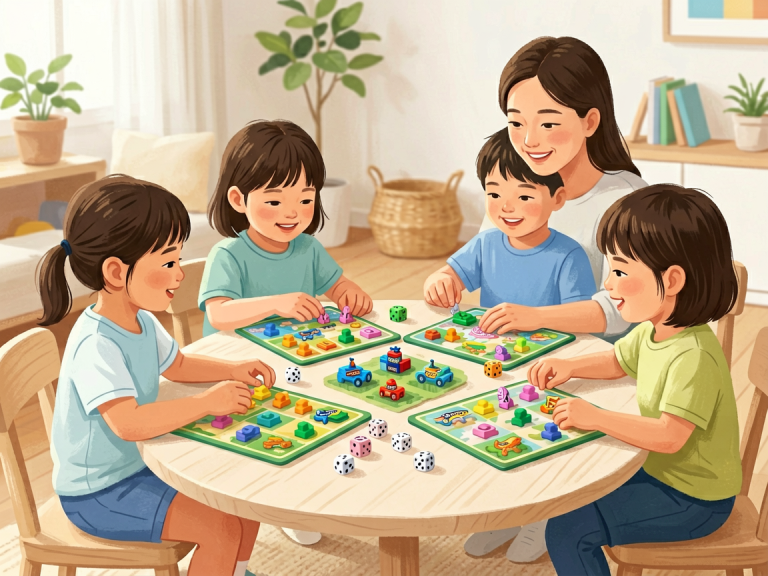
- Social Interaction: Favor toys that encourage two or more players. Language develops through conversation, and solo drills can be less effective. Board games, card games, and cooperative story-building sets are ideal.
- Sensory Engagement: Elementary kids respond well to toys that engage multiple senses—bright colors, textures, sounds, and movement. A toy that lights up when a correct word is formed, for instance, adds a reward element that reinforces learning.
- Cultural Relevance: Choose toys that reflect the child’s own experiences as well as expose them to diverse cultures. Stories and words from different backgrounds broaden a child’s worldview and language repertoire.
- Screen Time Balance: While digital language toys can be valuable, they should be balanced with physical, hands-on play. A mix of both ensures that children develop fine motor skills and real-world social interaction alongside digital literacy.
Conclusion
Language toys for elementary kids are far more than idle entertainment. They are carefully designed tools that transform the hard work of language acquisition into a joyful journey. From alphabet puzzles that introduce the ABCs to storytelling dice that unlock imagination, these toys provide the scaffolding that children need to become confident communicators. Parents and educators who invest in quality language toys are not just buying products—they are building bridges between play and proficiency. As children laugh, compete, and create with words, they internalize the rhythms of language, the nuances of meaning, and the power of connection. In a world where communication skills are paramount, giving elementary kids the right language toys is one of the most thoughtful gifts we can offer. So the next time you see a child absorbed in a word game, remember: they are not just playing; they are unlocking the world, one word at a time.