The Power of Play: Selecting the Best Early Learning Toys for 4-Year-Olds
Introduction
The age of four is a magical period in a child’s development. It is a time when curiosity blossoms, language explodes, and social skills begin to take shape. At this stage, children are no longer toddlers but are stepping into the world of preschoolers—eager to explore, ask questions, and mimic the adults around them. The toys they interact with during this critical window are not merely sources of entertainment; they are powerful tools for cognitive, physical, and emotional growth. Early learning toys for 4-year-olds are specifically designed to harness this developmental surge, turning play into a structured yet joyful learning experience. Choosing the right toys, however, can be overwhelming for parents and educators given the sheer volume of options on the market. This article delves into the characteristics of effective early learning toys for 4-year-olds, explores different categories of developmental benefits, and offers practical guidance for making informed choices that will nurture a child’s natural love for discovery.
The Developmental Landscape of a 4-Year-Old
Before diving into specific toys, it is essential to understand what a typical 4-year-old is capable of and what they need most. At this age, children demonstrate significant advancements in fine motor skills—they can use scissors, draw simple shapes, and manipulate small objects with increasing precision. Their vocabulary expands to roughly 1,500 to 2,000 words, and they begin to form complete sentences, tell stories, and ask endless “why” questions. Socially, they start engaging in cooperative play rather than parallel play, learning to share, take turns, and negotiate with peers. Cognitively, they are developing early math concepts like counting, sorting, and recognizing patterns, as well as pre-literacy skills such as letter recognition and phonological awareness. Emotionally, they are learning to regulate their feelings but still need guidance in handling frustration and disappointment.
The best early learning toys for this age group are those that address these multiple domains simultaneously. A toy that encourages a child to count, sort, and tell a story about the objects they are manipulating, for example, is far more valuable than a single-skill toy. Moreover, these toys should be open-ended, allowing for multiple uses and encouraging creativity, rather than prescribing a single correct outcome.
Key Categories of Early Learning Toys for 4-Year-Olds
To simplify the selection process, early learning toys can be grouped into several broad categories, each targeting specific developmental areas. The following sections outline the most effective types.
1. Building and Construction Toys: The Foundation of Spatial and Problem-Solving Skills
Building sets—such as wooden blocks, magnetic tiles, or interlocking plastic bricks—are timeless classics for a reason. For a 4-year-old, constructing towers, bridges, or imaginary houses is not just fun; it is a hands-on lesson in physics, geometry, and perseverance. When a child stacks blocks and watches them tumble, they learn about balance, gravity, and cause and effect. When they attempt to recreate a structure from a picture or their imagination, they exercise spatial reasoning and planning. Magnetic tiles, in particular, are excellent because they allow for easy assembly and disassembly, reducing frustration while still challenging fine motor control. These toys also promote social skills when used in group settings: children learn to collaborate, share ideas, and resolve conflicts over who gets which piece.
2. Puzzles and Matching Games: Sharpening Logic and Memory
Puzzles are among the most effective early learning tools because they require concentration, pattern recognition, and persistence. For 4-year-olds, floor puzzles with 20 to 40 large pieces are ideal. They should feature bright, engaging images—animals, vehicles, or scenes from familiar stories. Completing a puzzle gives a child a tremendous sense of accomplishment and teaches them to break a problem into smaller, manageable steps. Matching games, such as pairs of cards with identical pictures, train visual memory and attention to detail. More advanced versions might include matching letters to objects that start with that letter, or numbers to groups of objects. These games are superb for developing pre-reading and early math skills without the pressure of formal instruction.
3. Pretend Play and Role-Playing Sets: Nurturing Social and Emotional Intelligence
At age four, imagination is at its peak. Children love to imitate adults—cooking in a toy kitchen, fixing things with a play toolset, caring for dolls, or acting out scenes from a doctor’s office. Pretend play is not just cute; it is a vital mechanism for emotional regulation and social understanding. Through role-playing, children process real-life experiences, experiment with different roles, and practice empathy. A toy cash register, for instance, allows them to enact buying and selling, introducing basic concepts of money and exchange while also rehearsing polite social interactions. Dress-up clothes, puppet theaters, and animal figures all encourage storytelling and verbal expression. The best pretend play toys are those that leave room for the child to direct the narrative, rather than toys that come with fixed storylines or electronic voices that dictate the play.
4. Art and Craft Supplies: Unleashing Creativity and Fine Motor Dexterity
Art materials are often overlooked as “learning toys,” but they are among the most powerful developmental tools. Crayons, washable markers, child-safe scissors, glue sticks, playdough, and construction paper enable a 4-year-old to express ideas visually, practice hand-eye coordination, and develop the small muscles needed for writing later on. Drawing and painting allow children to represent their world—a house, a family, a rainbow—and to tell stories through images. Playdough, in particular, is excellent for strengthening hand muscles and encouraging sensory exploration. When children roll, pinch, and sculpt, they are not only creating but also learning about textures, shapes, and three-dimensional space. Additionally, craft projects that involve cutting, pasting, and assembling teach sequencing and following multi-step instructions.
5. Musical Instruments and Sound Toys: Boosting Auditory Processing and Rhythm
Music is a universal language that enhances brain development in profound ways. Simple, durable instruments—such as xylophones, drums, maracas, tambourines, and rain sticks—introduce children to rhythm, pitch, and volume. For a 4-year-old, making music is an exhilarating experience that also hones listening skills and concentration. Playing along with a song or following a simple beat pattern builds auditory discrimination, which is a precursor to reading. Moreover, musical toys encourage self-expression and can be a calming activity for an overstimulated child. Look for instruments that are sized for small hands and produce pleasant sounds, not harsh noises. Electronic keyboards with simple one-finger play settings are also popular, but the core value lies in the physical act of creating sound.
6. Science and Nature Exploration Kits: Sparking Curiosity About the World
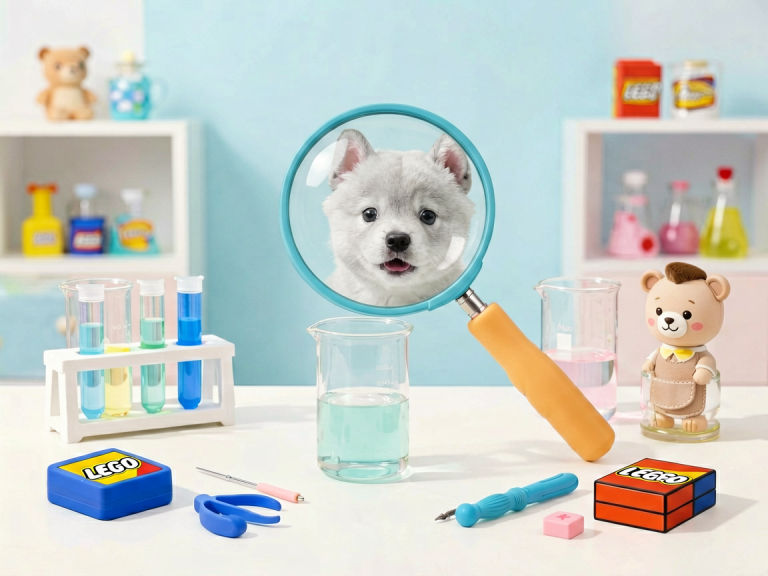
Four-year-olds are natural scientists. They love to observe bugs, collect leaves, mix water with sand, and ask why the sky is blue. Simple science kits—such as magnifying glasses, bug catchers, magnetic wands, and water-play sets—feed that curiosity. A set of colorful plastic test tubes and droppers allows a child to experiment with pouring and mixing colored water, learning about volume and cause and effect. A nature exploration set that includes a compass, a magnifying box, and a small notebook encourages outdoor discovery and documentation. These toys do not need to be complicated; the goal is to provide tools that enable the child to investigate their environment in a safe, hands-on way. Such experiences lay the groundwork for critical thinking and a lifelong love of science.
Selecting the Right Toys: Practical Tips for Parents and Educators
With so many options available, how can an adult choose wisely? The first principle is to prioritize quality over quantity. A few well-chosen, durable, and open-ended toys are far more beneficial than a room full of plastic gadgets that beep and flash. Look for toys made from natural materials such as wood, fabric, or sturdy cardboard, as these are not only safer but also more aesthetically pleasing and environmentally responsible. Always check for safety certifications and ensure that small parts are not a choking hazard—even though 4-year-olds are older, they may still put objects in their mouths.
Second, consider the child’s individual interests and temperament. A child who loves building might thrive with magnetic tiles, while a more introspective child might prefer puzzles or art supplies. Avoid forcing a toy on a child; instead, present it as an invitation. Observe how the child interacts with the toy: Is it engaging? Does it challenge them without causing excessive frustration? A toy that is too easy will bore the child, while one that is too difficult will discourage them. The “sweet spot” lies in what developmental psychologist Lev Vygotsky called the zone of proximal development—where the toy is slightly above the child’s current ability but achievable with a little effort or adult support.
Third, involve the child in the selection process when possible. Take them to a toy store or browse online images together and let them express what interests them. This not only empowers the child but also gives the adult insight into what captures their attention. Finally, remember that the most effective early learning does not come from the toy alone but from the interactions surrounding it. A parent or caregiver who sits down to play alongside the child, asking open-ended questions (“What do you think would happen if we put this block here?” or “Can you tell me a story about your puppet?”) amplifies the learning exponentially. The toy is the tool; the relationship and conversation are the true catalysts for growth.
Conclusion
Early learning toys for 4-year-olds are far more than playthings—they are the building blocks of a child’s cognitive, social, emotional, and physical development. From construction sets that teach spatial reasoning to pretend play kits that foster empathy, from art supplies that unleash creativity to science tools that ignite curiosity, the right toys can transform everyday play into a rich educational experience. The key is to choose wisely: prioritize open-ended, durable, and age-appropriate toys that align with the child’s interests and developmental stage. By investing time and thought into selecting these tools, and by engaging actively in play, adults can provide a foundation that will support a child’s learning for years to come. After all, the most profound lessons in early childhood are learned not through worksheets, but through the joyful, messy, and wondrous act of play.