The Power of Play: Why Math Toys Are Essential for Elementary Kids
Introduction: Turning Numbers into Adventures
Mathematics has long been the subject that divides young learners into two camps: those who find it an exhilarating puzzle and those who view it as a frustrating chore. For elementary school children, aged roughly 5 to 11, the foundation of mathematical thinking is laid during these formative years. Yet traditional methods of drilling multiplication tables and solving endless worksheets can quickly drain the joy out of learning. Enter math toys—physical, tactile, and often colorful objects that transform abstract concepts into tangible experiences. These toys are not mere entertainment; they are powerful pedagogical tools that help children develop number sense, spatial reasoning, logical thinking, and problem-solving skills. In this article, we will explore the diverse world of math toys designed for elementary kids, examine their educational benefits, and offer guidance on selecting the right toys for different age groups and learning styles.
The Cognitive Benefits of Hands-On Math Play
Children at the elementary level learn best when they can see, touch, and manipulate objects. Math toys bridge the gap between concrete experience and abstract understanding. When a child stacks blocks, they are not just building a tower; they are intuitively grasping concepts of volume, balance, and geometry. When they sort colored beads by pattern, they are practicing classification and early algebraic thinking. Research in developmental psychology consistently shows that kinesthetic learning—learning through physical activity—enhances memory retention and conceptual understanding. Math toys engage multiple senses simultaneously, creating stronger neural connections than passive instruction alone. Moreover, play reduces anxiety. A child who is anxious about timed tests may relax when using a playful abacus, allowing their natural curiosity to take over. This emotional safety is crucial for developing a growth mindset, where mistakes become opportunities rather than failures.
Categories of Math Toys for Elementary Kids
Counting and Number Sense Toys
The most fundamental math toys are those that help children understand what numbers actually represent. Classic examples include counting bears, linking cubes, and number rods. Counting bears, for instance, come in small plastic bears of different colors and sizes. Children can sort them by color, count them one by one, or create simple addition and subtraction scenarios (“If you have three red bears and two blue bears, how many bears do you have in total?”). Linking cubes snap together, allowing kids to physically combine and separate quantities. These toys teach one-to-one correspondence, cardinality, and the beginnings of arithmetic operations. For slightly older elementary students (grades 2–4), number line floor mats or magnetic number lines help visualize the ordering and magnitude of numbers. A toy like the “Sum Swamp” board game turns addition and subtraction into a race through a swamp, subtly reinforcing mental math skills with every roll of the dice.
Geometry and Spatial Reasoning Toys
Spatial reasoning is a critical component of mathematical ability, and it is best developed through manipulation of shapes. Tangram puzzles, pattern blocks, and geoboards are excellent choices. A tangram set consists of seven geometric pieces that can be arranged to form countless shapes, from simple squares to intricate animals. This toy teaches children about area, symmetry, fractions (the two large triangles each represent one-quarter of the square), and geometry vocabulary. Pattern blocks—hexagons, trapezoids, rhombuses, triangles, and squares—allow kids to create tessellations and explore how shapes fit together. Geoboards, with elastic bands stretched over pegs, let children create polygons and investigate concepts like perimeter and angles. For 3D exploration, magnetic building tiles (such as Magna-Tiles) are wildly popular. These colorful, translucent tiles click together to form cubes, pyramids, and more complex structures, teaching volume, faces, edges, and vertices in a playful, intuitive way.
Logic, Patterns, and Early Algebra Toys
Mathematics is not just about numbers; it is about patterns and logical relationships. Toys that challenge children to sequence, classify, and deduce are invaluable. Logic puzzle games like “Rush Hour” (a sliding car puzzle) or “Qwirkle” (a tile-matching game) develop strategic thinking and pattern recognition. Attribute blocks, which vary in color, shape, size, and thickness, encourage children to sort by multiple attributes and practice “if-then” reasoning—a precursor to algebraic thinking. Another excellent tool is the “MathLink Cubes” set, which can be used to create patterns, make bar graphs, or model simple equations. For older elementary kids (grades 3–5), board games like “Prime Climb” blend multiplication, division, and prime numbers into a colorful, competitive experience. Children must use math operations to move their pieces up a numbered spiral, all while dodging hazards. This game turns abstract arithmetic into a thrilling race.
Measurement and Data Toys
Measurement is a practical application of math that comes alive with the right toys. Balance scales with weights let children compare mass and understand equivalence. A toy kitchen scale, along with measuring cups and spoons, introduces volume and weight, and can be combined with pretend play. For time, analog clock puzzles or “Time Telling” games help kids master the tricky concept of hours and minutes. Rulers, measuring tapes, and even simple stopwatches can be part of a math toy collection. For data collection, a toy weather station or a simple “spin and graph” game teaches children how to gather, record, and interpret data. For instance, kids can spin a wheel that lands on different objects, then create a bar chart of their spins. This builds foundational skills for statistics and probability in an engaging way.
How to Choose the Right Math Toys for Your Elementary Child
Selecting math toys is not a one-size-fits-all endeavor. Several factors should guide your choice: the child’s age, current math proficiency, learning style, and interests. For kindergarten and first-grade children (ages 5–6), focus on toys that build number sense and fine motor skills. Simple counting sets, large pattern blocks, and shape sorters are ideal. Avoid toys that require reading or complex instructions. For second and third graders (ages 7–8), introduce more structured games that combine math facts with strategy. Board games like “Math Bingo” or “Monopoly Junior” (which involves money handling) are great. This is also a good time for fraction manipulatives such as pizza fraction sets or fraction circles. For fourth and fifth graders (ages 9–11), seek toys that challenge abstract reasoning. Logic puzzles, coding games (like “Code & Go Robot Mouse”), and advanced construction sets (like K’NEX or LEGO Technic) incorporate geometry, ratios, and engineering principles.
Also consider the child’s learning style. Visual learners benefit from colorful pattern blocks and geoboards. Kinesthetic learners love hands-on building sets and balance scales. Auditory learners may enjoy math-based card games with verbal counting. Multi-sensory toys, like “Shut the Box” (a wooden dice game), combine visual, tactile, and auditory elements. Finally, observe the child’s interests. A child who loves trains might enjoy a counting train set; a future architect might dive into 3D magnetic tiles. The best math toy is the one the child actually wants to play with repeatedly.
Integrating Math Toys into Daily Learning at Home and School
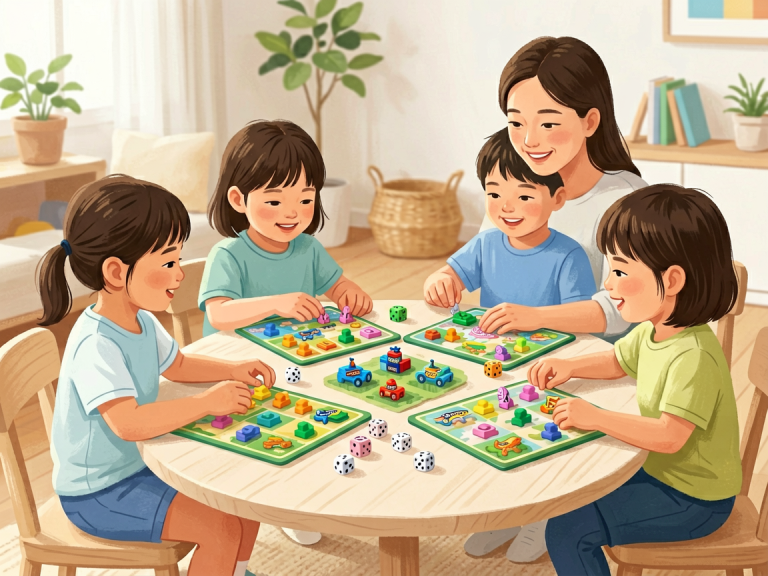
Math toys are most effective when they are not isolated in a “math corner” but woven into everyday activities. Parents can set up a small shelf of rotating math toys, allowing children to explore freely during downtime. A simple invitation like, “Can you build a tower that is exactly 12 cubes high?” turns play into a mini-lesson. Teachers can incorporate math toys into math centers or stations during classroom time. For example, a “pattern block station” can be part of a geometry unit, while a “balance scale station” can teach measurement. Group play with math board games encourages collaboration, communication, and even friendly competition—all of which deepen learning.
One effective strategy is to use math toys as a reward or transition activity. After completing a worksheet, a child might earn ten minutes of free play with math toys. This creates a positive association with mathematics. Additionally, parents can model mathematical language during play. Instead of saying, “Put that block here,” say, “Let’s slide the hexagon to the right so it aligns with the trapezoid’s short base.” Using precise vocabulary builds verbal mathematical skills. Over time, children internalize these terms naturally.
The Long-Term Impact: Building Mathematical Confidence
Perhaps the greatest benefit of math toys is the transformation of a child’s relationship with mathematics. When a child experiences success through play—when they figure out how to balance a scale or complete a complex tangram puzzle—they develop confidence. This confidence carries over to formal math lessons. Studies show that children who engage in regular playful math activities perform better on standardized tests and report higher levels of enjoyment in school. Moreover, the skills learned through math toys—persistence, creative problem-solving, and logical reasoning—are exactly the competencies needed in STEM fields and beyond. A child who learns to love math through toys is more likely to pursue advanced mathematics in middle school, high school, and beyond.
In conclusion, math toys are not a luxury or a distraction; they are an essential component of a well-rounded elementary education. They respect the natural way children learn: through curiosity, exploration, and play. By choosing high-quality math toys that align with a child’s developmental stage and interests, parents and educators can lay a strong foundation for mathematical understanding that will last a lifetime. So the next time you see a child stacking blocks or sorting colorful bears, remember: they are not just playing. They are building the neural pathways of a future mathematician, engineer, or data scientist—one joyful click, stack, and count at a time.