The Complete Parent Guide to Science and STEM Play: Unlocking Your Child’s Inner Innovator
As parents, we all want our children to thrive in a world that is increasingly shaped by technology, science, and engineering. But the idea of “teaching STEM” can feel intimidating—especially if you don’t consider yourself a “science person.” The good news is that you don’t need a lab coat or a PhD to foster a love of science, technology, engineering, and math in your child. The secret lies in STEM play—purposeful, playful activities that turn everyday moments into rich learning experiences. This guide will walk you through why STEM play matters, how to incorporate it into your daily routine, and what to do at every age stage, all while keeping the process fun and pressure-free.
Why STEM Play Matters: More Than Just Experiments
STEM play is not about drilling facts or forcing your child to memorize the periodic table. It’s about nurturing a mindset—curiosity, problem-solving, resilience, and creativity. When children engage in STEM play, they are doing exactly what real scientists and engineers do: asking questions, making predictions, testing ideas, learning from failures, and trying again. These habits of mind have been shown to improve critical thinking, boost confidence, and even strengthen academic performance across all subjects.
Moreover, early exposure to STEM play helps close the gender and diversity gaps that often appear later in school. When girls, children of color, or kids from non-traditional backgrounds see themselves as capable explorers and builders from a young age, they are far more likely to pursue STEM fields later. So every time you build a block tower together, mix baking soda and vinegar, or sort leaves by shape, you are planting a seed of possibility.
Getting Started: The Parent’s Mindset and Tool Kit
Before diving into specific activities, it’s important to shift your own mindset. You don’t need to have all the answers. In fact, one of the most powerful things you can say is, “I don’t know—let’s find out together.” This models curiosity and shows your child that learning is a lifelong journey, not a destination.
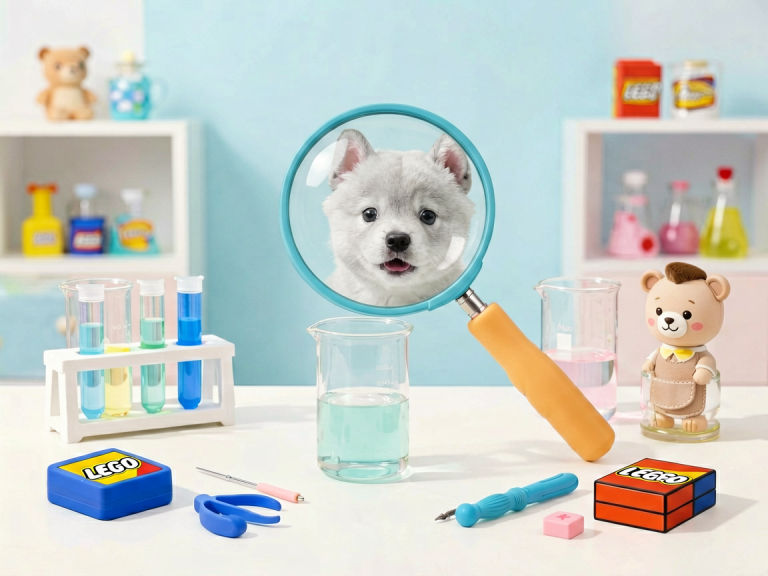
Your Minimal STEM Play Tool Kit
You probably already have most of what you need around the house. Here’s a quick checklist:
- Natural materials: rocks, sticks, leaves, shells, water, sand, dirt
- Recyclables: cardboard boxes, plastic bottles, paper towel tubes, bottle caps
- Basic supplies: measuring cups, spoons, tape, scissors, string, rubber bands, magnets, a flashlight
- Kitchen science: baking soda, vinegar, food coloring, salt, oil, cornstarch
- Building toys: LEGOs, wooden blocks, magnetic tiles, or even empty yogurt containers
- A notebook or sketchpad for observations (digital notes on a tablet work too)
The goal is not to buy expensive kits but to use what you have creatively. The best STEM play is improvised, open-ended, and child-led.
Age-by-Age Guide to STEM Play
Every stage of development brings new opportunities. Here’s how to tailor STEM play to your child’s abilities and interests.
Infants and Toddlers (0–2 Years): Sensory Exploration
At this age, STEM play is all about cause and effect and sensory input. Babies learn by touching, tasting, shaking, and dropping. Provide safe objects of different textures, sizes, and weights. Fill a plastic bottle with water and glitter—let them watch the sparkles swirl. Stack soft blocks and let them knock them down. Talk about what you see: “The red block is on top. Now it fell! Boom!” These simple interactions build neural pathways for understanding gravity, volume, and pattern recognition.
Activity idea: Fill a shallow tray with water and add a few floating toys. Give your toddler a spoon or a cup. Let them scoop, pour, and splash. Narrate their actions: “You poured water from the big cup into the little cup. It overflowed! More water than the cup could hold.” No pressure—just joyful discovery.
Preschoolers (3–5 Years): Questioning and Predicting
Preschoolers are natural scientists. They ask “why?” constantly. Channel that energy into simple experiments. Start with predictions: “What do you think will happen if we put this ice cube in the sun?” Then test it together. Use a ruler to measure how far a toy car rolls down a ramp made from a book. Sort toys by color, size, or shape—this builds early math skills.
Activity idea: Make a homemade lava lamp. Fill a clear bottle ¾ full with vegetable oil, then add water to almost the top. Add a few drops of food coloring. Drop in an Alka-Seltzer tablet and watch the “lava” bubble up. Explain that oil and water don’t mix because their molecules are different—a simple but powerful chemistry lesson.
Early Elementary (6–8 Years): Building and Designing
This is the golden age of engineering play. Kids love to build, and they are ready for more structured challenges. Give them a problem: “Build a bridge out of paper and tape that can hold a toy car.” Or: “Design a boat from aluminum foil that can carry as many pennies as possible without sinking.” These activities teach trial-and-error, perseverance, and basic physics like buoyancy and structural integrity.
Activity idea: The “Spaghetti Marshmallow Challenge.” Give your child 20 sticks of uncooked spaghetti, a yard of tape, a yard of string, and one marshmallow. Challenge them to build the tallest free-standing tower that can support the marshmallow on top. This classic team-building exercise (great for siblings or playdates) reveals a lot about structural design and iterative thinking.
Upper Elementary and Pre-Teens (9–12 Years): Coding, Robotics, and Real-World Science
Older children can handle more abstract concepts and digital tools. Introduce basic coding through free platforms like Scratch or Code.org. Let them program a simple animation or game. If you have a budget, consider a beginner robotics kit (like LEGO Boost or Sphero). But you can also create low-tech coding games: write a sequence of instructions on paper (e.g., “step forward, turn left, step forward”) and have your child be the “robot” executing them.
Activity idea: Build a simple circuit using a battery, copper wire, and a small light bulb. Or use play dough that conducts electricity (there are many recipes online). This hands-on introduction to electricity demystifies how devices work. Encourage your child to design a switch or add a buzzer. Let them document their “invention” in a journal with drawings and notes.
How to Support STEM Play Without Taking Over
The most common mistake parents make is to lead too much. STEM play should be child-directed, with the adult acting as a facilitator, not a teacher. Here are five practical tips:
- Ask open-ended questions instead of giving instructions. “What happens if we add more weight?” rather than “Put three more pennies in the boat.” “How could you make the tower taller?” instead of “Put the block here.”
- Embrace mess and failure. When an experiment doesn’t work—a tower collapses, a boat sinks—avoid rushing to fix it. Say, “Oh, that’s interesting! What do you think went wrong? What could you try differently next time?” This builds resilience and a growth mindset.
- Limit screen time for passive consumption, but use screens actively. Watch a video about how bridges are built, then build one. Use a nature identification app to identify a bug you found outside. Let technology be a tool, not a babysitter.
- Connect play to real-life contexts. When you cook together, talk about measurements and chemical reactions (yeast makes bread rise). When you garden, discuss soil and photosynthesis. When you fix a leaky faucet, that’s physics and engineering. Every moment can be a STEM moment.
- Follow your child’s interests. If your child loves dinosaurs, explore paleontology. If they are obsessed with trains, learn about friction and steam power. STEM play is most effective when it feels like play, not schoolwork.
Overcoming Common Barriers: Time, Materials, and Confidence
Many parents worry they don’t have enough time, money, or expertise. Let’s tackle each.
Lack of time: STEM play doesn’t need to be a scheduled 45-minute activity. Five minutes of building with blocks while waiting for dinner, or counting the number of red cars on a drive, counts. Short, frequent interactions are more powerful than rare, elaborate sessions.
Lack of materials: Refer back to the minimal tool kit. A cardboard box can be a spaceship, a marble run, or a science lab. Baking soda and vinegar cost pennies. Outdoor exploration is free. The best materials are the ones you already have.
Lack of confidence: You are not required to know all the answers. When your child asks a question you can’t answer, turn it into a research project together. Visit your local library, search for kid-friendly explanations online, or ask a friend who works in a STEM field. Your willingness to learn alongside your child is far more valuable than any fact you could recite.
Conclusion: Your Role as a Playful Partner
The ultimate goal of a parent guide to science STEM play is not to raise a generation of little Einsteins. It is to raise curious, capable, confident humans who know how to think, solve problems, and collaborate. By embracing STEM play, you are giving your child the tools to navigate an uncertain future with creativity and resilience.
So relax. Let the blocks tumble. Let the water spill. Let the predictions be wrong and the experiments be messy. Laugh together at the unexpected outcomes. Ask questions. Explore. The most important ingredient in STEM play is you—present, encouraging, and delighting in your child’s discoveries. And that is something every parent already has in abundance.
Now go play. The lab is open.