The Thoughtful Parent’s Guide to Choosing Age-Appropriate Toys for 2-Year-Olds
Introduction: Why Age Matters at Two
At two years old, a child is no longer a baby but not yet a preschooler. This transitional year is marked by explosive growth in language, motor skills, social awareness, and emotional expression. As a parent, you want to nurture this development, but the toy aisle can be overwhelming. Bright packaging, loud sounds, and marketing claims all compete for your attention. The truth is, the best toys for a two-year-old are not necessarily the most expensive or the most high-tech. They are the ones that match the child’s current abilities and challenges—toys that encourage exploration, problem-solving, and creativity without causing frustration or safety risks. This guide will walk you through the key developmental milestones of a two-year-old, the types of toys that support each area, and practical tips for making safe, engaging choices.
Understanding the Two-Year-Old Mind: Key Developmental Milestones
Before you buy any toy, it helps to know what your child is capable of—and what they are struggling with. At this age, children typically:
- Physical development: They are walking confidently, starting to run, climbing stairs with help, and using their hands to stack blocks, turn pages, and manipulate small objects. Their fine motor skills are improving rapidly, but they still lack the precision of an older child.
- Cognitive development: Two-year-olds are natural scientists. They explore cause and effect (what happens when I drop this toy?), engage in simple pretend play (feeding a doll), and begin to sort objects by shape or color. Their attention span is short—often just 5 to 10 minutes per activity.
- Language development: Most two-year-olds can say 50 to 100 words and are beginning to combine two words (“more juice,” “big truck”). They understand simple instructions and enjoy naming objects.
- Social and emotional development: Parallel play is common—they play next to other children rather than with them. They experience strong emotions (tantrums are normal), but they are also learning empathy and imitation of adult behaviors. They crave independence but still need comfort and security.
A toy that aligns with these milestones will hold a child’s interest, build confidence, and avoid the frustration of tasks that are too difficult or too boring.
Safety First: What Every Parent Must Check
Safety is non-negotiable for two-year-olds, who still explore the world by putting objects in their mouths. Here are the critical safety rules:
- Avoid small parts: The classic “choke tube” test—any toy or part that can fit inside a toilet paper roll is too small. Buttons, eyes on stuffed animals, beads, and small puzzle pieces are common hazards.
- Look for non-toxic materials: Ensure paints, plastics, and fabrics are labeled BPA-free, phthalate-free, and lead-free. Avoid toys with a strong chemical smell.
- Check for sharp edges and loose parts: Examine wooden toys for splinters, plastic toys for cracks, and stuffed animals for seams that could split open.
- Beware of strings and cords: Toys with long cords (pull toys, certain musical instruments) can pose a strangulation risk. Keep cords shorter than 12 inches.
- Age labels are your friend: While not perfect, the age recommendation on packaging is based on safety and developmental standards. For a two-year-old, stick with toys labeled “2+” or “toddler.”
Top Toy Categories for Two-Year-Olds
Now let’s dive into the specific types of toys that nurture development. For each category, I’ll explain why it works and give examples.
1. Building and Stacking Toys: The Foundation of Problem-Solving
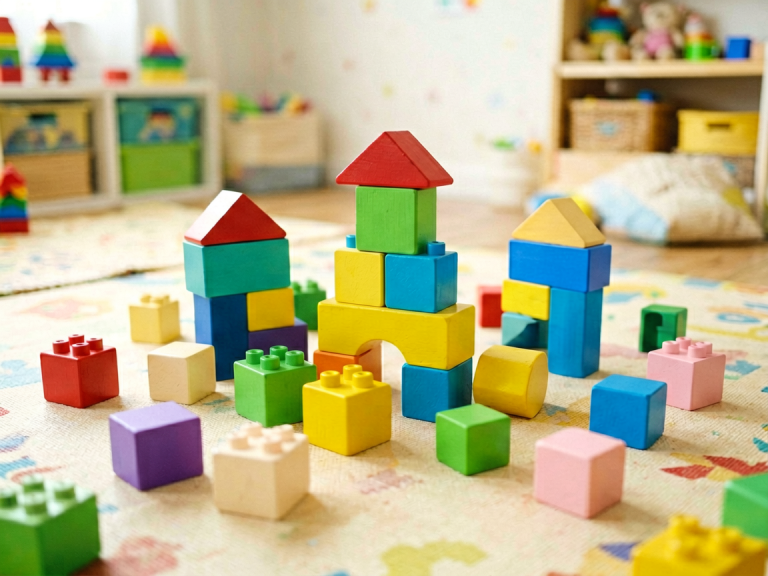
Two-year-olds love to stack, knock down, and stack again. This is not just fun—it teaches spatial awareness, hand-eye coordination, and basic physics. Large wooden blocks, soft foam blocks, or interlocking bricks (the oversized kind, not LEGO Duplo yet if they are very small) are perfect. Look for sets that include different shapes, colors, and sizes. Some blocks have letters or numbers printed on them, which introduces pre-literacy concepts incidentally.
Why it works: Stacking requires concentration and precision. When the tower falls, the child learns that actions have consequences. The frustration of collapse is actually a healthy learning moment.
2. Push and Pull Toys: Building Gross Motor Skills
At two, children are mastering walking and running. Push toys—like a small shopping cart, a lawn mower, or a toy stroller—give them a purpose for movement. Pull toys, such as a wooden dog on a string that wobbles as it moves, encourage them to walk backward and coordinate their steps. These toys also strengthen core muscles and balance.
Why it works: The child must coordinate their body with the movement of the toy. This builds confidence in mobility and provides sensory feedback (the sound of wheels, the resistance of pulling).
3. Simple Puzzles: Boosting Spatial Logic
Puzzles for two-year-olds should have large, chunky pieces with knobs or handles. Start with puzzles that have only three to four pieces, each fitting into a cutout shape. Themes like animals, vehicles, or fruits are engaging. Avoid puzzles with many small pieces or interlocking edges that require fine motor precision beyond their ability.
Why it works: Solving a puzzle requires visual discrimination (matching shape to hole), memory (remembering where the piece goes), and patience. The sense of accomplishment when the piece clicks in is huge.
4. Pretend Play Sets: Nurturing Imagination
Two-year-olds begin to imitate daily life. A play kitchen with plastic food, a doctor’s kit with a stethoscope, a tool bench with a plastic hammer, or dolls with simple clothes are all excellent. Pretend play builds language because children narrate their actions (“I make soup”). It also develops social skills as they copy adult roles.
Why it works: Pretend play allows children to process their experiences. If they just went to the doctor, acting out a check-up helps them understand and feel in control. The toys should be realistic enough to spark imagination but simple enough to avoid overwhelming.
5. Art Supplies: Encouraging Creativity and Fine Motor Control
Finger paints, large crayons (egg-shaped or triangular for a better grip), washable markers, and play dough are fantastic. At this age, the process matters more than the product. Set up a low table with a smock and let them scribble, smear, and squish. Art develops hand strength and coordination, and it’s a wonderful emotional outlet.
Why it works: Two-year-olds are sensory seekers. The feel of paint between their fingers, the resistance of play dough, and the bright colors all stimulate brain development. Plus, there is no “right way” to create, so it reduces pressure.
6. Musical Instruments: Rhyme, Rhythm, and Language
Simple instruments like a tambourine, maracas, a small xylophone, or a drum encourage rhythm and auditory discrimination. Singing along with instruments also supports language acquisition. Choose instruments that produce pleasant sounds (avoid screechy or overly loud ones) and are sturdy enough to withstand being dropped.
Why it works: Music activates multiple areas of the brain. Children learn to listen, anticipate beats, and coordinate movement with sound. Many two-year-olds also enjoy shaking an instrument while chanting a favorite nursery rhyme.
7. Books: The Unbeatable All-Rounder
Board books with thick pages, bright illustrations, and simple text are essential. Look for interactive features like flaps to lift, textures to feel, or mirrors. Repetitive phrases (“Brown bear, brown bear, what do you see?”) help children predict and participate. At two, they may pretend to “read” aloud by turning pages and pointing at pictures.
Why it works: Reading together builds vocabulary, attention span, and a lifelong love of books. It also strengthens the parent-child bond—a crucial emotional foundation.
What to Avoid: The Toy Traps
Not all toys marketed for two-year-olds are suitable. Avoid:
- Electronic toys that do everything for the child: If a toy lights up, sings, and dances at the press of a button, the child becomes a passive observer. The best toys require active manipulation.
- Toys with too many small pieces: A 100-piece set of tiny beads or a dollhouse with miniature furniture spells danger and frustration.
- Toys that are too advanced: A complex board game with rules will only lead to crying. Save those for age 4+.
- Toys with flashing lights or loud noises: These can overstimulate a developing nervous system. If a toy has a volume control, use it.
How to Involve Your Child in the Selection Process
Finally, remember that the best toy is the one your child actually plays with. When possible, take your child to a store (or watch their reaction to videos online) and see what draws their attention. A child who picks a toy themselves is more likely to engage deeply. Also, rotate toys: put half away and swap them every two weeks. This keeps the collection fresh without needing to buy more.
Conclusion: The Gift of Thoughtful Play
Choosing age-appropriate toys for a two-year-old is not about buying the newest trend. It is about observing your child, understanding their stage, and offering tools that invite discovery. A simple set of blocks can teach just as much as a fancy tablet—and often more. Remember that you are your child’s favorite toy. Your presence, your voice, and your attention are the most powerful learning tools of all. So, next time you stand in the aisle, ask yourself: *Does this toy invite my child to wonder, to move, to create, or to connect?* If the answer is yes, you’ve made the right choice.