The Ultimate Parent Guide to Choosing Age-Appropriate Toys for 5-Year-Olds
Introduction: Why Toy Selection Matters at Age Five
The fifth year of a child’s life is a remarkable developmental bridge. At five, children are no longer toddlers but not yet fully independent schoolagers. They have left behind the simple cause-and-effect play of infancy and are stepping into a world of imagination, social interaction, and early academic skills. The right toys can nurture this growth, while the wrong ones can lead to frustration, safety hazards, or missed learning opportunities. This guide will help parents navigate the vast toy market with confidence, ensuring that every purchase supports a five-year-old’s cognitive, physical, social, and emotional development.
Understanding the Five-Year-Old Developmental Milestones
Before selecting toys, parents must understand what a typical five-year-old is capable of and interested in. At this age, children exhibit:
- Language explosion: They speak in full sentences, tell simple stories, ask endless “why” questions, and enjoy jokes.
- Fine motor improvement: They can cut with scissors, draw recognizable shapes, button clothes, and handle small objects with increasing precision.
- Gross motor growth: They run, jump, climb, hop on one foot, and ride tricycles or balance bikes confidently.
- Cognitive leaps: They understand concepts like counting to 20, recognizing letters, sorting by color or size, and beginning to grasp time (yesterday, today, tomorrow).
- Social development: They engage in cooperative play, form friendships, show empathy, and may have imaginary friends. They also begin to understand rules and fairness.
- Emotional regulation: Still developing, but they can name feelings and sometimes use words instead of tantrums.
Toys that match these abilities will engage a five-year-old without overwhelming or boring them.
Categories of Age-Appropriate Toys for Five-Year-Olds
1. Toys That Encourage Creative and Imaginative Play
Imagination is the engine of cognitive development at this age. Five-year-olds love to role-play, create scenarios, and act out real-life situations.
- Dress-up costumes and props: Firefighter hats, doctor kits, chef aprons, and fairy wings. These allow children to explore different identities and practice social scripts.
- Play kitchens and tool benches: With realistic-looking accessories, they mimic adult activities and develop vocabulary related to cooking or building.
- Puppets and puppet theaters: Puppets help children express emotions and tell stories, building narrative skills.
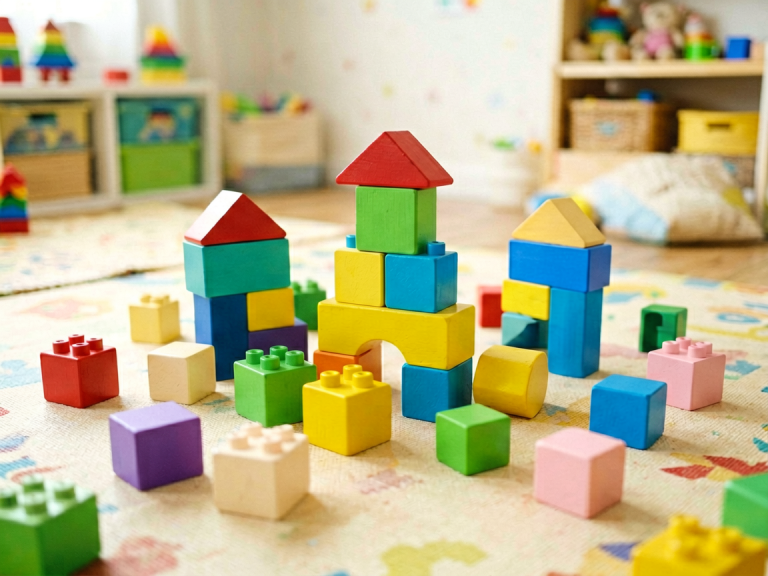
- Open-ended building sets: Blocks, magnetic tiles, LEGO Duplo (not small LEGO bricks, which are still a choking hazard for some five-year-olds), and wooden train tracks. These encourage problem-solving, spatial reasoning, and creativity.
2. Toys That Promote Language and Early Literacy
Reading readiness is a key focus for five-year-olds. Toys that make language fun can give them a head start.
- Alphabet puzzles and magnetic letters: Help with letter recognition and simple word building. Look for sets that include both uppercase and lowercase.
- Storytelling cards or sequence cards: Children arrange pictures in order to create a story, practicing logical sequencing and narrative.
- Rhyming games and word bingo: These phonemic awareness games prepare children for reading.
- Simple board games that require reading or matching: Games like “Zingo!” or “Alphabet Bingo” blend social turn-taking with literacy.
- Books with interactive features: Pop-up books, lift-the-flap books, or sound books keep reading engaging. Let the child “read” to you using memory.
3. Toys That Build Fine Motor Skills and Hand-Eye Coordination
Five-year-olds are refining their small muscle control, crucial for writing and self-care.
- Art supplies: Crayons, washable markers, safety scissors, glue sticks, child-friendly paint, and Play-Doh. Encourage cutting, drawing, and sculpting.
- Beading and lacing sets: Large beads and strings improve dexterity and patience.
- Stencils and tracing boards: Help children learn to control a pencil.
- Building bricks with smaller pieces (but still larger than standard LEGO): Consider Mega Bloks or LEGO Juniors, which have simpler instructions.
- Sticker books and sticker mosaics: Peeling and placing stickers strengthens the pincer grasp.
4. Toys That Develop Gross Motor Skills
Physical activity is vital for health, coordination, and emotional release.
- Tricycles, balance bikes, or scooters: Great for outdoor fun and balance. Ensure a properly fitted helmet.
- Balls of various sizes: Soccer balls, beach balls, or soft play balls encourage kicking, throwing, and catching.
- Obstacle course components: Hula hoops, cones, tunnels, and stepping stones. Set up simple challenges to build agility.
- Jump ropes (with a lightweight, plastic bead rope that is easier for beginners).
- Climbing structures: Small indoor or outdoor climbing domes or slides, always under supervision.
5. Toys That Teach Math, Logic, and Science
Five-year-olds are natural scientists. They love to count, compare, and experiment.
- Counting bears or number puzzles: Hands-on manipulatives make abstract concepts concrete.
- Pattern blocks and shape sorters: Even simple geometric puzzles teach geometry and symmetry.
- Simple board games with dice: Like “Chutes and Ladders” or “Candy Land” (though some five-year-olds may find Candy Land too simple; “The Sneaky Snacky Squirrel Game” is a good alternative).
- Science kits designed for ages 5+ : Simple volcano kits, magnifying glasses, bug catchers, or magnet sets. Avoid kits with small chemicals.
- Timers and stopwatches: Help children understand duration and turn-taking.
Safety Considerations When Choosing Toys
Age labeling is just a starting point. Parents must consider their individual child’s maturity and habits.
- Choking hazards: Avoid toys with small parts that can fit inside a toilet paper roll (approximately 1.25 inches in diameter). Many five-year-olds still put objects in their mouths.
- Sharp edges and points: Check for rough plastic seams or metal edges on toy cars or playsets.
- Toxic materials: Ensure paints, plastics, and fabrics are non-toxic and labeled as BPA-free, phthalate-free, and lead-free.
- Strangulation risks: Avoid toys with long cords, strings, or ribbons longer than 12 inches (e.g., pull toys with cords, toy necklaces).
- Batteries: Button batteries are extremely dangerous if swallowed. Ensure battery compartments are secured with screws.
- Age recommendations on packaging: While not infallible, they are based on safety testing. A toy marked “3+” may still be too simple for a five-year-old, but one marked “8+” is likely too advanced and may contain small parts.
Toys to Avoid for Five-Year-Olds
Not all toys are created equal. Some common offenders:
- Toys that promote violence or aggression: Realistic weapons like toy guns, swords, or bows and arrows (unless used in a purely imaginative, cooperative context, and even then, many educators advise against them).
- Electronic toys that do the thinking: Toys that talk, sing, or light up without requiring the child’s input. These can be passive and limit creativity.
- Toys with overwhelming sound or lights: Some flashy toys can overstimulate a five-year-old, leading to meltdowns.
- Toys that are too advanced: Board games with complex rules, chemistry sets with real chemicals, or construction sets with hundreds of tiny pieces. They lead to frustration.
- Fad toys with little play value: Many cheap plastic toys tied to movies or TV shows are quickly abandoned. Focus on open-ended, durable options.
How to Involve Your Five-Year-Old in Toy Selection
Children at this age benefit from having some choice. When shopping together:
- Set limits in advance: “You can choose one toy that costs under $20.”
- Ask open-ended questions: “What could you build with that?” “How would you play with this?”
- Encourage problem-solving: “That toy looks fun, but it has tiny magnets. Do you think you might put them in your mouth?”
- Let them test: If possible, visit a store with play areas or borrow from a friend first.
The Role of Simplicity and Open-Ended Play
The best toys for a five-year-old are often the simplest. A cardboard box can become a spaceship, a castle, or a car. A set of colored tiles can be used for counting, pattern-making, or decoration. Resist the urge to buy gadgets that promise to teach reading or math in ten minutes. Instead, trust the child’s natural curiosity. Toys that require the child to act, not just watch, are the ones that build executive function, creativity, and resilience.
A Sample “Toy Toolbox” for a Five-Year-Old
Here is a balanced collection that covers all developmental areas without overwhelming:
- A set of wooden unit blocks (about 50–100 pieces)
- A few costumes (e.g., doctor, firefighter, superhero cape)
- A collection of picture books (fiction and non-fiction)
- Art supplies: crayons, scissors, glue, paper, child-safe paint
- A simple board game like “The Sneaky Snacky Squirrel Game”
- A balance bike or scooter with helmet
- A few puzzles (24–48 pieces)
- Magnetic letters and a small whiteboard
- Play-Doh with a few tools
- A set of plastic animals or action figures
Rotate toys every few weeks to maintain novelty. Too many options can lead to overwhelm and reduced attention span.
Conclusion: Trust the Child, Trust the Process
Choosing toys for a five-year-old should be joyful, not stressful. Remember that every child develops at their own pace. A toy that one five-year-old adores might bore another. Observe your child’s play: Are they more drawn to building, dancing, drawing, or storytelling? Let that guide you. Above all, prioritize safety, simplicity, and open-ended play. The most valuable toy you can give is your time and attention. A parent who sits on the floor and builds a castle with their child is offering more than any store-bought item ever could. Use this guide as a compass, but let your child’s laughter be the final judge.