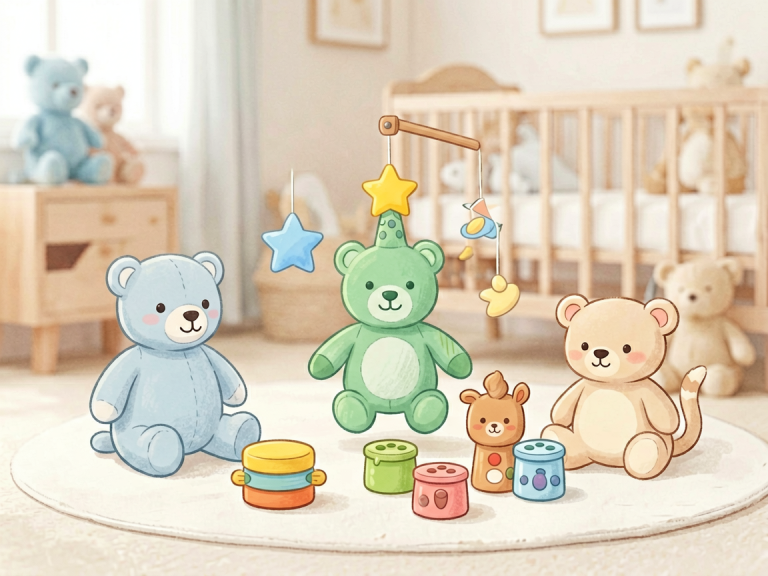
Rediscovering Wonder: Screen-Free Play Ideas for Toddler Girls to Replace Tablet Time
Introduction
In the quiet hum of a modern home, a small hand reaches for a glowing tablet. The child’s eyes fix on the screen, her fingers swiping and tapping with practiced ease. It is a scene repeated in millions of households—a temporary solution for a busy parent, a moment of peace. But what are we trading for that silence? For toddler girls aged one to three, whose brains are developing at lightning speed, the allure of digital entertainment often replaces something far more valuable: unstructured, sensory-rich, imaginative play. Replacing tablet time with screen-free activities is not merely a luxury; it is a developmental necessity. This article explores why screen-free play matters specifically for toddler girls and offers a treasure trove of ideas to help parents gently guide their little ones away from the screen and back into the real world of wonder.
—
The Hidden Cost of Screen Time for Toddler Girls
The American Academy of Pediatrics recommends avoiding digital media for children under 18 months (with the exception of video chatting) and limiting screen time to one hour per day for children aged two to five. Yet many toddlers spend far longer on tablets, often with passive consumption of fast-paced videos or simplistic games. The consequences are subtle but profound.
For toddler girls, whose language acquisition, fine motor skills, and social-emotional development are rapidly unfolding, excessive screen time can disrupt three critical areas:
- Language delay: Interactive apps may claim to teach words, but they lack the back-and-forth conversation, facial expressions, and tone of voice that babies and toddlers need to build vocabulary and comprehension. A screen cannot respond to a toddler’s babbling with delight or point to a real dog across the park.
- Reduced attention span: Fast-changing images and instant rewards train the brain to expect constant stimulation, making it harder for a child to engage in slower, open-ended play like building a block tower or examining a leaf.
- Missed sensory experiences: Tablets offer flat, two-dimensional input. Toddler girls need to touch, taste, smell, and manipulate real objects to build neural pathways. The absence of texture, temperature, weight, and resistance can delay sensorimotor integration.
Replacing tablet time with screen-free play is not about punishing the child or the parent. It is about reclaiming the messy, glorious, unscripted moments that build the foundation for creativity, resilience, and connection.
—
Why Toddler Girls Especially Benefit from Hands-On Play
Stereotypes aside, toddler girls often show early preferences for pretend play, nurturing, and detailed exploration—but they also need rough-and-tumble, problem-solving, and risk-taking. Screen-free play offers the perfect canvas.
When a toddler girl puts a doll to sleep with a tiny blanket, she is practicing empathy. When she pours water from a cup to a bowl, she is learning physics. When she pretends to cook a meal with plastic vegetables, she is sequencing events and role-modeling adult behavior. These activities cannot be replicated by a tablet’s tap-and-drag interface. They require whole-body involvement: balancing, reaching, squatting, gripping, and coordinating both hands.
Moreover, screen-free play gives toddler girls a sense of agency. On a tablet, the game dictates the rules. In real play, she decides: “This block is a car. Now it’s a telephone. Now it’s a mountain.” This flexible thinking is the bedrock of future creativity and problem-solving. And because girls are often socialized toward compliance, providing unstructured play time helps them develop assertiveness and independence—skills that will serve them well later in life.
—
Creative Play Ideas to Spark Imagination
### Dress-Up and Role-Play Corner
Set aside a small basket or low-hanging hook with a few scarves, hats, old necklaces, and a mirror. Toddler girls love to transform themselves. A simple silk scarf becomes a superhero cape, a princess train, or a baby carrier for a doll. Encourage her to act out scenes: going to the doctor, cooking dinner, or taking a train ride. You can join in by asking, “What should I order at your restaurant?” This not only replaces screen time but builds language and social scripts.
### Storytelling Without Pictures
Instead of watching a story on a tablet, create one together. Use a small felt board and felt shapes (animals, trees, houses) or simply use your hands and voices. Let your toddler girl choose the characters: “Is your bunny going to the park or the beach?” She can dictate the plot while you act it out. This strengthens narrative skills, memory, and the joy of co-creation.
### “Busy Boxes” for Independent Play
Prepare several shoe boxes or small containers with different themes, rotated weekly. For example:
- *Sensory box:* Dried beans, scoops, small cups, and plastic animals. (Always supervise with small objects to avoid choking.)
- *Construction box:* Mega-blocks, wooden train tracks, or magnetic tiles.
- *Art box:* Crayons, paper, stickers, and a glue stick.
When the tablet temptation arises, offer a busy box with a simple prompt: “Can you build a castle for the bear?” The open-ended nature keeps her engaged for longer than any app.
### Outdoor Treasure Hunts
Even a tiny backyard or balcony can become an adventure. Give her a small bucket and ask her to find three yellow leaves, one smooth rock, and a feather. Or simply blow bubbles and watch her chase them. Outdoor time provides vitamin D, gross motor movement, and a sense of wonder that no screen can match.
—
Sensory Play: A World of Textures and Colors
Toddler girls are natural scientists. They explore through their senses, and sensory play is one of the most effective alternatives to tablet time.
### Water Play
Fill a shallow basin with warm water, add a few drops of food coloring, and provide cups, funnels, and plastic bottles. She can pour, splash, and transfer water for twenty minutes straight. Add ice cubes for an extra dimension. Water play soothes and focuses the mind, and it’s impossible to multitask with a tablet.
### Playdough and Clay
Homemade playdough (flour, salt, water, cream of tartar, and a bit of oil) offers endless possibilities. Roll it into snakes, press cookie cutters into it, or hide small beads inside for her to find. Squeezing and rolling strengthens hand muscles needed for later writing. If she tries to eat it? It’s nontoxic (though salty).
### Messy Art with Shaving Cream
On a high-chair tray or a plastic tablecloth, spray some shaving cream and add a drop of food coloring. She can swirl her fingers through it, making patterns. Yes, it’s messy—but the joy of squishing and smearing builds tactile tolerance and creativity. Cleanup is easy: wipe off with a damp cloth.
### Nature Sensory Bins
Fill a bin with sand, pinecones, small stones, and artificial flowers. Add a little rake and a spoon. She can dig, hide objects, and create tiny landscapes. This connects her to the natural world and provides a calm, repetitive activity that mimics the calming effect of a screen without the blue light.
—
Building Social and Emotional Skills Through Unplugged Play
Tablets isolate children; cooperative play connects them. Even if your toddler girl plays alone, screen-free activities lay the groundwork for future friendships.
### Parallel Play with a Twist
Invite a friend over for a playdate with two identical sets of toys—toy kitchen items, doll beds, or building blocks. Toddler girls often engage in parallel play (playing side by side), but they still learn turn-taking and imitation. They watch each other’s pretend actions and mimic them, developing social scripts that screens cannot teach.
### Emotion Dolls and Puppets
Use simple sock puppets or a set of small dolls to act out emotions. “This doll is sad because she lost her toy. How can we help her?” Your toddler girl learns to name feelings and practice gentle responses. This emotional literacy is a direct antidote to the overstimulation of fast-paced shows.
### Music and Movement
Turn on some calm (or silly) music and dance together. Clap hands, stomp feet, spin around. If she wants to watch a video, instead say: “Let’s make our own music!” Use a pot and wooden spoon as a drum, or shake a bottle filled with rice. This builds rhythm, coordination, and body awareness without screens.
—
Practical Tips for Transitioning Away from Tablets
Letting go of the tablet can be as hard for parents as for toddlers. The key is gradual replacement, not cold-turkey denial.
### Create a “No-Screen” Zones
Designate certain areas (like the living room play mat or the dining table) as screen-free. Keep the tablet out of sight—literally put it in a drawer. Out of sight often leads to out of mind.
### Use Visual Timers
If your toddler girl expects daily tablet time, use a visual timer (like a sand timer or a simple picture chart). “We watch the bunny video for 10 minutes, then we turn it off and go outside.” Predictability reduces tantrums.
### Model Screen-Free Behavior Yourself
When you are with her, put your own phone away. She learns by watching. If she sees you reading a book, cooking, or drawing, she will naturally gravitate toward those activities.
### Embrace Boredom
Boredom is the birthplace of creativity. When she whines for the tablet, resist the urge to provide a new gadget. Instead, say, “I wonder what we could do with these blocks?” or “Let’s look out the window and count birds.” The first few minutes of resistance are hard, but once she enters the flow of real play, she will forget the screen.
### Prepare for Mess and Imperfection
Screen-free play is messy. Flour on the floor, water on the table, crayon on the wall. Accept this as the price of development. Lay down a waterproof mat, keep wipes handy, and remember that every spilled cup is a lesson in cause and effect.
—
Conclusion: The Gift of Real-World Wonder
Replacing tablet time with screen-free play for toddler girls is not about deprivation; it is about offering something infinitely richer. It is about letting her feel the squish of mud between her fingers, the weight of a wooden block in her palm, the pride of putting a puzzle piece in the right spot. It is about hearing her laugh as she chases a butterfly or watching her carefully tuck a stuffed animal into bed.
These moments are fleeting. The tablet will always be there, ready with its flashing colors and hollow rewards. But the neural connections formed during unstructured play will last a lifetime—shaping a child who is curious, resilient, and deeply connected to the physical world. As parents, we can choose to give our toddler girls not the screen, but the world. And that, truly, is the best gift of all.