Playful Pathways: Creative Play Ideas for 5-Year-Olds That Boost Language Development
Introduction
At the age of five, children are standing at a thrilling crossroads. Their cognitive abilities are expanding rapidly, their vocabularies are exploding, and their social awareness is deepening. Yet, perhaps the most powerful tool for nurturing all of these developments remains something beautifully simple: play. For a five-year-old, play is not merely a pastime—it is the very engine of learning. This is especially true for language development. Through carefully chosen play activities, parents, caregivers, and educators can weave rich linguistic experiences into the fabric of a child’s daily life. This article explores a variety of play ideas specifically designed for five-year-olds, each one intentionally crafted to enhance vocabulary, sentence structure, narrative skills, and communicative confidence. Every suggestion is grounded in developmental research and practical, joyful implementation. By the end, you will have a toolkit of engaging activities that turn ordinary playtime into a vibrant language laboratory.
1. Storytelling with Puppets and Props
Why Puppets Work Wonders for Language
Puppets are magical for five-year-olds because they lower the stakes of communication. When a child speaks through a puppet, the pressure to perform perfectly disappears. Instead, the puppet becomes a playful alter ego that can ask questions, make mistakes, and experiment with new words. This dramatic distance encourages risk-taking in language, which is essential for growth. Moreover, puppet play naturally invites dialogue—between the child and the puppet, between multiple puppets, or between the child and an adult partner.
How to Implement
Create a simple puppet theater using a cardboard box turned on its side, draped with a cloth. Gather a collection of puppets: store-bought animal hand puppets, simple sock puppets you make together, or even paper-bag puppets. Then, introduce a conflict. For example: “The bunny has lost his carrot. Can the fox help him find it?” Let the child take the lead. As the child voices the bunny, prompt them with open-ended questions: “What does the carrot look like? Where should we look first? How does the bunny feel?” These questions encourage the child to use descriptive language, ask questions themselves, and construct a simple narrative. Over time, children will begin to invent their own stories, using increasingly complex sentences and a wider vocabulary. The adult can model rich language by using words like *search, discover, disappointed, relieved* and then pause to let the child repeat or adapt them.
2. Sensory Bins with Vocabulary Treasure Hunts
The Sensory-Language Connection
Sensory play is often undervalued for language development, but it is profoundly effective. When children engage multiple senses—touch, sight, smell, and even sound—they form stronger neural connections. The concrete experience of handling rice, sand, water beads, or pasta provides a physical anchor for abstract words. A five-year-old can *feel* what “smooth,” “rough,” “squishy,” and “crumbly” truly mean. This embodied vocabulary sticks far better than flashcard drills ever could.
Activity Design
Fill a large plastic bin with a base material—uncooked rice, dried beans, kinetic sand, or shredded paper. Hide small plastic letters, toy animals, miniature objects, or picture cards inside. Give the child a scoop, tweezers, or their hands. Then, instead of simply saying “find the letter A,” turn it into a language-rich scavenger hunt. Use prepositional language: “Can you scoop out something *under* the green beans? Is the yellow duck *behind* the red block?” As the child finds objects, ask them to describe them: “What color is it? How does it feel? What sound does a duck make? What rhymes with duck?” This activity naturally introduces comparatives (“This rock is *smoother* than that one”), spatial terms (*above, below, inside, beside*), and descriptive adjectives. To deepen language, create a simple “treasure map” with pictures and ask the child to narrate their journey: “First, I dug in the sand. Then, I found the blue marble. It was cold and shiny.”
3. Pretend Play Scenarios with Scripted Roles
The Power of Sociodramatic Play
At age five, children are masters of make-believe. They love to imitate the adult world: cooking, shopping, going to the doctor, flying an airplane. This type of sociodramatic play is a goldmine for language because it requires children to adopt different registers of speech. A “doctor” speaks differently from a “customer.” A “bus driver” uses commands while a “passenger” makes requests. Through these shifts, children learn pragmatics—the social rules of language, such as turn-taking, politeness, and adjusting tone.
Setting Up a “Restaurant” Play
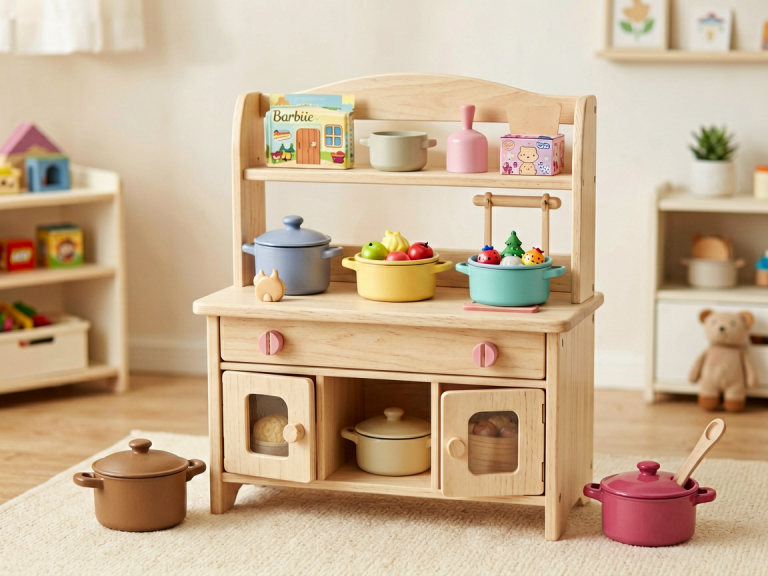
Transform your living room into a pretend restaurant. Provide menus you’ve drawn together, a notepad for taking orders, play food, and aprons. Assign roles: the chef, the server, the customer, the host. Then, let the child lead the scene. The server must greet the customer: “Welcome to our restaurant. Would you like to see the menu?” The customer can order: “I would like a bowl of soup, please, but no onions.” The chef might announce: “The special today is spaghetti with meatballs!” As the play unfolds, introduce new vocabulary naturally. Use words like *ingredients, recipe, reservation, check, tip, delicious, bland, spicy*. For a five-year-old, these words become memorable because they are used in a meaningful context. If the child struggles with a phrase, model it in character: “Oh, I think the chef meant to say the soup is *simmering* on the stove. Simmer means it’s cooking slowly with tiny bubbles.” This gentle correction embeds learning without interrupting the fun.
4. Rhyming Games and Poetry Walks
Phonological Awareness Through Fun
Language development is not only about vocabulary; it is also about the sound system of the language. Rhyming games build phonological awareness—the ability to hear and manipulate sounds. This skill is a strong predictor of later reading success. Five-year-olds love wordplay, and rhymes feel like magic to them. Incorporating rhyming into active play reinforces sound patterns without drilling.
Poetry Walks and Rhyme Races
Take a walk around the neighborhood or a park. Challenge your child to find something that rhymes with a word you say. For example: “I see a *tree*. Can you find something that rhymes with *tree*?” (Bee, knee, key, flea—maybe a leaf shaped like a key, or a dog named Flea!) Extend this by creating a collaborative poem as you walk: each person adds one line that rhymes with the previous line. “I saw a cat that wore a hat. The hat was red and on its head.” If your child struggles, accept silly rhymes; the goal is joy and sound awareness, not perfection. At home, try “Rhyme Hunt” in the living room: “Find something that rhymes with *book*.” (Hook, look, cook—a cookbook, a hook on the wall.) These games sharpen listening skills and expand the child’s ability to detect patterns in language.
5. Construction Play with Descriptive Dictation
Building Language Through Building Blocks
Blocks, LEGOs, magnetic tiles, and other construction toys are often seen as math or engineering tools. Yet they are equally powerful for language. During construction, children naturally use spatial language (*above, below, next to, diagonal, stack, balance*) and problem-solving vocabulary (*stable, collapse, support*). By adding a “dictation” twist, you can elevate this into a rich verbal exercise.
The “Architect and Builder” Game
One person becomes the “architect” and the other the “builder.” The architect describes a structure they want built, but cannot touch the blocks. The builder must listen and follow verbal instructions. For example: “Put a red square block *on top* of two blue rectangle blocks. Now take a green triangle and place it *on the left side* of the red square.” After three or four instructions, compare the result to the architect’s mental image. Then switch roles. This game forces the child to use precise language and to listen carefully to directions. It also introduces complex sentence structures: “If you want the tower to be taller, you need to put the block *diagonally* so it *balances*.” Over time, children learn to give multi-step instructions, use directional words, and describe relationships between objects. This is a direct workout for expressive language.
6. Art and Story Creation: Draw-and-Tell
Visual Stimuli as Language Catalysts
Five-year-olds are prolific artists. Their drawings are stories waiting to be told. By coupling art with narration, you encourage children to organize their thoughts into coherent sequences. The act of explaining what they have drawn helps them practice past tense, sequencing (first, then, next, finally), and descriptive detail.
Activity Steps
Provide paper, crayons, markers, and stickers. Ask your child to draw a picture of something they did today or an imaginary scene. After they finish, ask open-ended questions: “Tell me about your drawing. What is happening here? Who is that character? Why is the sky purple? What happened just before this moment?” Record their narration on your phone or write down their words on the back of the drawing. Then read it back to them. This validates their voice and shows how spoken language can be captured in written form. For a twist, cut the drawing into puzzle pieces and ask the child to reassemble it while retelling the story. This reinforces narrative coherence and memory.
7. Music and Movement: Songs with Action Commands
The Rhythm of Language
Music integrates rhythm, melody, and repetition—three elements that make language easier to acquire. Five-year-olds thrive on songs that involve actions, like “Head, Shoulders, Knees, and Toes” or “If You’re Happy and You Know It.” But you can move beyond classics to create custom language-building songs.
Command Songs
Invent a simple tune (or use a familiar one like “Row, Row, Row Your Boat”) and fill it with action commands that require understanding of adverbs and verbs. For example: “Stomp, stomp, stomp your feet, stomp them very loudly. Spin, spin, spin around, spin now very slowly.” This teaches adverbs of manner (*loudly, slowly, gently, quickly*). You can also include prepositions: “Reach your arms up high, then reach them down so low. Now put your hands behind your back, then wiggle them *in front*.” The physical engagement ensures that language is not just heard but embodied. Repetition across different songs builds automaticity in vocabulary use.
8. Cooperative Board Games and Conversation Starters
Social Language in Structured Play
Many board games for ages 4+ (like “Hoot Owl Hoot!”, “Race to the Treasure!”, or “The Sneaky, Snacky Squirrel Game”) involve cooperation rather than competition. These games naturally require players to talk to each other: negotiating moves, offering advice, celebrating successes, and dealing with setbacks. For five-year-olds, this is a low-stress environment for practicing conversational turn-taking, asking for help, and using polite expressions.
Enhancing Language During Gameplay
Before starting a game, establish a “game talk” expectation: we use full sentences. Instead of just saying “my turn,” encourage: “It’s my turn now. I will roll the dice.” When a child draws a card, ask: “What does that card say? Can you read the picture clue?” For pre-readers, describe the picture and ask them to repeat the description. After the game, invite a brief reflection: “What was the hardest part? What strategy did you use? How did you feel when we almost won?” This debriefing develops narrative recall and emotional vocabulary (frustrated, excited, relieved, proud). Over time, children internalize these conversational structures and apply them in other social settings.
Conclusion
Language development in five-year-olds is not a separate subject to be taught; it is a natural byproduct of meaningful, joyful play. Each of the play ideas explored in this article—puppet storytelling, sensory treasure hunts, pretend restaurant scenarios, rhyming walks, construction dictation, art narration, music command games, and cooperative board games—offers a unique doorway into richer vocabulary, more complex sentence structures, and greater communicative confidence. The key is intentionality. By thoughtfully designing play environments and interacting with children as curious partners rather than instructors, adults can turn every giggle, every negotiation over blocks, and every silly rhyme into a stepping stone for language growth. Remember: a five-year-old’s brain is wired to learn through doing. So give them the blocks, the puppets, the songs, and the stories. Then, get down on the floor and play with them. That is where the real magic happens—in the vibrant, messy, beautiful dialogue of play.