The Ultimate Parent Guide to Choosing Age-Appropriate Toys for 5-Year-Old Girls
Selecting the perfect toy for a 5-year-old girl can feel like navigating a maze of glitter, pink packaging, and marketing claims. At this age, children are bursting with curiosity, developing social skills, and refining their motor abilities. The right toy does more than entertain—it nurtures growth, sparks imagination, and builds confidence. This comprehensive guide will equip you with research-backed strategies to choose age-appropriate toys that align with your child’s developmental stage, interests, and safety needs.
Understanding the Developmental Landscape of a 5-Year-Old Girl
Before diving into toy categories, it is essential to grasp what is happening in your child’s mind and body at age five. This is a period of remarkable transformation.
Cognitive Milestones
Five-year-olds are moving from purely symbolic play to more structured thinking. They can follow multi-step instructions, engage in simple board games with rules, and enjoy puzzles with 20–50 pieces. Their attention spans have grown to 10–15 minutes for focused activities. They ask endless “why” questions and love categorizing objects by color, size, or shape. Toys that challenge their reasoning—like pattern recognition games, simple coding kits (e.g., robot mice), or matching memory cards—are ideal.
Social and Emotional Development
At five, girls often develop strong friendships and a desire for cooperative play. They can take turns, negotiate roles, and express empathy. However, they may still struggle with losing gracefully. Role-playing toys—such as doctor kits, kitchen sets, or dress-up costumes—allow them to practice social scripts. Emotional intelligence is also blossoming; dolls with different facial expressions or storybooks about feelings can help them articulate emotions.
Physical and Motor Skills
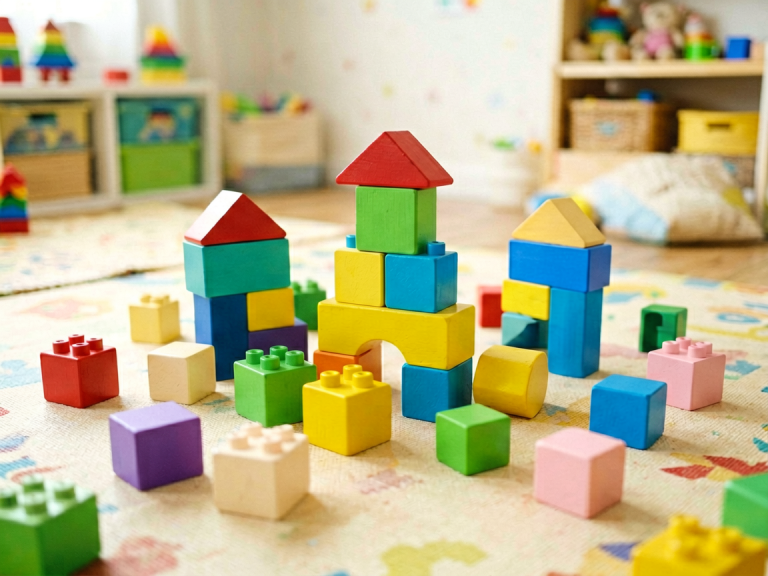
Fine motor skills are advancing rapidly: a 5-year-old can use scissors with control, button shirts, and draw recognizable shapes like triangles and diamonds. Gross motor skills are equally impressive—they can hop on one foot, skip, and catch a ball. Toys that encourage these abilities include building sets (LEGO Duplo or classic LEGO), art supplies (chunky crayons, washable markers, clay), and outdoor equipment (tricycles, jump ropes, or small climbing structures).
Key Criteria for Selecting Age-Appropriate Toys
Not all toys marketed to “ages 3–6” are equally suitable. Use these five filters to make informed decisions.
1. Safety First: Material and Construction
Small parts remain a choking hazard until age three, but at five, the risk shifts to sharp edges, toxic paints, or fragile plastic that can break into dangerous shards. Always check labels for ASTM (American Society for Testing and Materials) or CE (Conformité Européenne) certification. Avoid toys with strong chemical smells (possible phthalates) or loose magnets that could be swallowed. For electronic toys, ensure battery compartments are secured with screws.
2. Open-Ended vs. Single-Purpose Play
The best toys for a 5-year-old are those that can be used in multiple ways. A dollhouse can become a hospital, a school, or a castle. A set of wooden blocks can be a bridge, a tower, or a cave. Single-purpose toys (e.g., a plastic talking bear that only says three phrases) often lose appeal quickly. Open-ended toys encourage creativity and problem-solving, stretching a child’s imagination far beyond the product’s original design.
3. Alignment with Interests, Not Gender Stereotypes
While many 5-year-old girls love princesses and sparkly things, it is vital to offer a diverse range of options. A child who prefers trucks, robots, or dinosaurs is not unusual. Conversely, a girl who loves baking sets or fashion dolls is also perfectly normal. The key is to observe your daughter’s natural inclinations and provide toys that match her authentic passions, not societal expectations. Research shows that girls exposed to STEM toys early (like magnetic building tiles or simple microscopes) are more likely to pursue science later.
4. Appropriate Complexity Level
A toy that is too easy leads to boredom; one that is too hard causes frustration. The “Goldilocks” principle applies: the toy should be slightly challenging but achievable with some effort. For example, a 50-piece jigsaw puzzle is appropriate, but a 150-piece puzzle may overwhelm. A board game that requires counting to 20 is fine, but one that involves multiplication is not. Observe your child’s current skills and choose a toy that stretches them just a little.
5. Screen Time Moderation
Digital toys (tablets, interactive robots) are not inherently bad, but the American Academy of Pediatrics recommends no more than one hour of high-quality screen time per day for children ages 2–5. For 5-year-olds, look for apps and devices that require active participation—like digital drawing pads, coding apps that use physical commands, or story-creator programs. Avoid passive consumption like autoplaying videos.
Top Toy Categories for 5-Year-Old Girls
Now that you know what to look for, here are specific categories of toys that consistently deliver developmental benefits.
Creative and Artistic Toys
Five-year-olds are natural artists. Provide a variety of media: watercolor sets, dot markers, stamp sets, sticky paper mosaics, and modeling clay. A child-size easel encourages upright drawing posture, while a set of color-mixing paints teaches cause and effect. Look for “mess-free” options (e.g., water-reveal mats) if clean-up is a concern, but do not shy away from occasional messes—they are part of the learning process.
Construction and Building Sets
Beyond LEGO, consider magnetic tiles (Magnatiles, PicassoTiles), wooden unit blocks, or interlocking gears. These toys develop spatial reasoning, geometry, and fine motor control. Girls often enjoy building with themes—a castle kit, a farm set, or a marble run. For a challenge, try a simple “build the shape” card set that asks them to replicate structures.
Pretend Play and Role-Playing
This is the golden age for dramatic play. A well-stocked play kitchen (with wooden food items that can be “cut”), a doctor’s kit with working stethoscope and bandages, a cash register with play money, and a dress-up trunk with costumes (firefighter, veterinarian, astronaut, fairy) all fuel imagination. Dolls that can be bathed, dressed, and fed also teach nurturing skills. Avoid overly commercialized dolls that promote unrealistic body images; instead, choose diverse, anatomically neutral dolls.
Educational Games and Puzzles
Board games that teach turn-taking, counting, and strategy are excellent. Classics like “Candy Land,” “Chutes and Ladders,” and “Memory” are perfect for this age. For more academic readiness, try alphabet bingo, number matching games, or simple geography puzzles. A set of magnetic letters and a small whiteboard can turn spelling into a fun activity. For spatial skills, tangram puzzles or pattern blocks are superb.
Outdoor and Active Play
Physical activity is crucial for health and brain development. A tricycle or balance bike (with helmet) builds coordination. A lightweight jump rope, a Hula-Hoop, or a set of beanbags for tossing games can be used in the backyard or park. Consider a child-sized gardening set (trowel, gloves, seeds) to combine nature exploration with responsibility. If space allows, a small climbing dome or slide provides gross motor challenges.
Science and Nature Exploration
Five-year-olds are curious about the world. A simple magnifying glass, a bug-catcher kit (with viewing container), or a set of gemstone dig kits can captivate them for hours. A child-safe kaleidoscope or a prism that splits light teaches basic physics. For indoor experiments, try a sink-and-float kit or a baking soda volcano. These toys foster observation, hypothesis-making, and wonder.
Red Flags: Toys to Avoid at Age Five
Even well-intentioned purchases can be problematic. Steer clear of:
- Toys with excessive small pieces (beads, small balls) that pose choking risks, especially if younger siblings are present.
- Electronic toys that do everything for the child, like a “phone” that simply repeats words. These limit creativity and engagement.
- Toys with violent themes (toy guns, war figures) that may confuse a 5-year-old’s emerging understanding of pretend vs. reality.
- Overly gendered marketing that pigeonholes girls into only “nurturing” or “beauty” roles. A toy tool set or a chemistry kit is just as appropriate for a girl.
- Toys that require advanced reading or abstract logic without adult supervision—they can cause frustration.
Practical Tips for Shopping and Gifting
Finally, here are actionable strategies to make your toy selection successful.
- Watch your child at play. Observe what she reaches for in the classroom or at friends’ homes. This natural inclination is a powerful guide.
- Read reviews from other parents. Real-world feedback often reveals durability issues or hidden flaws that product descriptions miss.
- Consider used toys. Second-hand options are affordable and often of higher quality than new budget toys. Check for missing parts and clean thoroughly.
- Involve your child in the choice. Present two or three age-appropriate options and let her pick. This builds decision-making skills and ensures the toy will be used.
- Rotate toys. Store some toys out of sight and rotate them every few weeks. This renews interest without buying new items.
- Prioritize quality over quantity. A few well-chosen, durable toys are better than a mountain of cheap plastic that breaks quickly.
Conclusion: The Gift of Thoughtful Selection
Choosing age-appropriate toys for a 5-year-old girl is not about following trends or succumbing to marketing. It is about honoring her developmental journey—her growing mind, her expanding emotions, and her active body. The best toys are those that invite her to question, create, move, and connect. By staying informed and intentional, you can provide play experiences that build a foundation for lifelong learning and joy. Ultimately, the toy itself is secondary to the love and attention you bring to the selection process. Happy playing, and happy parenting.