The Power of Pretend: Enriching Play Activities for Kindergarteners
Introduction
In the bustling world of early childhood education, few experiences are as universally cherished—and as profoundly developmental—as pretend play. For kindergarteners, the period between four and six years of age marks a golden window of cognitive, social, and emotional blossoming. It is during these years that children begin to move beyond simple parallel play and enter into rich, collaborative imaginary worlds. Pretend play, also known as symbolic play or dramatic play, is far from a frivolous pastime. It is, in fact, a cornerstone of healthy development. Through pretending, children practice language, experiment with social roles, regulate emotions, solve problems, and build the foundational skills that will support academic learning for years to come. This article explores the multifaceted benefits of pretend play for kindergarteners and offers a detailed compendium of activities that educators and parents can use to nurture this essential form of play.
1. The Cognitive and Language Benefits of Pretend Play
Before diving into specific activities, it is important to understand why pretend play holds such transformative power. When a kindergartener picks up a wooden block and declares it a cell phone, or drapes a blanket over two chairs to create a “castle,” she is engaging in abstract thinking. She is manipulating symbols—a skill that directly correlates with later literacy and numeracy. Psychologist Lev Vygotsky famously argued that pretend play creates a “zone of proximal development,” where children perform at a level slightly above their actual age. In a make-believe scenario, a child might use vocabulary she does not yet use in everyday conversation, such as “prescription,” “emergency,” or “treasure map.” Additionally, pretend play requires narrative sequencing: first we go to the store, then we cook dinner, then we serve the guests. This logical ordering strengthens memory and executive function.
Activity Spotlight: The “Restaurant” Game
Set up a small table with plastic plates, cups, and a simple menu drawn on a piece of paper. Provide a notepad and pencil for “taking orders.” Children take turns being customers, waiters, and chefs. The waiter must listen carefully, write down (or draw) the order, and communicate it to the chef. This activity builds vocabulary related to food, money, and polite social phrases (“May I take your order?” “Here is your bill”). The chef must sequence the preparation steps. The customer practices patience and gratitude. Extend the activity by introducing simple math: “If a cookie costs two pretend dollars, and you have five, how many can you buy?”
2. Social-Emotional Development Through Role-Playing
Kindergarteners are at a critical stage of learning to understand others’ perspectives. Pretend play is a natural laboratory for empathy. When a child pretends to be a baby who needs care, a doctor who must be gentle, or a firefighter who is brave, she is rehearsing emotional scripts. She learns what it feels like to be in someone else’s shoes. Furthermore, collaborative pretend play requires negotiation: “I want to be the mom.” “But I was the mom yesterday!” “Okay, you can be the mom and I’ll be the big sister.” These negotiations teach compromise, turn-taking, and conflict resolution. They also help children practice regulating their own emotions when the play does not go as planned—for instance, when a “patient” refuses to take the medicine the “doctor” prescribes.
Activity Spotlight: “Doctor’s Office” Play
Create a mini clinic with a toy stethoscope, bandages, a white coat (or a white shirt worn backward), and a stuffed animal patient. Children can role-play different roles: doctor, nurse, patient, and parent. The doctor must ask questions about symptoms, examine the patient, and decide on treatment. The nurse can help with bandaging. The parent can comfort the “sick” animal. This activity helps children process common fears about medical visits while building compassion. Encourage the doctor to use phrases like “You are so brave” or “It will feel better soon.” For added depth, have the children create a “medical chart” where they draw or write the patient’s name and treatment.
3. Physical and Motor Skill Development in Pretend Play
Pretend play is not only mental; it is deeply physical. When kindergarteners dress up in oversized costumes, they practice fine motor skills by fastening buttons, zipping zippers, and tying ribbons. When they build a fort with pillows and blankets, they engage in gross motor movements—lifting, stacking, crawling. Many pretend play scenarios also incorporate movement: pretending to be animals that hop, slither, or fly; acting out a storm where they must “swim” through waves; or running a pretend “post office” where they must deliver letters across the room. These movements strengthen core muscles, improve coordination, and build body awareness.
Activity Spotlight: “Animal Rescue Mission”
Transform your classroom or living room into a jungle or a forest. Scatter soft toy animals around the room. Provide simple props such as a cardboard box “ambulance,” a rope (use a soft ribbon or scarf), and a “first-aid kit” with bandages and cotton balls. Children become animal rescuers. They must crawl under tables (caves), step over cushions (rocks), and carefully carry injured animals to the rescue center. This activity requires balancing, bending, and stretching. It also integrates narrative thinking: “The bunny fell and hurt its leg. What can we do?” The motor challenges are embedded in a story, making them far more engaging than isolated exercises.
4. Boosting Creativity and Problem-Solving with Open-Ended Props
One of the greatest gifts adults can give kindergarteners is a collection of open-ended materials rather than prescriptive toys. A cardboard box can become a spaceship, a boat, a time machine, or a refrigerator. A scarf can be a cape, a river, a baby blanket, or a magic wand. When children have to invent the function of an object, they exercise divergent thinking—the ability to generate multiple solutions to a problem. This is the same cognitive flexibility that later supports innovation in science, art, and business.
Activity Spotlight: “The Magic Box of Transformation”
Prepare a box filled with random, safe items: fabric scraps, empty containers, paper towel rolls, plastic lids, old keys, clothespins, and soft ribbons. Do not dictate a theme. Instead, say, “Today we are going to transform these ordinary things into anything you can imagine. What could this paper towel roll be? A telescope? A trumpet? A tunnel for a tiny mouse?” Let the children create their own scenarios. One child might build a “robot” from containers and lids; another might construct a “telephone” with two cups and a string. The adult’s role is to ask open-ended questions: “How does your invention work?” “What does it do?” “Who might use it?” This activity honors each child’s unique imagination and builds confidence in creative thinking.
5. Integrating Cultural and Community Roles into Play
Pretend play also serves as a vehicle for understanding the world beyond home and school. When children act out community helpers—police officers, mail carriers, construction workers, teachers—they gain respect for the roles that keep society functioning. Moreover, incorporating diverse cultural elements into pretend play fosters inclusivity and global awareness. A grocery store play area can include foods from different cuisines (tortillas, sushi, naan, plantains). A dress-up corner can feature clothing from various cultures (sarongs, kimonos, dashikis) as well as gender-neutral options. This helps children see the richness of human experience and challenges stereotypes.
Activity Spotlight: “International Market Day”
Set up multiple “stalls” in the play area, each representing a different country or region. One stall might be a French bakery with croissants and baguettes (pretend, of course), another a Mexican market with play vegetables and a toy cash register, and a third an African market with colorful cloth and wooden beads. Children can be “vendors” who describe their goods or “shoppers” who travel from stall to stall. Provide simple phrase cards (e.g., “Bonjour! How much is the bread?”) or let children make up their own language. This activity builds cultural appreciation, introduces basic geography, and practices social skills across diverse contexts.
6. The Adult’s Role: Facilitator, Not Director
While pretend play is inherently child-led, adults play a vital role in cultivating an environment where such play can flourish. The best practice is to be a “gentle facilitator”: observe, provide props when needed, offer suggestions only if the play stalls, and intervene only when safety or emotional distress arises. Adults can also be “play partners” who take on roles assigned by the children, following their lead. For example, if a child says, “You be the puppy and I’ll be your owner,” the adult should enthusiastically obey, barking and wagging an imaginary tail. This demonstrates respect for the child’s creative authority. Additionally, adults can extend learning by asking questions that prompt deeper thinking: “I wonder what the dragon eats for breakfast?” or “How will we cross the river?” These questions sustain the narrative while gently pushing cognitive boundaries.
7. Designing the Physical Space for Pretend Play
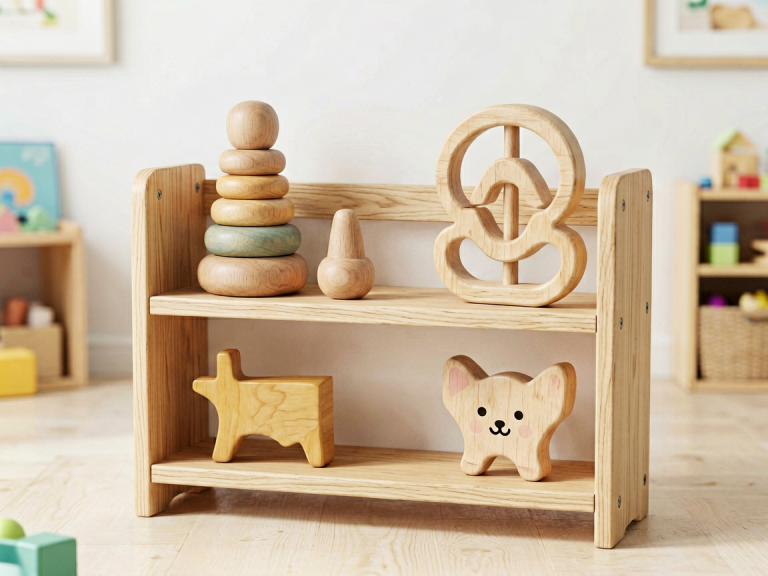
The environment itself can either invite or inhibit pretend play. A well-designed kindergarten classroom or playroom should include a dedicated dramatic play area—a space that is changed periodically to reflect new themes. Rotate themes every two to three weeks: a farm one week, a space station the next, an underwater aquarium the next. Include storage that allows children to access materials independently. Simple elements like a three-sided plywood “storefront” can be repurposed into a post office, a bank, or a summer camp check-in desk. Natural elements like wooden blocks, scarves, and stones invite more open-ended play than plastic toys with fixed functions. Even a simple “mud kitchen” outdoors—with pots, spoons, water, and dirt—can inspire hours of rich, sensory pretend play.
Conclusion
Pretend play is not a luxury or a break from “real” learning; it is real learning in its most holistic form. For kindergarteners, every time they don a firefighter hat, wield a wooden spoon as a magic wand, or negotiate who will be the pilot of the cardboard airplane, they are building the cognitive, social, emotional, and physical foundations for a lifetime of curiosity and connection. As educators and caregivers, our most important task is to carve out time, space, and respect for this powerful mode of exploration. By offering a treasure trove of open-ended props, celebrating diverse roles, and stepping back to let children direct their own dramas, we give them the greatest educational gift of all: the freedom to imagine. And that freedom, in the end, is what makes a kindergartener not just a learner, but a creator of worlds.