The Power of Pretend: How Imaginative Play Fuels Learning in Toddler Boys
Introduction: More Than Just Fun
When a toddler boy picks up a toy fire truck, presses it against the floor, and announces, “Wee-oo, wee-oo, I’m going to save the kitty!” he is not merely playing—he is learning. Pretend play, also known as imaginative or dramatic play, is one of the most powerful and natural learning tools available to young children. For toddler boys in particular, whose energy levels, curiosity, and developing sense of identity often drive them toward action-oriented play, pretending offers a rich, multi-layered foundation for cognitive, linguistic, social, emotional, and even physical growth. In a world increasingly focused on screen-based learning and structured academics, the humble act of “let’s pretend” remains an irreplaceable engine of development. This article explores the myriad ways that pretend play supports learning in toddler boys, providing parents, educators, and caregivers with a deeper understanding of why they should cherish—and actively encourage—those messy, noisy, and wonderfully imaginative moments.
Cognitive Development: Building Problem-Solving and Executive Function
One of the most profound benefits of pretend play for toddler boys lies in its impact on cognitive development. When a two-year-old boy decides that a cardboard box is a race car, he must engage in symbolic thinking—the ability to use one object to represent another. This is a cornerstone of abstract reasoning. He must hold a mental image of a car in his mind while simultaneously manipulating the box to function as that car. This dual-processing task strengthens the neural pathways responsible for creativity and flexible thinking.
Moreover, pretend play naturally introduces problem-solving. Consider a toddler boy playing “construction worker.” He has a toy hammer, a small plastic saw, and a stack of blocks that he wants to make into a “skyscraper.” When the blocks keep falling, he must experiment: Should he make the base wider? Should he use heavier blocks on the bottom? Should he ask his teddy bear for help? These are not trivial exercises; they are the seeds of scientific reasoning and engineering thinking. As he tries one solution after another, he learns cause and effect, trial and error, and the satisfaction of overcoming a challenge—all without a worksheet in sight.
Crucially, pretend play also builds executive function skills, which include self-control, working memory, and cognitive flexibility. When a toddler boy pretends to be a doctor giving a checkup to his stuffed dinosaur, he must remember the sequence: first the stethoscope, then the bandage, then the “medicine.” He must inhibit the impulse to grab the toy stethoscope and run around the room; instead, he sticks to his role. This self-regulation is practiced repeatedly during imaginative play. Research consistently shows that children who engage in more complex pretend play demonstrate stronger executive function abilities, which predict later success in school and life. For energetic toddler boys, who may struggle with impulse control, pretend play offers a safe, enjoyable training ground.
Language Development: Words, Stories, and Conversations
Toddler boys are often later talkers than their female peers, but pretend play can dramatically accelerate their language acquisition. When a boy pretends to be a superhero, he is highly motivated to learn the words that go with the role: “super strength,” “cape,” “fly,” “save the day.” He might narrate his actions (“I’m zooming up the wall!”) or create dialogues between his action figures. This natural context for language use is far more effective than rote flashcards because it is emotionally engaging and personally relevant.
During pretend play, toddler boys experiment with different registers of language. They might adopt a gruff voice for the “monster” or a gentle tone for the “baby.” They learn to ask questions (“Are you the bad guy?”), give commands (“Stop right there!”), and negotiate (“You can be the firefighter, and I’ll be the chief”). All of these communicative functions are practiced in a low-stakes environment where mistakes are part of the fun. Furthermore, when a caregiver joins the play and introduces new vocabulary—saying, “Oh, your dump truck is carrying a heavy load of gravel”—the child absorbs those words effortlessly.
Pretend play also fosters narrative skills. A toddler boy who lines up his toy animals and declares, “The lion is going to the zoo to meet the elephant,” is crafting a story. He is learning that events have a sequence, characters have motivations, and conflicts can be resolved. These early storytelling experiences lay the groundwork for reading comprehension and later writing ability. For boys who tend to be more physically active, the act of “acting out” a story can be a gateway to a love of books and language.
Social and Emotional Growth: Empathy, Cooperation, and Self-Regulation
Perhaps one of the most underappreciated benefits of pretend play for toddler boys is the development of social and emotional skills. Boys are often socialized to be active and competitive, but pretend play offers a space for them to explore gentler, collaborative, and empathetic roles. When a toddler boy pretends to feed his baby doll a bottle or wrap a blanket around a sad teddy bear, he is practicing nurturance. This is not just cute—it is the foundation of empathy. He learns to imagine how another being feels and to respond with care. This ability to take another’s perspective is critical for forming healthy relationships throughout life.
Pretend play also teaches cooperation. Two toddler boys playing together as firefighters must coordinate: one holds the hose, the other “drives” the truck. They have to share toys, take turns, and negotiate the storyline. “No, the fire is over here!” “Okay, but then I get to put it out.” This back-and-forth is a mini-lesson in conflict resolution. They learn that play is more enjoyable when they work together, a lesson that translates directly to classroom group projects and later workplace teamwork.
Emotional regulation is another key outcome. When a toddler boy is pretending to be a “scary dinosaur” and his playmate pretends to be scared, he learns to modulate his own intensity. If he becomes too aggressive, the play may break down. He must read the social cues—is his friend still smiling? Does he seem genuinely frightened? This feedback loop helps boys understand the boundaries of acceptable behavior. Moreover, pretend play allows children to process difficult emotions in a controlled setting. A boy who is afraid of going to the doctor can act out the scenario multiple times, gaining mastery over his fear. He might say, “The shot hurts, but then it’s all better,” taking control of a situation where he usually feels powerless.
Physical and Motor Development: Gross and Fine Skills in Action
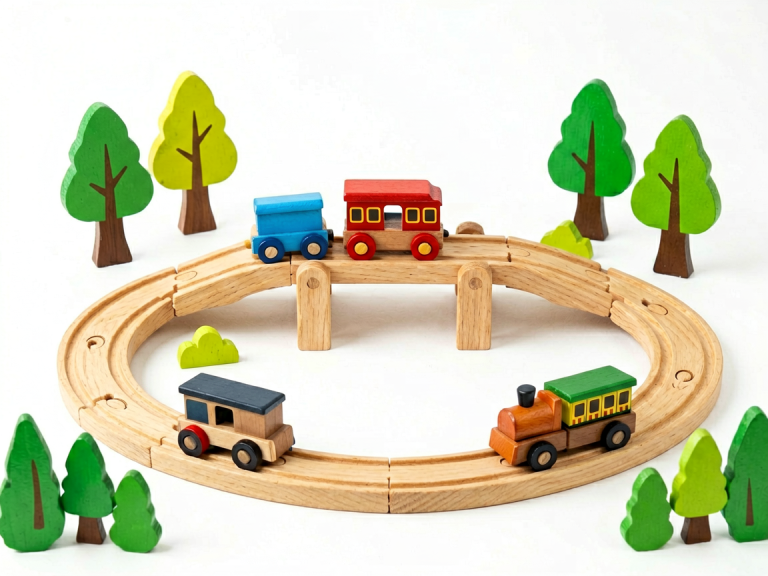
While we often think of pretend play as a mental activity, it is also deeply physical. Toddler boys are naturally inclined to move, and pretend play channels that energy into purposeful activity. A boy pretending to be a superhero might jump off a couch (gross motor skill) or a train engineer might push a heavy wooden train along a track (coordination and balance). These movements strengthen large muscle groups, improve spatial awareness, and develop balance and body control.
Fine motor skills are equally engaged. Dressing a doll, buttoning a tiny coat, manipulating small action figures, or stirring an imaginary pot of soup with a spoon all require precise hand-eye coordination and dexterity. For toddler boys, whose fine motor development sometimes lags behind their gross motor skills, pretend play provides a low-pressure way to practice these important abilities. A boy who would resist a formal “fine motor exercise” will happily spend twenty minutes putting a “doctor’s kit” back together, snapping the toy thermometer into its case, and fastening the Velcro on the bandage. The motivation comes from the play itself, not from an adult’s demand.
Additionally, pretend play encourages sensory exploration. A boy making “mud pies” with dirt and water, or pretending to be a chef in a play kitchen, is learning about texture, temperature, and cause and effect. He might discover that too much water makes the “soup” runny, or that sand feels different when it is dry versus wet. These tactile experiences are vital for brain development, especially for active learners who need to touch, feel, and manipulate their environment.
The Role of Parents and Caregivers: How to Nurture Pretend Play
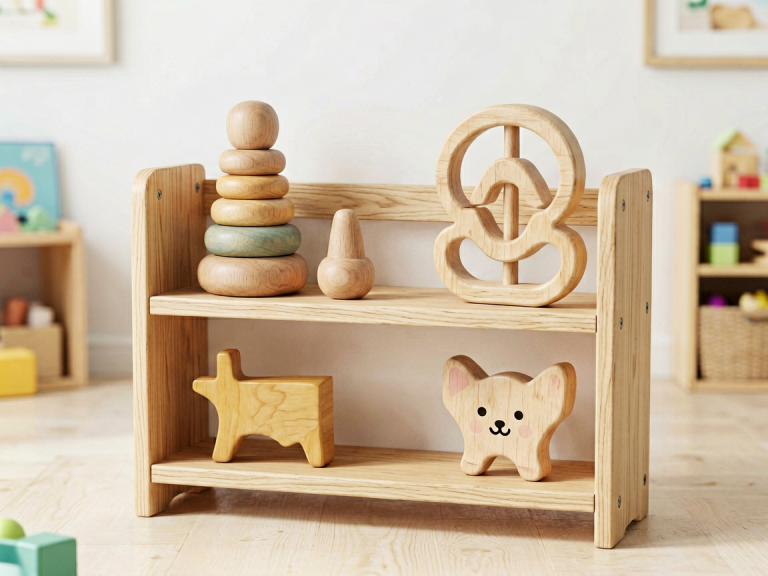
Understanding the benefits of pretend play is only half the battle; knowing how to support it is equally important. For toddler boys, adults can foster imaginative play in several simple but powerful ways. First, provide open-ended toys. Unlike a battery-powered toy that does one thing, a set of wooden blocks, a collection of play scarves, cardboard boxes, and animal figures can become anything. The fewer the constraints, the richer the imagination.
Second, allow ample unstructured time. In our busy, scheduled lives, it is tempting to fill every moment with classes and activities. But toddlers need large blocks of time—at least 45 minutes to an hour—to enter a deep state of play. Rushed play is shallow play. Let your toddler boy lead the way. If he wants to spend twenty minutes lining up cars in a perfect row, that is still pretend preparation; he is “the traffic manager.” Trust his process.
Third, join the play, but follow his lead. Research by developmental psychologist Alison Gopnik and others shows that children learn best when adults are responsive rather than directive. Instead of saying, “Let’s pretend this is a farm,” ask, “What are your cars doing?” Get down on the floor. If he offers you a pretend cup of tea, drink it with an exaggerated “Ahh!” Be a witness and a co-player, not a teacher. This validates his ideas and builds his confidence.
Fourth, embrace messiness and noise. Pretend play for toddler boys is rarely quiet or tidy. It might involve roaring, crashing, and throwing pillows. Within safety limits, allow this exuberance. The boy who is allowed to be a loud, stomping dinosaur is learning to express his energy in a controlled, imaginative context. If we constantly shush him, we risk discouraging the very creativity we want to cultivate.
Finally, consider the environment. A small play corner with a few carefully chosen props—a play phone, a doctor’s kit, a cape, some plastic food—can trigger endless scenarios. Rotating toys keeps interest fresh. And do not underestimate the power of outdoor pretend play. A stick becomes a magic wand, a bush becomes a castle, and a puddle becomes an ocean. Nature itself is the ultimate open-ended toy.
Conclusion: The Lasting Impact of Make-Believe
In the rush to prepare our children for a competitive future, it is easy to overlook the simple, time-honored activity of pretend play. But for toddler boys, in particular, this form of play is not a distraction from learning—it is the very engine of it. Through pretending, they develop cognitive flexibility, language fluency, emotional intelligence, social skills, and physical competence. They learn to solve problems, to create stories, to empathize, and to regulate their own impulses. They build the foundational skills that will serve them in kindergarten and beyond, all while laughing, roaring, and having the time of their lives.
So the next time you see your toddler boy wearing a cardboard box on his head, declaring that he is a robot, remember: he is not just playing. He is learning. He is growing. And he is showing you, in the most delightful way, that the most profound education often comes not from a screen or a workbook, but from the boundless, wild, and wonderful world of “let’s pretend.” Embrace it, encourage it, and join him there. The lessons he learns in that imaginary world will last a lifetime.