From Playpens to Classrooms: How Early Learning Toys for Babies Pave the Path to School Readiness
Introduction
In the quiet moments of a baby’s first year, when a rattle shakes or a textured block is grasped, something far more significant than simple amusement is unfolding. These early encounters with toys are not merely distractions; they are the foundational building blocks of cognitive, motor, and social skills that will later determine a child’s ability to thrive in a formal academic setting. School readiness—the state of possessing the necessary skills to engage successfully in a structured learning environment—is not an overnight achievement. It begins in infancy, shaped by the very objects a baby touches, mouths, and manipulates. Early learning toys, when intentionally designed and appropriately introduced, can accelerate this developmental journey. This article explores the intricate relationship between early learning toys for babies and school readiness, examining how specific toy features promote critical skills, how to choose toys for each developmental stage, and what role caregivers play in maximizing these benefits.
## The Developmental Blueprint: How Early Learning Toys Build Core Competencies
### Cognitive Foundations: Problem-Solving and Cause-Effect Understanding
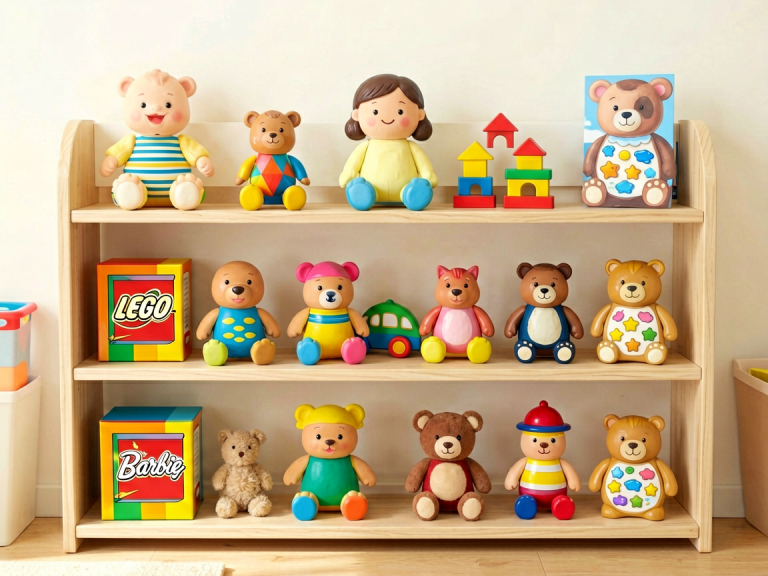
From the moment a baby realizes that shaking a rattle produces sound, a fundamental cognitive process is ignited. Early learning toys that incorporate cause-and-effect mechanisms—such as stacking rings, shape sorters, or simple pop-up toys—teach babies that their actions have predictable outcomes. This understanding is the precursor to logical reasoning, a skill essential for school subjects like mathematics and science. For example, when a nine-month-old repeatedly drops a spoon from the high chair and watches it fall, she is mentally mapping gravity and object permanence. Toys that offer clear, immediate feedback—like a ball that rolls away when pushed or a musical toy that plays when a button is pressed—reinforce this neural wiring. By the time a child enters kindergarten, these early cognitive experiences translate into the ability to follow multi-step instructions, recognize patterns, and persist through challenging tasks—all hallmarks of school readiness.
### Language and Communication: The Seeds of Literacy
Language acquisition begins long before a baby speaks her first word. Toys that expose infants to varied sounds, rhythms, and words lay the groundwork for vocabulary development, phonemic awareness, and early literacy. Soft books with high-contrast images, talking plush animals, and nursery rhyme toys introduce rhythm and repetition, which are crucial for language processing. Consider a simple push-button toy that recites the alphabet: while a six-month-old may not understand the letters, she is absorbing the cadence and tone of speech. Later, toys like farm animal sets with corresponding sounds (“moo,” “baa”) help babies associate sounds with objects, building semantic categories. As toddlers approach preschool age, pretend-play toys such as a toy phone or a grocery cart encourage dialogue and narrative formation. These experiences directly correlate with reading readiness—children who have been regularly exposed to rich language through play often enter kindergarten with larger vocabularies and stronger listening comprehension.
### Fine and Gross Motor Skills: Preparing the Body for Classroom Demands
School readiness is not only about the mind; it also requires physical control. A child must be able to hold a pencil, cut with scissors, sit still during circle time, and navigate the classroom without tripping. Early learning toys specifically target these motor milestones. For infants, grasping a rattle strengthens the palmar grasp; dangling toys encourage reaching and swatting, which develop hand-eye coordination. As babies grow, toys like interlocking blocks, pegboards, and chunky puzzles refine the pincer grip needed for writing. Meanwhile, gross motor toys—such as soft balls for rolling, activity gyms for kicking, and push-walkers for cruising—build core strength and balance. A child who has spent months stacking foam blocks or pulling herself up on a sturdy activity table will enter preschool with the body awareness to sit upright on a carpet, hold a crayon with control, and navigate playground equipment independently. These physical competencies reduce frustration and allow the child to focus on learning.
### Social and Emotional Development: Navigating Relationships and Self-Regulation
School is a social ecosystem. Children must share, take turns, manage emotions, and follow routines. Early learning toys can foster these abilities even in infancy. Simple toys like a mirror help a baby develop self-recognition, the first step toward identity formation. Duplicates of the same toy (e.g., two identical stacking cups) teach turn-taking when used with a caregiver. As babies become toddlers, toys that mimic real-world scenarios—such as a doll with a blanket or a play kitchen—encourage empathy and cooperative play. A child who pretends to feed a teddy bear is practicing nurturing behavior, while two toddlers sharing a set of toy cars learn to negotiate space and objects. Board books about feelings, puppets that express emotions, and calm-down jars (a sensory toy with glitter) also help children identify and regulate their own emotions. When a child enters kindergarten with the ability to calm herself after a disappointment or share a marker without conflict, she is far more prepared to engage in academic instruction.
## Choosing the Right Toy at Every Stage: A Guide for Parents and Educators
### 0–6 Months: Sensory Exploration and Bonding
During the first half-year, babies rely on their senses to make sense of the world. The best early learning toys for this age are those that stimulate sight, sound, texture, and touch. High-contrast black-and-white cards or soft rattles with gentle jingles encourage visual tracking and auditory discrimination. Unbreakable mirrors allow babies to discover their own reflection. Safety is paramount: toys must be large enough to prevent choking, free of small parts, and made from non-toxic materials. Soft fabric books with crinkle pages or different textures (fuzzy, smooth, bumpy) engage tactile exploration. At this stage, the caregiver’s role is to narrate the play (“Look at the red circle! That’s a soft lamb!”). This interaction builds the foundation for joint attention, a critical social-cognitive skill that predicts later language development and academic success.
### 6–12 Months: Cause and Effect, and Intentional Movement
As babies begin to sit, crawl, and eventually stand, toys that respond to their actions become powerful motivators. Stacking cups, activity boxes with levers and buttons, and simple puzzles with large knobs are ideal. A baby who repeatedly drops a ball into a hole and watches it reappear learns object permanence and spatial awareness. Musical instruments like a xylophone or a drum provide immediate auditory feedback, reinforcing cause-effect thinking. Push toys and ride-on vehicles that require walking support gross motor development. Importantly, toys that encourage problem-solving, such as shape sorters with only two or three distinct shapes, should be introduced gradually. This is also the prime age for toys that promote imitation—a toy phone that a baby can hold to her ear or a plastic wooden spoon for mimicking stirring. Emulating adult behaviors is a key step in developing the social scripts needed for classroom routines.
### 12–24 Months: Language Explosion and Pretend Play
Between one and two years, a child’s vocabulary expands exponentially. Toys that label objects or produce words—like interactive books, talking flashcards, or puzzles with pictures—feed this growth. Simple board games with one or two steps (e.g., “find the cat”) teach following directions. Pretend-play sets become central: a doctor’s kit, a play kitchen with plastic fruits, or a toolbench. These toys allow toddlers to act out scenarios they observe in daily life, reinforcing language and sequencing. Fine motor challenges increase with threading beads, large pegboards, and crayons for scribbling. Gross motor toys like a small slide or a push-along lawnmower encourage balance and coordination. At this stage, caregivers should engage in “serve and return” interactions—asking questions (“What does the cow say?”), expanding on the child’s actions (“You put the banana in the bowl! Now let’s cut it”), and modeling turn-taking. These rituals build executive function skills such as working memory and inhibitory control, which are essential for kindergarten.
## Beyond the Toy: The Indispensable Role of Caregiver Interaction
No toy, no matter how sophisticated, can replace the human element. Research consistently shows that the quality of caregiver-child interaction during play determines the developmental impact. A simple wooden block held by a parent who says, “This block is square. Can you find another square?” offers infinitely more learning than a high-tech tablet playing an automated game. When caregivers scaffold learning—demonstrating, asking open-ended questions, and praising effort—they transform a toy into a teaching instrument. For example, while playing with a shape sorter, a parent might first guide the baby’s hand, then later ask, “Which shape goes here?” and finally step back to let the child succeed independently. This gradual release of responsibility mirrors the teaching approach in elementary classrooms. Additionally, reading aloud with a toy prop (e.g., a puppet that acts out the story) deepens engagement and comprehension. The key is to follow the child’s lead, allowing her to explore at her own pace while gently challenging her to the next level. In this way, every play session becomes a micro-lesson in school-readiness skills.
## Direct Bridges to School: How Toy Skills Translate to Academic Success
The connection between infant play and school readiness is not theoretical—it is measurable. Kindergarten teachers consistently identify self-regulation, attention span, and language ability as the strongest predictors of early reading and math achievement. Early learning toys directly cultivate these attributes. A baby who learns to focus on stacking a tower of blocks is practicing sustained attention, the same cognitive skill needed to listen to a story. A toddler who negotiates with a playmate over a toy vehicle is developing social competence and conflict resolution. The numerical concepts embedded in counting toys or stacking rings (one-to-one correspondence, sequence, quantity) form a pre-math foundation. Moreover, the fine motor control from manipulating small toys directly prepares a child for handwriting. Even the sensory integration from exploring different textures and sounds helps a child regulate in a noisy, brightly decorated classroom. In essence, the playroom is a microcosm of the classroom, and each toy is a micro-tool for building the cognitive muscle required for formal education.
## Conclusion: Investing in the First Five Years
The journey from a baby’s first rattle to a kindergarten desk is neither random nor automatic. It is shaped by the environment, the interactions, and the tools placed in the child’s hands. Early learning toys for babies are not trivial luxuries; they are strategic investments in a child’s future ability to read, calculate, cooperate, and persevere. By choosing developmentally appropriate toys, engaging in responsive play, and understanding how each toy supports specific school-readiness domains, parents and early childhood educators can bridge the gap between the playpen and the classroom. School readiness begins long before a child steps through the school door—it starts with the curious eyes of an infant reaching for a brightly colored block, ready to learn through play. And in that simple act, the seeds of lifelong learning are sown.