Screen-Free Play for 6-Month-Olds: Engaging Activities to Keep Your Baby Busy and Thriving
Introduction
At six months old, your baby is experiencing an explosion of cognitive, physical, and sensory development. They are beginning to sit with support, reach for objects, babble, and show curiosity about the world around them. This is a critical window for learning through exploration, yet many parents feel pressured to turn to screens—baby videos, interactive apps, or even television—to keep their little ones occupied. However, research consistently shows that screen time before age two offers no developmental benefits and may actually hinder language acquisition, attention span, and social skills. The good news is that six-month-olds do not need screens to be happily engaged. In fact, they thrive on simple, sensory-rich, hands-on play that stimulates their growing minds and bodies. This article provides a comprehensive guide to screen-free play for six-month-olds, offering practical, safe, and developmentally appropriate activities that will keep your baby busy while nurturing their natural curiosity and motor skills. By embracing unstructured, interactive play, you are giving your child the best foundation for lifelong learning.
Why Screen-Free Play Matters for 6-Month-Olds
The Developing Brain Craves Real-World Interaction
Between six and nine months, a baby's brain forms neural connections at an astonishing rate—about one million new connections per second. These connections are built through sensory experiences: touching different textures, hearing the sound of a parent’s voice, seeing contrasting colors, and tasting new foods. Screens, by contrast, provide passive, two-dimensional stimuli that fail to engage multiple senses or require active participation. A baby watching a glowing screen is not practicing cause and effect, not problem-solving, and not strengthening the muscles needed for crawling and grasping. Screen-free play, on the other hand, invites the baby to explore with all their senses, promoting neural integration and laying the groundwork for complex skills like language, fine motor control, and social-emotional understanding.
The Myth of “Keeping Kids Busy” Through Screens
Many parents turn to screens hoping for a few minutes of quiet so they can cook dinner, make a phone call, or simply breathe. While a short distraction may seem harmless, the effect is often the opposite: screens overstimulate infants, leading to fussiness, sleep disruption, and difficulty settling down. Moreover, babies quickly become habituated to the fast-paced, brightly colored visual input, making ordinary toys seem boring. Screen-free play, when thoughtfully designed, actually fosters longer attention spans because the baby is actively involved. A simple activity like crumpling a piece of paper or shaking a homemade rattle can hold a six-month-old’s interest for several minutes—long enough for a parent to accomplish small tasks nearby, especially if the baby is in a safe, contained space like a play yard.
Developmental Milestones at 6 Months: What to Play For
Before diving into specific activities, it helps to understand what a typical six-month-old is working on. At this age, your baby is likely:
- Rolling over in both directions, and possibly beginning to sit unassisted for a few seconds.
- Reaching, grasping, and transferring objects from one hand to the other.
- Putting everything in their mouth (the primary way they explore textures and shapes).
- Responding to their name, babbling with consonant-vowel combinations (e.g., “ba-ba,” “da-da”).
- Showing interest in cause-and-effect (e.g., dropping a toy to see it fall).
- Beginning to understand object permanence—the idea that things still exist even when out of sight.
All screen-free play activities for this age should support these milestones while remaining safe and low-pressure. Your baby does not need to “achieve” anything; the joy is in the process of exploration.
Core Principles of Screen-Free Play for Infants
Effective screen-free play is not complicated. Keep these principles in mind:
- Follow your baby’s lead. If they are not interested in an activity, do not force it. Move on to something else or simply allow them to observe.
- Prioritize safety. Always supervise mouthing of objects. Avoid small parts that could become choking hazards (anything that can fit through a toilet paper tube is too small). Ensure all materials are non-toxic and washable.
- Keep it simple. A six-month-old does not need electronic toys with flashing lights and sounds. A wooden spoon, a soft scarf, or a bowl of water (under supervision) can be endlessly fascinating.
- Encourage active participation. Instead of entertaining your baby, set up opportunities for them to interact. For example, tie a ribbon to a toy so they can pull it, or place a rattle just out of reach so they work to grab it.
- Be present and responsive. While you do not need to hover constantly, your baby benefits when you narrate their play: “Oh, you picked up the red block! It feels rough, doesn’t it?” This builds language and strengthens your bond.
Activity Categories and Specific Ideas
1. Sensory Play: Exploring Textures, Sounds, and Tastes
Sensory play is the cornerstone of infant development. For a six-month-old, safe, non-toxic materials are key.
Homemade Texture Bags
Fill a strong zip-top bag with hair gel or baby oil, add a few drops of food coloring, and seal it with strong tape (to prevent leaks). Place the bag on a tray or directly on the floor. Your baby can pat, squeeze, and push the gel, watching the colors swirl. This activity is mess-free and stimulates visual tracking and tactile awareness. Always supervise to ensure the bag does not burst.
Safe Sensory Bottles
Take an empty, clear plastic bottle (like a water bottle) and fill it with water, oil, glitter, or small items such as colored beads (large enough to be non-choking). Seal the lid tightly with hot glue or strong tape. Your baby will love shaking the bottle and watching the contents move. You can also add a few drops of blue food coloring for a calming ocean effect.
Exploring Natural Textures
Place your baby on a blanket and surround them with safe natural objects: a smooth wooden block, a piece of velvet fabric, a clean pinecone (check for loose bits), and a stainless steel measuring cup. Let them reach, grasp, and mouth each item (wash thoroughly first). Name each texture: “This is bumpy. This is silky.” This builds vocabulary and sensory discrimination.
2. Tummy Time Fun: Strengthening Core and Neck Muscles
Tummy time is essential for building the muscles needed for crawling, sitting, and overall motor coordination. At six months, many babies tolerate tummy time for longer periods, especially when there is something interesting to look at.
Mirror Play
Place an unbreakable, infant-safe mirror in front of your baby during tummy time. Babies are fascinated by their own reflection. They will lift their head to look, reach out to touch the “other baby,” and often smile or coo. You can also make funny faces in the mirror to encourage social interaction.
Tummy Time Water Mat
Purchase a water mat designed for babies (essentially a flat plastic mat filled with water and floating toys). Place it on the floor, lay your baby on their tummy on top of it, and let them press down to see the water and toys move. The resistance and cool sensation provide excellent sensory feedback while strengthening arms and core.
Low-Height Activity Arch
Place a soft, low play arch (with dangling rings or bells) over your baby during tummy time. Position it so they have to reach up or sideways to bat at the toys. This encourages cross-body movements that develop bilateral coordination.
3. Grasping, Releasing, and Manipulating Objects
Fine motor skills blossom at six months. Activities that require picking up, holding, dropping, and transferring objects are ideal.
Treasure Basket
Fill a shallow, wide basket with a variety of safe, everyday objects that your baby can explore independently. Examples: a wooden spoon, a silicone spatula, a clean sock, a large key ring (no small keys), a crinkly fabric scrap, and a soft ball. Place the basket within reach while your baby sits supported or lies on their back. They will instinctively reach in, pull objects out, mouth them, and drop them. The novelty of each item holds their attention. Rotate the basket every few days to renew interest.
Block Stacking and Knocking Down
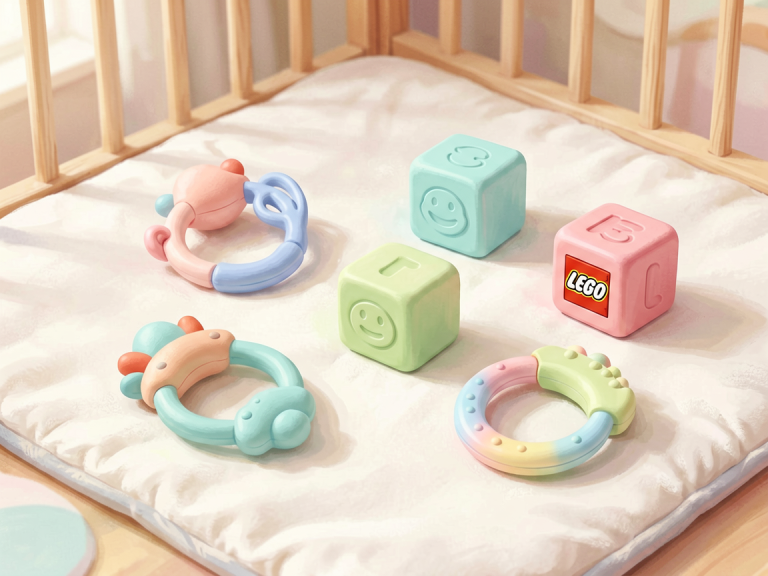
Use lightweight, soft blocks (fabric or foam) that are easy to grasp. Show your baby how to stack two blocks, then let them knock them over. The cause-and-effect of building and tumbling is a huge hit at this age. You can also hand them blocks one at a time and encourage them to place them into a container (a large yogurt tub works well)—this builds hand-eye coordination and early problem-solving.
Pull-Along Toy with Ribbon
Tie a short, sturdy ribbon (no longer than 12 inches) to a lightweight toy like a plastic car or a wooden ring. Place the toy just out of your baby’s reach, with the ribbon end near their hand. Encourage them to grab the ribbon and pull. This teaches them that they can make things move, a powerful early lesson in agency.
4. Social Interaction and Language Play
Even though your baby cannot speak yet, they are absorbing the rhythm and patterns of language. Screen-free play that involves back-and-forth interaction is invaluable.
Peek-a-Boo Variations
Peek-a-boo never gets old. You can hide behind a scarf, your hands, or a piece of fabric, then pop out with a cheerful “Peek-a-boo!” At six months, babies begin to understand object permanence, and the anticipation of your reappearance delights them. You can also place a toy under a blanket and lift the blanket to reveal it, encouraging your baby to do the same.
Singing and Rhyme with Gestures
Sing simple songs like “Itsy Bitsy Spider,” “Pat-a-Cake,” or “Row, Row, Row Your Boat” while doing the hand motions. Your baby will watch your hands intently and may eventually try to imitate. This supports auditory processing, rhythmic awareness, and motor imitation. Even if your baby is wiggling on the floor, you can sit nearby and sing, making eye contact.
Face-to-Face Babbling Conversations
Hold your baby comfortably facing you and imitate their babbling sounds. If they say “ba-ba,” you say “ba-ba” back with exaggerated intonation. Pause and wait for them to respond. This turn-taking is the foundation of conversation. You can also introduce new sounds like “ma-ma” or “da-da” and watch them try to mimic.
5. Outdoor and Water Play (Supervised)
Fresh air and natural light offer a different kind of stimulation that no screen can replicate.
Blanket Play in the Grass or Park
Spread a large blanket on a grassy area (check for sharp objects or bugs). Let your baby lie on their back and watch clouds, leaves moving in the wind, or birds. The changing patterns of light, shadow, and movement are mesmerizing. They can also reach for grass (supervise closely to prevent eating it) or a dandelion puff. The temperature, breeze, and smells engage all senses.
Safe Water Play in a Basin
Fill a shallow plastic basin with a couple of inches of lukewarm water. Place it on a towel on the floor (or outside if weather permits). Let your baby sit (with your support) and splash their hands and feet. Add a few floating toys like a rubber duck or a small cup. Never leave a baby unsupervised near water, even shallow. This sensory activity is calming and highly engaging.
6. Music and Movement
Babies respond naturally to rhythm. You do not need a device—just your voice or simple instruments.
DIY Shakers
Fill a small, empty plastic container (like a yogurt cup) with dried beans or rice, secure the lid with tape, and let your baby shake it. They will love the sound and the vibration in their hands. Alternatively, use a commercial baby rattle that is easy to grip.
Gentle Dancing
Hold your baby securely and sway or bounce to a song you hum. Vary the tempo—slow for lullabies, faster for playful tunes. This builds vestibular sense (balance and spatial awareness) and strengthens your bond.
Safety Tips for Screen-Free Play
- Always stay within arm’s reach when your baby is playing with any object that could pose a choking or suffocation hazard.
- Regularly inspect toys for loose parts, sharp edges, or broken pieces.
- Avoid toys with long strings or cords (over 12 inches) that could wrap around a baby’s neck.
- For water play, use just a few inches of water and never leave your baby unattended.
- Keep the play area clean and free of pet hair, dirt, or small debris.
- Rotate toys every few days to maintain novelty without overwhelming your baby.
- Trust your instincts. If an activity seems unsafe or overstimulating, stop.
Conclusion: The Gift of Unstructured Time
Screen-free play for a six-month-old is not about keeping your baby “busy” in the sense of constant entertainment. It is about giving them the quiet, unhurried space to discover the world on their own terms—to feel the weight of a wooden block, to hear the crinkle of paper, to watch a shadow dance on the wall. In our modern, hyper-scheduled lives, it can feel counterintuitive to step away from screens, but the benefits are profound: stronger parent-child attachment, richer language development, improved motor skills, and a foundation for focused, creative play that will serve your child for years to come.
You do not need expensive toys or fancy gadgets. Your lap, your voice, a cardboard box, a spoon, a soft scarf—these are the tools of exploration. The next time your baby seems restless, instead of reaching for a tablet, reach for a simple object and watch their eyes light up. They are not just “busy”; they are building a brain, one sensory experience at a time. Embrace the mess, the repetition, the giggles, and the occasional frustration. This is the real, screen-free magic of early childhood.