Unlocking Little Minds: A Guide to Teaching Problem-Solving to Babies
—
Introduction: Why Problem-Solving Matters from Day One
When we think of “problem-solving,” we often imagine adults in boardrooms or engineers debugging code. Yet the seeds of this critical skill are planted far earlier—in the first months of life. Every time a baby stretches for a rattle, figures out how to make a toy squeak, or turns a cup upside down to see what happens, they are engaging in problem-solving. Teaching babies to approach challenges with curiosity and persistence is not about forcing academic rigor; it is about nurturing their innate drive to explore and master their environment. This article offers a practical, evidence-informed framework for parents and caregivers to foster problem-solving abilities in infants from birth to about 18 months. We will explore developmental foundations, environmental design, interactive strategies, and specific activities—all while respecting the baby’s pace and personality.
—
Understanding Infant Cognitive Development: The Foundation for Problem-Solving
Before we teach, we must understand how babies think. Jean Piaget’s theory of sensorimotor development (birth to 2 years) provides the classic roadmap. During this stage, infants learn through their senses and actions. They do not yet have the ability to reason abstractly; instead, they build knowledge by touching, mouthing, dropping, and manipulating objects. Key milestones relevant to problem-solving include:
- Object permanence (around 8–12 months): The realization that objects continue to exist even when out of sight. This is a prerequisite for searching for hidden toys, a foundational problem-solving task.
- Means-end behavior (around 8–12 months): The ability to perform an action to achieve a goal—e.g., pulling a cloth to reach a toy resting on it. This marks the birth of intentional problem-solving.
- Trial-and-error experimentation (throughout infancy): Babies systematically vary their actions to see what happens. A 6-month-old may shake a rattle differently to produce different sounds; a 12-month-old may try inserting a shape block into various holes.
Recognizing these stages helps us design challenges that are just right—not too easy (which leads to boredom) and not too hard (which leads to frustration). The concept of “scaffolding,” popularized by Lev Vygotsky, is equally important: we provide just enough support for the baby to succeed with effort, then gradually withdraw that support as they become more competent.
—
Creating a Safe, Stimulating Environment: The Laboratory for Discovery
Babies learn best when they feel secure and have access to a “yes-space”—an area where they can explore freely without constant “no’s.” A well-designed environment is the first and most powerful tool for teaching problem-solving.
1. Offer Open-Ended Toys and Materials
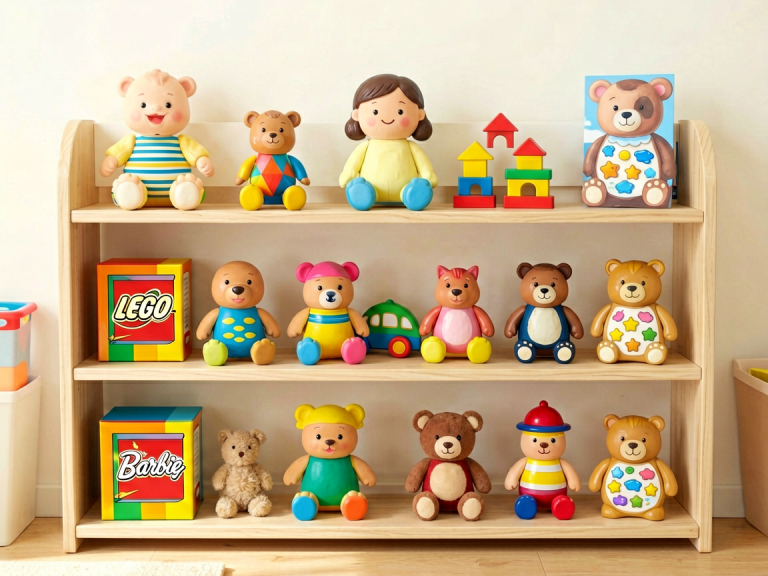
Open-ended toys have no single “right” way to play. Examples include:
- Stacking cups or nesting bowls – Babies can fill, empty, stack, knock down, or hide objects inside.
- Simple wooden blocks – Even a 6-month-old can grasp, bang, and later attempt to stack.
- Balls of different sizes and textures – Rolling, chasing, and retrieving build spatial reasoning and cause-effect understanding.
- Fabric scraps or scarves – Peekaboo, pulling, and dropping them over edges encourages object permanence and manual dexterity.
Avoid overstimulating electronic toys that do things for the baby. The best problem-solving toys are those that require the baby to *do* something to get a result.
2. Arrange the Space for Small Challenges
Place a toy slightly out of reach on a blanket or inside a transparent container with a loose lid. Position a cushion between the baby and an interesting object so they have to crawl around it. These small obstacles invite the baby to invent solutions: reaching, rolling, scooting, or crawling. The environment itself becomes a puzzle.
3. Rotate Toys to Maintain Novelty
Babies are motivated by moderate novelty. If the same 10 toys are always available, interest wanes. Rotate items every few days, bringing out “new” ones from storage. A fresh challenge re-engages problem-solving circuits in the developing brain.
—
Interactive Strategies: How to Be a Problem-Solving Coach
Your role as a caregiver is not to solve the problem *for* the baby, but to be a calm, encouraging presence beside them. Here are key strategies.
1. Pause Before Helping
This is the most important habit to cultivate. When a baby struggles to reach a toy or fit a shape, resist the urge to immediately hand it to them. Wait 5–10 seconds (or longer). Observe their attempts. Often, they will solve it on their own if given time. The pause communicates that you trust their ability, and it gives them the space to engage in trial-and-error learning.
2. Use Descriptive Language
Even before babies understand words, the rhythm and tone of language matter. Describe what you see and what they are doing:
- “You are reaching for the red block. It’s just a little far. What can you do?”
- “The cup fell over. Now it’s upside down. Can you turn it?”
- “You tried to put the square into the circle hole. It doesn’t fit. Should we try a different hole?”
This “sports commentating” style models thinking aloud and introduces vocabulary related to actions, space, and outcomes. Later, around 12–18 months, babies will begin to understand these words and use them to guide their own reasoning.
3. Encourage Multiple Attempts
Problem-solving often requires iteration. If a baby drops a toy and it rolls under the sofa, they may cry or look at you. Instead of retrieving it immediately, gesture toward the toy and say, “Uh-oh, it’s under there. How can we get it?” If they crawl toward it, praise the attempt. If they give up, you can show one strategy (using a stick or your hand) and let them try again. The message is: failure is temporary and part of the process.
4. Model Simple Problem-Solving
Babies learn by watching. Occasionally, you can demonstrate a very simple sequence while narrating:
- “I want to put this ball into the basket. I will lift the basket lid first. That makes an opening. Now I drop the ball in. Yay!”
- “This blanket has a toy under it. I pull the blanket. Look—there’s the toy!”
Keep demonstrations brief and unpressured. Then step back and let the baby try.
5. Celebrate Effort, Not Just Success
Research on motivation shows that praising effort (“You worked so hard to turn that block!”) fosters a growth mindset, while praising ability (“You’re so smart!”) can lead to fear of failure. When a baby solves a problem, acknowledge the process: “You tried three ways, and then you did it! You figured it out!” If they don’t solve it, acknowledge their persistence: “You kept trying even when it was tricky. That’s really good problem-solving.”
—
Specific Activities to Build Problem-Solving Skills
Here are concrete, developmentally appropriate activities organized by approximate age ranges. Adjust based on your baby’s individual readiness.
For Babies 4–8 Months: Cause and Effect & Reaching
Activity 1: The Wrist Rattle Game
Tie a soft rattle around your baby’s wrist or ankle. At first, they will move randomly and discover that the sound occurs. Then they will intentionally shake the limb to produce the sound again. Narrate: “You moved your hand and the rattle jingled! Can you do it again?” This is their first lesson in action→outcome.
Activity 2: The “Just Out of Reach” Toy
Place a favorite toy on a play mat just beyond your baby’s fingertips. Sit behind them and encourage them to stretch, roll, or scoot. Do not move the toy closer. If they get frustrated, gently guide their hand toward it without taking over. This builds persistence and spatial awareness.
For Babies 8–12 Months: Object Permanence & Means-End
Activity 3: Peekaboo with a Twist
Instead of covering your own face, cover a small toy with a cup or a cloth while the baby watches. Say, “Where did the ball go?” Let them lift the cover to find it. Gradually increase the number of covers or add a second hiding location. This teaches that objects can be retrieved through deliberate actions.
Activity 4: The Blanket Pull
Place a toy on a small towel or blanket, just beyond a baby’s reach. The toy is sitting on the blanket. Show the baby once that pulling the blanket brings the toy closer. Then let them try. This classic means-end task is a milestone of logical thinking.
Activity 5: Shape Sorter (Simplified)
Most shape sorters are too advanced for 8-month-olds. Instead, offer a container with a large hole and one large block. Show how the block goes in. Then let the baby try. If they struggle, angle the container slightly. The goal is not mastery but exposure to the concept of matching.
For Babies 12–18 Months: Trial-and-Error, Sequencing, and Tool Use
Activity 6: The Sticky Tape Challenge
Place a toy on a low table or the floor and secure it with a small piece of painter’s tape (easy to peel). Let the baby discover they must pull the tape to free the toy. This introduces the idea of removing a barrier to reach a goal. Supervise to prevent mouthing the tape.
Activity 7: The DIY Puzzle
Cut a large hole in the lid of a cardboard box. Give your baby a few soft balls or blocks and show them how to drop them through the hole. They will enjoy the sound and the disappearance. To increase complexity, use a transparent container with a lid that they must remove first.
Activity 8: Simple Tool Use
At around 14–16 months, babies can begin using a simple tool. Place a toy far under a low sofa or chair, and provide a lightweight stick or a long wooden spoon. Show them how to rake the toy toward them. Then let them try. This is early insight into modifying the environment with an intermediary object.
Activity 9: Water Play with Containers
During bath time or a water table session, give the baby different cups, spoons, and funnels. The problem: how to fill a small cup using a larger scoop. How to make water go through a funnel. How to float a toy that keeps tipping over. Water play is rich with cause-and-effect, volume, and gravity concepts.
—
The Role of Repetition and Patience
Babies thrive on repetition. They may perform the same action—dropping a spoon, picking it up, dropping it again—dozens of times. This is not random; it is the brain consolidating a causal relationship. Allow this repetition without rushing to stop it. Each cycle refines neural connections.
When a baby fails at a problem, they may cry or show frustration. This is normal and even beneficial. Your job is to stay calm, acknowledge the feeling (“You’re upset because the block won’t go in. That’s okay.”), and offer a small hint if needed. Over time, the baby learns to regulate their emotions and persist longer.
Avoid the temptation to “rescue” immediately. A little struggle builds resilience. However, if the baby becomes intensely distressed, step in with a simpler variation of the problem so they can experience success before ending the play session.
—
Common Pitfalls to Avoid
- Over-assisting: The fastest way to kill problem-solving motivation is to always hand the solution to the baby. Let them grapple.
- Using complex or advanced toys: Toys labeled for older children can overwhelm. Stick to age-appropriate challenges.
- Expecting linear progress: Some days a baby solves a puzzle easily; other days they can’t figure it out. This is normal; do not pressure.
- Ignoring non-verbal cues: Babies communicate with gaze, pointing, vocalizations, and body tension. A baby who looks at you and then at a toy is asking for a different kind of help—perhaps you can show a new angle rather than solve it entirely.
- Forgetting to play yourself: Your own joy in discovery is contagious. If you seem bored or mechanical, the baby may lose interest. Engage with genuine curiosity: “I wonder what happens if we put the big ball in this tube?”
—
Conclusion: The Bigger Picture
Teaching problem-solving to babies is not a curriculum to be checked off. It is a way of being with your child—a mindset of curiosity, patience, and respect for their emerging competence. Every time you pause before helping, every time you narrate a struggle, every time you smile at a determined little face, you are building the neural architecture for lifelong learning. The baby who learns at 10 months to pull a blanket to get a toy is laying the groundwork for the 5-year-old who will try different strategies to solve a puzzle, and the adult who will approach complex challenges with flexibility and grit.
So put away the flash cards and the “educational” apps. Instead, set out a few wooden blocks, a cup, a scarf, and your loving attention. Watch as your baby becomes a tiny scientist, testing hypotheses, iterating, and discovering the joy of figuring things out. That is the most powerful lesson you can ever teach.