Top Educational Toys for Babies Under $75: A Comprehensive Guide
Introduction
The first year of a baby’s life is a whirlwind of rapid physical, cognitive, and emotional growth. During this critical window, the right toys can do far more than simply entertain—they can actively stimulate neural connections, enhance motor skills, and lay the foundation for lifelong learning. Yet many parents assume that high‑quality educational toys come with a hefty price tag. The good news is that a wealth of developmentally appropriate, engaging, and safe toys are available for under $75. In fact, some of the most effective learning tools are surprisingly affordable. This guide will explore the importance of educational toys for babies, offer practical tips for selecting the best options on a budget, and provide detailed recommendations across several key developmental categories—all while keeping your wallet happy.
Why Educational Toys Matter for Babies
Babies are born with billions of neurons, but the connections between them are formed primarily through experience. Every rattle shaken, every textured ball grasped, and every mirror gazed into helps forge new pathways in the brain. Educational toys are purposefully designed to target specific developmental domains:
- Sensory stimulation: Bright colors, varied textures, and gentle sounds engage a baby’s sight, touch, and hearing, which are essential for sensory integration.
- Fine and gross motor skills: Toys that encourage reaching, grasping, pulling, and stacking build muscle control and hand‑eye coordination.
- Cognitive development: Cause‑and‑effect toys (e.g., a button that plays music when pressed) teach early problem‑solving and logical thinking.
- Language and social‑emotional growth: Soft books, puppets, and interactive toys that coo or sing can introduce vocabulary and turn‑taking, while mirrors help babies recognize themselves and develop self‑awareness.
Perhaps most importantly, the best educational toys are ones that babies *want* to play with repeatedly. When a toy is both fun and developmentally challenging, it naturally encourages the kind of focused, self‑directed play that researchers call “productive play.” And because babies grow so quickly, the ideal toys are those that adapt with the child—offering new challenges as the baby masters old ones.
Key Factors When Choosing Educational Toys Under $75
With countless options lining store shelves and online marketplaces, narrowing down the choices can be overwhelming. To ensure you get the most value for your money, consider these five factors:
- Safety first: Always check that toys are free of small parts (choking hazards), made from non‑toxic materials (BPA‑free, lead‑free), and have no sharp edges. Look for ASTM or CPSC certification.
- Age appropriateness: A toy that is too advanced will frustrate a baby, while one that is too simple will bore them. Manufacturers’ age recommendations are a good starting point, but observe your own baby’s developmental stage.
- Multi‑stage or convertible design: The best budget toys are those that can be used in several ways as the baby grows. For example, a play gym that later converts into a tunnel, or stacking cups that double as bath toys.
- Open‑ended play potential: Toys that allow for multiple uses—blocks, balls, scarves—spark creativity and have a longer lifespan than single‑function electronic gadgets.
- Ease of cleaning: Babies explore with their mouths, so toys should be easy to wipe down or toss in the washing machine. Avoid porous materials that trap bacteria.
Top Educational Toy Categories and Recommendations
Sensory Exploration Toys
Sensory play is the bedrock of early learning. Toys that stimulate a baby’s senses help them make sense of the world and can be incredibly soothing.
- High‑contrast black‑and‑white soft books: Newborns’ vision is not fully developed; high‑contrast patterns grab their attention. Several board books and cloth books with bold geometric designs are available for under $15. They are safe to chew, washable, and often crinkle or squeak, adding auditory interest.
- Multi‑texture teethers: Silicone teethers with bumps, ridges, and soft edges provide relief during teething and introduce varying tactile sensations. Look for sets that include rings, keys, or animal shapes—prices range from $8 to $20.
- Activity gyms and play mats: A padded mat with dangling toys encourages tummy time and reaching. Many affordable options (under $50) include detachable toys that can be moved to a high chair or stroller later. The Fisher‑Price Deluxe Kick & Play Piano Gym, for instance, is a classic that grows with the baby by offering music and lights triggered by kicking.
- Sensory balls: A set of textured balls (e.g., with soft spikes, ridges, or bumps) lets babies practice gripping, rolling, and tracking. They are typically under $15 and can be used for rolling games long past infancy.
Motor Skill Development Toys
As babies gain control over their bodies, activities that strengthen both fine and gross motor skills become paramount.
- Stacking rings or cups: The classic cone‑shaped ring stacker teaches hand‑eye coordination and early concepts of size sequencing. Options from Fisher‑Price or Green Toys are under $20. Stacking cups (often 8–10 pieces) can be nested, knocked over, and later used for scooping water or sand.
- Shape sorters: These toys help babies recognize shapes and practice deliberate placement. Look for a sorter with a clear lid so the child can see the shapes inside. The Melissa & Doug First Shapes Jumbo Knob Puzzle (around $12) is a simpler alternative for younger babies.
- Push‑pull toys: Once a baby starts cruising, a sturdy push toy (like a wooden cart with blocks or a noisy animal on wheels) provides support and motivation. Many cost between $25 and $50. The VTech Sit‑to‑Stand Learning Walker (around $35) includes a detachable activity panel for floor play.
- Grasping beads and wobblers: A wooden or silicone bead maze on a suction cup can be attached to a high chair tray, encouraging fine‑motor manipulation. Prices typically stay under $30.
Cognitive and Problem‑Solving Toys
Babies are natural scientists; they love discovering that their actions produce predictable results.
- Cause‑and‑effect toys: Pop‑up toys (where the baby pushes a button or slides a switch to make a character pop up) are excellent for teaching cause and effect. The Melissa & Doug Pound & Roll Tower (around $20) or a classic jack‑in‑the‑box (under $15) are timeless choices.
- Simple puzzles with knobs: Chunky wooden puzzles (animals, vehicles, or farm scenes) with large knobs are perfect for very young toddlers—but even younger babies can enjoy removing pieces and mouthing them. Expect to pay $10–$20.
- Mirror toys: Unbreakable safety mirrors encourage self‑recognition and social‑emotional development. You can find soft mirror books, crib mirrors, or teethers with mirrors for under $15.
- Musical instruments: Maracas, drums, xylophones, or rain sticks that make different sounds when shaken or banged help develop auditory discrimination and rhythm. A set of two or three instruments often costs $20–$30.
Language and Social Interaction Toys
Even before a baby speaks, they are absorbing the rhythm and structure of language.
- Soft cloth books with daily life themes: Books that feature familiar objects like food, animals, or family members promote vocabulary building. The Lamaze “Peek‑a‑Boo” books (around $12) have flaps, textures, and mirrors.
- Hand puppets and finger puppets: A simple animal puppet can engage a baby in “conversation,” helping them learn turn‑taking and emotional expression. Puppets made for babies often have squeakers or rattles inside, and many cost under $20.
- Musical toys with simple songs: Toys that play lullabies or nursery rhymes when activated, like mobiles or crib soothers, can soothe a baby and introduce melodic patterns. Look for ones with volume control and an auto‑off timer. Most are between $30 and $60.
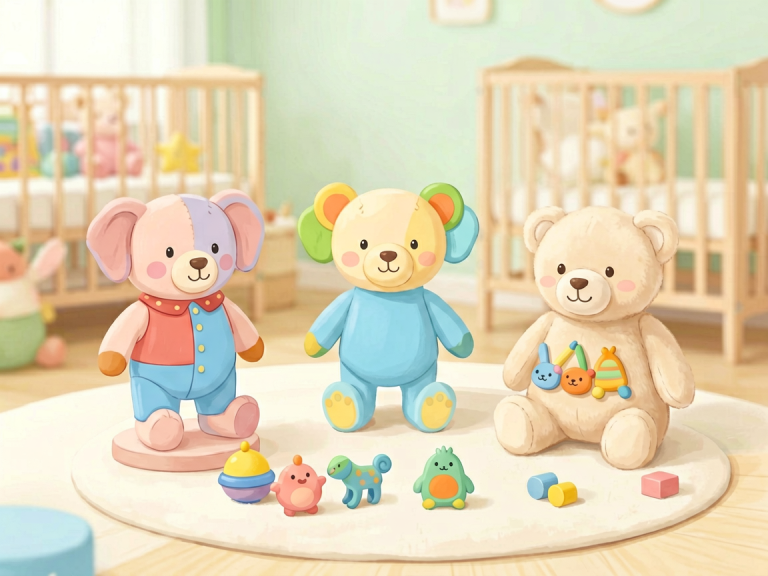
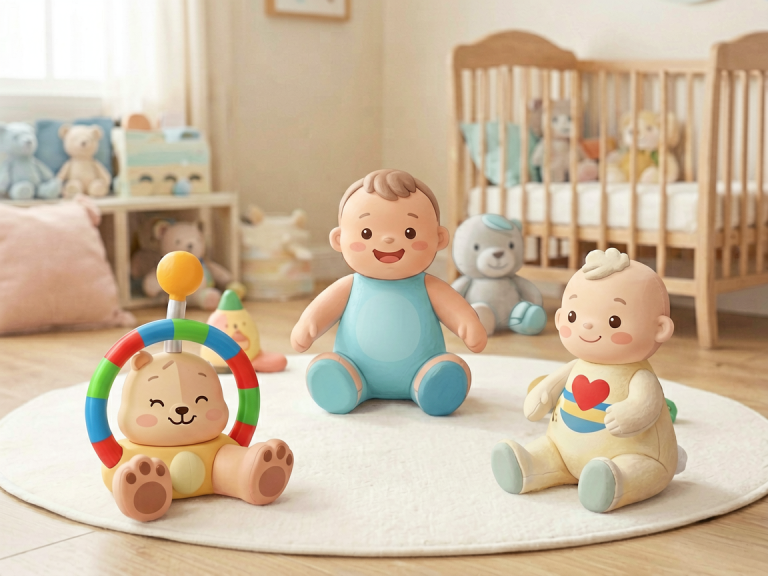
- Dolls and stuffed animals: A soft, machine‑washable doll or plush with different textures encourages pretend play, empathy, and self‑soothing. Many high‑quality options (like the Manhattan Toy Winkel Rattle) double as sensory toys and remain under $30.
Budget‑Friendly Tips: Getting the Most for Your Money
Staying under $75 doesn’t mean sacrificing quality or developmental benefit. Here are a few strategies to stretch your budget even further:
- Buy open‑ended toys first: A simple set of wooden blocks, a ball, and a few stacking cups can be used in dozens of ways for months or even years. They never go out of style.
- Rotate toys: Babies thrive on novelty, but you don’t need a huge collection. Keep only 5–7 toys available at a time and rotate them weekly. This keeps each toy feeling new and extends its interest span.
- Look for bundles and sets: Many brands offer multi‑packs of rattles, teethers, or sensory items for a lower per‑item cost. Buying a value set can be more economical than purchasing pieces individually.
- Consider gently used items: Baby gear is often used for a very short time. Thrift stores, online marketplaces, and parent‑to‑parent groups sell excellent educational toys at deep discounts—just inspect for safety and cleanliness.
- Focus on quality, not quantity: One well‑made toy that grows with your baby is far better than five cheap, short‑lived toys. Invest in a few durable items that can be used in different ways (e.g., a wooden activity cube with multiple sides).
Conclusion
Raising a curious, engaged baby does not require a large bank account. The market for educational toys under $75 is surprisingly rich, with options that support sensory exploration, motor development, cognitive skills, and early language acquisition. By choosing toys that are safe, age‑appropriate, and open‑ended, you can create a stimulating play environment that nurtures your baby’s natural love of learning. Remember that the best toy is often you—your voice, your attention, and your willingness to play alongside your little one. So go ahead, pick a few of the recommendations above, and watch your baby’s eyes light up as they discover, problem‑solve, and grow. With careful selection and a little creativity, you can build a wonderful collection of educational toys that will delight and teach your baby every day—all without breaking the bank.