Nurturing Young Minds: A Parents Guide to Supporting Learning at Home for 7-Year-Olds
Introduction
At age seven, children are at a pivotal stage in their cognitive and emotional development. They have moved beyond the basics of letter recognition and counting, and are now ready to tackle more complex ideas—reading for meaning, writing simple stories, understanding place value, and solving basic addition and subtraction problems. Yet they still crave play, structure, and your undivided attention. As a parent, you don’t need to replicate a classroom at home. Instead, you can weave learning into everyday moments, turning your living room into a laboratory of curiosity. This guide offers practical, research-backed strategies to help you support your 7-year-old’s academic growth while preserving their love of discovery. With the right balance of routine, play, and encouragement, you can make home a place where learning feels natural, joyful, and deeply personal.
—
Creating a Learning-Friendly Physical and Emotional Environment
Before diving into specific subjects, consider the space where learning happens. A 7-year-old thrives when their environment is both stimulating and predictable. Designate a small corner or table as a “learning zone.” It doesn’t need to be elaborate—just a clutter-free surface with good lighting, a few sharp pencils, paper, and age-appropriate books. Let your child help decorate it with a plant, a small clock, or a drawing they’re proud of. Ownership increases motivation.
Equally important is the emotional climate. Your child is still learning how to handle frustration when a math problem seems hard or a spelling word won’t stick. Keep your voice calm and patient. Celebrate effort over correctness. Use phrases like, “I love how you kept trying that problem,” rather than “You got it right!” This builds a growth mindset. Also, ensure that learning time is free from digital distractions—turn off the TV and put your phone away. Your focused presence tells your child that their learning matters.
—
Building a Daily Rhythm Without Over-Scheduling
Seven-year-olds benefit from routine, but rigidity can backfire. Aim for a loose daily structure that includes a consistent time for focused learning (usually 20–30 minutes), plenty of free play, and time outdoors. Many experts suggest that after-school “power hour” works well: 15 minutes of reading, 10 minutes of math, and 5 minutes of a quick writing activity. But if your child is exhausted from a full school day, shift your learning time to the weekend mornings when they’re fresh.
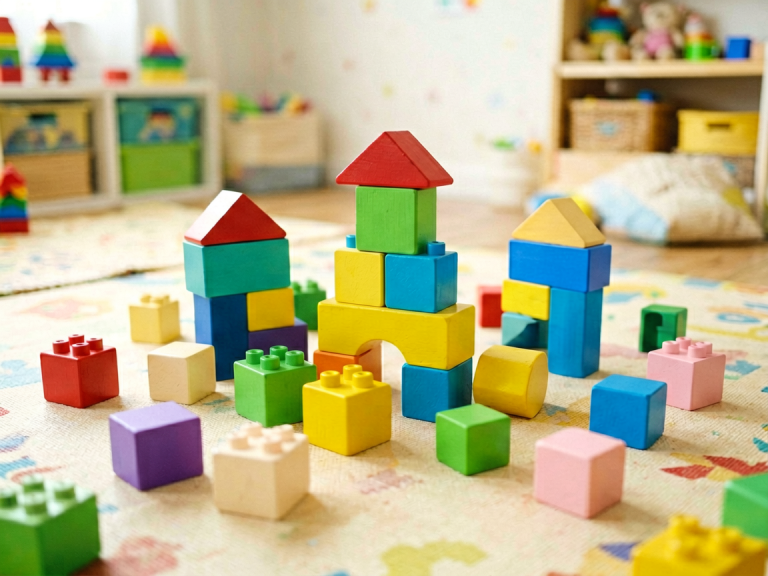
The key is to listen to your child. Some days they’ll be eager; other days they’ll resist. On low-energy days, turn learning into a game. For example, instead of a worksheet, use a deck of cards to practice addition (pick two cards, add them up). The goal is consistency, not intensity. Remember that unstructured play—building with blocks, drawing, or pretending—is itself a form of learning, developing creativity, problem-solving, and social skills.
—
Fostering a Love for Reading and Comprehension
Reading is the cornerstone of all learning at this age. Your 7-year-old is likely moving from “learning to read” to “reading to learn.” To support this transition, provide a mix of decodable books (to build fluency) and picture-rich storybooks that spark imagination. Let them choose their own books at the library—even if it’s a graphic novel or a dinosaur encyclopedia. Choice breeds engagement.
Read Aloud Together—Every Day. Don’t stop reading to your child just because they can read independently. Reading aloud exposes them to richer vocabulary and complex sentence structures. Pause to ask questions: “Why do you think the character did that?” “What might happen next?” This develops inferential thinking. You can also take turns reading pages—you read one, they read one. This shared experience builds confidence and closeness.
Make Reading Interactive. After a story, ask your child to draw a picture of their favorite scene and write a one-sentence caption. Or act out a dialogue between two characters. For non-fiction, have them “teach” you three facts they learned. These activities deepen comprehension without feeling like a chore.
—
Making Math Meaningful Through Real-Life Play
Math anxiety can start early, so keep it concrete and playful. Seven-year-olds need to understand the “why” behind numbers. Instead of memorizing addition facts through flashcards (which can be boring), embed math into daily routines. When setting the table, ask, “We have 4 plates, but we need 6. How many more do we need?” When baking, let them measure flour and count eggs. These experiences build number sense more effectively than worksheets.
Use Games and Manipulatives. Board games like Monopoly Junior, Chutes and Ladders, or even a simple dice game teach counting, addition, and strategy. Card games like “War” (comparing numbers) or “Go Fish” (matching) reinforce number recognition. Physical objects—buttons, coins, LEGO bricks—help children visualize addition and subtraction. For example, “If you have 10 LEGO pieces and you give me 3, how many do you have left?”
Introduce Simple Word Problems. Create stories that relate to your child’s interests: “You have 12 Pokémon cards. You give 4 to your friend. How many do you have now?” Encourage them to draw the problem or use objects before writing a number sentence. This builds the bridge between abstract symbols and real-world meaning.
—
Encouraging Writing with Low-Stakes Prompts
Writing can feel intimidating for a 7-year-old. They may struggle with spelling or handwriting, so avoid correcting every mistake. Instead, focus on the message. Provide short, fun prompts that tap into their imagination: “Write a menu for a restaurant where all the food is purple,” or “Describe the best playground in the world.” Let them illustrate their writing—mixed-media projects make the process less daunting.
Keep a Shared Journal. Buy a blank notebook and take turns writing each other notes. You write a sentence about your day, and your child writes back (or dictates to you if they’re tired). This shows that writing is a tool for connection, not just a school task. Another idea: have them write a shopping list or a thank-you note to a grandparent. Authentic purposes boost motivation.
Work on Handwriting Gently. If fine motor skills are still developing, use fun tools like short pencils, sidewalk chalk, or finger painting in shaving cream. Practice letters in sand or with playdough. The goal is legibility, not perfection. Praise improvements: “Your letter ‘B’ is much taller today—good job!”
—
Using Everyday Tasks as Learning Opportunities
Learning doesn’t have to be confined to a desk. The kitchen, grocery store, and backyard are rich classrooms. At the supermarket, ask your child to help compare prices (which is cheaper?), count items, or read labels aloud. In the kitchen, let them do simple measuring, stirring, and following a recipe of 3–4 steps—this practices sequencing and following instructions. While gardening, talk about plant life cycles, counting seeds, or measuring growth.
Incorporate Technology Wisely. Educational apps and websites can supplement learning, but screen time should be limited and purposeful. Choose apps that are interactive and skill-building, such as for phonics (e.g., Teach Your Monster to Read) or math (e.g., Moose Math). Watch together and discuss what they learned. Avoid passive consumption. Also, use audio books during car rides—they build vocabulary and listening comprehension without screen exposure.
—
Supporting Social-Emotional Learning and Executive Function
At age seven, children are developing self-regulation, empathy, and the ability to manage frustration. These skills are as important as academics. When your child gets stuck on a task, help them name the emotion: “I see you’re feeling frustrated. That’s okay. Let’s take a deep breath and try again.” Teach them a simple phrase: “I can’t do this yet.” This small shift in language builds resilience.
Encourage Planning and Reflection. At the start of a learning session, ask: “What’s your plan? What do you want to finish first?” At the end, ask: “What was the easiest part? What was hardest? What did you learn?” This reflection builds metacognition—the ability to think about one’s own thinking. It also helps children take ownership of their learning.
Model Curiosity. Let your child see you reading, exploring a new hobby, or asking questions. If you don’t know an answer, say, “I’m not sure—let’s look it up together.” This shows that learning is a lifelong adventure, not something that ends with childhood. Your enthusiasm is the most powerful learning tool you have.
—
Partnering with Your Child’s Teacher
Communication with school is vital. Stay informed about the curriculum and your child’s specific strengths and challenges. Ask the teacher for suggestions on activities that align with classroom goals. For example, if the class is working on fractions, you can cut an apple into halves and quarters at home. If your child struggles with phonics, ask for a list of high-frequency words to practice. Most teachers welcome parent partnership and can offer tailored strategies.
Be an Advocate, Not a Tutor. Your role is to support, not to replicate instruction. If your child is truly stuck on a concept, resist the urge to teach it yourself unless you feel confident. Instead, note the difficulty and share it with the teacher. You can also watch a short instructional video together (like Khan Academy Kids) and then practice. The key is to keep the home environment positive, so learning remains associated with warmth rather than pressure.
—
Adjusting for Different Learning Styles and Needs
Every seven-year-old is different. Some are kinesthetic learners who need to move—they might solve math problems while hopping on one foot. Others are visual learners who prefer diagrams and color-coded notes. Still others learn best through music or rhythm. Observe your child: do they fidget while sitting? Try a standing desk or a wiggle cushion. Do they love singing? Turn spelling words into a chant. Don’t be afraid to experiment. If an activity causes tears, drop it and try a different approach. The goal is to find what sparks joy and curiosity.
For Children Who Need Extra Support. If your child has a diagnosed learning difference, such as dyslexia or ADHD, you may need to modify these suggestions. Shorter sessions, more frequent breaks, and multi-sensory activities (e.g., tracing letters in sand while saying the sound) are especially helpful. Seek guidance from specialists, and remember that progress, not perfection, is the aim. Celebrate tiny victories.
For Children Who Excel. If your child is ahead, avoid pushing them into “grade-level up” worksheets. Instead, enrich their learning. Offer longer chapter books, introduce coding through beginner apps, or explore a topic in depth—like dinosaurs or space—through library books, documentaries, and simple experiments. The key is to deepen understanding rather than accelerate prematurely.
—
Managing Your Own Expectations and Well-Being
Finally, take care of yourself. Parental guilt and pressure are common, but they help no one. You do not need to create a perfect homeschool environment. Some days will be messy—you’ll be tired, your child will be cranky, and the math worksheet will end up torn. That’s okay. The single most important factor in a child’s learning is a warm, responsive parent-child relationship, not fancy materials or rigid schedules.
Set realistic goals. Even 15 minutes of focused, positive interaction each day can have a profound impact. If you miss a day, simply start again tomorrow. Forgive yourself. Remember that you are your child’s first and most important teacher, not because you have all the answers, but because you have all the love. That love, combined with a few intentional strategies, will carry your 7-year-old far.
—
Conclusion
Supporting learning at home for a 7-year-old is less about high-tech tools or elaborate lesson plans and more about weaving small moments of discovery into your daily life. A shared book, a kitchen measurement, a math game with dice, a quick journal entry—these seemingly insignificant activities build the neural pathways for literacy, numeracy, and critical thinking. More importantly, they build a foundation of curiosity and confidence that will serve your child for a lifetime. As you guide your young learner, remember to laugh often, celebrate mistakes as stepping stones, and above all, enjoy the journey together. The goal is not to raise a perfect student, but a joyful, resilient, lifelong learner.