An Essential Parent Guide to Supporting Learning at Home for Kindergarteners
Introduction
The kindergarten years are a magical window of development—a time when children transition from the playful curiosity of early childhood to the more structured world of formal education. As a parent, you are your child’s first and most influential teacher. While kindergarten classrooms provide a foundation, the learning that happens at home can significantly amplify your child’s growth. This guide is designed to empower you with practical, research-based strategies to support your kindergartener’s learning in a joyful, pressure-free way. By weaving learning into everyday routines, play, and conversations, you can nurture a lifelong love of discovery while strengthening your child’s cognitive, social, and emotional skills. Remember, the goal is not to replicate school at home, but to create an environment where curiosity thrives and learning feels natural.
Creating a Learning-Friendly Environment
Your home environment sets the stage for how your child engages with learning. Begin by designating a small, quiet space for activities like drawing, reading, or puzzle-solving. This doesn’t need to be elaborate—a corner of the living room with a child-sized table and a basket of books works perfectly. Keep materials accessible: crayons, child-safe scissors, glue sticks, blank paper, and age-appropriate puzzles. Rotate these items periodically to maintain novelty. Equally important is minimizing distractions. When your child is focused on an activity, try to limit background noise from television or tablets. Natural light and a sense of order help children feel calm and ready to explore. Additionally, display your child’s artwork or completed projects at their eye level. This simple act communicates that their efforts are valued and encourages a sense of pride and ownership over their learning.
Establishing Routines That Support Learning
Kindergarteners thrive on predictability. A consistent daily routine provides a sense of security and helps children transition smoothly between activities. While flexibility is important, aim to have a loose schedule that includes dedicated time for learning, physical play, meals, and rest. For example, mornings might be best for focused activities like letter practice or counting games, when your child’s energy is fresh. Afternoons can involve more open-ended play, outdoor exploration, or art projects. Evenings are ideal for reading together and reflecting on the day’s highlights. Keep routines visual: a simple picture chart showing “Morning Routine” (brush teeth, get dressed, eat breakfast, read a book) can empower your child to follow steps independently. The key is to make learning a natural part of the day rather than a separate “lesson time.” For instance, while setting the table, you can practice counting plates and cups. During bath time, explore concepts of volume and floating. When routines become predictable, learning moments multiply effortlessly.
Incorporating Play-Based Learning
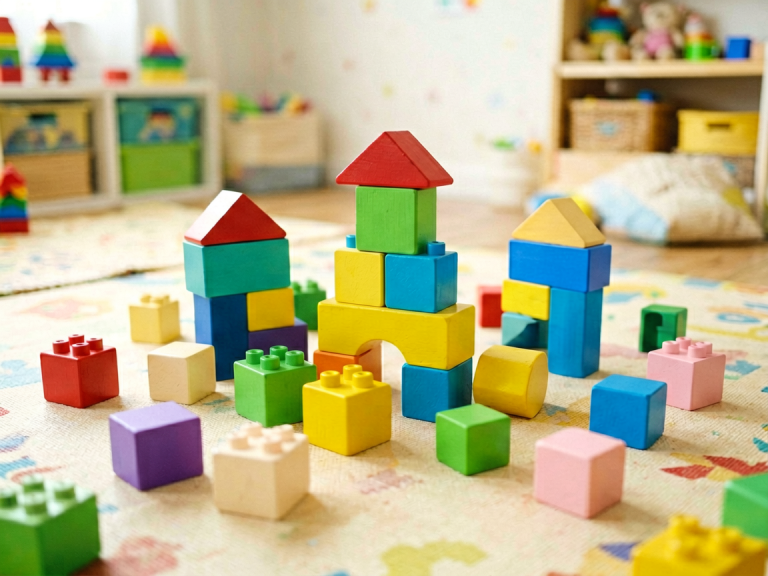
Play is the work of childhood—and the most powerful vehicle for kindergarten learning. Instead of drilling flashcards, embed academic skills into imaginative play. Set up a pretend grocery store with empty boxes and play money; your child will practice counting, sorting, and basic addition without realizing it. Build with blocks to explore shapes, balance, and spatial awareness. Even simple activities like playing “I Spy” strengthen observation and vocabulary. Outdoor play is equally vital: digging in the sandpit builds fine motor skills, running develops gross motor coordination, and observing insects sparks scientific curiosity. Resist the urge to intervene too quickly. Let your child struggle with a puzzle or figure out how to stack blocks without toppling them. This trial-and-error process builds problem-solving abilities and resilience. Remember, when a child is deeply engaged in play, their brain is actively making connections. Your role is to provide rich materials and then step back, offering gentle prompts only when needed.
Developing Early Literacy Skills
Literacy development in kindergarten goes beyond learning the alphabet. It encompasses a love for stories, phonemic awareness (hearing and manipulating sounds), and early writing. Read aloud every day—and make it interactive. Pause to ask questions like, “What do you think will happen next?” or “Why do you think the character feels sad?” Let your child hold the book and turn pages. Point to words as you read to build print awareness. Create a print-rich environment by labeling objects around the house (door, window, chair) with sticky notes. Encourage scribbling and invented spelling; a note that says “I luv u” is a triumph of phonetic understanding. Play rhyming games, sing songs, and clap out syllables in words—these activities build the auditory skills essential for reading. Visit the library regularly and let your child choose books based on their interests. When children feel ownership over their reading choices, they are more motivated to engage. Most importantly, let your child see you reading for pleasure. Modeling a love of literacy is more powerful than any worksheet.
Building Numeracy Foundations
Mathematics in kindergarten is about building number sense—the intuitive understanding of quantity, patterns, and relationships—not just memorizing numbers. Count everything: steps, crackers, toys, fingers. Count forward and backward, and eventually skip-count by tens. Sort objects by color, size, or shape; make patterns with beads or colored pasta. Play board games that involve dice or spinners; these naturally teach one-to-one correspondence and subitizing (recognizing small quantities without counting). Cooking together is a fantastic numeracy activity: measuring cups, counting eggs, and timing how long to stir. Talk about math in daily life: “We need three plates. How many more do we need?” Use math language like “more than,” “less than,” “equal to,” and “first, second, third.” Encourage your child to estimate— “Do you think this jar holds more beans than that one?”—then count to check. The goal is to make math a natural part of conversation, not a chore. Avoid forcing speed drills or timed tests, which can create anxiety. Instead, celebrate effort and curiosity.
Fostering Social-Emotional Growth
Kindergarten is as much about learning to manage emotions and get along with others as it is about academics. At home, you can support social-emotional learning through intentional conversations and modeling. Name emotions for your child: “I see you’re feeling frustrated because the tower fell. It’s okay to feel that way. Let’s take a deep breath.” Teach simple conflict-resolution phrases like “Can I have a turn?” or “I don’t like when you do that. Please stop.” Role-play common scenarios with dolls or stuffed animals—for example, sharing a toy or inviting someone to play. Help your child recognize emotions in storybooks: “How do you think she felt when her friend moved away?” Also, build empathy by discussing how others might feel. Set aside time for unstructured, child-led play with siblings or friends, where your child practices negotiation and cooperation. Finally, model self-regulation by managing your own emotions calmly. When you say, “I’m feeling angry, so I’m going to take a few deep breaths,” you teach your child a lifelong coping skill.
Using Everyday Moments as Learning Opportunities
Some of the richest learning happens during mundane daily tasks. While grocery shopping, ask your child to find items of a certain color or shape, or to compare prices (which is cheaper?). During laundry, practice sorting by color, counting socks, or matching pairs. While walking to the park, observe clouds (science), count steps (math), and discuss the changing leaves (nature). Involve your child in simple chores like watering plants or setting the table—these build responsibility and fine motor skills. Even waiting in line can become a game: “Let’s see how many red cars we can spot before we get to the front.” The key is to be present and attentive. Put away your phone during these moments. Ask open-ended questions that spark curiosity: “I wonder why that bird is hopping instead of flying?” or “How do you think the mail gets into our mailbox?” These conversations build vocabulary, critical thinking, and the habit of inquiry. When children see that learning is everywhere, they develop an intrinsic motivation to explore.
Encouraging Independence and Curiosity
One of the most valuable gifts you can give your kindergartener is the confidence to try things on their own. Resist the temptation to immediately answer every question or solve every problem. Instead, respond with, “What do you think?” or “Let’s find out together.” Provide simple tools like a magnifying glass, a flashlight, or a set of measuring spoons, and let your child investigate. Allow for mess and mistakes—a spilled cup while pouring water is a lesson in cause and effect and motor control. Praise effort rather than outcome: “I love how you kept trying even when it was hard!” This builds a growth mindset. Create a “wonder wall” where your child can display questions they have, such as “Why is the sky blue?” or “Do ants sleep?” Then research the answers together through books or child-friendly videos. Give choices whenever possible: “Do you want to practice your letters on paper or with sidewalk chalk?” Autonomy fosters engagement. By trusting your child’s ability to learn through exploration, you nurture a self-directed learner who sees challenges as opportunities.
Conclusion
Supporting your kindergartener’s learning at home is not about creating a mini classroom—it is about embracing your natural role as a guide, playmate, and cheerleader. Every hug, every shared story, every silly counting game strengthens the bond between you while building essential skills. Remember that children develop at different paces; comparisons with other children are rarely helpful. Trust your instincts, follow your child’s interests, and keep the atmosphere light and joyful. When learning is connected to love and everyday life, it becomes a source of pleasure rather than pressure. You already have everything you need: your time, your attention, and your belief in your child’s potential. So take a deep breath, start small, and celebrate the little victories—a new word, a solved puzzle, a shared laugh. The foundation you are building today will support your child’s learning journey for years to come.