The Ultimate Parent Guide to Supporting Learning at Home for Elementary School Kids
Introduction
In an age where education extends far beyond the classroom walls, parents play an increasingly vital role in shaping their children’s academic journey. For elementary school kids—typically ages 5 to 11—the home environment can either ignite a lifelong love of learning or create unnecessary stress. This guide is designed to help you, as a parent, build a supportive, structured, and joyful learning atmosphere at home. Whether you are navigating remote schooling, supplementing classroom instruction, or simply looking to enrich your child’s everyday experiences, the strategies outlined here are practical, research-backed, and adaptable to your family’s unique rhythm.
Remember: you do not need to be a certified teacher to be an effective learning partner. What your child truly needs is your presence, patience, and a few intentional techniques. Let’s explore how you can turn your home into a hub of curiosity and growth.
—
1. Creating a Conducive Learning Environment
Designate a Dedicated Learning Space
Children thrive on consistency. A specific spot in your home—whether it’s a corner of the living room, a desk in their bedroom, or a small table in the kitchen—signals to the brain that it is time to focus. Keep this area organized with basic supplies: pencils, crayons, paper, a clock, and any textbooks or workbooks. Remove distractions like televisions, loud toys, or siblings’ play areas if possible.
Establish Routines, Not Rigid Schedules
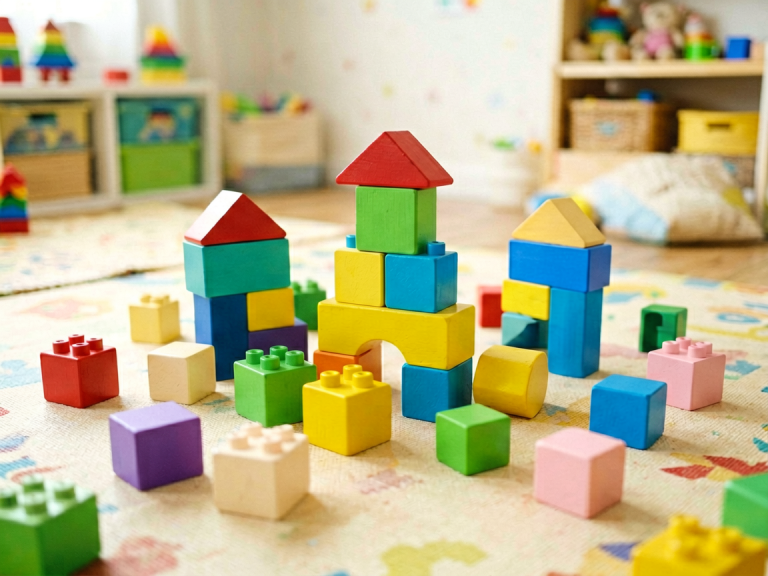
Young learners benefit from predictable rhythms. For example, after breakfast and a short movement break, dedicate 30–45 minutes to a focused learning block. Follow with a snack, then a hands‑on activity like building with blocks or drawing. While a rigid timetable can cause anxiety, a flexible routine helps children transition naturally between tasks. Use visual schedules (like a simple chart with pictures) for non‑readers or early readers.
Minimize Distractions Intentionally
In our hyper‑connected world, phones, tablets, and background noise are silent saboteurs of concentration. Set a family rule: during learning time, all screens except those being used for educational purposes are on silent and out of sight. If you work from home, model the same behavior. Your child will mirror your focus.
—
2. Building Strong Reading and Literacy Foundations
Read Aloud Every Day—Even After They Can Read Independently
Reading aloud is the single most powerful habit you can cultivate. For elementary kids, hearing fluent reading builds vocabulary, comprehension, and a love for story. Choose a mix of picture books, chapter books, non‑fiction, and poetry. After reading, ask open‑ended questions: “Why do you think the character made that choice?” or “What do you predict will happen next?”
Create a Print‑Rich Home
Surround your child with words. Label common objects in your language (or in a second language if you are bilingual). Keep a small bookshelf in the learning area. Visit the library regularly and let your child choose their own books—even if they pick the same dinosaur book for the tenth time. Repetition is how they internalize language patterns.
Encourage Writing for Real Purposes
Move beyond worksheets. Have your child write a shopping list, a thank‑you note, a short letter to a grandparent, or a journal entry about their day. Let them dictate stories to you while you type them out—this shows that their ideas matter and that writing is a tool for communication, not just a school task.
—
3. Making Math Meaningful and Fun
Incorporate Math into Daily Life
Elementary math is all around us. Cooking: ask your child to measure flour or double a recipe. Grocery shopping: compare prices, count items, or estimate the total bill. Driving: read license plates, count the number of red cars, or talk about distance and time. These real‑world applications make abstract concepts concrete.
Use Manipulatives and Games
Children learn best when they can touch and move objects. Use buttons, coins, Lego bricks, or dried beans for counting, addition, and subtraction. Board games like *Chutes and Ladders* teach number recognition; card games like *War* build comparison skills. Online tools like *Prodigy* or *Khan Academy Kids* can supplement, but keep screen time balanced.
Celebrate Mistakes as Learning Opportunities
Math anxiety often starts early. When your child gets an answer wrong, resist the urge to correct them immediately. Instead, ask, “Can you show me how you got that?” This invites them to reflect. Praise effort and strategies (“I like how you tried to count by twos!”) rather than just correct answers.
—
4. Fostering Curiosity in Science and Social Studies
Conduct Simple Experiments at Home
You don’t need a laboratory. Grow a bean in a clear cup to observe germination. Freeze water and then melt it to discuss states of matter. Mix baking soda and vinegar for a classic reaction. Let your child ask “What if…?” questions and guide them to test their hypotheses.
Explore the World Through Maps and Stories
Social studies becomes alive when children connect to people and places. Look at a world map together and find where your family’s ancestors came from. Cook a meal from another culture. Read books about children in different countries. Talk about community helpers—mail carriers, firefighters, doctors—and discuss how they contribute to society.
Encourage Observation and Questioning
Take nature walks and collect leaves, rocks, or feathers. Bring a magnifying glass. Ask: “What do you notice? What does it remind you of? What do you wonder about?” This simple framework (Notice, Think, Wonder) is used by scientists and can be adapted for any age.
—
5. Leveraging Technology Wisely
Choose Quality Over Quantity
Not all screen time is equal. For elementary kids, look for apps and websites that are interactive, creative, and ad‑free. Examples include:
- *ABCmouse* (early literacy and math)
- *ScratchJr* (coding and logic)
- *National Geographic Kids* (science and geography)
- *Duolingo ABC* (beginner reading)
Set clear time limits—the American Academy of Pediatrics suggests no more than one hour of high‑quality screen time per day for elementary‑aged children, outside of homework.
Co‑View and Discuss
Whenever possible, watch or play alongside your child. Ask questions: “What did you learn? Which part was the most fun? Was anything confusing?” This turns passive consumption into active learning and gives you insight into their developing interests.
Teach Digital Citizenship Early
Even young children can understand basic rules: never share personal information, treat others kindly online, and ask a parent before downloading anything. Model these behaviors yourself.
—
6. Encouraging Independence and Executive Function Skills
Teach Organization with Simple Systems
Help your child manage their own materials. A color‑coded folder system (e.g., red for math, blue for reading) works well. Create a checklist for daily tasks: “Pack your backpack, put your homework folder in, bring your water bottle.” Gradually shift responsibility to them.
Break Tasks into Manageable Steps
Many elementary kids feel overwhelmed by “Do your homework.” Instead, say: “First, write your spelling words. Then, after that, do two math problems. Let’s check in after ten minutes.” This builds the executive function skill of task initiation.
Allow Natural Consequences (within reason)
If your child forgets their lunchbox, do not rush to deliver it. The discomfort of a hungry morning teaches responsibility more effectively than a lecture. Obviously, avoid consequences that are harmful or overly punitive, but let small mistakes become learning moments.
—
7. Supporting Emotional Well‑Being and Motivation
Validate Effort, Not Just Achievement
Praise specific behaviors: “I saw how hard you concentrated on that puzzle,” or “You kept trying even when it was hard. That’s resilience.” Avoid general labels like “You’re so smart” because they can create fear of failure. Instead, highlight the process.
Build a Growth Mindset Together
Introduce the concept that brains grow stronger with challenges. Use phrases like “You haven’t mastered this *yet*,” and share stories of famous people who failed before succeeding (e.g., Thomas Edison, J.K. Rowling). Read books like *The Girl Who Never Made Mistakes* or *Your Fantastic Elastic Brain*.
Create a Calm‑Down Corner
Learning can be frustrating. Designate a small space with a soft cushion, a few calming books, a stress ball, or a sensory bottle. Teach your child that it is okay to take a break when they feel overwhelmed. They can return to the task when they are ready—no punishment, just self‑regulation.
—
8. Partnering with Your Child’s School
Communicate Regularly with Teachers
Attend parent‑teacher conferences, read classroom newsletters, and send a brief email if you notice your child struggling or excelling. Teachers appreciate knowing what you see at home because it gives them a fuller picture of the child.
Reinforce School Routines at Home
If the teacher sends home a spelling list, practice it daily in short bursts. If a project is due, help your child plan backward from the deadline. Consistency between home and school reduces confusion and anxiety.
Advocate Without Being Adversarial
If you have concerns about your child’s learning—whether it’s a suspected learning difference, a social challenge, or a mismatch with instructional style—approach the teacher as a teammate. Use “I” statements: “I’ve noticed that my child seems anxious about reading tests. Can we work together on strategies to build confidence?”
—
9. Adapting to Your Child’s Unique Learning Style
Observe and Adjust
Some children learn best by listening (auditory), others by seeing pictures or diagrams (visual), and still others by moving and touching (kinesthetic). Offer a variety of activities and notice which ones engage your child most. For a kinesthetic learner, let them hop on one foot while reciting math facts. For an auditory learner, make up a silly song for the planets.
Respect Their Pace
Every child develops differently. If your second‑grader struggles with reading while their friend is already reading chapter books, resist comparison. Focus on your child’s growth from where they were last month. Provide challenges that are just slightly beyond their current level—not so easy that they’re bored, and not so hard that they’re frustrated.
Incorporate Their Passions
If your child loves dinosaurs, use dinosaur counting for math, dinosaur stories for reading, and dinosaur habitats for science. When learning is tied to personal interests, motivation skyrockets.
—
10. Taking Care of Yourself as a Parent
Avoid Perfectionism
You will have days when the learning space is messy, the schedule falls apart, and your child refuses to cooperate. That is completely normal. Learning at home is a marathon, not a sprint. Apologize when you lose your temper, and try again tomorrow.
Seek Support Networks
Join a local or online parent group focused on elementary education. Share tips, vent frustrations, and celebrate small victories. You are not alone. Many schools also offer parent workshops on supporting learning at home.
Model Lifelong Learning
The best way to inspire a love of learning in your child is to show your own. Read books yourself, share interesting facts you learned, take up a new hobby, or say “I don’t know—let’s look it up together.” Your enthusiasm is contagious.
—
Conclusion
Supporting your elementary‑aged child’s learning at home is not about replicating a classroom. It is about creating a warm, curious, and consistent environment where mistakes are seen as stepping stones, where questions are celebrated, and where effort matters more than perfection. By establishing simple routines, integrating learning into everyday life, and staying connected with your child’s emotional and academic needs, you are laying a foundation that will serve them for years to come.
You already have the most important tool: your love and attention. Now go ahead—read a story together, count the apples at the grocery store, wonder aloud about the stars. Those small moments are the ones that make a lasting difference.