The Power of Open-Ended Play: Unlocking Creativity and Deep Learning through Unstructured Activities
In recent years, educators and parents alike have increasingly recognized the limitations of rigid, outcome-driven learning environments. While structured lessons and standardized tests have their place, they often fail to nurture the very skills that children will need in an unpredictable future: adaptability, critical thinking, creativity, and collaboration. This is where open-ended play learning activities come into their own. Unlike closed-ended tasks that have a single correct answer or a predetermined outcome, open-ended play invites children to explore, experiment, and invent without fear of failure. These activities are not merely “fun” distractions; they are powerful pedagogical tools that foster deep cognitive, social, and emotional development. By embracing the messiness and unpredictability of open-ended play, we give children the freedom to become active architects of their own learning—a gift that far outlasts any worksheet or flashcard.
What Are Open-Ended Play Learning Activities?
Open-ended play learning activities are experiences that have no fixed endpoint, no prescribed “right” way to use materials, and no single correct solution. They are characterized by flexibility, child-directed exploration, and the opportunity for divergent thinking. In these activities, the process itself is the product—the child’s engagement, curiosity, and decision-making matter more than any final result.
Classic examples include building blocks, loose parts (such as stones, buttons, and fabric scraps), sand and water tables, art supplies like clay and paint, and dramatic play setups like a “kitchen” or “doctor’s office.” A child given a set of wooden blocks might build a tower, a castle, a spaceship, or an abstract sculpture. Another child might sort the blocks by color, stack them in patterns, or use them to represent characters in an imaginary story. No two children will use the same materials in the same way, and the activity can evolve over minutes, hours, or even days. Unlike a jigsaw puzzle, which becomes “finished” when all pieces are in place, open-ended play has an infinite horizon. This openness is what makes it so potent for learning: it encourages children to ask their own questions, test their own hypotheses, and negotiate meaning with peers.
The Educational and Developmental Benefits
The benefits of open-ended play learning activities are supported by decades of research in developmental psychology and neuroscience. First and foremost, they promote cognitive flexibility and problem-solving. When a child cannot rely on a predetermined outcome, they must constantly evaluate options, adjust strategies, and think creatively. For instance, a child trying to build a bridge that can support a toy car using only recycled cardboard tubes will need to consider balance, weight distribution, and structural integrity. This kind of trial-and-error learning builds resilience and a growth mindset, as children come to see mistakes not as failures but as data.
Second, open-ended play enhances language and communication skills. When children engage in pretend play, they naturally create narratives, negotiate roles, and explain their ideas to others. “You be the dragon, and I’ll be the knight, and we have to save the castle—but the dragon is actually friendly!” Such exchanges require children to use complex vocabulary, articulate cause-and-effect relationships, and practice turn-taking in conversation. Research shows that children who engage in frequent, high-quality pretend play tend to have stronger oral language skills and better narrative comprehension.
Third, these activities support social and emotional development. Open-ended play often involves cooperation, compromise, and conflict resolution. Children must learn to share materials, agree on a shared imaginary scenario, and deal with disagreements. For example, two children playing with a box of assorted fabric squares may argue about whether the red cloth represents a cape or a tablecloth. Resolving that disagreement requires them to express their perspectives, listen to the other, and find a creative compromise. Such experiences build empathy, self-regulation, and patience.
Fourth, open-ended play nurtures creativity and divergent thinking. In a world that increasingly demands innovation, the ability to generate multiple solutions to a single problem is invaluable. Open-ended activities provide a safe space for children to think “outside the box.” A simple cardboard box can become a car, a robot, a house, or a time machine. This kind of symbolic thinking is foundational for later abstract reasoning and artistic expression.
Finally, open-ended play builds intrinsic motivation and a love of learning. When children are in control of their own exploration, they are more engaged, more persistent, and more likely to enter a state of flow. They learn to trust their own instincts and develop a sense of agency. This contrasts sharply with the extrinsic motivation of rewards or grades, which can undermine curiosity over time.
Designing and Facilitating Open-Ended Play Experiences
Creating an effective open-ended play environment does not require expensive toys or elaborate setups. In fact, the best materials are often the simplest and most versatile. The key principle is to provide resources that can be used in a variety of ways and to step back as an adult to observe, support, and occasionally scaffold rather than direct.
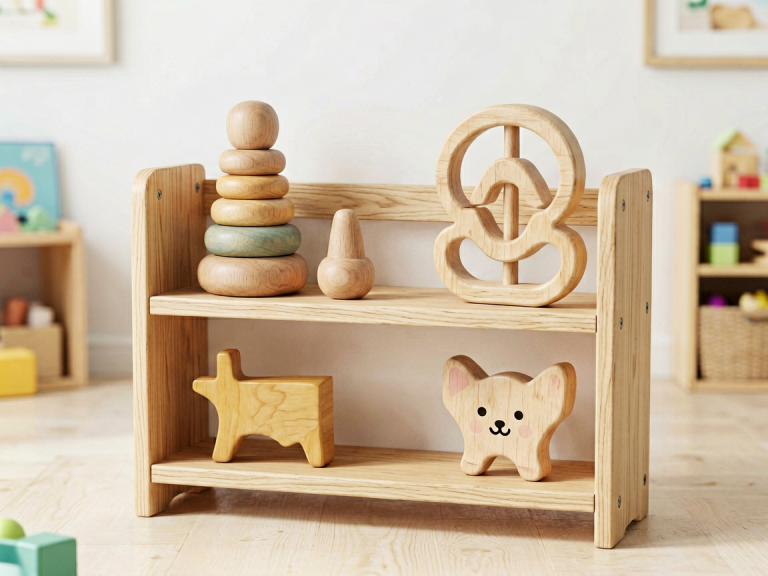
Choosing materials: Loose parts are the cornerstone of open-ended play. Collect items like wooden blocks, fabric scraps, cardboard tubes, bottle caps, shells, pinecones, string, and old keys. These can be stored in open baskets or on low shelves so children can access them independently. For art, offer materials like playdough, natural clay, watercolors, and collage supplies—all without a predetermined project in mind. For sensory play, consider bins of rice, beans, sand, or water, with scoops, funnels, and small containers.
Setting up the environment: Arrange the play space to invite exploration. Low tables, floor cushions, and clear sightlines allow children to move freely. Avoid overcrowding the space with too many options; a few carefully chosen sets of materials often spark deeper engagement than a chaotic array. Rotate materials regularly to maintain novelty.
The adult’s role: The most challenging shift for many adults is to move from a “teacher as instructor” mindset to a “teacher as facilitator” mindset. Instead of saying “Let’s make a bird using these feathers,” you might say “I wonder what you can create with these feathers and this clay.” Instead of correcting a child who is “using a block as a phone,” you can simply observe and perhaps ask “Does that phone have a ringtone?” This kind of open-ended questioning (e.g., “What do you think would happen if…?” or “How could we make this taller?”) extends learning without imposing a script.
It is also important to allow extended periods of uninterrupted play. Rushed play, curtailed by tight schedules, undermines the deep engagement required for true learning. Many early childhood experts recommend at least 45–60 minutes of continuous play time in which children can fully immerse themselves.
Practical Examples Across Age Groups
Open-ended play is valuable across the entire childhood spectrum, from infancy through the primary school years—and even beyond.
Toddlers and preschoolers (ages 1–4): Sensory bins are ideal. Fill a shallow bin with cooked spaghetti, add a few plastic cups and spoons, and watch a toddler explore texture, cause-and-effect (dropping spaghetti into a cup), and language (saying “squishy” or “long”). Another example is a simple “posting” activity: a cardboard box with a slit cut in the top, and a collection of bottle caps, large buttons, and small blocks. The child can decide what fits, how to fit it, and whether to put them in one by one or all at once.
Early childhood (ages 3–6): Dramatic play with open-ended props. A “grocery store” can be created with empty food boxes, a cash register (real or homemade), play money, and reusable bags. Children take on roles (shopper, cashier, manager) and create their own scenarios—perhaps a sale, a customer complaint, or a delivery. The learning here encompasses math (counting money), literacy (reading labels), social skills (politeness, negotiation), and creativity.
School-age children (ages 6–10): Project-based open-ended challenges. For example, give a group of children a pile of newspapers, masking tape, and a pair of scissors, and ask them to “build something that can hold a heavy book.” The problem is open-ended because there are many solutions—a strong column, a wide base, a triangular support. As they work, they engage in engineering design, measurement, teamwork, and iterative testing. Another example is an “invention box” filled with old electronic components (safe, non-functioning), craft supplies, and cardboard; children can create imaginary machines, explain their function, and even write a “patent description.”
Adolescents (ages 11+): Even teenagers benefit from open-ended learning. In a classroom or after-school program, a “design thinking” challenge such as “redesign your school lunch experience” or “create a product that solves a problem in your community” is deeply open-ended. Students research, brainstorm, prototype, test, and refine—all without a single right answer. This builds critical thinking, collaboration, and real-world problem-solving.
Overcoming Common Challenges
Despite the clear benefits, many educators and parents are hesitant to fully embrace open-ended play learning activities. Common concerns include perceived lack of academic rigor, messiness, noise, and difficulty in assessment. These are legitimate but surmountable.
To address the concern about academic learning, it helps to reframe understanding: open-ended play is not a break from learning, but a different kind of learning. A child building with blocks is learning physics principles—balance, gravity, symmetry. A child drawing with pastels is exploring color theory, fine motor control, and self-expression. These are foundational skills that later translate into reading comprehension (understanding symbolic representation) and math (spatial reasoning).
To manage messiness, set clear boundaries. Designate a specific area for messy play (e.g., an art table covered with newspaper or a water table on a tiled floor). Teach children cleanup routines as part of the activity. Over time, children learn to take responsibility for their environment.
As for assessment, shift from looking for a “correct answer” to observing learning processes. Use photographs, videos, anecdotal notes, and portfolios to document growth in problem-solving, collaboration, and creativity. Ask questions like “What was your biggest challenge today?” or “How did you decide to build that?” These conversations reveal deep learning that no test score can capture.
Conclusion
Open-ended play learning activities are not a passing educational trend; they are a return to the most natural and powerful way that children learn. From the infant who repeatedly drops a spoon to discover gravity, to the twelve-year-old who engineers a cardboard trebuchet, children are born scientists, artists, and problem-solvers—if we give them the space and materials to explore freely. By prioritizing open-ended play in homes, schools, and community programs, we invest in the skills that truly matter: creativity, resilience, collaboration, and a lifelong love of discovery. The next time you see a child deeply absorbed in an apparently “pointless” activity—filling a bucket with sand, only to empty it again; arranging sticks in a pattern that makes sense only to them—remember that they are not wasting time. They are building the architecture of their own minds. And that is the most important learning of all.