The Energetic Learner: A Parent’s Guide to Supporting Learning at Home for 7-Year-Old Boys
Introduction
Seven-year-old boys are a whirlwind of curiosity, energy, and budding independence. At this age, they begin to transition from learning through pure play to more structured academic tasks, yet their attention spans remain short, their bodies crave movement, and their minds thrive on hands-on experiences. As a parent, you may wonder how to channel that boundless energy into productive learning without turning your home into a battlefield. This guide offers practical, evidence-based strategies tailored specifically for 7-year-old boys. By understanding their developmental needs and leveraging their natural strengths—competitiveness, imagination, and a love for action—you can create a home learning environment that feels less like “school” and more like an adventure.
—
Understanding the 7-Year-Old Boy’s Brain and Body
Before diving into activities, it helps to know what’s happening inside your son’s developing mind and body. At age seven, boys typically experience a growth spurt in fine motor skills, but gross motor coordination is still a work in progress. Their prefrontal cortex—the part of the brain responsible for impulse control and focus—is far from mature. This means they can be easily distracted, especially by screens or loud noises.
Key traits of 7-year-old boys:
- Short attention spans: Expect 10–15 minutes of focused work before they need a break or a change of activity.
- High physical energy: Sitting still for long periods is genuinely difficult. Movement actually helps them learn.
- Literal thinking: Abstract concepts can be confusing; they learn best through concrete, real-world examples.
- Love for rules and fairness: They enjoy games with clear rules and will argue passionately if something feels “unfair.”
- Social comparison: They start comparing themselves to peers, which can boost motivation or cause frustration.
Armed with this knowledge, you can design learning sessions that work *with* your son’s biology, not against it.
—
Creating a Learning-Friendly Home Environment
The physical space where learning happens matters more than you might think. For a 7-year-old boy, a designated “learning corner” doesn’t have to be a desk in a silent room. In fact, a silent room might feel oppressive. Instead:
- Use a flexible setup: A small table with a chair, but also allow floor space for building, drawing, or reading on a cushion.
- Minimize visual clutter: Boys this age are easily overwhelmed by too many toys or decorations on the wall. Keep only current materials visible.
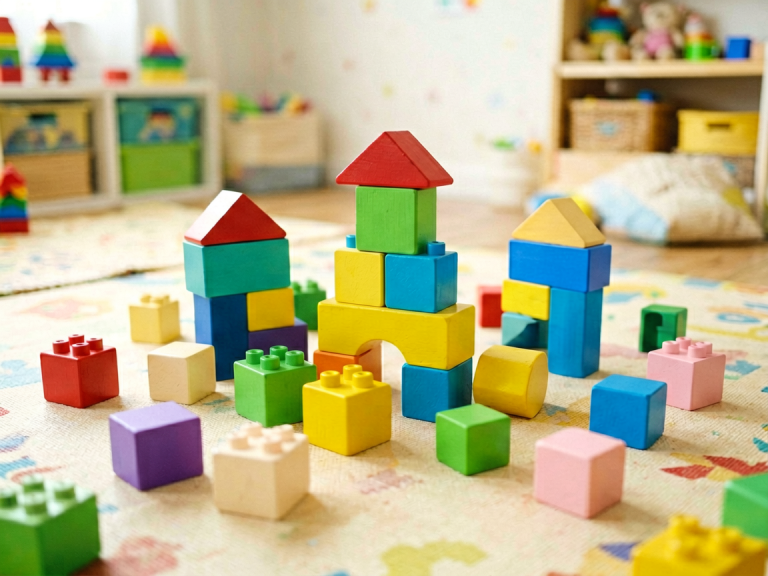
- Stock low-tech tools: Pencils, crayons, scissors, glue, building blocks, magnifying glasses, and simple measuring tapes are gold.
- Create a “movement station”: A yoga mat, a small trampoline, or even a strip of tape on the floor for jumping jacks can be a built-in break zone.
Routine is also part of the environment. Set a consistent time each day for “learning time”—perhaps right after breakfast or after a physical play session. But keep it short: 30–45 minutes is plenty for focused work, with breaks woven in.
—
Making Learning Active: Movement and Hands-On Play
The single most effective strategy for 7-year-old boys is to embed learning into physical activity. When they move, their brains wake up.
- Kinesthetic math: Practice addition and subtraction by hopping on numbered floor tiles, tossing beanbags into targets labeled with numbers, or using LEGO bricks to build “number towers.” For multiplication basics, arrange toys into rows and columns.
- Active spelling: Write spelling words on index cards and scatter them around the room. Your son has to run to each card, read it aloud, then do a jumping jack before moving to the next. Or, spell words with sidewalk chalk while doing a “hopscotch” pattern.
- Science through action: Build a simple pulley system to lift a bucket of toy cars. Explore physics by rolling balls down ramps of different heights. Measure how far a toy can be launched with a rubber band.
- Reading on the move: Try “whisper reading” while walking around the house, or reading a book while standing on one foot. Some boys focus better when they’re moving slightly, like on a wobble stool.
The key is to never let a lesson become a sedentary lecture. If your son starts fidgeting, don’t scold—redirect the energy into a task that uses his body.
—
Leveraging Interests: Superheroes, Dinosaurs, and Trains
Most 7-year-old boys have intense, sometimes narrow interests. Whether it’s dinosaurs, space, Minecraft, or superheroes, these passions are powerful learning tools. Instead of fighting them, ride the wave.
- Reading connections: If your son loves Pokémon, find Pokémon-themed early chapter books or non-fiction about animals that inspired the characters. Set a goal: “Read three facts about Charizard, then tell me one.”
- Writing opportunities: Let him write a short “guide” to his favorite video game character, or create a comic strip featuring his superhero. He can dictate sentences while you type, then copy them down.
- Math with meaning: Count dinosaur fossils (plastic ones), measure how tall a T-Rex was using string, or calculate how many minutes it takes to “defeat” a boss in his favorite game.
- Science exploration: If he loves space, build a model solar system with fruit (orange for the sun, grape for Mercury). If he loves construction, study simple machines (levers, wheels) using toy trucks.
When learning connects to what he already cares about, he becomes intrinsically motivated. Praise his effort and curiosity, not just correct answers.
—
Reading Together and Independently
Reading is the cornerstone of academic success, but at age seven, boys often lag behind girls in reading fluency because they may resist sitting still with a book. Here’s how to make it work:
- Don’t force silent reading alone. Instead, do “paired reading”: take turns reading pages or sentences. You can even read aloud to him while he doodles or builds with LEGO—his brain is still listening.
- Choose high-interest, low-readability books: Graphic novels like *Dog Man*, *Captain Underpants*, or *The Bad Guys* are perfect. They combine humor, action, and illustrations that support comprehension.
- Use “trap” reading: Leave a funny book in the bathroom, or place a comic on the kitchen table during snack time. Boys will pick it up out of boredom.
- Record his reading: Let him use your phone to record himself reading a page. Then play it back. Kids love hearing their own voice, and it builds fluency.
- Set a weekly “reading challenge”: For example, read 10 pages a day for a star on a chart. After 5 stars, he earns a small reward (like choosing a movie for family night).
Remember, any reading counts—including cereal boxes, video game instructions, and sports scores.
—
Math and Logical Thinking: Beyond Worksheets
Math for 7-year-old boys often involves addition, subtraction, place value, and beginning multiplication. Drills can kill enthusiasm. Instead, play games:
- Card games: War (comparing numbers), Snap (quick addition), or “Make 10” (find two cards that add to 10).
- Board games: Snakes and Ladders practices counting; Monopoly Junior teaches money; Qwirkle builds pattern recognition.
- Real-world math: At the grocery store, ask: “We have 3 apples. If we buy 2 more, how many will we have?” Cooking together is full of fractions (half a cup, quarter teaspoon).
- Patterns and puzzles: Use pattern blocks, tangrams, or simple sudoku (with pictures instead of numbers).
- Competitive math races: Set a timer: “Can you solve these 10 addition problems in 2 minutes? Ready, set, go!” The adrenaline of a race boosts focus.
For boys who struggle with writing numbers, use magnetic numbers, number tiles, or even write in shaving cream on a tray. The sensory experience helps memory.
—
Social-Emotional Learning: Managing Big Feelings
Seven-year-old boys are not just learning academics—they’re learning how to handle frustration, disappointment, and competition. At home, you can intentionally teach emotional regulation:
- Use “calm down” tools: A beanbag chair, a weighted blanket, or a “fidget box” with stress balls and putty. Teach him to take three deep breaths when he feels angry during a hard math problem.
- Role-play social scenarios: Practice what to say if a friend won’t share, or if he loses a game. Keep it light: “Let’s pretend you’re playing soccer and someone scores against you. What would you say?”
- Praise effort, not outcome: Instead of “You’re so smart,” say “I saw how hard you worked on that puzzle. You kept trying even when it was tricky.” This builds a growth mindset.
- Teach “think-aloud” problem-solving: When he’s stuck, model your own thinking: “Hmm, I’m not sure what 8+5 is. Let’s count on our fingers together…” This shows that struggle is normal.
Because boys often suppress emotions, check in regularly: “How’s your brain feeling right now? Frustrated? Curious?” Naming feelings reduces acting-out behavior.
—
Screen Time: Friend or Foe?
At age seven, many boys are drawn to tablets and video games. Rather than banning screens entirely, use them strategically:
- Educational games: *Prodigy* (math), *Epic!* (reading), *Khan Academy Kids* (varied subjects), and *Minecraft: Education Edition* (creativity and logic) can be valuable.
- Set clear limits: 20–30 minutes of educational screen time per day, preferably after offline learning is done. Use a timer so he knows when it ends.
- Co-play: Sit with him for 10 minutes and ask questions: “Why did you choose that building material? How many blocks did you use?” This turns passive screen time into active learning.
- Watch for overstimulation: Some boys become hyperactive or irritable after too much screen time. If you notice this, schedule screen time earlier in the day, not before bed.
The goal is to make screens a tool, not a babysitter. And always prioritize physical play and face-to-face conversation.
—
Building a Daily Routine That Works
Consistency reduces resistance. Here’s a sample flexible schedule for after-school learning at home:
| Time | Activity | Notes |
|——|———-|——-|
| 3:30–3:45 | Unwind snack + talk | Ask about his day; listen without judgment |
| 3:45–4:00 | Active brain warm-up | Jumping jacks, stretches, or a dance video |
| 4:00–4:15 | Focused learning 1 | Math game or writing (choose one) |
| 4:15–4:25 | Movement break | Run around the yard, ride bike, or do 10 push-ups |
| 4:25–4:40 | Focused learning 2 | Reading (paired or independent) |
| 4:40–5:00 | Free play / interest project | LEGOs, drawing, science kit, etc. |
| 5:00–5:15 | Review & wrap-up | Share one thing learned; put materials away |
Feel free to adjust based on your son’s energy levels. Some boys learn better in the morning, others after a long recess. Experiment and ask his input: “Do you want to do math first or reading first today?”
—
Encouraging Independence Without Overwhelming
Seven-year-olds want to feel capable, but they still need scaffolding. Help him develop study habits early:
- Create a visual checklist: Pictures or simple words for “1. Get your backpack 2. Put homework in folder 3. Have a pencil ready.” He can check off each step.
- Teach the “two-minute rule”: If a task takes less than two minutes (writing his name, putting a book back), do it immediately. This builds momentum.
- Allow mistakes: If he forgets his library book, let him face the natural consequence (no new book that week) rather than rushing to fix it.
- Praise organization: “I noticed you put your crayons back in the box. That saves time tomorrow!”
The long-term goal is not perfection now, but the habit of taking responsibility.
—
When Things Go Wrong: Handling Resistance
Even with the best strategies, some days your son will refuse to do anything that resembles learning. That’s normal. Instead of fighting, try:
- The “yes, and” approach: “Yes, you don’t want to read. And we need to do 5 minutes of reading. Would you rather read on the couch or upside down on the floor?”
- Use a timer for meltdowns: “We’ll take a 5-minute break. Set the timer. When it rings, we start again.”
- Connect before correct: If he’s frustrated, sit next to him and say, “This is hard. I get it. We don’t have to finish today. Let’s just do three problems, then we’ll stop.”
- End on a positive note: Always try to finish a learning session with something he enjoys, even if it’s just a silly joke or a high-five. This keeps his overall attitude toward learning positive.
Remember: a 7-year-old boy’s brain is still wiring its emotional centers. Your calm presence is the greatest teaching tool you have.
—
Conclusion: The Joy of Learning Together
Supporting a 7-year-old boy’s learning at home is not about replicating a classroom or drilling flashcards. It’s about recognizing his need for movement, his hunger for hands-on discovery, and his desire to feel competent. By turning math into a race, reading into a game, and writing into a superhero story, you transform “homework” into quality time.
You don’t have to be a perfect teacher. Your job is to be a curious partner. Ask questions, laugh at mistakes, and celebrate small victories. The habits you build now—curiosity, persistence, and joy in learning—will serve him for the rest of his life. And along the way, you’ll discover that the most important lessons are the ones you teach through your own patience and love.
So put on your running shoes, grab a deck of cards, and let the adventure begin.