The Joyful Learner: A Parent’s Guide to Supporting Your 7‑Year‑Old Girl’s Learning at Home
—
Introduction: Why This Guide Matters
At age seven, a girl is no longer a wobbly preschooler nor yet a self‑directed pre‑teen. She stands at a magical crossroads: her reading fluency is taking off, her mathematical reasoning is becoming concrete, her social awareness is blossoming, and her imagination is still wonderfully alive. Yet she may also be easily distracted, sensitive to criticism, and prone to comparing herself with friends. As a parent, your role is to be her learning partner, not a drill sergeant. This guide offers practical, research‑inspired strategies to create a nurturing home environment where your daughter can develop confidence, curiosity, and a love for learning.
—
Creating a Learning‑Friendly Space
1. Design a “Yes” Corner
Seven‑year‑olds thrive on ownership. Instead of a formal desk in a quiet room (which can feel isolating), set up a small table or a lap desk in a spot where you can still keep an eye on her. Stock it with child‑size pencils, colorful sticky notes, a whiteboard, and age‑appropriate reference tools (a picture dictionary, a number line). Let her decorate it with her own art—this signals that learning is *her* domain.
2. Minimize Clutter, Maximize Access
Research shows that visual clutter overwhelms young brains. Rotate materials weekly: keep out only the current reading book, one math game, one art project. Store extra supplies in clear, labeled bins (use pictures, not just words, because some 7‑year‑olds still read slowly). The goal is to reduce the “where is my ruler?” frustration that can derail a productive fifteen‑minute session.
3. Respect the Fluidity of Time
A seven‑year‑old girl’s attention span for focused work is typically 10–20 minutes. Build your schedule around short, intentional bursts. For example: 15 minutes of spelling practice → 5 minutes of movement (stretching like a cat, hopping like a frog) → 15 minutes of math → a snack break. When she is genuinely engaged in an activity—say, building a castle with math blocks—let her continue beyond the timer. The key is to follow her energy, not a rigid clock.
—
Building a Daily Rhythm That Works for Her
3. The Power of “First, Then”
Instead of a daunting list of subjects, use a simple visual schedule: “First we finish reading, then we can play dress‑up with the vocabulary cards.” For many 7‑year‑old girls, the promise of a playful reward (especially one involving imagination or social play) is more motivating than stickers or candy. Write the schedule on a whiteboard and let her check off each task with a special marker.
4. Incorporate Movement and Sensory Breaks
Sitting still is hard for a young body that is growing fast. Build in “sensory snacks”:
- Heavy work: carrying books from one room to another, pushing a chair under the table.
- Balance games: walking on a line of tape, standing on one foot while reciting the alphabet.
- Hand‑eye coordination: tossing a beanbag while spelling a word.
These activities not only reset her focus but also strengthen the neural connections that support academic learning.
5. Honor Her Emotional Clock
Girls at this age are acutely aware of their own feelings and the moods of others. If she comes home from school tired or tearful, do not launch into homework. Instead, offer a warm drink and a ten‑minute cuddle while you read a story aloud. Once she feels safe and connected, academic work becomes a shared adventure rather than a chore.
—
Literacy That Feeds Her Imagination
6. Reading Together, Not Just to Her
At seven, many girls can decode words, but comprehension often lags behind. Use the “pause and predict” method: read a page, then ask, “What do you think will happen next? Why?” Let her hold the book and follow along with her finger—this builds the habit of tracking text. Once a week, try “echo reading”: you read a sentence, she repeats it with the same expression. This boosts fluency and confidence.
7. The Power of Series and Buddy Reading
Seven‑year‑old girls love series (think *Ivy & Bean*, *Judy Moody*, *The Princess in Black*). Series offer a familiar world and characters, which reduces the cognitive load of building a new setting each time. Also, invite her to read to a younger sibling, a pet, or even a stuffed animal. The act of *teaching* reading reinforces her own skills and builds self‑esteem.
8. Writing: From Lists to Little Stories
Don’t demand a full paragraph. Start with a “wonder journal” where she can write one sentence about something she noticed today (e.g., “The spider web sparkled like a diamond”). For reluctant writers, try “caption writing”: she draws a picture, then writes a one‑line caption. Gradually move to “2‑sentence stories” (character + problem = solution). Celebrate invented spelling—it shows phonological awareness. Correct only one or two words per session to avoid discouragement.
—
Math That Makes Sense and Sparks Joy
9. Embrace Concrete Manipulatives
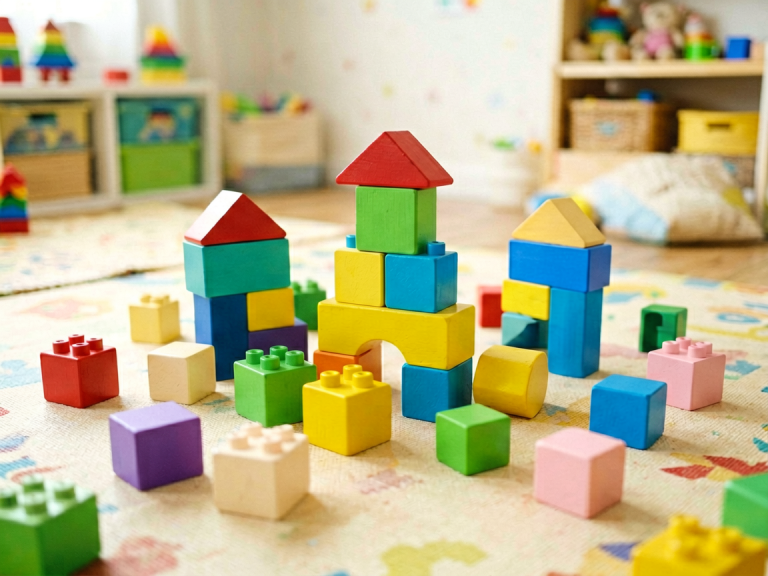
Seven‑year‑olds are in Piaget’s concrete operational stage. Give her buttons, dried beans, LEGO bricks, or coins to count, group, add, and subtract. When introducing place value, use ten‑frames and bundles of sticks (10 sticks in a rubber band = one ten). She needs to touch the numbers before she can abstract them.
10. Real‑Life Math Adventures
Math lives outside the worksheet:
- Cooking: doubling or halving a recipe (fractions naturally)
- Shopping: estimating the total cost of three items under $10
- Time: reading the clock to see when her favorite show starts
- Measurement: measuring her stuffed animals’ heights in inches
When she sees math as a tool for understanding the world, her motivation skyrockets.
11. Games Over Drills
Classic games adapt beautifully:
- War with playing cards: flip two cards, add them, whoever has the higher sum wins.
- Race to 100: roll two dice, add the numbers, move a game piece that many spaces.
- Skip‑counting hopscotch: chalk the numbers 2,4,6,8… on the driveway and hop.
The friendly competition and physical movement make math memorable.
—
Cultivating Creativity and Critical Thinking
12. Open‑Ended Projects
At this age, girls love to plan and create. Provide a “maker box” with paper, tape, scissors, recycled cardboard, yarn, and fabric scraps. Ask a question like, “Can you build a bridge that can hold a toy car?” or “Design a new outfit for your doll.” There is no single correct answer—this freedom builds flexible thinking and problem‑solving.
13. Science Through Stories
Introduce scientific concepts via picture books (e.g., *The Most Magnificent Thing* for engineering, *The Tree Lady* for botany). After reading, conduct a simple experiment: make a “rain gauge” with a plastic bottle, grow a bean in a clear cup, or mix baking soda and vinegar. Let her record her results in a “science notebook” with drawings and a few words.
14. Art as a Learning Tool
Drawing is not separate from learning; it is a form of thinking. Use art to reinforce academic skills:
- Draw a map of her bedroom (spatial reasoning)
- Illustrate a story she wrote (sequencing)
- Create a symmetry painting by folding paper (geometry)
Praise the process, not the product: “I love how you tried three different shades of blue for the sky.”
—
Social‑Emotional Support: The Hidden Curriculum
15. Normalize Mistakes
Girls at seven can become perfectionists. When she makes an error—say, misspells “because”—avoid immediate correction. Instead, say, “Great try! You wrote ‘becuz’—that sounds right. Let’s look it up together and see how it’s really spelled.” Praise her effort, not her correctness. Model your own mistakes: “Oops, I forgot to carry the number. I’ll fix that.”
16. Foster a Growth Mindset
Use specific praise: “You worked on that math problem for a long time, and you didn’t give up. That’s excellent persistence.” Avoid generic “You’re so smart,” which can lead to fear of losing that label. Teach her that the brain is like a muscle—it gets stronger when we struggle.
17. Protect Free Play
Structured learning is only one piece. Unstructured play—dressing up, building forts, pretending to be a teacher—is where she processes what she has learned. It also develops executive function (planning, negotiation, self‑regulation). Let her have at least 45 minutes of free play every day without screens.
—
Partnering with Her School
18. Communication Without Micromanaging
Stay informed about what she is learning at school, but resist the urge to re‑teach every lesson at home. Instead, ask open questions: “What was something interesting you learned today?” “What was tricky?” Use that information to reinforce concepts through the fun activities above. If she is struggling with a specific skill (e.g., subtraction with regrouping), talk to her teacher for targeted ideas—then practice through games, not worksheets.
19. Set Boundaries with Screen Time
At seven, girls are often drawn to tablets and apps that promise learning. While some are excellent (e.g., Khan Academy Kids, Lexia), passive screen time should be limited to 20–30 minutes per day for educational content. Prioritize interactive, creative, or physical learning. Remember: nothing replaces the warmth of a parent’s voice reading aloud or the satisfaction of building something with real hands.
—
Conclusion: You Are Enough
You do not need to be a trained teacher, a perfect organizer, or a patient saint. Your daughter learns best when she feels safe, seen, and celebrated. When a math problem frustrates her, sit beside her and say, “Let’s figure this out together.” When she reads a word correctly, clap. When she writes a wobbly sentence, frame it on the wall. The home is not a classroom—it is a garden. Your job is to provide soil, water, and sunlight. The learning will grow in its own time, in its own beautiful way.
Take a deep breath. Pick one strategy from this guide and try it tomorrow. You’ve got this.
—
*(Word count: 1,493 words)*