The Energetic Learner: A Parent’s Guide to Supporting Learning at Home for 6-Year-Old Boys
Introduction: Understanding Your 6-Year-Old Son as a Learner
At age six, boys typically enter a phase of remarkable cognitive, social, and physical growth. They are curious, imaginative, and full of energy. They love to move, ask endless “why” questions, and test boundaries. Yet their attention spans are still short—often no more than 10 to 15 minutes for a single seated activity. This combination of high energy and limited focus can make at-home learning feel like herding squirrels. But it also presents a golden opportunity. When you tailor the learning environment and activities to match how a six-year-old boy’s brain works best—through motion, play, competition, and hands-on exploration—you transform frustration into fun and resistance into genuine enthusiasm.
This guide offers practical, research-backed strategies for parents who want to support their six-year-old son’s learning at home without turning the living room into a battleground. You will learn how to structure the day, choose effective materials, harness his natural interests, and keep your own patience intact.
Creating a Learning-Friendly Environment
Design a “Yes” Space for Active Learning
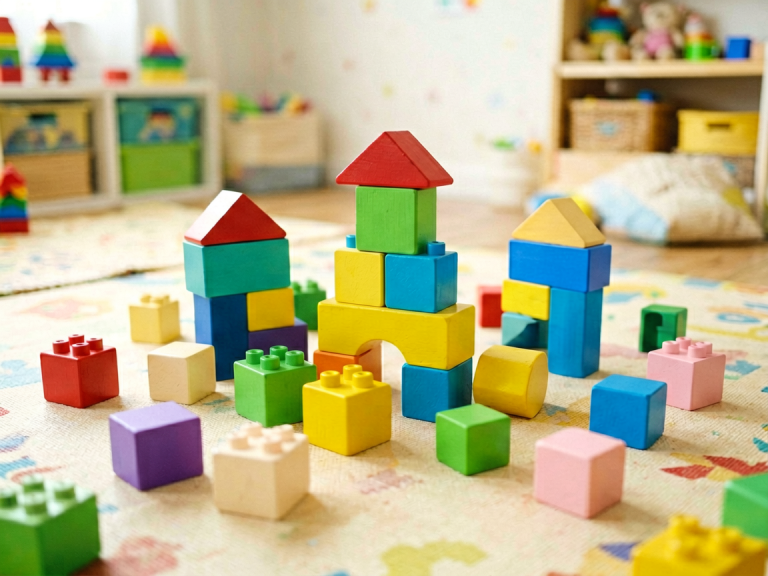
A six-year-old boy does not thrive in a silent, immaculate study corner. He needs a space where movement is allowed, noise is tolerated, and mess is part of the process. Instead of trying to enforce stillness, create a designated learning zone that accommodates action. Use a low table where he can stand, kneel, or even dance while working. Place a small trampoline or balance board nearby so he can bounce while listening to an audiobook or practicing spelling words aloud. Keep materials within easy reach—pencils, scissors, building bricks, counting bears, and age-appropriate books displayed with covers facing out.
Minimize Distractions, Maximize Engagement
Boys at this age are especially susceptible to visual and auditory distractions. Turn off the television and put away tablets unless they are being used for a specific learning app. If you have other children, schedule learning time when the house is relatively quiet. Use a simple visual timer (like a Time Timer) to show how long an activity will last. When your son knows that the “red slice” will disappear in 12 minutes, he can invest his full attention without worrying about when it will end.
Structuring the Day for Success
Follow the Energy Curve
Most six-year-old boys have predictable energy peaks and valleys. Observe your son for a few days. Does he wake up bouncing off the walls? Or is he groggy until after breakfast? Typically, the morning hours (after a good breakfast) are best for focused tasks like phonics, math worksheets, or handwriting. Afternoon, especially after lunch, is often a low-energy slump—perfect for quiet reading, puzzles, or listening to stories. Late afternoon brings a second wind, ideal for gross-motor activities that also reinforce learning, such as hopscotch with sight words or a nature scavenger hunt.
Use the “Three-Block” System
Divide your daily learning time into three short blocks, each no longer than 15–20 minutes, with plenty of movement breaks in between. For example:
- Block 1 (Morning): Focused skill work (e.g., 10 minutes of letter-sound practice on a whiteboard, then 5 minutes of counting objects).
- Block 2 (Midday): Creative or exploratory learning (e.g., building a marble run to learn cause and effect, or drawing a map of the backyard).
- Block 3 (Late afternoon): Physical learning game (e.g., a spelling hop where each correct answer lets him jump one step closer to a treat).
This structure respects his developmental reality: he can concentrate in short bursts, but he needs frequent physical release.
Choosing the Right Activities and Materials
Embrace “Learning Through Doing”
Six-year-old boys are tactile learners. They understand concepts best when they can touch, manipulate, and experiment. Replace workbooks with hands-on alternatives wherever possible. For math, use Lego bricks to teach addition and subtraction—each brick represents a unit. For reading, write sight words on sticky notes and hide them around the room for a treasure hunt. For science, plant a bean in a clear cup and let him measure its growth daily.
Incorporate His Obsessions
If your son is obsessed with dinosaurs, trains, superheroes, or Minecraft, use that passion as the vehicle for all subjects. Read books about fossils; write a story about a train that travels through different countries; count the number of wheels on a locomotive; build a superhero city from cardboard boxes and measure its perimeter with string. When learning is embedded in something he already loves, the resistance vanishes and the retention skyrockets.
Screen Time Done Right
Not all screen time is equal. Choose apps and video content that require active participation rather than passive watching. Excellent choices include:
- Khan Academy Kids (free, adaptive, packed with math and reading games)
- Epic! (a digital library with read-aloud books and quizzes)
- Osmo (physical pieces interact with the iPad for spatial reasoning and coding)
Set a strict timer—15 to 20 minutes per session—and always watch or play alongside him at first to model thinking aloud.
Motivating Without Rewards That Backfire
Use “Game-ification” Instead of Bribes
Six-year-old boys respond powerfully to competition—with themselves or with you. Instead of saying, “Finish this worksheet and you can have a cookie,” try framing it as a challenge: “Can you beat your own record? Last time you got six math problems right in five minutes. Let’s see if you can get seven this time.” Or turn it into a race: “I’ll set the timer. You try to complete the page before I finish making my coffee.”
Praise Effort, Not Intelligence
Decades of research by psychologist Carol Dweck show that praising a child’s effort (“You worked really hard on that puzzle!”) builds a growth mindset, while praising innate intelligence (“You’re so smart!”) can make them avoid challenges for fear of failure. For a six-year-old boy who may already feel pressure to be “good at everything,” specific praise about the process is far more encouraging.
Build in Autonomy
Boys this age crave a sense of control. Offer limited choices: “Do you want to practice spelling on the whiteboard or with magnetic letters?” or “Should we do reading before or after snack?” When he feels that his opinion matters, he takes ownership of the learning.
Nurturing Social and Emotional Learning at Home
Teach Self-Regulation Through Movement
A six-year-old boy’s brain is still developing the ability to manage impulses and emotions. Instead of punishing him for fidgeting or interrupting, teach him simple techniques. Introduce “animal poses” (like tree pose or downward dog) as a way to reset. Use a breathing exercise where he imagines smelling a flower and blowing out a candle. Create a “calm-down jar” (glitter water in a jar) that he can shake and watch until the glitter settles—a concrete representation of his emotions calming down.
Practice Perspective-Taking Through Stories
Reading fiction together is one of the most powerful ways to build empathy. After reading a story, ask questions like, “How do you think the boy felt when his tower fell down?” or “What would you have done differently?” This not only boosts comprehension but also helps your son navigate friendships and conflicts at school.
Model Lifelong Learning
Children learn more from what you do than from what you say. Let your son see you reading a book, working on a puzzle, or learning a new skill yourself. Talk about your own mistakes: “I tried to bake bread and it turned out flat. Tomorrow I’ll try a different recipe.” When he sees learning as a normal, lifelong, and sometimes messy process, he will internalize that same attitude.
Troubleshooting Common Challenges
“He Refuses to Do Any Schoolwork at Home”
Resistance is often a signal that the activity is too hard, too boring, or too long. Scale back. If he balks at writing a sentence, let him dictate it to you while you write, then have him copy just one word. If he hates worksheets, give him chalk to practice math on the driveway. Sometimes the best solution is to take a complete break for a day or two and return with a fresh, playful approach.
“He Can’t Sit Still for Even Five Minutes”
Stop trying to make him sit still. Incorporate movement into every learning task. Use a wobble cushion on his chair. Let him do spelling words while doing the “floss” dance. Practice counting by jumping jacks. When the body is moving, the brain is often more alert and receptive.
“He Compares Himself to His Sibling or Friends”
Boys at six are becoming more socially aware and may feel inadequate if a sibling reads earlier or counts faster. Gently redirect the conversation: “Everyone learns at their own pace. The important thing is that you are trying new things and getting better every day.” Celebrate small victories, such as reading one new word without help or finishing a puzzle all by himself.
Conclusion: The Joy of Learning Together
Supporting a six-year-old boy’s learning at home is not about replicating a classroom or drilling worksheets. It is about creating an environment where curiosity is celebrated, mistakes are welcomed as learning opportunities, and movement is seen as a friend, not an enemy. It is about meeting your son where he is—full of energy, wonder, and a desire to prove his growing independence.
When you step back and let him lead sometimes, when you laugh at the mess and celebrate the small wins, you are teaching him far more than reading or math. You are teaching him that learning is a joyful adventure, and that you are his biggest fan and most reliable teammate. That lesson will carry him through every grade and every challenge ahead.
Now go ahead: grab a timer, put on your silliest voice for story time, and get ready to bounce through the alphabet together. Your six-year-old boy is waiting.