The Power of Open-Ended Play: Unlocking Creativity and Development in Babies
In the bustling world of modern parenting, it is easy to fall into the trap of believing that the best toys for babies are those that flash lights, sing songs, or promise to teach letters and numbers before the first birthday. Yet, a growing body of research in early childhood development points to a more profound truth: the most valuable play experiences for infants come not from high-tech gadgets, but from simple, open-ended materials and activities. Open-ended play—play without a predetermined outcome, fixed rules, or single correct answer—is the cornerstone of authentic learning during the first year of life. This article explores why open-ended play matters for babies, how it supports critical developmental milestones, and provides a rich collection of activity ideas that any caregiver can implement with everyday items.
What Is Open-Ended Play and Why Does It Matter for Babies?
Open-ended play is characterized by its flexibility. A cardboard box, a set of wooden blocks, or a handful of scarves can become anything a baby imagines. Unlike a battery-operated toy that does one thing (press a button to hear a song), open-ended materials invite exploration, experimentation, and repeated discovery. For babies who are still learning to understand their bodies, their environment, and cause-and-effect relationships, this type of play is not merely entertainment—it is serious cognitive work.
At its core, open-ended play supports what developmental psychologists call "divergent thinking." When a baby rolls a ball of yarn and watches it unfurl, she is not just practicing motor skills; she is hypothesizing about motion, texture, and trajectory. When she stuffs a silk scarf into a plastic bottle and then tries to pull it out, she is learning about volume, gravity, and problem-solving. These experiences build neural connections that form the foundation for later creativity, resilience, and executive function.
Moreover, open-ended play respects the individual pace and interest of each baby. No two infants will interact with a set of stacking cups in exactly the same way. One might bang them together, another might try to fit them inside each other, and a third might simply mouth them. All of these responses are valid and valuable. In a world that often pressures babies to meet rigid milestones, open-ended play offers a space where the child is the leader, and the adult is a supportive observer.
Developmental Benefits of Open-Ended Play for Infants
Sensory Integration and Fine Motor Development
Babies learn through their senses. Open-ended activities naturally provide rich sensory input. Consider a simple "treasure basket" filled with natural and household objects: a wooden spoon, a metal whisk, a smooth stone, a piece of velvet, a lemon. Each item offers a unique texture, weight, temperature, and sound. As babies grasp, shake, transfer, and mouth these objects, they refine their fine motor skills, hand-eye coordination, and tactile discrimination. This kind of sensory play is particularly important in the first year because it helps the brain organize and interpret sensory information—a process known as sensory integration.
Cognitive Flexibility and Problem-Solving
Because open-ended play has no "right" way to be done, it naturally encourages cognitive flexibility. A baby who has access to a set of nesting bowls will eventually try to stack them, knock them over, hide a small toy inside, or use one as a drum. Each attempt is a mini-experiment. When a baby discovers that a bowl placed upside down can hide a ball, she is engaging in object permanence and spatial reasoning. When she tries to fit a square block into a round hole and fails, she begins to understand shape and size. These trial-and-error processes are far more effective for deep learning than passively watching a screen or pressing a single button.
Language Development and Social-Emotional Growth
Open-ended play also fosters language development, even when the baby is pre-verbal. As caregivers narrate what the baby is doing ("You put the red block on top of the blue block! That's so tall!"), they are building vocabulary and reinforcing the connection between actions and words. Furthermore, when play is child-led, the baby experiences a sense of agency and competence. This nurtures self-confidence and a positive attitude toward exploration. In group settings, open-ended materials encourage parallel play and early social interactions, as babies watch each other and sometimes mimic or share objects.
Practical Open-Ended Play Activities for Babies (0–12 Months)
Below are concrete, safe, and easy-to-implement activity ideas categorized by developmental stage. Remember that adult supervision is always required, and all materials should be size-appropriate to prevent choking hazards.
For Young Babies (0–6 Months): Simple Sensory Invitations
1. Black-and-White Pattern Cards and Mirrors
Newborns have limited color vision and prefer high-contrast patterns. Hang simple black-and-white geometric cards or a child-safe mirror near the changing table or play mat. Let the baby gaze, track the patterns, and later reach out to touch. This is open-ended because there is no required response—the baby chooses where to look and for how long.
2. Barefoot Sensory Play on Different Textures
At around 3–4 months, babies begin to kick and wiggle more intentionally. Lay a soft blanket on the floor and place several fabric squares of different textures: fleece, silk, corduroy, burlap. Let the baby lie on his back or tummy and kick his feet against them. Describe the sensations: "That feels soft and fuzzy. This one is bumpy." The baby learns to associate physical sensations with language.
3. Grasping Garlands
Thread large, baby-safe items (plastic curtain rings, wooden beads with wide holes, fabric scraps) onto a sturdy ribbon or piece of elastic. Tie the ends together to create a ring or drape it over a low-hanging hook. Place it within the baby’s reach during tummy time or while lying on her back. She will bat at it, grab the items, and explore how each one moves and feels.
For Older Babies (6–12 Months): Exploring Cause and Effect
4. The Classic "Drop and Retrieve" Game
Give your baby a lightweight, unbreakable container (like a plastic yogurt tub) and a few small objects (large wooden blocks, a ball of crumpled tissue paper, a plastic egg). Show him how to drop an object into the container, then tip it out. He will repeat this action countless times, learning about gravity, containment, and the joy of making things disappear and reappear. This activity is deeply satisfying and lays the groundwork for understanding object permanence.
5. Stacking and Toppling with Recycled Materials
Yogurt cups, cardboard tubes, and small boxes are fantastic for stacking. A 7-month-old may not be able to build a tower yet, but she will love knocking one down that you have built. Cheer and say, "Boom! The tower fell!" Let her try to place one cup on top of another. The process of experimenting with balance and force is pure learning.
6. Scooping and Pouring in a High Chair
Use a low-sided plastic tray on the high chair tray. Add a few large, dry materials like puffed rice cereal or plain oatmeal (supervised to avoid choking). Give the baby a sturdy plastic cup and a small spoon. Pouring, scooping, and spilling are incredibly educational. The baby learns about volume, weight, and the properties of loose parts. If you are concerned about mess, a simple splat mat under the high chair makes cleanup easy.
7. Drawing with Edible Markers or Finger Paints
Around 10–12 months, babies can start mark-making. Use yogurt thinned with a little beet juice for red, or pureed blueberries for blue. Dip a carrot stick or the baby’s own finger into the "paint" and let her smear it on a piece of paper taped to the high chair tray. There is no goal—just the joy of seeing color appear, feeling the texture, and making random marks. This is pre-writing and creative expression.
8. Homemade Busy Boards
A busy board is a piece of plywood or sturdy cardboard onto which you attach various safe, interesting hardware: a large plastic latch, a door knob, a pair of zippers sewn onto fabric, a piece of soft Velcro, a large button. Babies love to fiddle with these mechanisms. Each item invites investigation—push, pull, slide, twist. The board is open-ended because the baby chooses what to explore and for how long.
Creating an Environment That Encourages Open-Ended Play
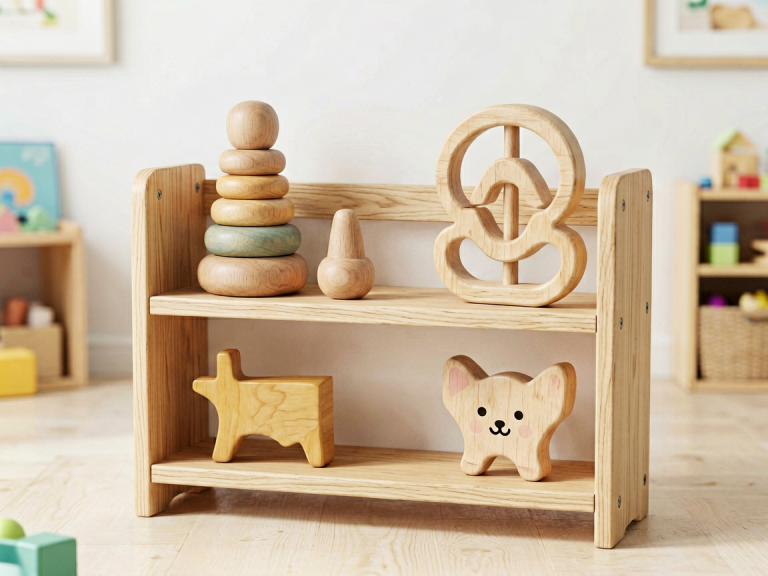
The physical environment plays a crucial role in fostering open-ended play. Aim to provide a "yes space"—a safe area where the baby can move freely without constant "no's." Place a few carefully chosen open-ended materials on a low shelf or in a basket that the baby can access independently (once she is crawling or cruising). Rotate the items every few days to maintain novelty. For example, one week offer wooden blocks and silk scarves; the next week, swap in cardboard tubes and a set of metal measuring spoons.
Resist the urge to direct the play. Instead, sit nearby and follow the baby’s lead. Observe what she is doing, and only intervene to ensure safety or to offer a gentle narration. If she seems frustrated, you might model a new way to use a material, but then step back again. The goal is not to "teach" but to support discovery.
Safety Considerations for Open-Ended Play with Babies
While open-ended play is wonderful, it must be done with safety as the top priority. Always supervise babies during play, especially with small objects, cloth items that could cover the face, or anything that could break into sharp pieces. Follow these guidelines:
- Choking hazards: Any object that can fit through a toilet paper tube is a potential choking hazard for babies under 12 months. Avoid small balls, beads, coins, or button batteries. When in doubt, leave it out.
- Strangulation risks: Remove cords, ribbons longer than 12 inches, and any strings that could wrap around a baby’s neck.
- Toxic materials: Ensure paints, inks, and any mouthable items are non-toxic and labeled safe for children. Natural materials like sticks, pinecones, and stones should be washed and inspected for splinters or sharp edges.
- Heavy items: Large blocks or heavy objects that could cause injury if dropped on a baby’s head should be avoided or used only with very close supervision.
- Cleanliness: Babies explore with their mouths. Wash all materials regularly, especially those that go from floor to mouth.
The Role of the Caregiver: Being Present Without Directing
Perhaps the most important element of open-ended play is the caregiver’s attitude. It is tempting to jump in and "show" the baby how something is supposed to work, but doing so can squash the very creativity that open-ended play is meant to cultivate. Instead, try to be a "sportscaster"—describe what you see without evaluating. "You are rubbing the scarf on your cheek. It feels soft. Now you’re shaking it in the air." This kind of language validates the baby’s actions and builds vocabulary without imposing a agenda.
You can also introduce new vocabulary by naming colors, textures, and actions, but keep it conversational. If the baby seems bored, do not rush to provide a new activity. Sometimes babies need time to process or simply to sit and watch. Boredom can be a precursor to deeper exploration.
Conclusion: Less Is More, More Is Less
In a consumer-driven culture that bombards parents with advertisements for "educational" toys, the concept of open-ended play can feel counterintuitive. Yet the evidence is clear: babies thrive when given simple, authentic materials and the freedom to explore them on their own terms. The cardboard box truly is more valuable than the toy that came inside it. The wooden spoon is a drum, a digging tool, a teether, and a scepter all in one. By embracing open-ended play, we give our babies the greatest gift—the opportunity to be the architects of their own learning, to discover the world with wonder, and to build a foundation of creativity that will support them for a lifetime.
So, put away the noisy plastic toys for a while. Pull out a basket of scarves, a set of cups, and a blanket. Sit on the floor with your baby, breathe, and watch the magic unfold. You may be surprised at how much both of you learn—not about ABCs, but about each other, about joy, and about the endless possibilities of a simple object in tiny, curious hands.