Unlocking Wonder: Open-Ended Play Activities for 6-Month-Olds That Foster Growth and Discovery
Introduction: The Magic of Open-Ended Play in Early Infancy
At six months old, a baby is a whirlwind of curiosity. They have begun to sit with support, reach for objects with intent, and explore the world with their mouths and hands. This is a critical window for cognitive, sensory, and motor development. Yet many parents feel pressured to provide “educational” toys with specific outcomes—lights that flash, buttons that beep, or toys that “teach” letters. In contrast, open-ended play activities offer something far richer: the freedom to explore without predetermined rules or endpoints. For a six-month-old, an open-ended activity might be a simple scarf, a bowl of water, or a collection of wooden blocks. These materials invite the infant to discover, experiment, and create their own learning experiences. This article delves into what open-ended play truly means for a six-month-old, why it matters, and provides a comprehensive guide to activities that nurture every dimension of development—all while being safe, simple, and deeply engaging.
Why Open-Ended Play Matters for a Six-Month-Old
Building Neural Connections Through Free Exploration
The brain of a six-month-old is forming one million new neural connections every second. Open-ended play supports this explosive growth by allowing the baby to engage in self-directed investigation. Unlike closed toys (e.g., a pop-up toy that only works one way), open-ended materials offer multiple possibilities. A soft fabric square can be grasped, crumpled, chewed, waved, or hidden. Each action triggers different sensory inputs and motor responses, strengthening synaptic pathways in the visual, tactile, and motor cortices. Neuroscientists emphasize that when infants initiate their own actions—rather than passively receiving stimulation—the resulting neural patterns are more robust and flexible.
Fostering Creativity and Problem-Solving from the Start
Even at six months, babies are problem solvers. When they drop a rattle and watch it fall, they are experimenting with cause and effect. Open-ended play amplifies this because there is no “right” way to play. A baby might discover that pushing a cardboard tube makes it roll, or that rattling a plastic bottle filled with rice produces a different sound than one filled with sand. These small discoveries lay the foundation for later cognitive flexibility, creativity, and persistence. According to early childhood experts, children who engage in open-ended play develop stronger executive function skills—attention, working memory, and self-control—than those who primarily use single-purpose toys.
Supporting Emotional Regulation and Bonding
Six-month-olds are highly attuned to their caregivers’ reactions. In open-ended play, the adult’s role shifts from “teacher” to “partner.” When a parent sits on the floor, mirrors the baby’s actions, and responds to their coos with delight, the baby feels safe and valued. This secure attachment encourages exploration. Moreover, because open-ended activities have no prescribed outcome, neither parent nor baby feels pressure to “succeed.” This lowers stress for both, creating a joyful, relaxed atmosphere that is ideal for emotional development.
Key Developmental Milestones at Six Months: What to Look For
To design effective open-ended play activities, it helps to understand what a typical six-month-old can do physically, sensorially, and socially. Most babies at this age:
- Gross motor skills: Can roll both ways, sit with support (or independently for a few seconds), and may begin to scoot or rock on hands and knees.
- Fine motor skills: Can reach for and grasp objects using a raking motion (fingers sweeping toward palm), transfer objects from one hand to the other, and bring things to their mouth for exploration.
- Sensory awareness: Show strong interest in textures, temperatures, sounds, and visual contrasts. They enjoy looking at their own reflection and tracking moving objects.
- Social and emotional: Respond to their name, express joy and frustration, and engage in back-and-forth babbling or noises. Stranger anxiety may begin to emerge.
Open-ended activities should align with these milestones without rushing them. The goal is not to “teach” a skill but to provide opportunities for practice through play.
Sensory Exploration Activities That Spark Discovery
The Texture Treasure Basket
One of the most classic open-ended setups for a six-month-old is a treasure basket. Fill a shallow, sturdy basket (with no sharp edges) with everyday objects that offer a variety of textures, shapes, and materials. Examples include a silk scarf, a wooden spoon, a large, smooth stone (washed and sanitized), a piece of crinkly paper, a soft bristle brush, a metal whisk, and a fabric ball. Place the basket within the baby’s reach while they sit supported on the floor. Let them explore freely—they will likely pick up items, mouth them, shake them, and drop them. The adult should sit nearby, narrating softly without directing: “You have the spoon. It feels smooth and hard.” This activity develops tactile discrimination, hand-eye coordination, and curiosity.
Water Play in a Shallow Tray
As long as the baby can sit with good head control and is supervised at all times, water play is a delight. Use a shallow plastic tray or basin with just 1–2 inches of lukewarm water. Add a few cups, spoons, a floating silicone duck, and a washcloth. The baby can splash, pat the water, watch ripples, and try to grasp floating objects. The unpredictable movement of water provides endless cause-and-effect learning. To extend the activity, freeze a few ice cubes and drop them in—the cold temperature and melting process fascinate infants. Always stay within arm’s reach and avoid using small objects that could be choking hazards.
DIY Sensory Bags
Create a sealed bag that the baby can squish and manipulate without mess. Use a heavy-duty ziplock bag (double-bag for safety) and fill it with hair gel, or water with a few drops of food coloring, plus small, non-sharp items like buttons (or large pom-poms—not small beads). Seal the bag with strong tape and lay it flat on the high-chair tray or floor. The baby will press, pat, and slide the contents. The visual and tactile feedback is mesmerizing. For added novelty, tape the bag to a window so that light shines through. This activity supports visual tracking and fine motor pressure.
Motor Skill Development Through Open-Ended Action
The Pull-and-Discover Fabric Garland
Babies at six months love to pull things. String a few large, lightweight fabric scraps (e.g., a satin ribbon, a piece of fleece, a lace trim) onto a silicone ring or a cardboard tube. Tie the garland to a low hook, to the side of a play gym, or even to the handle of a drawer (with safety locks in place). Let the baby lie on their back or sit and pull at the fabric. They will experiment with gripping, tugging, and releasing. The varying textures and resistance teach muscle control. If the garland is within their reach, they may also try to bring a piece to their mouth, which is excellent for oral sensory integration.
Soft Block Towers (That They Can Knock Down)
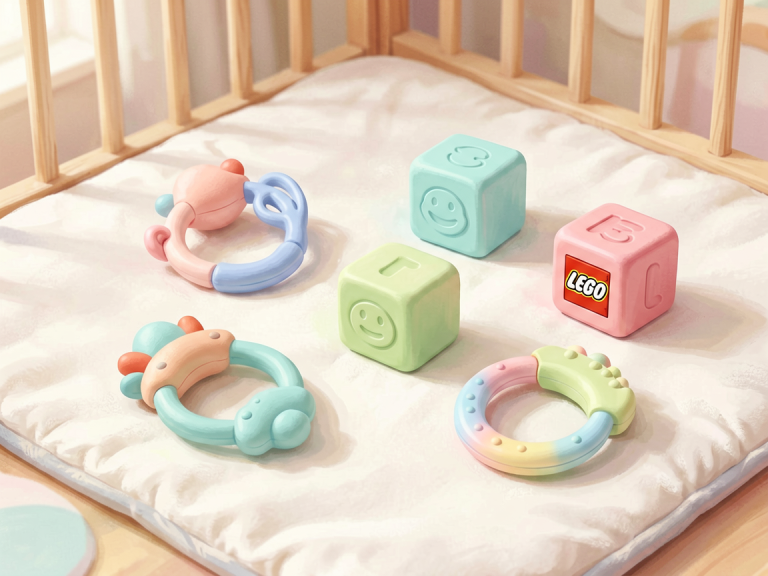
A set of soft foam or fabric blocks—lightweight, washable, and safe for chewing—is a cornerstone of open-ended play. Sit facing the baby and stack two or three blocks. Encourage them to reach, grab, and knock over the tower. The cause-and-effect joy is immense. Then, hand a block to the baby and see what they do: they might hold it, mouth it, bang it on the floor, or even try to stack one on top of another (though successful stacking usually comes later). The key is that there is no expectation. The baby is learning weight, balance, and hand strength. Let them lead—if they want to simply hold one block and bang it repeatedly, that is a perfect motor exercise.
Roll and Chase with a Ball
A large, soft, lightweight ball (like a fabric ball or a balloon with a little air) is an open-ended treasure. Lie the baby on their tummy (if they tolerate it) and roll the ball slowly toward them, then away. They will try to reach, and the movement of the ball encourages them to lift their head and extend their arm. If the baby is sitting, roll the ball so they can swat it or track it with their eyes. Rolling a ball back and forth with your baby is a simple but powerful activity that builds visual-motor coordination and early social turn-taking.
Auditory and Visual Stimulation Without Overload
The Sound Collection: Rattles That Aren’t Just Rattles
Instead of a single rattle, create a few noise-making alternatives. Fill clean, empty plastic bottles (with lids securely glued shut) with different materials: dried beans, rice, pasta, small bells, or crumpled foil. Let the baby shake them, mouth them (bottles must be large enough to not fit in the mouth, and never leave unattended), and listen. The different pitches and volumes teach auditory discrimination. Another idea: fill a metal tin with a few large buttons or small pebbles, then tape the lid shut. The metallic sound is novel. As the baby shakes these objects, they learn that their actions produce different sounds, reinforcing agency.
High-Contrast Books and Black-and-White Patterns
Six-month-olds are drawn to high-contrast visuals, especially black-and-white or bold color patterns. Offer a board book with simple images, or create your own “pattern cards” by gluing black felt shapes onto white cardstock. Let the baby explore the book in their hands—they will chew the corners, turn pages (or attempt to), and stare intently. Open-ended means that the book need not be read cover to cover; it is a prop for visual interest. You can also tape a black-and-white pattern on the wall next to the changing table for a moment of calm focus. This strengthens the visual system and encourages concentration.
Mirror Play: The Ultimate Self-Discovery Activity
A shatterproof, unbreakable mirror (acrylic mirror sheets sold for play) is a must for open-ended play. Place the mirror horizontally on the floor or prop it securely against a wall. Place the baby in front of it—on their tummy or sitting. They will gaze at their reflection, smile, touch the mirror, and perhaps make faces. They may try to reach for the “other baby” behind the glass. Mirror play helps develop self-awareness, emotional expression, and visual tracking. For added sensory input, put a few drops of water on the mirror so the baby can smudge and see the water move.
Safe and Simple DIY Ideas to Rotate for Variety
Open-ended activities do not require expensive toys. Here are a few more bare-bones ideas that you can create in minutes:
- Cardboard Box Ramp: Tilt a shoebox lid at an angle and show the baby how a ball rolls down. They may try to push the ball themselves.
- Fabric Peek-a-Boo: Drape a lightweight scarf over the baby’s head (always lift it away after a second) and play peek-a-boo. The surprise and disappearance are delightful.
- Ice Cube Play (with caution): Place a few large ice cubes in a bowl—the baby will be intrigued by the cold and the melting. If they mouth it, supervise carefully.
- Sponge Squeeze: Give the baby a clean, damp sponge (new and washed). They can squeeze, suck, and explore the porous texture.
Rotate these activities every few days to keep novelty high. A six-month-old’s attention span is short—five to fifteen minutes is typical—so having a small selection of options each day is sufficient.
Practical Tips for Parents: Setting Up and Supervising
- Safety first: Always supervise during open-ended play, especially with water, small objects, and items that can be torn. Ensure all materials are large enough not to be choking hazards (the standard rule: nothing that fits entirely inside a toilet paper tube).
- Create a cozy play space: Use a playmat or a blanket on the floor. Place a mirror, a basket of objects, and some soft blocks. Keep the area distraction-free but not sterile.
- Follow the baby’s lead: If the baby is interested in the toy for only two minutes, that is fine. If they want to mouth the same scarf for ten minutes, that is also fine. Resist the urge to “entertain” or “redirect.” Your calm presence is enough.
- Talk and narrate: Describe what the baby is doing in simple language: “You are holding the yellow ball. It feels bumpy.” This builds language connections without overwhelming.
- Let them struggle a little: If a toy rolls out of reach, pause and see if the baby makes an effort to get it. A little frustration is a powerful teacher of motor planning and persistence.
Conclusion: The Simple Joy of Unscripted Discovery
Open-ended play for a six-month-old is not about keeping them busy; it is about giving them ownership of their learning. Each crinkled piece of paper, each splash of water, each mirrored smile lays a building block for lifelong curiosity and confidence. In a world that often pushes early academics, choosing open-ended activities is a gentle rebellion—a reminder that infants learn best through their own hands, mouths, and eyes. So the next time you are tempted to buy the flashy, battery-operated toy, consider offering your baby a simple wooden spoon, a cotton scarf, or a bowl of water. You may be surprised by the depth of concentration and pure wonder that unfolds. In that quiet, unstructured moment, the seeds of creativity, resilience, and joy are sown—one small, open-ended play session at a time.