Unlocking Imagination: The Power of Open-Ended Play for Two-Year-Olds
Introduction
The toddler years are a whirlwind of discovery, curiosity, and rapid development. At age two, children are no longer passive infants; they are active explorers who test boundaries, mimic adult behaviors, and begin to form their own tiny worlds of meaning. For parents, educators, and caregivers, choosing the right play activities can feel overwhelming. Many toys on the market promise educational benefits but come with rigid instructions, flashing lights, and predetermined outcomes. Yet research in early childhood development consistently points to a more profound, and surprisingly simpler, approach: open-ended play.
Open-ended play activities are those that have no single correct way to use them, no fixed end result, and no prescribed set of steps. A cardboard box, a pile of wooden blocks, a handful of scarves—these humble objects invite a two-year-old to create, experiment, and imagine without limits. This article explores why open-ended play is not just fun but essential for toddlers, provides a rich array of specific activities tailored to two-year-olds, and offers practical guidance for adults who want to nurture this type of play at home or in a classroom setting.
—
Understanding Open-Ended Play: What It Is and Why It Matters
Open-ended play is often contrasted with closed-ended play. A closed-ended toy, such as a puzzle with exactly one solution or a shape sorter with fixed holes, teaches specific skills but leaves little room for creativity. In contrast, open-ended play materials allow a child to decide *how* to use them. A set of nesting cups can become a tower, a drum, a hat, a scoop for sand, or a phone. The child’s imagination, not the toy’s design, drives the activity.
For a two-year-old, whose brain is forming neural connections at an astonishing rate, this flexibility is critical. At this age, children are developing what psychologists call “executive function”—the ability to plan, focus attention, switch between tasks, and control impulses. Open-ended play naturally strengthens these skills because it requires the child to make choices, solve problems (e.g., “How do I make this block tower stable?”), and persist through small frustrations. Moreover, because there is no “right” answer, a toddler is free to explore without fear of failure, building confidence and a love for learning that will last a lifetime.
The Montessori and Reggio Emilia educational philosophies both champion open-ended materials, emphasizing that the child is an active constructor of knowledge rather than a passive receiver. For two-year-olds, this means that the simplest objects—stones, sticks, fabric scraps, water, sand—become powerful tools for understanding the world.
—
Key Developmental Benefits for Two-Year-Olds
Cognitive Development
When a two-year-old engages in open-ended play, they are constantly forming hypotheses. “What happens if I drop this rock into the water?” “Can I stack this round block on top of that square one?” These miniature experiments lay the foundation for scientific thinking. They also promote cause-and-effect reasoning, categorization (sorting leaves by size or color), and early math concepts such as volume, weight, and spatial relationships.
Language and Communication
Open-ended play is a rich context for language development. As toddlers narrate their actions (“The car goes vroom! Now it’s sleeping in the garage.”), they practice vocabulary, sentence structure, and storytelling. Adults who join in the play—without taking over—can model new words and ask thoughtful questions (“I wonder why the bear needs a hat today?”). This back-and-forth interaction is far more valuable for language growth than passively watching a screen.
Social and Emotional Skills
Play with open-ended materials often involves negotiation with peers or siblings. Two-year-olds are just beginning to understand sharing, turn-taking, and empathy. A basket of scarves can lead to a shared game of peek-a-boo, a pretend picnic, or—inevitably—a disagreement over the “best” scarf. These moments teach emotional regulation and conflict resolution. Additionally, open-ended play gives toddlers a sense of agency. They decide the rules, the roles, and the course of the story, which builds self-esteem and independence.
Fine and Gross Motor Skills
Pouring, scooping, threading, stacking, and crawling under a blanket fort all require precise movements. Open-ended activities naturally incorporate a wide range of physical skills. For example, manipulating playdough strengthens hand muscles needed later for writing, while climbing over pillows in a home-made obstacle course builds coordination and balance.
—
Top Open-Ended Play Activities for Two-Year-Olds
1. The Sensory Bin
A sensory bin is a container filled with materials that invite touch, sight, sound, and sometimes smell. For a two-year-old, keep it simple and safe. Use uncooked rice, dry beans (supervised to avoid choking), sand, water, or shredded paper. Add scoops, small cups, plastic animals, or a funnel. Avoid small objects that could be swallowed. The child can pour, dig, hide objects, and then find them again. This activity promotes fine motor skills, sensory integration, and language as you name what they are doing (“You’re pouring the rice into the blue cup!”).
2. Block Play with Unstructured Materials
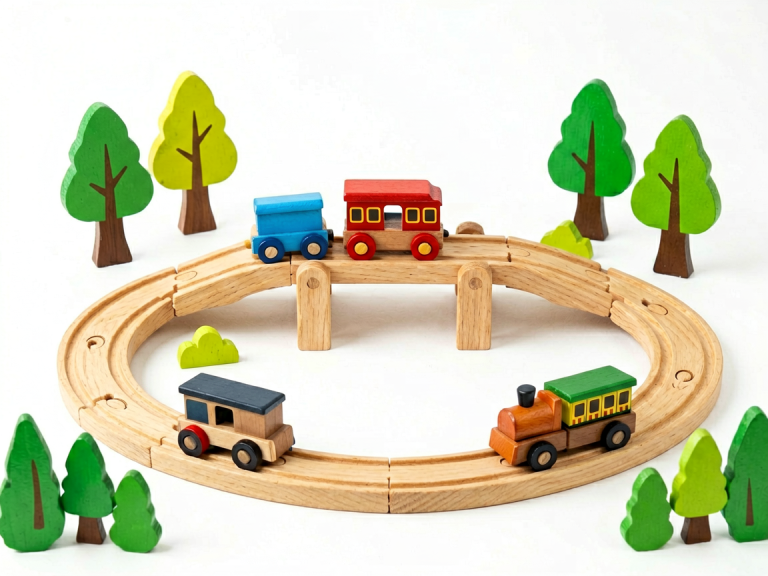
Wooden unit blocks are classic open-ended toys, but you can also use large cardboard bricks, foam blocks, or even empty food boxes. A two-year-old will instinctively try to stack, knock down, line up, and carry blocks. As they experiment, they learn about gravity, balance, and symmetry. To extend the play, add small figures or cars. The child might build a “house” for a stuffed bunny or a “bridge” for a toy train. Resist the urge to correct how they build; let them discover their own solutions.
3. Water Play
A shallow tub of warm water (supervised at all times) with cups, spoons, a colander, and floating toys provides endless fascination. Two-year-olds love to pour, fill, empty, and splash. They learn about volume, displacement, and the properties of liquids. Adding a drop of food coloring or a few ice cubes introduces new concepts. Water play is also wonderfully calming for many toddlers, helping them self-regulate when they are overstimulated.
4. Creative “Art” with Non-Toxic Materials
Art for a two-year-old is not about producing a recognizable picture; it is about the process. Offer large sheets of paper, chunky crayons, washable markers, finger paints, or even a bowl of yogurt mixed with a drop of food coloring. Let them smear, scribble, and stamp with sponges. You can also try “painting” with water on a sidewalk or using a brush on a cardboard box. Talk about the colors and shapes they create, but avoid turning the activity into a lesson.
5. Pretend Play with Loose Parts
Loose parts are any movable objects that children can combine and transform. Think scarves, fabric scraps, large buttons (supervised), plastic lids, cardboard tubes, and old hats. A two-year-old might wrap a scarf around a doll and call it a “blankie,” then use a tube as a telescope. This type of symbolic play is a direct precursor to reading and complex thinking, because the child learns that one thing can stand for another. Keep a basket of loose parts accessible at all times.
6. Nature Exploration
The outdoors is the ultimate open-ended playground. A simple walk can become a treasure hunt. Let the child collect leaves, sticks, pinecones, and pebbles. At home, they can arrange these objects in patterns, sort them by size, or use them as “food” for a toy animal. Digging in dirt with a small shovel, splashing in puddles, and watching ants carry crumbs all engage a toddler’s natural curiosity. The only rule is safety—avoid poisonous plants and sharp objects.
7. Simple Pretend Scenarios
You don’t need a fancy toy kitchen or costume trunk. A cardboard box can become a car, a boat, or a cave. A few empty bowls, a wooden spoon, and some dry pasta can become a “restaurant.” Two-year-olds love to imitate grown-ups: cooking, cleaning, talking on the phone. Join them in their imaginary world. If they hand you a “cup of tea,” sip it gratefully. If they declare the blanket is a “tent,” crawl inside with them.
—
Tips for Parents and Caregivers to Facilitate Open-Ended Play
1. Less Is More
Resist the urge to buy expensive, battery-operated toys. A two-year-old will often spend more time playing with the box than with the toy inside. Rotate a small number of open-ended materials every few weeks to keep interest fresh without overwhelming the child.
2. Create a Safe, Inviting Space
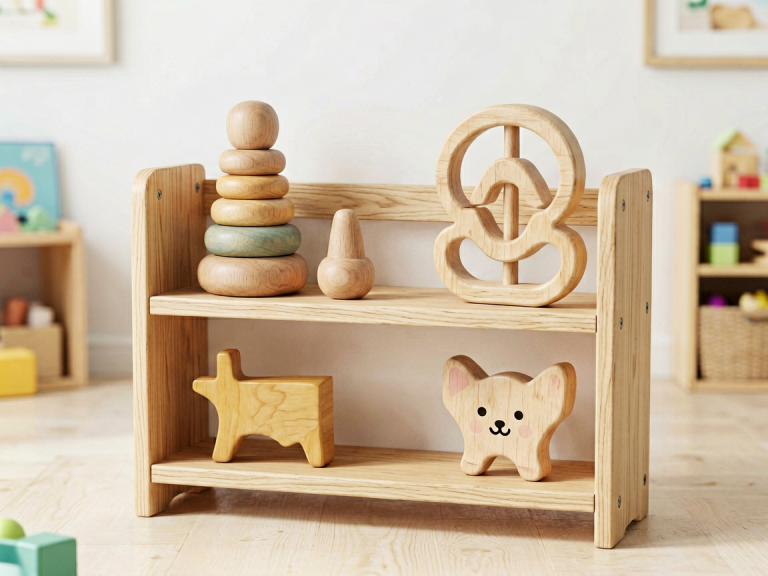
Designate a corner of the living room or a small play area where the child can access materials independently. Low shelves with baskets for blocks, scarves, and cups allow the toddler to choose what they want. Ensure the space is free from hazards—no small parts that could choke, no sharp edges, and secure furniture that won’t tip.
3. Follow the Child’s Lead
The golden rule of open-ended play is to observe before intervening. If your toddler is intently stacking blocks, do not suggest what to build. If they are staring at a puddle, give them time to explore. Your role is to be a curious companion, not an instructor. Ask open-ended questions: “What are you making?” “How did you get that block to stay?” “What do you think will happen next?”
4. Embrace Mess
Open-ended play is often messy. Water spills, sand scatters, and paint finds its way to hands and clothes. View this as a sign of deep engagement. Prepare by using a plastic tablecloth, choosing washable materials, and having a towel handy. A little mess now means a lot of learning.
5. Join the Play Without Taking Over
It is wonderful to play beside your child. Narrate your own actions (“I’m going to pour this rice into the green cup.”) without demanding a response. But if the child seems content alone, do not interrupt. The ability to sustain independent play is a valuable skill.
—
Overcoming Common Challenges
Challenge: “My child loses interest after two minutes.”
Two-year-olds have short attention spans, and that is normal. Open-ended play often involves short bursts of focused activity followed by exploration of something new. Trust the process. Even two minutes of deep engagement is beneficial. Over time, as the child matures, you may see longer play sessions.
Challenge: “I don’t have space for a messy sensory bin.”
Use the bathtub or a shallow plastic container on the kitchen floor. You can also take sensory play outdoors. Alternatively, try dry materials like uncooked rice, which are easier to clean than water.
Challenge: “My child puts everything in their mouth.”
This is common at two, especially when exploring new textures. Always supervise. Choose large items (such as a whole orange for water play, not a small marble). If mouthing persists, redirect to safe, edible sensory play—like a bin of dry cereal or yogurt painting.
Challenge: “I don’t know what to do. I feel silly playing without a plan.”
Remember that your child does not need an agenda. Sit on the floor with a few blocks and simply start stacking. Your presence is what matters. Even if you just watch and smile, you are validating their play. Over time, you will discover your own playful side.
—
Conclusion
Open-ended play is not a luxury; it is a developmental necessity for two-year-olds. It nurtures creativity, problem-solving, language, motor skills, and emotional resilience in ways that flashy electronic toys cannot. By offering simple, open-ended materials and stepping back to let the child lead, we give them the most precious gift: the opportunity to build their own understanding of the world.
The next time your toddler picks up a cardboard tube and looks at it with wonder, resist the urge to show them what it is “for.” Instead, ask: “What do you think it could be?” You might be amazed by the answer. A tube can be a telescope, a trumpet, a tunnel, a magic wand, or a secret hiding place for a tiny toy. In that moment, your child is not just playing—they are thinking, imagining, and becoming. And that is the most powerful activity of all.