The Power of Play and Purpose: A Parent’s Guide to Supporting Learning at Home for 9‑Year‑Old Boys
—
Introduction: Why 9‑Year‑Old Boys Need a Different Approach
At nine, a boy is standing at a fascinating crossroads. He is no longer a little child who needs constant hand‑holding, yet he is not quite ready for the abstract, self‑directed study of a teenager. His brain is wiring itself for logical thinking, his body is bursting with energy, and his social world is widening. For parents, supporting learning at home at this age can feel like trying to teach a whirlwind to sit still. But the key is not to fight the whirlwind — it is to channel it.
This guide offers practical, research‑backed strategies tailored specifically for the developmental strengths and quirks of 9‑year‑old boys. You will learn how to create a learning environment that respects their need for movement, how to turn their natural competitiveness into a motivation tool, and how to keep the joy of discovery alive even when homework feels like a chore.
—
1. Setting the Stage: How to Create a “Boy‑Friendly” Learning Space
A 9‑year‑old boy’s desk is not just a piece of furniture; it is a command centre. Unfortunately, many home learning spaces are designed for quiet angels who never fidget. For your son, the environment must accommodate his physicality.
1.1. Allow for Movement, Not Stillness
Forget the old rule of “sit up straight and don’t move.” Research in educational neuroscience shows that boys often learn better when they are allowed small, controlled movements. Consider:
- Standing desks or high tables where he can work while shifting his weight from foot to foot.
- Balance ball chairs or wobble cushions that engage his core without causing distraction.
- A “wiggle break” zone — a small carpet square where he can do three jumping jacks or a quick stretch between tasks.
1.2. Keep Distractions at Bay, But Not Too Strictly
Boys at nine are easily hooked by screens, but they also have a strong sense of fairness. Instead of a blanket ban on all electronic devices, create a “focus box” — a physical container where his phone, tablet, and smartwatch go during study time. Explain that this is not punishment; it is a tool to help his brain stay on the exciting mission of learning.
1.3. Visual Schedules and Checklists
A nine‑year‑old boy loves to see progress. Use a simple whiteboard or a magnet chart that lists the day’s learning tasks. Each completed task earns a checkmark or a small sticker. The act of physically moving a magnet from “to do” to “done” gives him a sense of control and achievement.
—
2. Turning Homework into a Game: The Science of Motivation
Let’s be honest: many 9‑year‑old boys see homework as a boring interruption to their real job — playing. To change that perception, you must tap into what drives them: competition, mastery, and immediate rewards.
2.1. The “Beat the Timer” Method
Boys thrive on challenges that feel like a race. Set a kitchen timer for a short, realistic duration — say, 15 minutes for a maths worksheet. Say, “Can you finish five problems before the timer goes off? If you do, you get a 5‑minute bonus break.” This works because it turns the abstract goal of “finishing homework” into a concrete, low‑pressure game.
2.2. Use Gamified Apps and Board Games
You do not have to reinvent the wheel. Educational games such as *Prodigy* (maths), *Duolingo* (languages), and *Oregon Trail* (history, problem‑solving) feel nothing like school. For offline fun, try board games like *Rush Hour* (logic), *Settlers of Catan* (strategy), or even *Uno* (number skills). Every 30 minutes of game time can be framed as “learning time” — and he will not argue.
2.3. Introduce “Mission Cards” Instead of To‑Do Lists
A flat list of subjects (“Math, Reading, Spelling”) can kill enthusiasm. Instead, write each subject as a mission on a card. For example:
- Mission Alpha: Conquer the multiplication fortress (maths)
- Mission Beta: Unlock the secret of the ancient text (reading comprehension)
- Mission Gamma: Decode the spelling cipher (spelling practice)
When he completes a mission, he hands the card to you and receives a small token — a marble in a jar, a point on a scoreboard, or even a silly dance from you. The more dramatic the celebration, the more he will buy in.
—
3. Subject‑Specific Strategies for a 9‑Year‑Old Boy’s Brain
Different subjects demand different approaches. Here is how to tailor core areas to his cognitive and emotional wiring.
3.1. Reading: From Reluctant to Relentless
Many 9‑year‑old boys hit a wall with reading because they are expected to move from picture books to dense chapter books too quickly. They want action, humour, and a clear hero.
- Let him choose graphic novels and non‑fiction. Books like *Dog Man*, *The Bad Guys*, or *National Geographic Kids* are not “lesser” reading. They build vocabulary and comprehension just as effectively as traditional novels.
- Use the “one page out loud” rule. If he is struggling with a long book, take turns reading. You read one page, he reads the next. This reduces anxiety and keeps the story moving.
- Create a reading fort. Build a blanket tent in the living room, supply a flashlight, and let him read in a “secret cave.” The novelty makes it an adventure.
3.2. Maths: Making Numbers Physical
Boys often excel at maths when they can see, touch, and move numbers.
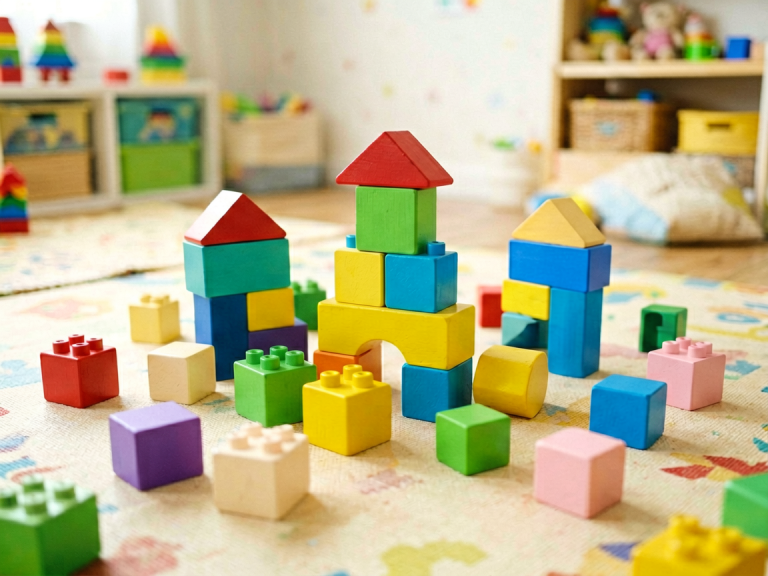
- Use LEGO bricks for fractions and multiplication. A 2×4 brick is a perfect visual for 2×4=8. Stacking bricks shows fractions concretely.
- Cook together. Doubling a recipe, measuring ingredients, and timing the oven all build real‑world maths skills.
- Create a “maths obstacle course” in the backyard. Place cards with problems at different stations. He has to solve the problem before moving to the next station (e.g., run to the tree, answer 3×7, then jump to the swing).
3.3. Writing: From Grunts to Grand Sentences
Boys often struggle with writing because they feel the pressure to be “perfect” right away. Lower the bar for the first draft.
- Voice‑to‑text is your ally. Let him dictate a story or a report into your phone. Once the ideas are down, he can edit on paper. This separates the creative flow from the mechanical labour of handwriting.
- Write about what he loves. If he is obsessed with Minecraft, let him write a guide to building a castle. If he loves dinosaurs, ask him to write a newspaper article about a T‑Rex escape.
- Use comic strips. A story in four panels with speech bubbles requires sequencing, dialogue, and character development — all without the terror of a blank page.
3.4. Science and Social Studies: Hands‑On and Epic
At nine, a boy’s imagination is soaring. He wants to know how volcanoes work, why the Romans were so powerful, and what happens if you mix vinegar and baking soda.
- Weekly kitchen experiments (e.g., making slime, growing crystals, building a baking soda volcano) teach the scientific method without a textbook.
- Build timelines with string and clothespins. For a history unit, hang a clothesline across his room. He pins up index cards with dates and events. Moving the pins helps him visualize cause and effect.
- Watch documentaries together. *Planet Earth*, *The Magic School Bus*, and *Horrible Histories* are gold. Afterwards, ask him to explain one new fact to you in 30 seconds. This reinforces recall and builds confidence.
—
4. Managing Energy and Attention: The Importance of Structure and Flow
A 9‑year‑old boy’s attention span is not a problem to solve; it is a rhythm to honour.
4.1. The Pomodoro Technique, Boy‑Style
The classic Pomodoro method (25 minutes work, 5 minutes break) can be too long for some boys. Try 15‑20 minute bursts followed by a 3‑minute movement break. During the break, he must do something physical: jumping jacks, bouncing a ball, or running a lap around the house. After three cycles, give a longer 15‑minute break for free play.
4.2. The “First This, Then That” Rule
Boys respond exceptionally well to clear cause‑and‑effect language. “After you finish your maths sheet, you can play outside for 20 minutes.” Avoid wordy explanations. Keep it short, firm, and consistent.
4.3. Understand the After‑School Crash
Many 9‑year‑old boys come home from school exhausted and overwhelmed. Their prefrontal cortex (the “stop and think” part of the brain) is depleted. Do not force homework immediately. Instead, offer a real break: a snack, time outside, or free play for at least 30 minutes. Then, ease into learning with the most engaging task first — save the least favourite subject for last.
—
5. The Emotional Side: Building Resilience and a Growth Mindset
Boys are often told to “man up” or “stop crying” at this age, which can shut down their willingness to try hard things. Your home learning environment should be a safe place to fail.
5.1. Celebrate Effort, Not Just Results
“Wow, you really stuck with that difficult problem! I love how you tried three different ways.” This kind of praise builds a growth mindset. Avoid “You’re so smart,” which can make him avoid challenges for fear of looking dumb.
5.2. Use “Yet” Language
When he says, “I can’t do this division,” add the word “yet.” “You can’t do it yet, but you will. Let’s look at it together.” This small shift reduces frustration and teaches perseverance.
5.3. Model Your Own Learning
Let him see you struggle with something — a new language, a crossword, a DIY project. Say out loud, “Hmm, I’m stuck. Let me try a different strategy.” This normalizes the struggle and shows that learning never stops, even for grown‑ups.
—
6. When to Step Back: Fostering Independence
By age nine, boys are desperate for autonomy but still need a safety net. The goal of home learning support is to gradually hand over the reins.
6.1. The “Ask Three Before Me” Rule
If he is stuck on a problem, before running to you, he must try three strategies: re‑read the instructions, look at the example, or try a simpler version of the problem. This builds problem‑solving skills and reduces learned helplessness.
6.2. Create a “Help Jar”
When you are busy, he may feel ignored. Set up a jar where he can drop a note with a question. You agree to answer within a certain time (e.g., after dinner). This teaches patience and respect for boundaries.
6.3. Weekly Check‑Ins, Not Daily Nagging
Instead of checking his work every day, schedule a 15‑minute weekly “learning review” on Sunday evening. Ask him to show you his best piece of work from the week and explain why it is good. Ask what was hard and what was easy. This shifts responsibility to him and makes you a coach, not a micromanager.
—
Conclusion: You Are Not Just a Homework Helper — You Are a Learning Partner
Supporting a 9‑year‑old boy’s learning at home is not about drilling facts or forcing him to sit still. It is about understanding that his brain is wired for action, competition, and connection. When you embrace his energy and turn it into a tool, learning becomes something he *wants* to do, not something he *has* to do.
Remember: the boy who is allowed to fidget, to ask “why” a hundred times, and to turn his spelling words into a sword‑fighting chant will grow into a young man who loves learning — not because he was pushed, but because he was supported in a way that made sense to him.
So go ahead: let him stand on his chair, set a timer, and turn that maths worksheet into a race against the clock. You are not lowering standards; you are raising a lifelong learner.