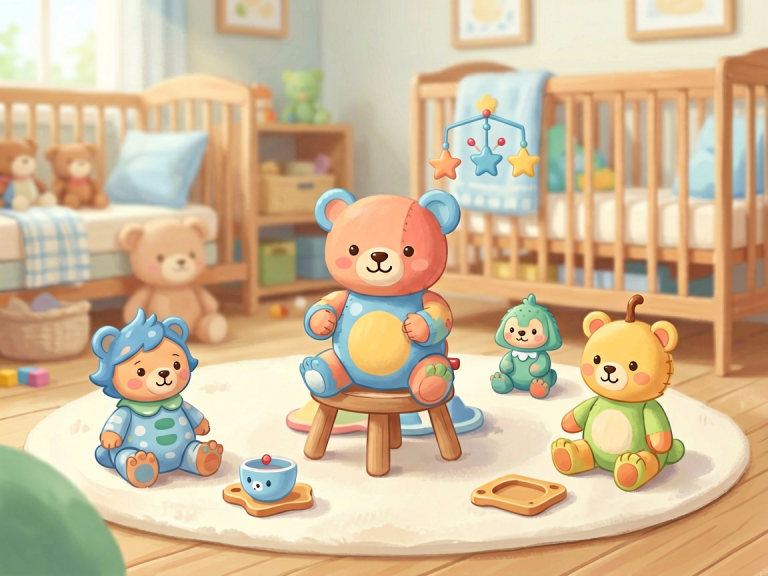
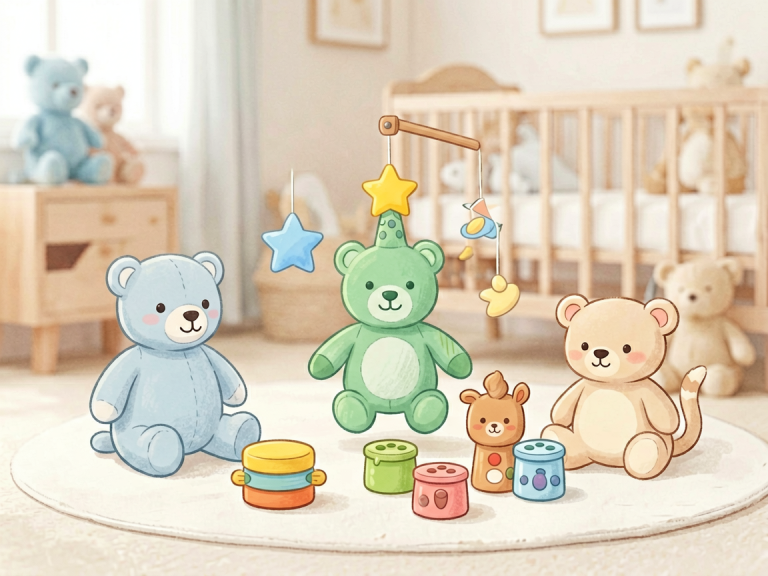
From Unplugged Play to Gentle Stillness: A Guide to Screen-Free Quiet Time for One-Year-Olds
Introduction
In the first year of life, a child’s brain forms connections at a staggering rate—over one million neural synapses per second. Every interaction, every sound, every texture they touch becomes a building block for cognition, language, and emotional regulation. Yet in our modern, hyper-connected world, it is all too easy to hand a smartphone or tablet to a fussy toddler for a few minutes of peace. For a one-year-old, however, screen time offers no developmental benefit and can actually disrupt the natural rhythms of attention, sleep, and self-soothing. This article explores the profound value of screen-free play for one-year-olds and offers a practical road map for parents and caregivers to guide their little ones from active, exploratory play into a calm, restorative quiet time—without a single pixel in sight.
—
The Importance of Screen-Free Play for One-Year-Olds
Why does a one-year-old need to avoid screens? The answer lies not in moral panic but in developmental science. At twelve months, a child is in the sensorimotor stage of cognitive development, as described by Jean Piaget. They learn by doing: by grasping, shaking, dropping, mouthing, and moving objects. Screens, by contrast, present a two-dimensional, passive experience. A one-year-old watching a colorful animation may appear mesmerized, but the brain is not actively integrating the information through touch, movement, or social interaction. Studies from the American Academy of Pediatrics consistently advise against any screen time for children under eighteen months, with the sole exception of live video chatting with a distant relative.
Screen-free play, on the other hand, builds foundational skills. When a one-year-old stacks wooden blocks, they practice hand-eye coordination, cause and effect, and spatial reasoning. When they push a toy car and watch it roll, they learn about motion and gravity. When they tear a piece of paper or scoop sand, they refine fine motor skills and sensory integration. Perhaps most critically, screen-free play fosters executive function—the ability to focus, control impulses, and manage emotions. A one-year-old who learns to entertain themselves with a simple rattle or a fabric book is building the neural pathways for later self-regulation. This is the very skill that will, in a few short years, allow them to sit still during circle time or transition from a boisterous game to a quiet nap.
Furthermore, screen-free play is inherently relational. Even when a toddler plays alone, they are often in the presence of a caregiver who observes, narrates, or gently intervenes. This back-and-forth—the eye contact, the shared smile, the verbal labeling of objects—is the soil in which language and social-emotional intelligence grow. Screens, by contrast, interrupt that relational loop. The child looks at the glowing rectangle, not at the parent’s face. The parent’s voice is replaced by a recorded jingle. Over time, this can weaken the attachment bond and reduce the child’s ability to read emotional cues.
—
What Screen-Free Play Looks Like for a One-Year-Old
Designing screen-free play for a one-year-old does not require a Pinterest-perfect playroom or expensive toys. In fact, the most engaging materials are often the simplest and most open-ended. At this age, play is about exploration, repetition, and sensory delight. Here are some developmentally appropriate examples:
- Object Permanence Games: A one-year-old is fascinated by things that appear and disappear. A simple set of nesting cups, a wooden puzzle with knobs, or a small ball that rolls out of sight under a blanket can provide endless fascination. These games teach cause-and-effect and the concept that objects continue to exist even when hidden.
- Sensory Bins: Fill a shallow plastic container with dry rice, oats, or sand. Add scoops, spoons, and small cups. The child can pour, scoop, and feel the texture. Supervise closely to prevent mouthing of unsafe items. This activity fine-tunes tactile discrimination and encourages quiet, focused play.
- Stacking and Knocking Down: Wooden blocks, stacking rings, or soft fabric cubes. The one-year-old will stack two or three blocks, then gleefully knock them down. This is not destruction—it is a learning loop of construction and collapse that reinforces spatial understanding and motor planning.
- Push and Pull Toys: A small cart that makes a rattling sound or a wooden animal on wheels encourages cruising and walking while providing auditory feedback. The child learns that their action produces a satisfying result.
- Books with Texture: Cloth books, board books with flaps, or books with crinkly pages invite the child to look, touch, and even taste. Sit with the child and point to pictures, naming objects in a slow, warm voice. This is screen-free bonding that builds vocabulary and print awareness.
- Mirror Play: A child-safe mirror on the floor or wall. One-year-olds are often delighted by their own reflection, making faces and touching the “other baby.” This supports self-awareness and provides a quiet moment of self-observation.
Crucially, screen-free play should not be a solitary, neglected activity. The adult’s role is to set up the environment and then observe, occasionally offering a word or a gentle redirect, but without dominating the play. Too much adult direction can stifle the child’s own initiative. The goal is to let the child lead, to allow them to experience boredom and then discover their own solution. This is the foundation of intrinsic motivation.
—
Transitioning from Active Play to Quiet Time
One of the greatest challenges for parents of one-year-olds is moving from high-energy play to a calm, quiet period—often before a nap, a feeding, or simply a moment of rest for the caregiver. The transition is not instinctive; it must be scaffolded. A one-year-old does not yet have the cognitive capacity to regulate their own arousal levels. They may be overstimulated, overtired, or simply resistant to change. Screens often seem like a convenient “off switch,” but they actually rev the brain’s visual and auditory systems, making quiet time harder to achieve.
Instead, use a consistent, gentle routine that signals the shift. For example, after twenty minutes of active block play, you might say, “Blocks are tired now. Let’s put them in the basket.” Sing the same clean-up song each time. Then move to a dimmer area of the room. Close the curtains slightly. Turn off any loud background noise. This environmental shift speaks to the child’s developing sense of time and ritual.
Next, introduce a transitional object—a favorite soft toy, a small blanket, or a special “quiet book.” This object becomes the anchor for quiet time. Hand it to the child and say, “Time for quiet. Mr. Bear wants to rest with you.” Sit with them on a soft mat or a floor cushion. Resist the urge to talk constantly; let your presence be calm and still. You might hum a lullaby or simply breathe slowly. The child will pick up on your energy.
A powerful tool for this transition is the “quiet basket.” Prepare a small basket with three or four silent, soothing items: a soft fabric ball, a wooden teether, a crinkly scarf, a simple board book about bedtime. During quiet time, place the basket near the child and let them explore these items at their own pace. The restricted choice and soft textures promote a lower arousal state. Unlike a screen, which demands high attention, a quiet basket invites relaxed focus.
It is also vital to match the child’s energy. If they are extremely wound up, do not expect immediate stillness. Instead, engage in a calming activity together: a gentle rocking chair, a slow walk around the room while naming objects in a whisper, or a “magic bubble” game where you pretend to blow a soft, invisible bubble that floats and pops silently. These playful yet low-energy interactions ease the nervous system into a parasympathetic state.
—
Practical Tips for Establishing a Quiet Time Routine
Consistency is king. A one-year-old thrives on predictability. To create a successful screen-free quiet time:
- Schedule it at the same time every day. Typically, this will be right before a nap or after a morning of active play. The child’s internal clock will begin to anticipate the change.
- Keep the duration short and flexible. For a one-year-old, a quiet time of ten to fifteen minutes is a triumph. Do not force them to stay still if they are genuinely distressed. Instead, reduce the expectation to just two minutes of calm interaction, then build gradually.
- Use a visual timer or a simple song. A small hourglass or a wooden egg timer allows the child to see that quiet time has a beginning and an end. For example, “We will be quiet until the blue sand runs down.” Sing a short, repetitive song like “Twinkle, Twinkle” each time; the melody becomes a cue.
- Remove all screens from the room. This includes the parent’s phone. If you are sitting with the child, be fully present. Your phone buzzes? Ignore it. The child notices every glance. Your full attention models the peace you want them to embrace.
- Honor the child’s need for proximity. Some one-year-olds want to sit on your lap during quiet time; others want to lie on the floor near your legs. Follow their lead. Physical closeness releases oxytocin and lowers cortisol in both of you.
- Do not use quiet time as a punishment. The phrase “Go to your room and be quiet” carries negative connotations. Instead, frame quiet time as a privilege—a special time to rest and recharge. Use loving words: “Let’s have a quiet snuggle now.”
- Be prepared for resistance. It is normal for a one-year-old to cry, push away the quiet basket, or try to crawl off. Stay calm. Acknowledge their feeling: “You don’t want to be quiet right now. I know. But we will try again in a moment.” Offer a small comfort (a back rub, a sip of water) and gently restart. Over days and weeks, the pattern will settle.
—
The Long-Term Benefits of Unplugged Early Years
The work you invest in screen-free play and intentional quiet time during the first year may not show immediate dramatic results. Your one-year-old might still fuss, still resist the quiet basket, still throw a block across the room. But the cumulative effect is profound. Children who learn to play without screens develop stronger attention spans, better emotional regulation, and deeper creativity. They learn to tolerate boredom—that fertile space where imagination blooms. They become comfortable with stillness, which is the precursor to mindfulness, empathy, and deep learning in later years.
Moreover, quiet time without screens teaches a child that they do not need external stimulation to feel okay. They can rest in their own company. They can look out the window, listen to the rain, or simply breathe. In a world that constantly demands attention, this inner resource is priceless.
As a caregiver, you are not just avoiding the blue light or the addictive swipes. You are building a sanctuary. In that ten-minute quiet time on a rainy afternoon, with your one-year-old nestled beside you, turning the pages of a cloth book and hearing only the rustle of fabric and the soft rhythm of your breathing, you are giving them something that no app can ever replicate: the gift of presence. And that gift, repeated day after day, becomes the quiet foundation of a resilient, centered, and joyful human being.